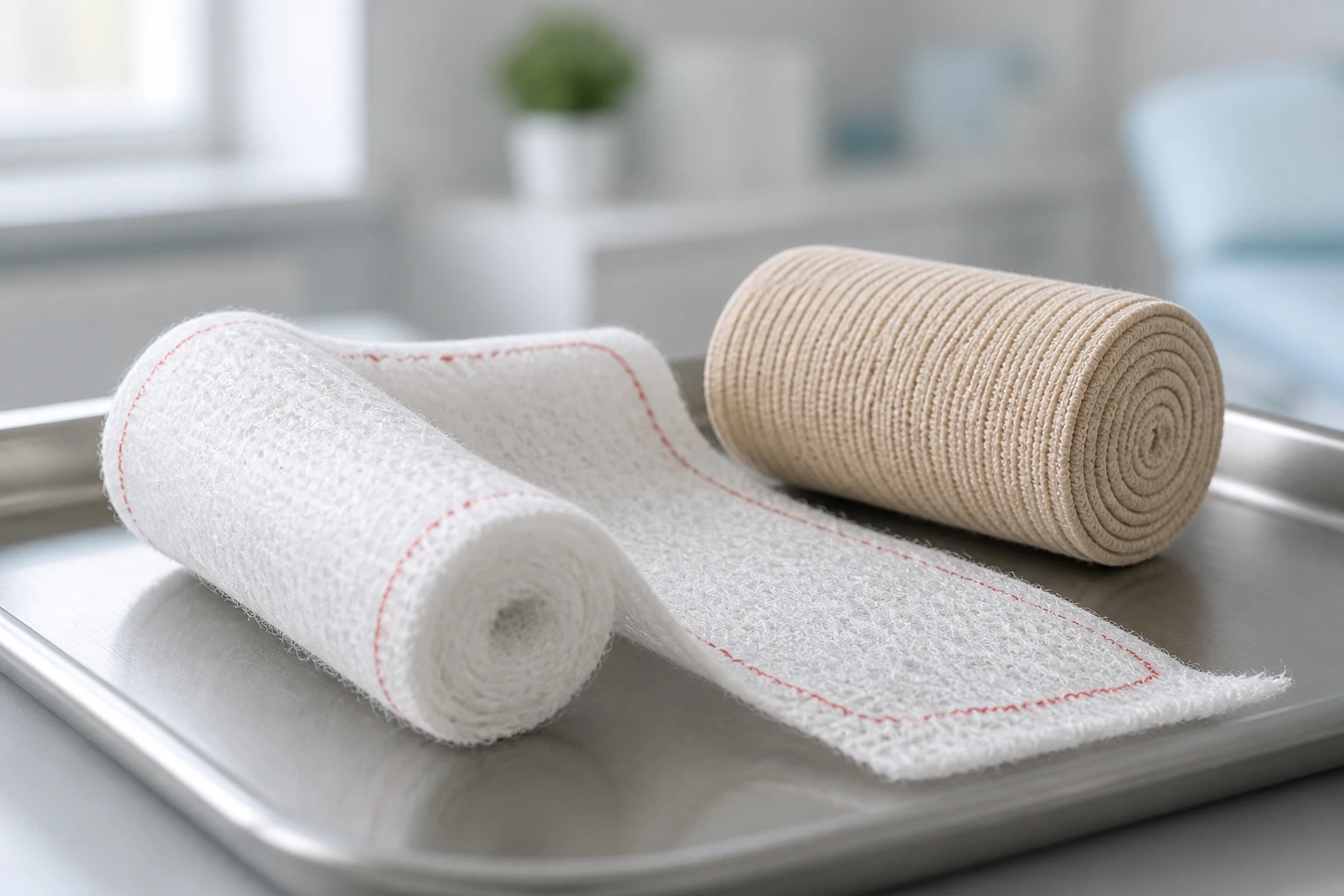
If you have spent any time running a production line for first aid kits, you already know the sinking feeling of a packaging failure. You source thousands of medical components, assemble sleek emergency trauma boxes, ship them overseas, and then get a frantic email from a buyer. The bandage rolls inside arrived swollen from sea-freight humidity, or worse, the elasticity popped after six months sitting in a vehicle glove box.
When assembling kits for tactical medics, workplace safety compliance, or home emergencies, every single component has to hold up under pressure. The humble emergency elastic crepe bandage is often treated like a basic commodity, but in real-world trauma situations, it is the primary tool for holding pressure dressings, stabilizing sprains, and controlling swelling.
As a manufacturer, buying poor-quality wraps destroys your brand reputation overnight. This guide breaks down what actually matters when sourcing bulk wraps, from fabric weave formulas to airtight sterile pouch engineering, so your kits perform flawlessly every single time.
Why the Emergency Elastic Crepe Bandage Is the Heart of Any Trauma Kit
In emergency medicine, bleeding control and joint stabilization depend entirely on uniform tension. An emergency elastic crepe bandage relies on a specialized weave—usually heavy-weave cotton blended with stretchable synthetic yarns—that creates natural micro-crimps. These crimps give the fabric its characteristic textured weave and stretch without needing continuous rubber threading that degrades over time.
According to Wikipedia’s guide on elastic bandages, compression wraps are engineered to supply localized pressure to restrict swelling and keep primary dressings firmly secured. But for a first aid kit assembler, not all crepe wraps are created equal.
Field Reality Check: A cheap, low-weight crepe roll might look fine on your assembly line table. But after two years inside a sealed first aid kit stored in a warm warehouse, low-grade elastic fibers lose their memory. When an end-user wraps a sprained ankle, the wrap sags within ten minutes. That is why choosing a qualified first aid kit bandage supplier is a strategic decision for your supply chain, not just a line-item purchase.
Technical Performance Metrics You Cannot Ignore
When evaluating samples from a factory, ignore the flashy sales pitch and look at raw material density. High-performing wraps use a specific thread ratio to balance breathability with compression capability.
To calculate the structural mass density of a wrap roll, we use the standard Grams per Square Meter (GSM) equation:
GSM = (Fabric Weight in Grams) / (Unstretched Length in Meters * Width in Meters)
For a heavy-duty emergency elastic crepe bandage, target a minimum of 90 to 110 GSM in its unstretched state. Anything below 70 GSM feels paper-thin, offers zero support for sprained joints, and bleeds through easily when managing fluid absorption.
Another key metric is the Elasticity Stretch Percentage:
Stretch Ratio (%) = ((Stretched Length – Unstretched Length) / Unstretched Length) * 100
A reliable emergency elastic crepe bandage should deliver a consistent stretch ratio between 160% and 200%. If the stretch ratio jumps above 220%, the wrap loses its structural rebound force, leaving the victim with insufficient compression pressure.
An emergency elastic crepe bandage must maintain this compression rebound force across thousands of duty cycles to ensure medical efficacy.
Sourcing the Right Dimensions: Standard Sizes vs. Custom Size Crepe Bandage Demands
First aid kit assemblers rarely buy one-size-fits-all components. A compact hiker kit needs slim rolls, while an industrial workplace trauma box demands wide, heavy-duty wraps capable of securing large abdominal dressings.
Standard Width Spectrum Overview:
- 5 cm (2 in): Best for Finger, Wrist & Infant Limb Wrapping
- 7.5 cm (3 in): Ideal for Ankle, Forearm & Small Foot Injuries
- 10 cm (4 in): Essential for Knee, Calf & Large Arm Traumas
- 15 cm (6 in): Designed for Chest, Thigh & Abdominal Dressing Retention
The Big Four Sizes
- 5 cm x 4.5 m (Stretched): Essential for fingers, wrists, and pediatric limb wrapping. Keeps compact vehicle kits lightweight.
- 7.5 cm x 4.5 m (Stretched): The sweet spot for general first aid kits. Fits easily into small nylon pouch pockets while covering adult ankles and forearms.
- 10 cm x 4.5 m (Stretched): The standard inclusion for OSHA workplace safety kits and military IFAKs (Individual First Aid Kits). Ideal for leg injuries and holding thick trauma pads in place. An emergency elastic crepe bandage of this size is the core workhorse in trauma response.
- 15 cm x 4.5 m (Stretched): Designed for heavy emergency response, torso wrapping, and thigh splinting.
When to Order a Custom Size Crepe Bandage
Sometimes off-the-shelf standard dimensions do not fit your custom tray mold or pouch layout. If you are designing a low-profile tactical pouch, a standard 10cm roll might be too thick in diameter to allow the pouch zipper to close smoothly.
Working with a manufacturer like MediTapes allows you to request a custom size crepe bandage. Whether you need an unusual 12.5cm width for specialized orthopedic kits, or a shorter 2.5-meter stretched length to fit ultra-thin pocket kits, customizing roll dimensions prevents awkward packing layouts and eliminates wasted material. Incorporating a custom size crepe bandage gives your brand a distinct competitive advantage in customized kit design.
| Bandage Size (Stretched) | Primary Application Scenario | Recommended Kit Type | Packing Profile Volume |
|---|---|---|---|
| 5 cm x 4.5 m | Wrist sprains, small limb stabilization | Compact travel & home kits | Low (< 25 cm³) |
| 7.5 cm x 4.5 m | Ankle, elbow, and forearm wrapping | Sports & vehicle first aid kits | Medium (~ 45 cm³) |
| 10 cm x 4.5 m | Calf, knee, major dressing retention | OSHA workplace & tactical IFAKs | High (~ 70 cm³) |
| 15 cm x 4.5 m | Torso, thigh, and large burn dressings | Paramedic & disaster response kits | Very High (> 110 cm³) |
Packaging Integrity: Why Airtight Sealing and Sterile Processing Are Vital
Here is something many kit manufacturers learn the hard way: your emergency elastic crepe bandage can pass every laboratory stretch test, but if the primary wrapper fails, the product is ruined before it reaches the customer.
First aid kits are stored in extreme environments—boiling car trunks, damp maritime vessels, and dusty construction sites. Humidity is the absolute enemy of stored medical textiles. Water vapor penetrates low-grade polyethylene film, causing cotton fibers to absorb moisture, break down, and develop a musty odor.
Moisture Degradation Sequence:
- Damp Air Infiltration through low-density plastic wrapper
- Fiber Swelling and moisture accumulation in woven cotton
- Elasticity Loss due to fabric saturation and thread fatigue
- Mold Risk and sterility compromise in field storage
To prevent this, medical device packaging must adhere to strict international frameworks, such as ISO 13485 medical device quality standards. For sterile rolls, manufacturers must validate shelf life using rigorous stability testing, as outlined in ASTM F1980 sterile barrier packaging guidelines.
Airtight Sealing Requirements
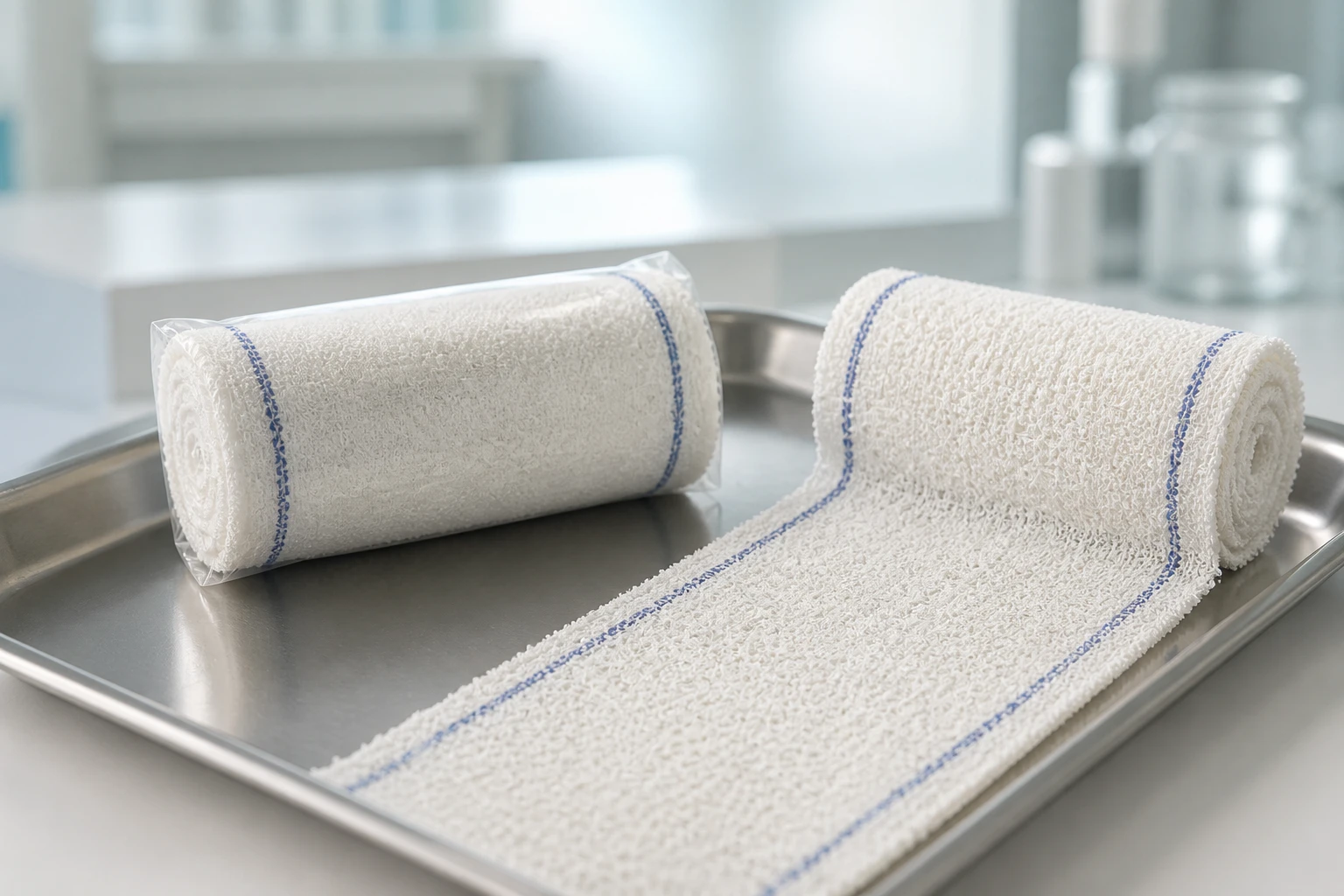
When sourcing an emergency elastic crepe bandage for long-shelf-life kits, insist on high-density PE/PET laminated film or thick aluminum foil peel-pouches. A premium emergency elastic crepe bandage requires an airtight barrier to withstand long-distance shipping containers without degrading.
To evaluate packaging performance, quality assurance teams calculate the Water Vapor Transmission Rate (WVTR):
WVTR = (Mass of Moisture Transmitted) / (Pouch Surface Area * Time in Days)
For tropical or military-grade kits, your supplier’s pouch material should maintain a WVTR close to zero (below 0.1 g/m² per 24 hours).
Every sterile emergency elastic crepe bandage produced at MediTapes undergoes continuous seal-strength integrity tests. This guarantees that whether your kits sit in a humid jungle or a freezing alpine rescue station, opening the package reveals a crisp, clean, sterile wrap ready for action.
Material Breakdown: Comparing Bulk Medical Wraps for Sourcing Managers
If you search for bulk medical wraps, you will see prices ranging from pennies to several dollars per roll. Why such a massive gap? It all comes down to fiber selection and edge finishing. Buying low-tier bulk medical wraps often leads to high return rates from disgruntled client groups.
Cotton vs. Synthetic Blends
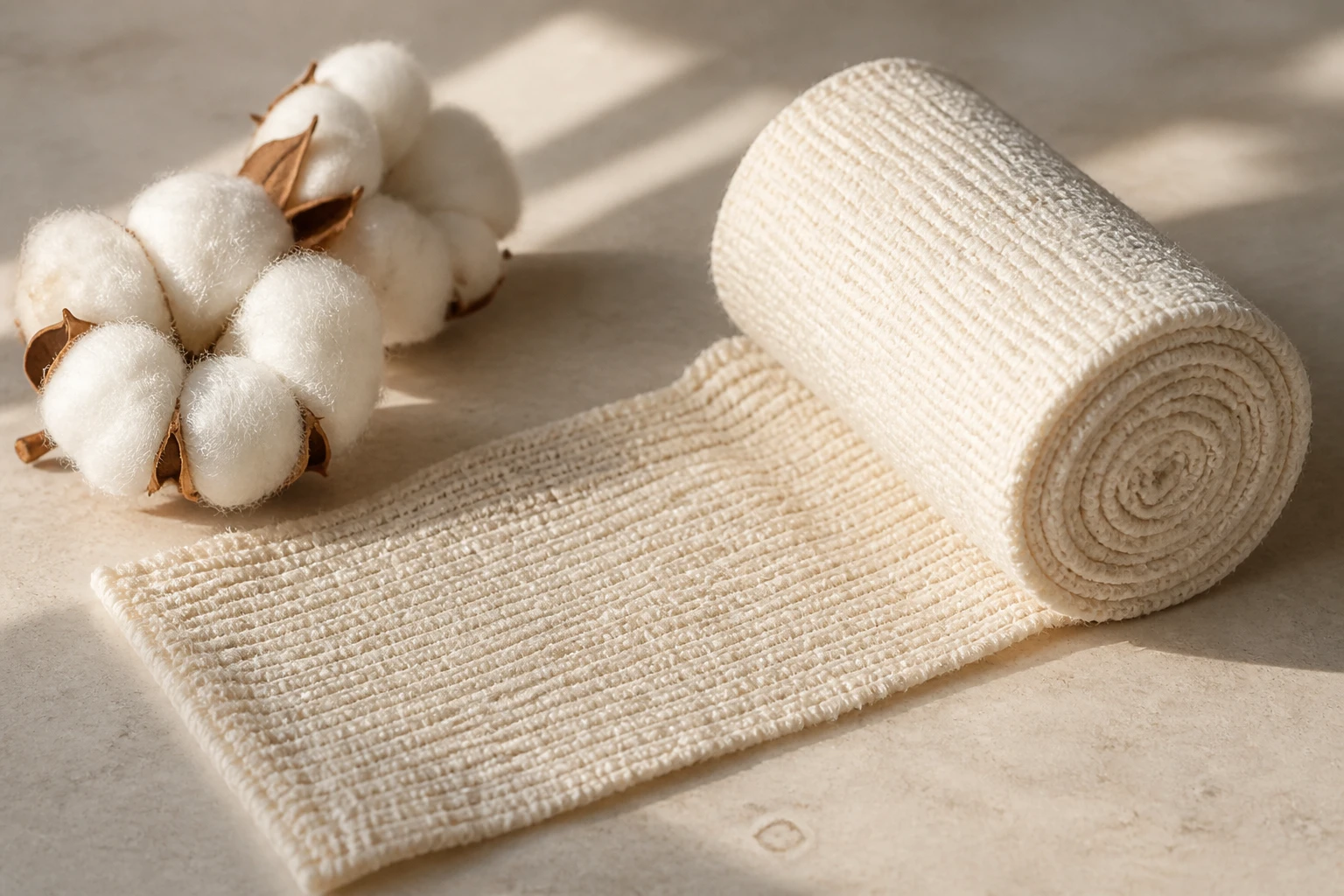
- 100% Pure Cotton Crepe: Offers supreme skin comfort, excellent absorbency, and hypoallergenic performance. However, pure cotton can shrink slightly during high-temperature steam sterilization if not pre-shrunk during processing.
- Cotton-Viscose-Polyester Blends: Highly durable and budget-friendly. Synthetics increase elastic recovery rate, ensuring an emergency elastic crepe bandage retains its compression after multiple adjustments.
- Latex-Free Elastic Fabrics: Essential for modern medical compliance. Latex allergies pose severe risks in emergency rooms, so high-tier kit builders avoid natural rubber latex entirely. Every emergency elastic crepe bandage distributed globally should ideally be 100% latex-free.
Compliance guidelines set by FDA medical device regulatory frame emphasize reducing allergen exposure in broad-distribution medical items, making latex-free synthetics the gold standard for global markets.
Edge Finish Comparison:
- Non-Feathered Edge (Raw Cut): Frays easily, loose threads catch in wounds, and creates a messy appearance during application.
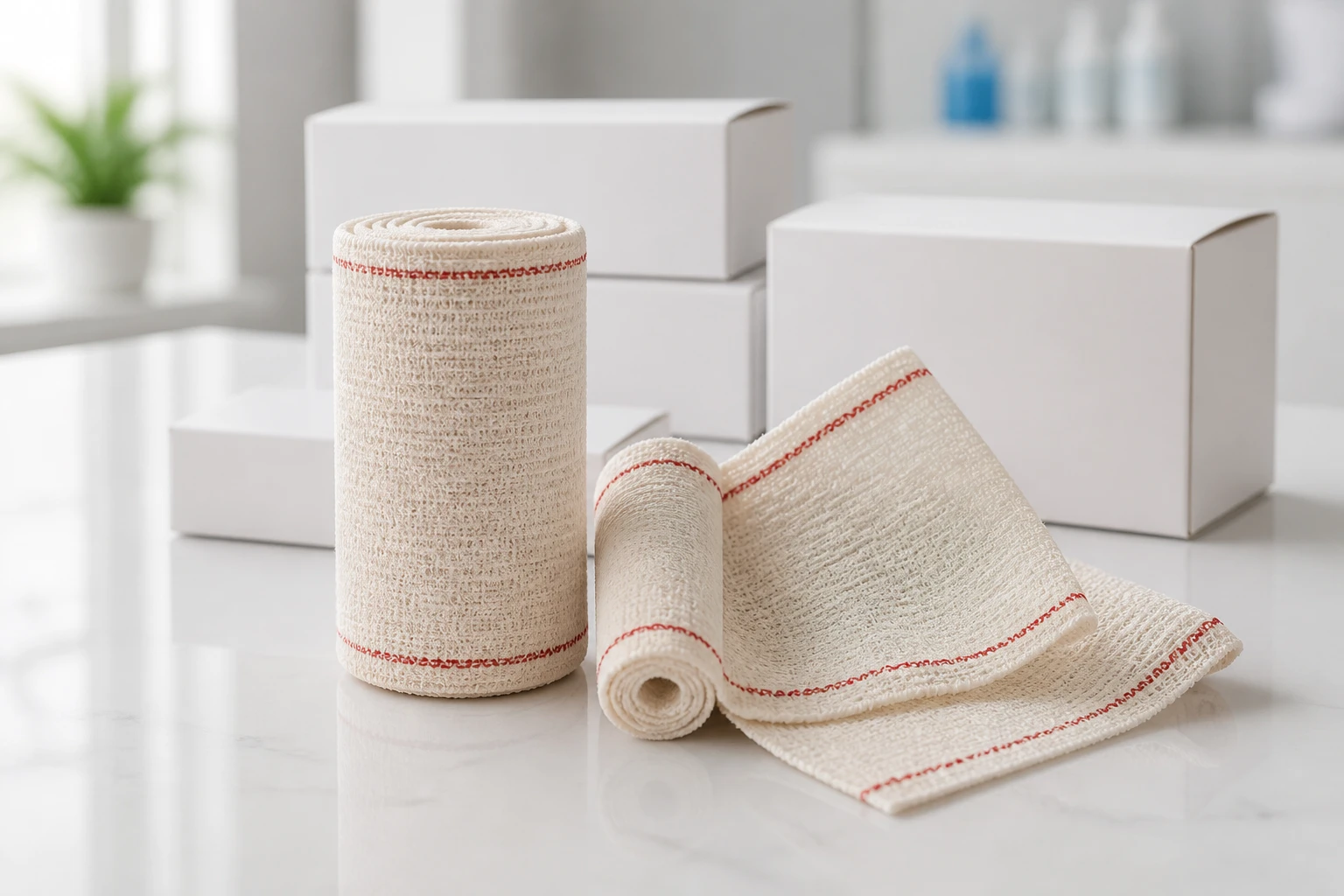
- Feathered / Fast Edges (Woven): Clean, non-fraying edge that provides a smooth, professional finish and superior structural hold.
The Clip vs. Closure Controversy
How should an emergency elastic crepe bandage be secured in the field?
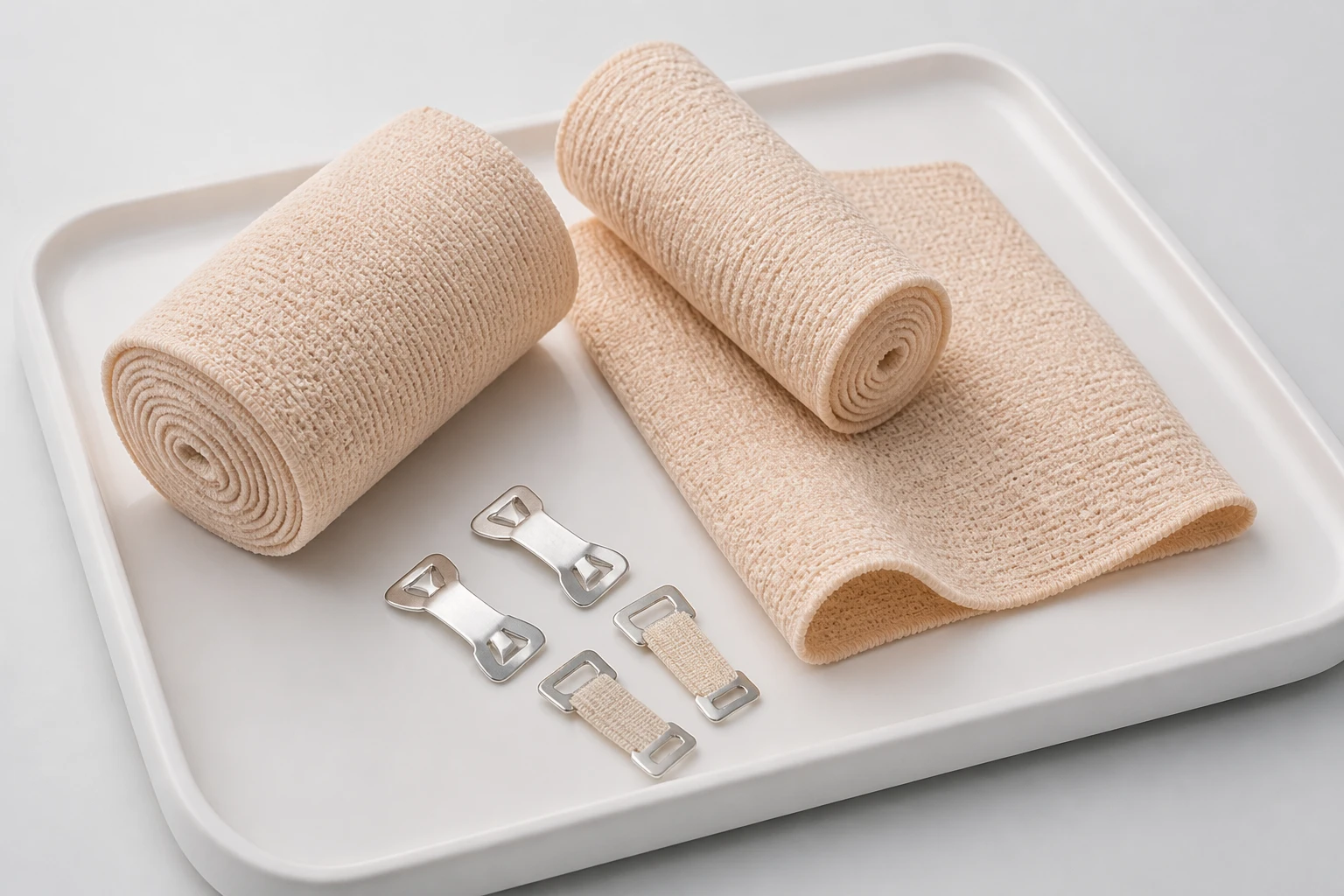
For decades, suppliers included traditional metal aluminum clips with tiny teeth. Frankly, metal clips are a terrible choice for emergency response kits. They drop in the dirt, puncture thin gloves, and get lost easily.
In modern kit manufacturing, we strongly recommend two options:
- Self-Fastening / Micro-Velcro End Strip: Eliminates loose hardware. The medic simply wraps and presses the end tab onto the bandage face.
- Heavy-Duty Safety Pins: Simple, reliable, and versatile. They secure the wrap and can assist with other emergency tasks in the field.
When choosing a first aid kit bandage supplier, make sure they offer modern closure alternatives rather than forcing outdated metal clips into your supply chain.
Real-World Sourcing Scenario: Fixing a Defect Rate for a Tactical Kit Assembler
A few years ago, a mid-sized European trauma kit builder reached out to us with a serious problem. They had contracted a low-cost supplier for an emergency elastic crepe bandage order, importing 50,000 unit rolls to complete a government tender.
Three months after packing the kits into sealed nylon bags, quality control opened sample units for audit. Nearly 15% of the crepe bandage rolls had expanded inside their plastic sleeves, blowing out the heat-sealed edges of the wrappers. The culprit? Excess residual moisture retained in the cotton fibers during factory wrapping, combined with cheap 30-micron single-layer plastic film.
The manufacturer had to unpack thousands of kits, discard the ruined rolls, and delay their delivery deadline. Replacing every defective emergency elastic crepe bandage wiped out their profit margin on that contract.
When they transitioned their order to our Elastic Crepe Bandage section, we introduced three key fixes:
- In-Line Vacuum Dehumidification: Reducing cotton moisture content below 5% prior to sealing.
- Multi-Layer PET/AL/PE Foil Pouches: Providing an absolute barrier against atmospheric moisture and ambient pressure shifts.
- Automated Continuous Heat-Sealing: Eliminating micro-gaps along the pouch seams.
The result? Zero pouch failures across their next 200,000 units, zero kit recalls, and a contract renewal with their buyer. Sourcing an emergency elastic crepe bandage from a proven first aid kit bandage supplier isn’t just about buying gauze—it is about risk management for your manufacturing brand.
Technical Calculations for Procurement Managers
When budgeting for a large production run of first aid kits, calculating raw material requirements and box volumes requires exact mathematical formulas. Here are three equations every B2B procurement manager should keep on hand when calculating order quantities for an emergency elastic crepe bandage:
1. Total Fabric Yield Calculation
To determine how many linear meters of raw woven fabric you need to order to produce a target batch of finished rolls:
Total Woven Fabric Required (Meters) = (Target Roll Count * Unstretched Length per Roll) * (1 + Waste Factor)
Where Waste Factor typically ranges from 0.03 to 0.05 (3% to 5%) to account for edge trimming and roll start-up losses.
2. Volumetric Container Packing Index
To estimate how many boxed rolls of an emergency elastic crepe bandage can fit into a standard 20ft shipping container:
Container Capacity (Units) = (Container Usable Volume in Cubic Meters * Packing Efficiency Factor) / (Individual Box Volume in Cubic Meters)
Usable Volume for a 20ft GP Container is approximately 28 to 30 cubic meters, and Packing Efficiency Factor is typically 0.85. Sourcing bulk medical wraps efficiently depends on optimizing this spatial density ratio.
3. Compression Force Calculation
To evaluate the pressure applied by an emergency elastic crepe bandage on a limb (Laplace’s Law applied to bandaging):
Pressure (mmHg) = (Tension in Newtons * Number of Layers * 4630) / (Limb Circumference in cm * Bandage Width in cm)
Ensuring your emergency elastic crepe bandage maintains uniform tension prevents the dangerous “tourniquet effect” where blood flow is accidentally cut off during prolonged field transport.
Frequently Asked Questions (FAQ)
What GSM is recommended for an emergency elastic crepe bandage in first aid kits?
For standard first aid and emergency response kits, we recommend a minimum weight of 90 to 110 GSM in its unstretched state. Lower GSM options (60-70 GSM) are cheaper but tear easily and lack the tensile strength needed to hold heavy trauma pads in place. Ensuring your emergency elastic crepe bandage meets this threshold guarantees field dependability.
How do you prevent sterile crepe bandages from losing elasticity during long sea freight transit?
Elasticity loss is usually caused by excessive heat exposure combined with low-grade synthetic yarns. Working with an experienced first aid kit bandage supplier ensures the use of heat-stabilized elastic threads and airtight barrier pouches, preserving elasticity even in hot shipping containers. Every emergency elastic crepe bandage must be protected from ambient moisture during ocean freight.
Can MediTapes provide a custom size crepe bandage with private label branding?
Yes. We regularly produce custom widths (such as 6cm or 12cm) and non-standard lengths, alongside custom-printed outer pouch artwork, barcoding, and private label branding to match your kit specifications. Ordering a custom size crepe bandage allows kit manufacturers to maximize space in compact tactical bags.
What is the shelf life of a sterile emergency elastic crepe bandage?
When sealed in a high-barrier airtight pouch, a sterile emergency elastic crepe bandage maintains a verified shelf life of 3 to 5 years under standard storage conditions.
Ready to Upgrade Your Kit Components? Partner with MediTapes
As a kit manufacturer, your brand reputation rests on the quality of every single item inside your box. Choosing an emergency elastic crepe bandage that resists moisture and provides consistent tension ensures long-term customer trust. Partnering with a dedicated first aid kit bandage supplier guarantees reliable delivery schedules, strict ISO quality control, and field-tested durability.
Whether you need standard bulk stock of an emergency elastic crepe bandage or a tailored custom size crepe bandage order, our team at MediTapes is ready to assist you. Sourcing high-quality bulk medical wraps has never been more straightforward.
How to Get Started Today:
- Explore Our Catalog: Review our complete range in the Elastic Crepe Bandage section to compare weave weights, finishes, and sizes for every emergency elastic crepe bandage.
- Request Sample Packages: Test our tension memory, package seal strength, and GSM density directly on your assembly line before placing a full order for bulk medical wraps.
- Get a Bulk Quote: Contact our B2B procurement team through our contact us page or email us directly at info@meditapes.com.