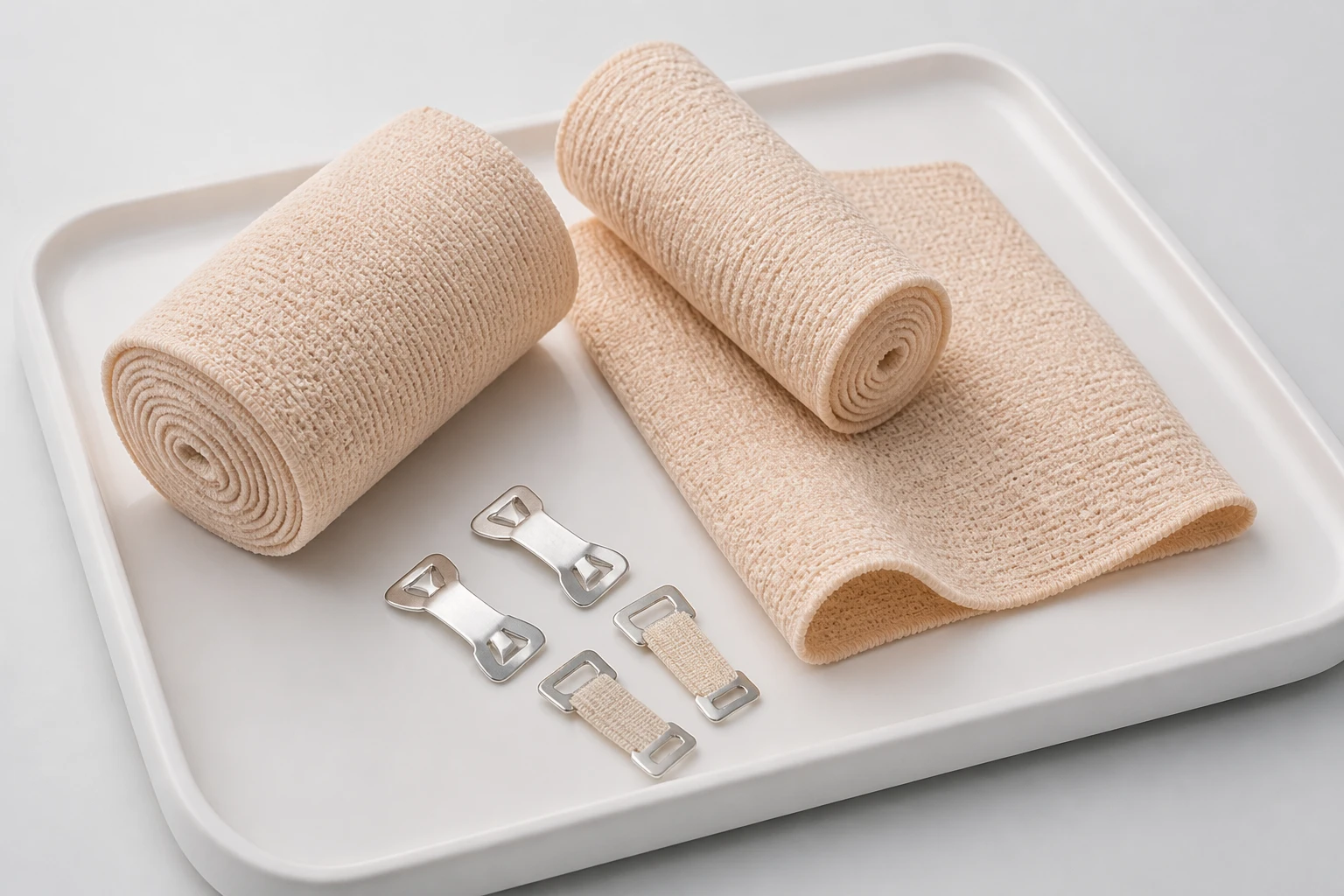
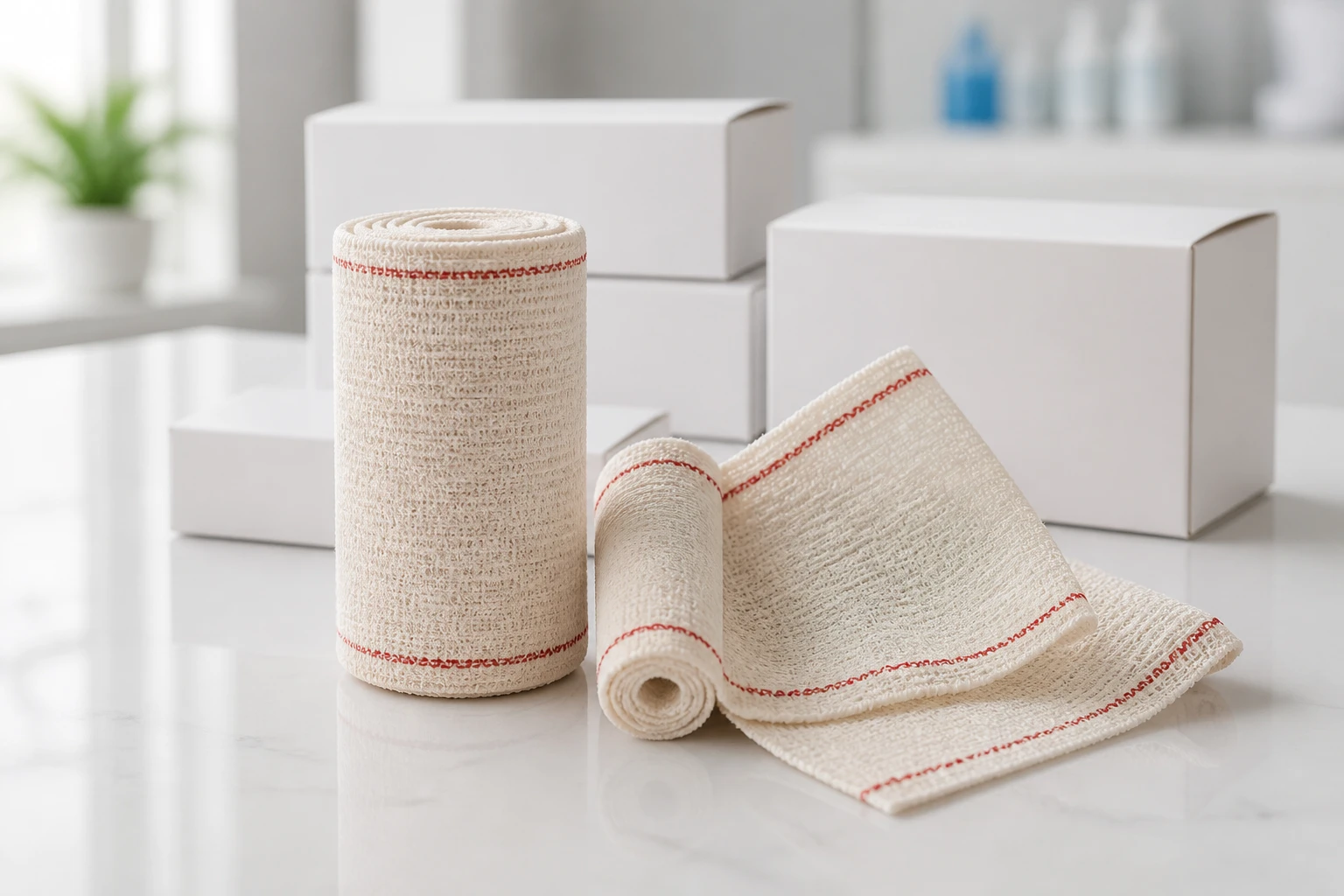
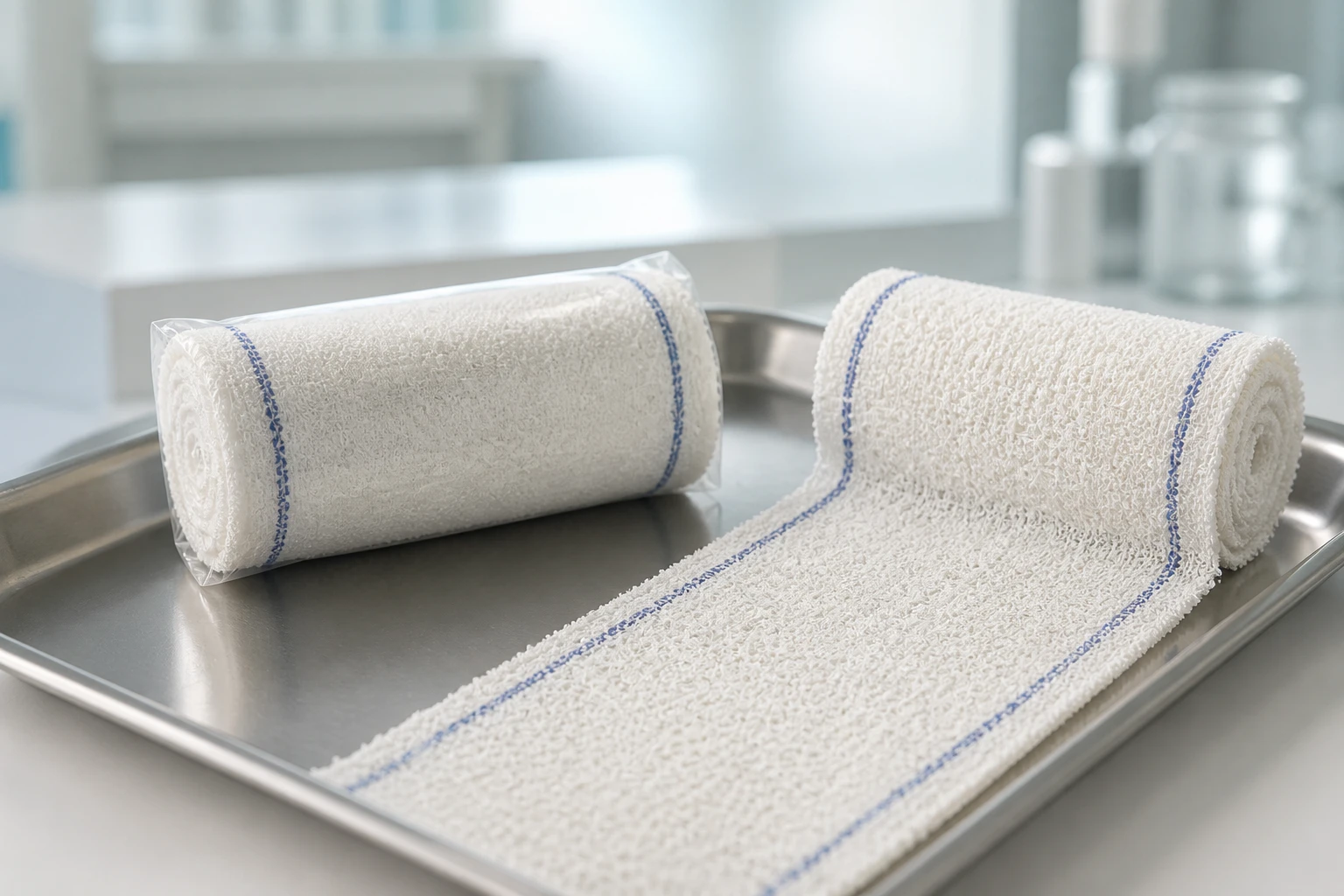
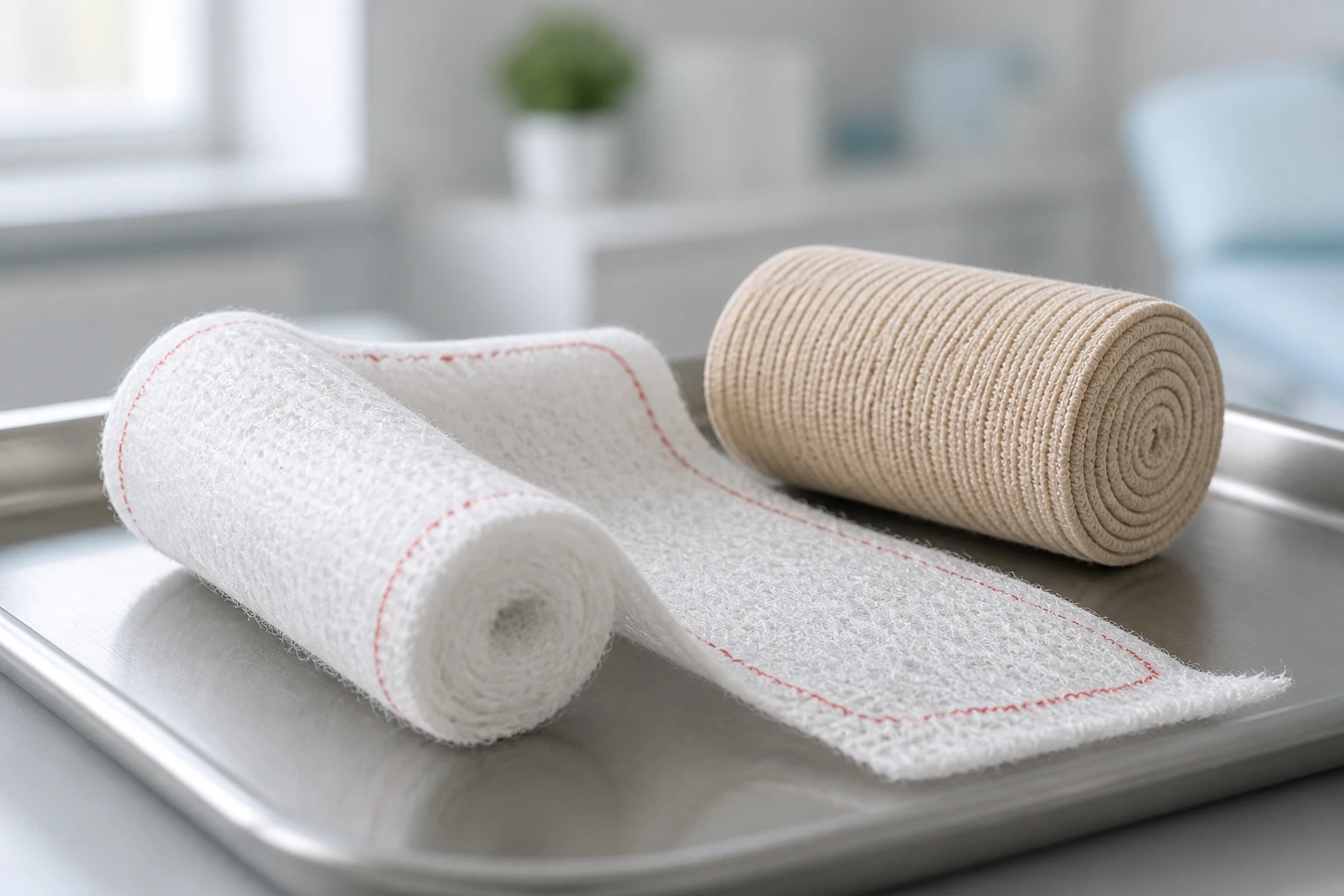
Last month, a European medical distributor watched a $140,000 container of compression dressings sit dead at the Port of Rotterdam for three weeks. Why? Their offshore supplier handed them an expired CE “Declaration of Conformity” issued under the old Medical Device Directive (MDD 93/42/EEC) instead of the updated Medical Device Regulation (EU) 2017/745. Demurrage fees piled up, their hospital supply contract was penalized, and customs threatened re-exportation.
Scenarios like this happen at Hamburg, Antwerp, Long Beach, and Newark every single week.
For years, buying elastic wraps, tubular support, and crepe rolls felt simple. Importers treated them as low-risk Class I commodities. You haggled on price per roll, checked sample stretch, checked the shipping terms, and moved cargo.
Those days are long gone.
With stricter enforcement from the European Competent Authorities and tighter surveillance from the U.S. FDA, sourcing MDR compliant medical bandages is no longer just a purchasing routine—it is a high-stakes regulatory hurdle. If your factory cuts corners on biocompatibility files, label symbols, or technical documentation, your business bears the legal and financial brunt.
At MediTapes, we have spent years guiding procurement teams, brand owners, and healthcare distributors through global regulatory audits. Here is a practical look at how to navigate FDA, CE, and EU MDR requirements for medical dressings, avoid border seizures, and vet manufacturing partners properly.
Why Class I Medical Bandages Face Unprecedented Customs Scrutiny
There is a stubborn misconception in procurement: “It’s just an elastic bandage; it doesn’t touch the bloodstream or run on batteries, so customs won’t care.”
Customs officers and market surveillance authorities care deeply.
Under global medical supply regulations, wound care items and support wraps fall under medical device classifications because they serve specific clinical purposes: compression therapy, strain immobilization, dressing retention, and edema management.
Medical Bandage Classification Overview:
- European Union (EU MDR): Class I (Non-sterile, without measuring function) under Rule 1
- United States (FDA): Class I Medical Device, 510(k) Exempt (21 CFR 880.5075 for Elastic Bandages)
- United Kingdom (UKCA): Class I General Medical Device under UK MDR 2002
When you import MDR compliant medical bandages, regulators are not just inspecting the physical woven cotton or spandex yarn. They are auditing the entire quality trail:
- Biocompatibility Risk: Does the fabric leach cytotoxic compounds, residual bleach, or heavy metals into broken or fragile skin?
- Skin Sensitization: Is the elastic binder made of natural rubber latex without clear warning labels?
- Traceability: If a hospital batch causes contact dermatitis, can authorities trace the roll back to the exact loom, yarn lot, and dye vat?
- Declared Performance Claims: If the packaging says “Medium Stretch – 100% Elongation,” does the product actually deliver that sustained pressure without cutting off arterial circulation?
Failing any of these checks turns a routine customs clearance into a bureaucratic nightmare.
EU MDR (2017/745) vs. US FDA: The Real-World Procurement Differences
Before signing a supply contract, you need to understand how the European Union and the United States diverge in how they regulate basic elastic dressings.
| Regulatory Parameter | European Union (EU MDR 2017/745) | United States (US FDA) |
|---|---|---|
| Device Classification | Class I (Annex VIII, Rule 1) | Class I (General Controls, 510(k) Exempt) |
| Primary Legislation | Regulation (EU) 2017/745 | 21 CFR Part 880.5075 |
| Registration Database | EUDAMED (Economic Operator & Device Modules) | FDA FURLS / CDRH Establishment Registration |
| Traceability System | Basic UDI-DI & UDI-PI on packaging | UDI (Unique Device Identifier) on label |
| Local Representative Required | Yes (European Authorised Representative – EC REP) | Yes (U.S. Agent for foreign facilities) |
| Technical File Depth | Annex II & III (GSPR, CER, PMS Plan, Biocompatibility) | Device Master Record (DMR), GMP compliance |
| Quality Standard | ISO 13485:2016 practically mandatory | 21 CFR Part 820 / QMSR alignment |
The EU MDR Reality: Class I Is No Longer “Self-Declaration Without Proof”
Under the old MDD framework, factories often signed a self-declaration, paid a nominal fee to a mailbox address in Europe to serve as their “EC REP,” slapped a CE mark on the box, and shipped.
Under EU MDR 2017/745, genuine MDR compliant medical bandages require a massive Technical Documentation dossier (Annex II and III). Even though Class I non-sterile devices do not require a Notified Body audit for routine CE marking, national Competent Authorities (like BfArM in Germany, ANSM in France, or AEMPS in Spain) regularly perform unannounced document reviews at border checkpoints.
If your supplier cannot produce a complete General Safety and Performance Requirements (GSPR) checklist, a Post-Market Surveillance (PMS) plan, and a Clinical Evaluation Report (CER) within 48 hours of an audit request, your shipment is impounded.
The US FDA Reality: Registration, Listing, and 21 CFR 880 Compliance
For the American market, an FDA registered elastic crepe bandage is generally classified under 21 CFR 880.5075 (Product Code: FQM).
While it is 510(k) exempt (meaning you do not need a lengthy premarket clearance process), you cannot simply ship bandages to a warehouse in New Jersey without proper compliance. The overseas manufacturer must hold an active Device Establishment Registration, maintain an active Device Listing, designate an official U.S. Agent, and adhere to 21 CFR Part 820 Quality System Regulations (QSR). Furthermore, product labeling must comply with FDA UDI rules and list device identifiers in the FDA GUDID Database.
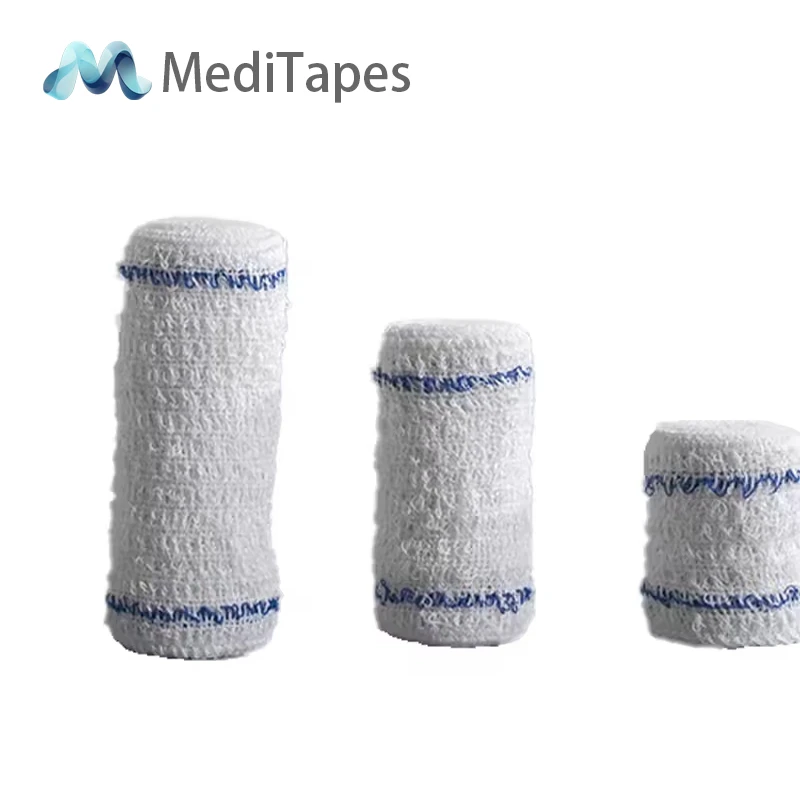
Skin-Color Elastic Crepe Bandage for Varicose Vein Treatment
Skin-Color Elastic Crepe Bandage for Varicose Veins | MediTapes Meta Description: Wholesale Skin-Color Elastic Crepe Bandages for Varicose Vein Treatment and Edema Control. Discreet, breathable compression rolls available in various widths. MediTapes offers factory-direct prices for vascular support supplies. Contact us for bulk orders.
4 Costly Paperwork Traps That Get Bandages Seized at Customs
We review dozens of compliance packets every quarter for B2B buyers who switched to low-bid suppliers only to run into brick walls at border control. These are the most common pitfalls:
1. Fake or Meaningless “CE Certificates” from Commercial Agencies
This is the number-one trap in international medical purchasing. A vendor provides a shiny, gold-embossed certificate issued by an entity like “ICR Check,” “Ente Certificazione,” or generic verification agencies stating “Certificate of Compliance for CE Mark.”
Expert Warning: Under EU MDR, Notified Bodies do not issue CE certificates for standard Class I non-sterile medical bandages. The legal manufacturer issues their own EU Declaration of Conformity (DoC) based on their Annex II Technical File. Third-party commercial compliance certificates have zero legal standing with European customs authorities.
If a vendor hands you a third-party certificate instead of a legitimate DoC backed by a registered Basic UDI-DI and a valid European Authorised Representative agreement, walk away. They do not have MDR compliant medical bandages.
2. Missing or Broken Biocompatibility Testing (ISO 10993)
Bandages sit against warm, sweating, compromised human skin for hours or days. You cannot claim compliance using raw fabric mill reports. Custom borders and health ministries require full testing under ISO 10993-1 Biological Evaluation.
For medical bandages, your technical dossier must include recent test reports from an accredited ISO 17025 laboratory covering:
- Cytotoxicity (ISO 10993-5): Verifying that extracts from the yarn, elastic filaments, or chemical finishing agents do not cause cell destruction.
- Skin Irritation (ISO 10993-23 / ISO 10993-10): Testing for localized dermal redness or edema.
- Skin Sensitization (ISO 10993-10): Ensuring no delayed-type contact hypersensitivity reactions occur.
If your overseas factory tweaked their raw yarn supplier to save $0.03 per spool and did not re-run ISO 10993 testing, your shipment is out of compliance.
3. Misleading Latex Declarations
Natural rubber latex provides excellent elasticity, but it is a massive liability if mislabeled. Type I latex allergies can provoke severe anaphylaxis.
Under both FDA and MDR rules:
- If the bandage contains natural rubber latex, it must carry an explicit warning symbol and text: “Caution: This Product Contains Natural Rubber Latex Which May Cause Allergic Reactions.”
- If marketed as “Latex-Free,” the manufacturer must validate that synthetic elastane/polyurethane is processed on dedicated lines free of cross-contamination.
Customs agencies in the UK and Germany frequently test random retail boxes from Class I imports. A single positive protein swab on an unlabelled “latex-free” batch will trigger an immediate recall.
4. Flawed Packaging Symbols and UDI Placement
EU MDR has zero tolerance for outdated MDD-era artwork. Common labeling mistakes that stop containers:
- Omitting the new “MD” (Medical Device) symbol required under ISO 15223-1:2021.
- Missing the manufacturer’s physical address alongside the European Authorised Representative (EC REP) box.
- Absence of a 2D DataMatrix code carrying the UDI-PI (Lot number, Expiration date, Production identifier).
- Missing Basic UDI-DI on the official Declaration of Conformity.
Essential Label Elements Checklist for EU MDR Medical Bandages:
- “MD” Symbol positioned next to the product trade name (ISO 15223-1:2021)
- Basic UDI-DI referenced in DoC & UDI-PI barcode printed on physical packaging
- Legal Manufacturer Name & physical manufacturing site address
- Authorized Representative (EC REP) Name & verified European address
- Batch / Lot Number & Expiry Date (YYYY-MM format)
- Storage Conditions (Temperature limits and keep-dry symbols)
- Clear Latex status declaration (Contains Latex vs Latex-Free statement)
Technical Specifications: The Math Behind Compliant Bandages
When auditing a CE mark bandage factory, inspecting paperwork is only half the battle. You need to inspect how they calculate physical performance parameters. Regulators require your technical files to substantiate all physical performance claims with measurable data.
Calculating Bandage Stretch and Recovery
For elastic crepe, high-compression, and PBT conforming bandages, mechanical performance is defined by key physical calculations.
1. Elastic Stretch Ratio (%)
This measures the percentage increase in length when pulled to full extension under standard tension:
Stretch Ratio (%) = [ (Extended Length – Relaxed Length) / Relaxed Length ] * 100
Example: A nominal 4.5-meter elastic crepe roll measures 1.8 meters in its relaxed state on the inspection table and pulls out to 4.5 meters under 10 N/cm load:
Stretch Ratio = [ (4.5 – 1.8) / 1.8 ] * 100 = (2.7 / 1.8) * 100 = 150%
If your tech sheet claims a 150% stretch, your factory must prove that every production lot maintains this ratio within a tight standard deviation (plus or minus 10%).
2. Elastic Recovery Rate (%)
Elastic recovery demonstrates that the bandage will not sag or lose therapeutic pressure after several hours of patient movement:
Recovery Rate (%) = [ (Extended Length – Final Relaxed Length) / (Extended Length – Initial Relaxed Length) ] * 100
Where Final Relaxed Length is measured 60 seconds after releasing the tension load. High-grade MDR compliant medical bandages typically achieve an Elastic Recovery Rate greater than 85%.
3. Fabric Grammage (GSM – Grams per Square Meter)
Grammage determines compression profile and durability:
GSM (g/m2) = Total Fabric Weight in Grams / [ Bandage Relaxed Width in Meters * Bandage Relaxed Length in Meters ]
Under clinical evaluation requirements, variance in GSM greater than 7% across a single production lot indicates uneven yarn feeding on the looms, which can lead to localized tourniquet effects or treatment failure.
Technical File Comparison: What Must Be in Your Dossier
To ensure your procurement pipeline remains completely insulated from regulatory bottlenecks, compare your supplier’s technical documentation package against the matrix below:
| Documentation Component | Requirement Details | European Union (MDR) | United States (FDA) |
|---|---|---|---|
| Declaration of Conformity | Signed by the legal entity stating compliance with Annex IV | Mandatory | Not Applicable |
| GSPR Checklist | Annex I General Safety and Performance Requirements | Mandatory | Not Applicable |
| Biocompatibility Report | Cytotoxicity, Sensitization, Irritation per ISO 10993 | Mandatory (Annex II) | Mandatory (Device Master File) |
| Clinical Evaluation Report | CER evaluating literature and clinical data (MEDDEV 2.7/1 rev 4 & MDCG) | Mandatory | Required for high-risk; summary for Class I |
| PMS & PMCF Plan | Post-Market Surveillance and Post-Market Clinical Follow-up protocols | Mandatory (Annex III) | Post-market complaint handling (Part 820) |
| Risk Management File | Risk assessment conducted under ISO 14971:2019 | Mandatory | Mandatory under QSR |
| UDI Registration | Assigned Basic UDI-DI / Device listing | EUDAMED | GUDID |
If your current vendor hesitates when you ask for their GSPR checklist or ISO 14971 Risk Management File, you do not have genuine MDR compliant medical bandages. You have high-risk cargo waiting to be flagged.
Case Study: How MediTapes Rescued a German Medical Supply Chain
In Q3 2024, a healthcare brand based in Bavaria reached out to our team at MediTapes. They had been sourcing unbleached elastic crepe bandages from an overseas OEM vendor for five years.
During an annual customs spot-check at the Port of Hamburg, German border officials requested:
- The GSPR compliance matrix mapping against EU MDR 2017/745.
- Direct biocompatibility data for the synthetic polyurethane threads used in the woven selvedge edge.
- Proof of PMS periodic reporting for Class I devices.
The vendor’s response? They sent a 2018 MDD certificate and an outdated ISO 9001 factory certificate. German customs immediately placed a customs hold on two full 40-foot high-cube containers. Demurrage was racking up at €280 per container per day, and their inventory reserves were within two weeks of complete depletion.
The Turnaround Strategy:
- Immediate Technical File Translation & Gap Closure: MediTapes provided our comprehensive, pre-audited MDR Annex II/III technical documentation package.
- Rapid Verification: We furnished complete ISO 10993-5 and ISO 10993-10 test reports from our accredited laboratories.
- Supply Chain Transition: Within 10 days, we diverted emergency compliant air-freight stock of our FDA registered elastic crepe bandage line to cover hospital contracts while their maritime shipment was sorted out.
- Permanent Migration: The distributor permanently transitioned their OEM production to MediTapes’ certified cleanroom weaving and packaging facilities.
The client resolved their regulatory flags, avoided long-term hospital delivery penalties, and reduced their customs audit resolution time from an average of 14 days down to zero for subsequent shipments.
The Auditor’s Checklist: How to Vet an OEM Bandage Factory
Before issuing a Purchase Order or transferring a deposit to an overseas manufacturer, have your quality assurance team verify these four critical checkpoints:
Step 1: Demand the Complete GSPR Mapping Table
A legitimate manufacturer producing MDR compliant medical bandages will have an active Annex I GSPR table ready. Ask to see how they fulfill GSPR 10 (Chemical, physical and biological properties) and GSPR 23 (Information supplied by the manufacturer).
Step 2: Validate the European Authorised Representative (EC REP)
Do not accept an EC REP address that traces back to a shared residential flat or an unknown agent. Ensure the EC REP is registered with an EU Competent Authority and has a formal mandate agreement with the factory.
Step 3: Check Weaving Line Contamination Protocols
Ask how the factory handles raw cotton vs. synthetic fibers. Are the high-speed shuttleless looms operating in an enclosed, dust-controlled environment? Is the water used in bleaching and scouring treated to prevent bioburden spikes? (Bioburden testing under ISO 11737-1 is critical even for non-sterile dressings to prevent mold growth during ocean transit).
Step 4: Verify FDA Establishment Identifier (FEI)
For U.S. shipments, enter the supplier’s FEI number or Registration Number directly into the public FDA CDRH database. Ensure their status is listed as “Active” and that the product code matches FQM (Bandage, Elastic) or DQY (Bandage, Flannel/Gauze).
Frequently Asked Questions (FAQ)
1. Are non-sterile Class I bandages required to have an EU MDR Notified Body certificate?
No. Standard non-sterile medical bandages (such as elastic crepe, cotton conforming, and tubular support wraps) fall under Class I non-sterile, non-measuring devices (Rule 1). They do not require an audit certificate from a Notified Body (like TÜV SÜD or BSI).
However, the legal manufacturer must compile a comprehensive Annex II & III Technical File, assign a Basic UDI-DI, draft an official EU Declaration of Conformity, register on EUDAMED, and appoint an authorized EC REP. European Competent Authorities can inspect this technical dossier at any time.
2. Can I use an existing ISO 9001 certificate to prove medical bandage compliance?
No. ISO 9001 is a generic industrial quality management standard and holds zero weight for medical device compliance. Both European and American authorities expect manufacturers to operate under ISO 13485:2016 (Medical devices — Quality management systems) or FDA 21 CFR Part 820 (currently transitioning to the QMSR). ISO 13485 ensures clinical traceability, risk management (ISO 14971), clean production environments, and structured CAPA processes.
3. What is the difference between Basic UDI-DI and UDI-DI on bandage packaging?
The Basic UDI-DI is the primary access key in the EUDAMED database for a specific device model family; it appears on your regulatory documents (Declaration of Conformity, Technical File) but does not appear on the product’s barcode label.
The UDI-DI (Device Identifier) is the specific GTIN/numeric code that identifies your exact product variant (e.g., 10 cm x 4.5 m roll), and it must be printed directly on the physical retail box and master carton as part of the machine-readable 2D DataMatrix or GS1-128 barcode alongside the UDI-PI (Production Identifier: lot number and expiry date).
4. What happens if our shipment of medical bandages is held by customs due to regulatory non-compliance?
If border authorities flag missing technical files or an invalid CE declaration, you will typically receive a formal Notice of Detention. You will have a limited window (usually 14 to 30 days) to submit acceptable documentation, prove device registration, or provide valid ISO 10993 test records. If your supplier cannot furnish these documents, the container will be ordered for destruction or mandatory re-exportation at your expense, accompanied by heavy port demurrage fees.
Secure Your Medical Supply Chain with Fully Compliant Bandages
Navigating international medical supply regulations does not have to be a guessing game that puts your business at risk.
At MediTapes, we eliminate the guesswork. We engineer and manufacture our extensive range of dressings—from our high-performance elastic crepe bandage lines to conforming and zinc-oxide cohesive wraps—under rigorous ISO 13485:2016 quality systems.
When you partner with us for OEM or private-label production, you receive:
- Fully Audited Technical Files: Turnkey Annex II & III dossiers ready for European Competent Authority inspection.
- Complete Biocompatibility Verification: Up-to-date ISO 10993-5 and ISO 10993-10 testing from accredited laboratories.
- FDA & MDR Compliant Labeling: Seamless GS1-compliant UDI barcoding, precise latex declarations, and up-to-date standard symbols.
- Stable Batch Consistency: Guaranteed stretch ratios, uniform GSM, and clean-edge weaving with zero fraying.
Stop risking customs holds and supplier audits. Contact our technical compliance team today at info@meditapes.com or visit our MediTapes Contact Page to request full technical data sheets, sample kits, and customized OEM quotations.