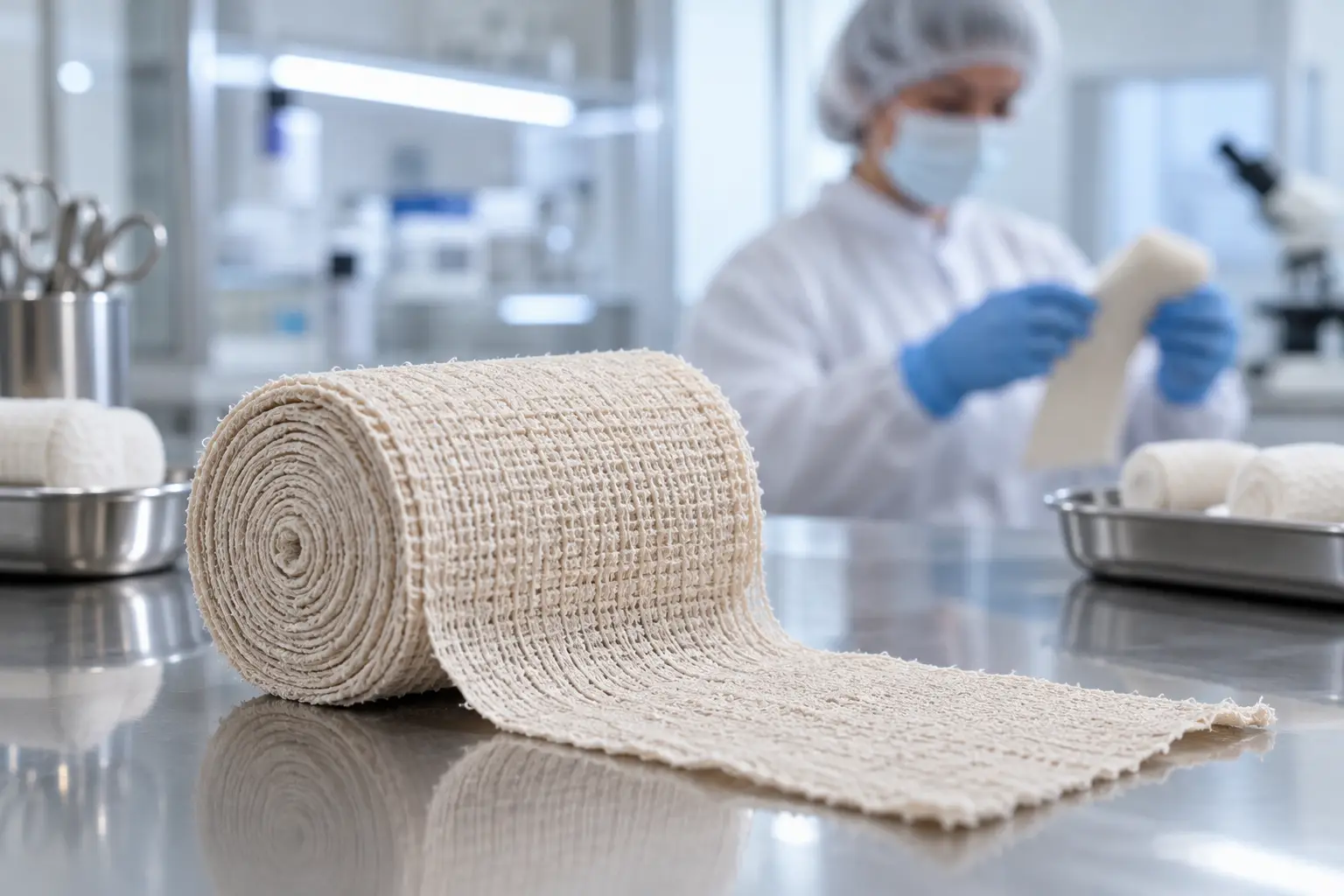
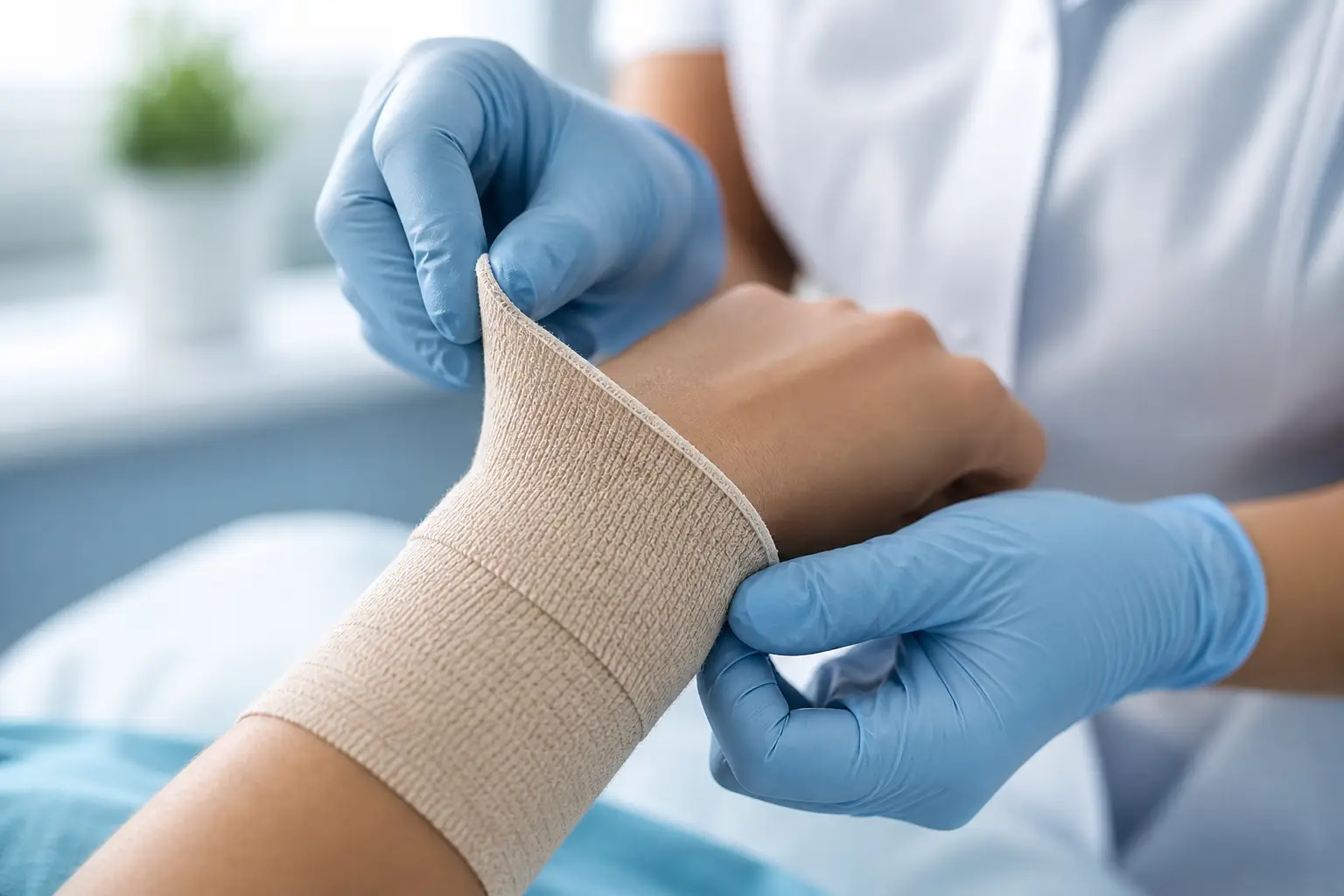
Medical textile procurement is facing a quiet revolution. If you have looked at recent NHS tenders in the UK or public health procurement contracts across France, Germany, and the Nordics, you already know the rules changed. Price and baseline technical specs used to be the whole ballgame. Now, environmental weighting accounts for 10% to 30% of aggregate tender scoring under new EU Green Public Procurement criteria.
For hospital distributors and medical supply importers, this shift is brutal if your supply chain is stuck in the past. Bleached virgin cotton grown with heavy pesticides and processed with chlorine chemistry does not pass modern audit standards. Moving to eco friendly medical cotton is no longer just a feel-good marketing campaign; it is a structural supply chain requirement for securing long-term hospital business.
Direct Industry Takeaway: Sustainable procurement is not about paying 50% more for “green” novelties. It is about locking in verified, ethically harvested fiber that satisfies both pharmacopeia purity benchmarks and Scope 3 hospital decarbonization mandates.
1. The Green Hospital Procurement Surge in Europe and North America
Procurement officers in western healthcare systems are under strict institutional orders to strip carbon out of their operational footprints. Programs like the NHS Greener NHS initiative have pushed decarbonization down to tier-1 and tier-2 consumable suppliers.
When a public hospital group evaluates tender packages for basic ward consumables, wound dressings, retention wraps, and operating room sponges, they look directly at upstream raw materials. Traditional cotton production has long carried an ugly environmental tab: high synthetic pesticide usage, excessive irrigation drawdowns, and toxic effluent discharge during chemical scouring.
Traditional Sourcing Risk:
High Agronomic Water + Chlorine Bleaching + Synthetic Interweaves = Heavy Tender Scoring PenaltiesEco-Friendly Sourcing Advantage:
Rainfed/GOTS Cotton + Enzymatic Scouring + 100% Biodegradable Fibers = Maximum ESG Tender Score
Switching to eco friendly medical cotton directly addresses Scope 3 supply chain emissions. Because cotton is a natural cellulose polymer, sustainably managed cultivation captures atmospheric carbon rather than emitting it. When distributors can document life-cycle tracing from certified farms to the finished roll, they give hospital procurement committees the exact sustainability data needed to award multi-year contracts.
2. Agronomics and Chemistry: Conventional vs. Eco Friendly Medical Cotton
Not all cotton labeled “natural” belongs in a wound contact layer or a high-performance compression wrap. The difference between conventional field cotton and true eco friendly medical cotton comes down to agricultural inputs and chemical post-processing.
| Parameter | Conventional Medical Cotton | Eco Friendly Medical Cotton | Operational Impact on Medical Consumables |
|---|---|---|---|
| Agricultural Inputs | Synthetic fertilizers, organophosphates | Non-GMO seeds, organic manure, bio-pest control | Eliminates residual pesticide allergens on sensitive skin |
| Water Consumption | 10,000–20,000 L/kg (mostly flood irrigation) | 2,000–5,000 L/kg (primarily rainfed / drip) | Lowers overall Life Cycle Assessment (LCA) water depletion index |
| Bleaching Agent | Chlorine gas / Sodium hypochlorite | Hydrogen peroxide (H2O2) or totally chlorine-free (TCF) | Zero dioxin formation; meets strict OEKO-TEX Standard 100 criteria |
| Scouring Process | Harsh sodium hydroxide bath | Enzymatic bio-scouring | Preserves fiber cuticle integrity while using 40% less thermal energy |
| End-of-Life Profile | Slow breakdown if blended with polyester | 100% biodegradable in industrial and soil compost | Meets municipal requirements for biodegradable medical consumables |
| Biocompatibility Risk | Potential trace chemical leachates | High purity, chemical-neutral fiber baseline | Verified under ISO 10993 biological evaluation |
When we process raw fiber into eco friendly medical cotton, the absence of aggressive chemical scouring protects the natural cellulose chain length. This gives the fiber higher intrinsic tensile stability, which becomes a huge engineering advantage when spinning yarn for medical textiles.
3. Engineering Performance: Eco Friendly Medical Cotton in Elastic Bandages
A common myth among procurement officers is that sustainable textiles lack the mechanical resilience of synthetic-reinforced blends. In reality, precision manufacturing turns eco friendly medical cotton into exceptionally durable, clinically reliable compression and retention tools.
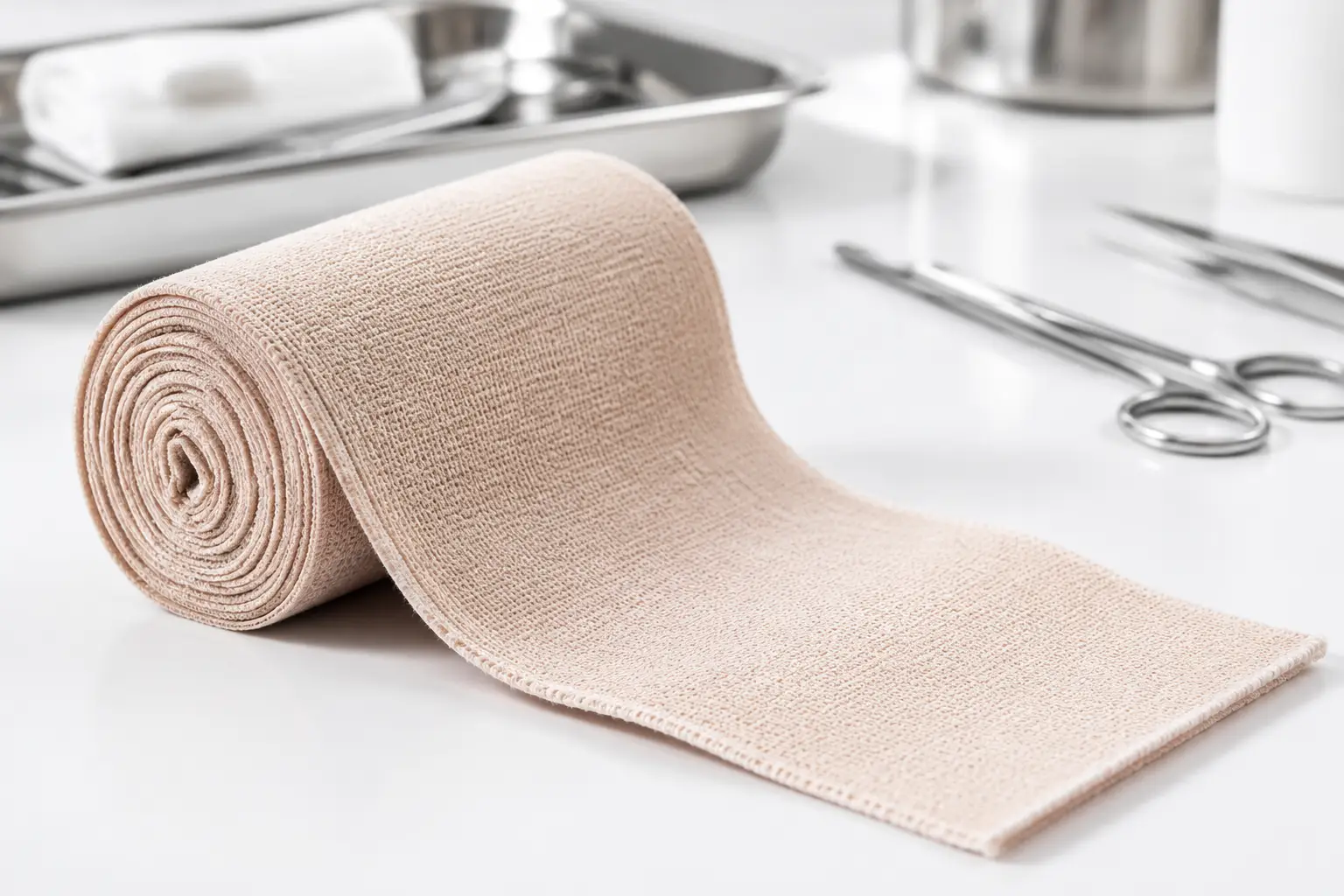
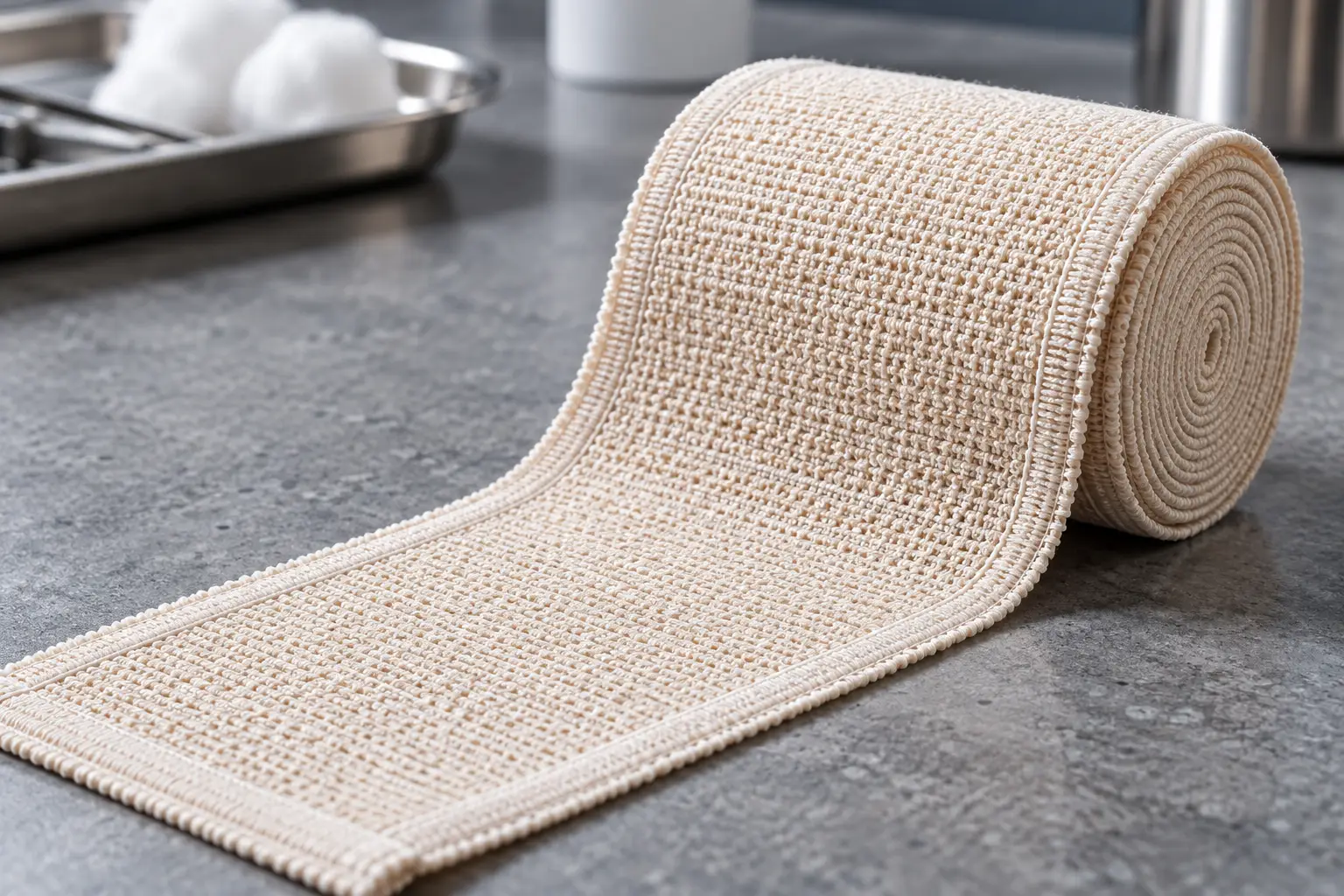
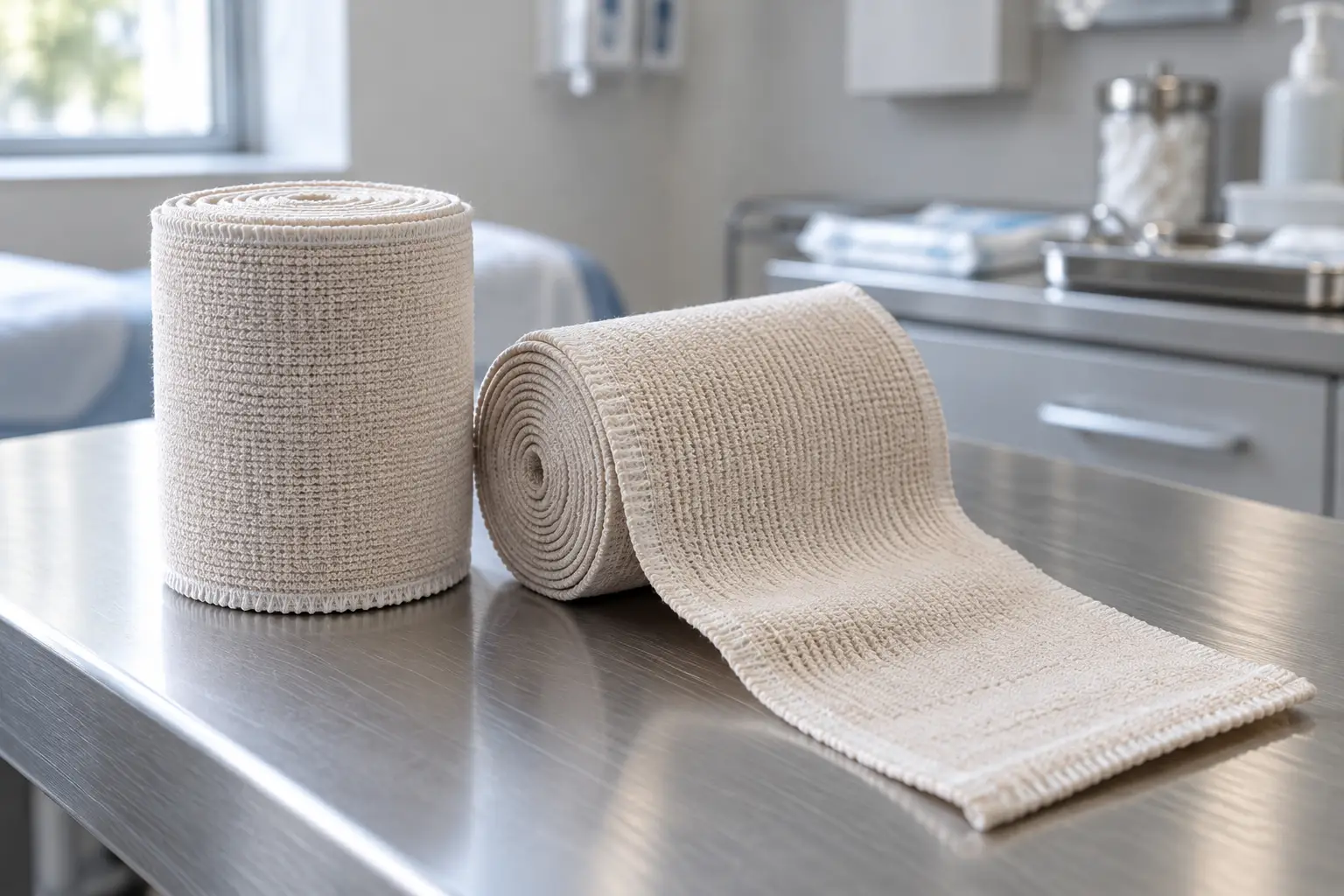
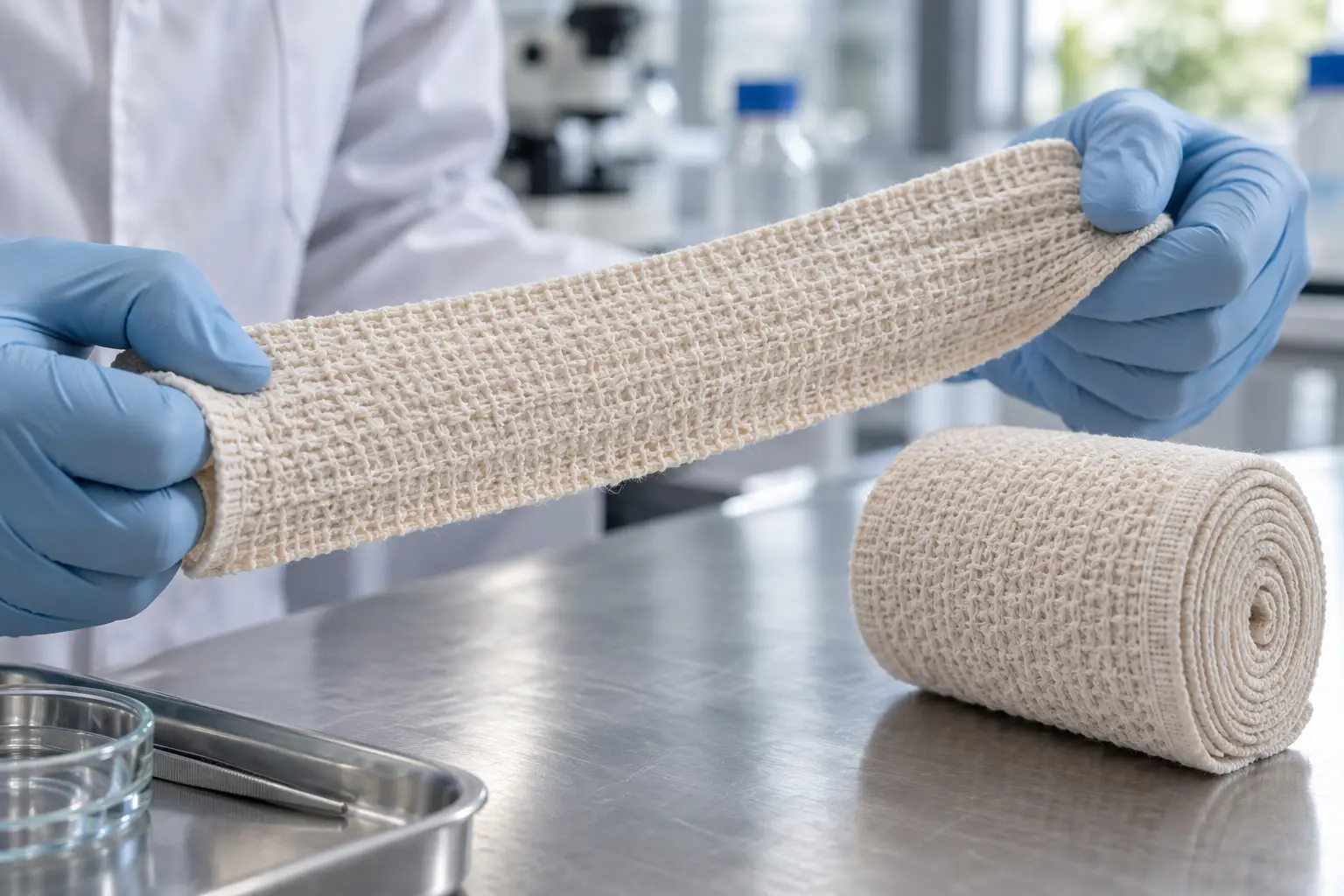
A prime example is the sustainable elastic crepe bandage. Bandages used for sprain management, post-operative venous support, and mild compression need balanced stretch and consistent regain without relying on non-recyclable synthetic elastics.
Engineering Note on Crepe Elasticity: The spring in a 100% cotton crepe bandage does not come from elastane or synthetic rubber. It comes from high-twist (crepe-twist) cotton yarns woven in an alternating S-twist and Z-twist matrix. When washed in warm water, the torsion balance causes the yarn to contract naturally, providing mechanical stretch and recovery.
The Physics of Yarn Strength in Sustainable Bandages
When spinning eco friendly medical cotton for high-load medical use, yarn tensile strength can be calculated using the standard fiber tenacity relationship:
- Tenacity Formula: Tenacity (cN/tex) = Breaking Force (cN) / Linear Density (tex)
For a high-durability bandage wrap, the twist multiplier (TM) must be carefully controlled during spinning:
- Twist Multiplier Formula: Twist per Inch (TPI) = Twist Multiplier (TM) * Square Root of Yarn Count (Ne)
For standard warp weaving, a TM of 3.8 to 4.2 provides standard soft strength. For a sustainable elastic crepe bandage, the yarn requires a crepe twist multiplier between 5.5 and 7.0. Because eco friendly medical cotton preserves long-staple cellulose fibers without acid-degradation during scouring, the raw yarn withstands this intense mechanical twist without breaking on high-speed shuttleless looms.
High-Twist Cotton Weave Structure:
- Warp Yarn (S-Twist) interlocked with Warp Yarn (Z-Twist) across a pure cotton weft
- Dynamic Result: 100% mechanical elasticity with zero synthetic rubber or polyurethane threads.
The outcome is an ultra-pure, washable, reusable medical wrap that delivers continuous dynamic compression while remaining fully biodegradable at its eventual end of life.
4. Regulatory Compliance and International Standards for Eco Cotton
If you are shipping containers of wound care or orthopedic wraps into the European Union or United States, self-declared green claims will get you into trouble. Regulators and hospital procurement boards demand certified paper trails.
When procuring eco friendly medical cotton, hospital distributors must check for three layers of regulatory and technical compliance:
1. Environmental and Social Chain of Custody
- GOTS (Global Organic Textile Standard): Verifies that the cotton contains a minimum of 70% to 95% certified organic fibers, processed without toxic dyestuffs or heavy metals, according to the Textile Exchange standards framework.
- OEKO-TEX Standard 100 (Class I / Class II): Verifies that raw materials, finished fabrics, and packaging are entirely free from harmful levels of over 100 regulated substances, including formaldehydes, heavy metals, and chlorinated phenols.
2. Pharmacopeia Purity Monographs
Medical cotton must meet physical and chemical criteria set out in the European Pharmacopoeia (Ph. Eur.) and United States Pharmacopeia (USP):
- Foreign fibers: Nil to trace.
- Absorbency time: Sinking time under 10 seconds for surgical grades.
- Water-soluble substances: Less than 0.50%.
- Ether-soluble substances: Less than 0.50%.
- Fluorescence: Examined under 365 nm UV light to guarantee no optical brighteners have been applied to hide dirt or processing defects.
3. Mechanical and Biocompatibility Testing
- Tensile and Elongation Testing: Evaluated under ASTM D5034 breaking strength methods to ensure the bandage does not snap during tight joint immobilization.
- ISO 10993-5 / ISO 10993-10: In vitro cytotoxicity, skin irritation, and delayed-type hypersensitivity testing ensuring complete safety on compromised skin.
By combining pharmacopeia grade purity with organic agricultural origin, eco friendly medical cotton passes both clinical bio-safety reviews and hospital environmental audits with zero friction.
5. Hospital Economics: Beyond the Unit Purchase Price
Procurement teams often push back against eco friendly medical cotton assuming unit costs will blow their budget. However, seasoned supply chain managers evaluate the Total Cost of Ownership (TCO) across the whole hospital waste stream.
Total Economic Picture:
Net Operating Cost = Unit Purchase Price per Roll + Incineration/Landfill Surcharge – Green Tender Rebate
Hospitals produce massive volumes of waste every day. Non-biodegradable synthetic wound dressings and polyester-blend bandages cannot break down naturally in standard waste streams. They end up in high-temperature clinical waste incinerators or municipal landfills, racking up heavy disposal fees per metric ton.
- Waste Disposal Surcharge Calculation: Surcharge per 10,000 Units = (Total Fabric Dry Mass in kg * Municipal Waste Processing Fee per kg) * Landfill Surcharge Index
When a facility switches to biodegradable medical consumables manufactured from genuine eco friendly medical cotton, unsoiled dressing waste and physical therapy wraps can enter commercial organic composting or low-emission waste-to-energy channels. When you factor in carbon tax credits, municipal waste reduction, and the points gained in green hospital procurement tenders, the small initial unit price premium on eco-cotton disappears.
6. How Distributors Win Tenders with Sustainable Elastic Bandages
Consider this practical case from an international medical distributor bidding on a major regional hospital network tender in northern Europe.
Tender Overview:
- Product: Standard retention and support crepe bandages (300,000 units/year)
- Requirement: Grade A elastic support, latex-free, low bioburden
- Evaluation: 70% Unit Price | 30% Sustainability & Carbon Reporting
The incumbent supplier bid standard synthetic-blend elastic bandages at €0.38 per unit with zero supply chain transparency. The challenging distributor partnered with MediTapes to submit our 100% natural sustainable elastic crepe bandage made with certified eco friendly medical cotton at €0.41 per unit.
| Evaluation Parameter | Incineration-Heavy Synthetic Wrap | MediTapes Sustainable Elastic Crepe Bandage |
|---|---|---|
| Unit Bid Price (70% Weight) | 68.5 / 70 points | 64.2 / 70 points |
| Scope 3 Decarbonization (15% Weight) | 4.0 / 15 points | 14.5 / 15 points |
| Material Traceability & ISO Compliance (15% Weight) | 8.0 / 15 points | 14.0 / 15 points |
| Total Evaluation Score | 80.5 / 100 | 92.7 / 100 (Winning Bid) |
The result? The distributor secured a three-year contract worth over €360,000 in recurring revenue. The hospital procurement panel explicitly cited the fully traceable eco friendly medical cotton and plastic-free packaging as the deciding factor.
7. Manufacturing Inside the MediTapes Facility
Engineering high-reliability medical textiles is an exacting craft. At MediTapes, we have spent years refining our spinning, weaving, and non-woven processing lines to optimize natural fiber behavior.
MediTapes Zero-Defect Production Sequence:
- Certified Organic Long-Staple Raw Cotton Sourcing
- Chlorine-Free Enzyme Bio-Scouring and Hydrogen Peroxide Bleach
- High-Precision S-Twist and Z-Twist Crepe Spooling
- Shuttleless Air-Jet Weaving with Continuous Sensor Tension Control
- Automated Ultrasonic Cleanroom Slitting and Plastic-Free Packaging
When dealing with eco friendly medical cotton, tension control during yarn spinning is everything. Natural cotton fibers have subtle batch-to-batch variations in staple length. MediTapes uses multi-point sensor feedback across our weaving looms to dynamically balance weft tension. This guarantees that every roll of our elastic crepe bandage range provides consistent stretch and predictable compression profiles throughout its clinical lifecycle.
Furthermore, we eliminate non-essential plastic packaging. Every roll is protected by biodegradable glassine paper or compostable PLA liners, giving your downstream hospital clients an end-to-end eco-friendly product ready for shelf display or clinical stockrooms.
8. Frequently Asked Questions (FAQ)
What makes eco friendly medical cotton different from standard pharmacy cotton?
Standard pharmacy cotton is often sourced from bulk agricultural pools that use heavy synthetic fertilizers, chemical defoliants, and chlorine-based bleach. Eco friendly medical cotton is cultivated through organic or low-impact agricultural practices, uses zero harsh chemical pesticides, and relies entirely on hydrogen peroxide or bio-enzymes for scouring and purification. This preserves natural fiber strength, minimizes skin allergen risks, and lowers total carbon footprint.
Does a sustainable elastic crepe bandage contain elastane or natural rubber latex?
No. A high-quality sustainable elastic crepe bandage uses 100% natural eco friendly medical cotton to generate its elasticity. Stretch and recovery are created through high-twist mechanical spinning (alternating S-twist and Z-twist yarns) and high-density weaving. This makes the bandage 100% latex-free, hypoallergenic, fully autoclavable, and completely biodegradable.
How does stocking biodegradable medical consumables help distributors in hospital bids?
Public hospitals across North America and Europe now incorporate strict green procurement scoring rubrics into their tender reviews. Consumables made from certified eco friendly medical cotton give distributors verified Scope 3 environmental data, helping them capture high ESG evaluation scores that frequently outweigh small unit-price differences against synthetic competitors.
Can eco friendly medical cotton bandages be sterilized without losing elasticity?
Yes. Bandages woven from eco friendly medical cotton can be sterilized using standard steam autoclaving (121°C to 134°C) or ethylene oxide (EO) without degrading fiber structure or compromising mechanical crepe elasticity. Because there are no synthetic polyurethanes or heat-sensitive rubber bands to melt, thermal stability is superior to synthetic alternatives.
Is the fiber absorption capacity of eco friendly medical cotton equal to conventional bleached cotton?
It is often better. Because enzymatic scouring removes natural cotton fats and pectins without damaging the internal lumen of the cellulose fiber, the capillary absorption rate of eco friendly medical cotton exceeds European and US Pharmacopoeia standards, consistently sinking in under 3 to 5 seconds during standard basket immersion tests.
9. Upgrade Your Medical Consumable Catalog Today
If you are bidding on upcoming regional hospital tenders, expanding your wound care distribution catalog, or looking to strip non-recyclable synthetics out of your private label medical supplies, you need a manufacturing partner who understands both clinical performance and international green compliance.
MediTapes manufactures medical textiles engineered to exceed international healthcare specifications while meeting today’s strictest environmental benchmarks.
- Looking for certified bulk supply? Explore our comprehensive elastic crepe bandage product category to inspect technical specifications, yarn counts, and packaging variants.
- Need technical documentation or custom OEM specifications? You can contact our technical engineering team directly or email us at info@meditapes.com for full material safety data sheets, ISO test summaries, and competitive container-load quotation packages.
Let’s build a greener, more resilient medical supply chain together. Contact MediTapes today and ensure your catalog leads the next generation of healthcare procurement.