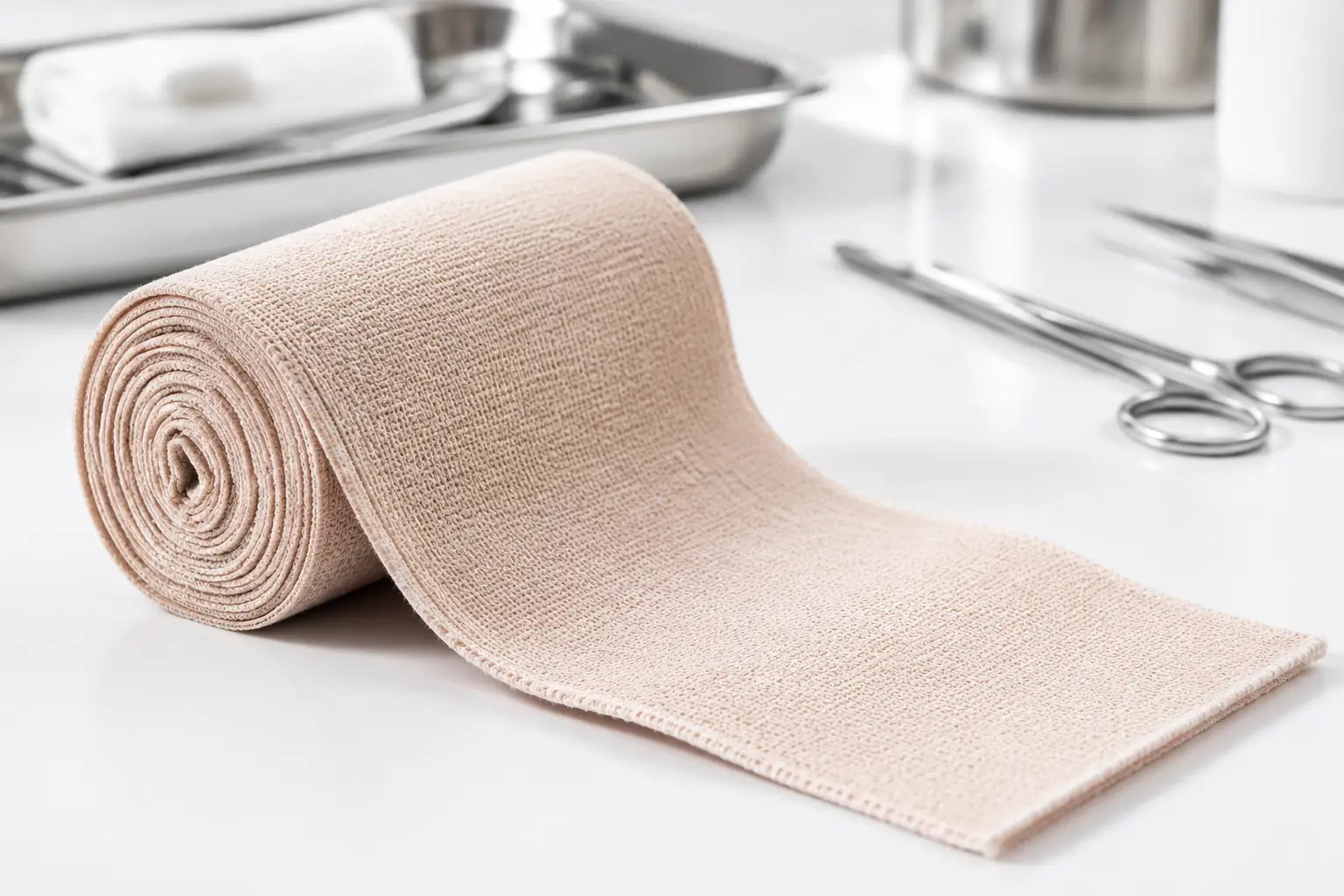
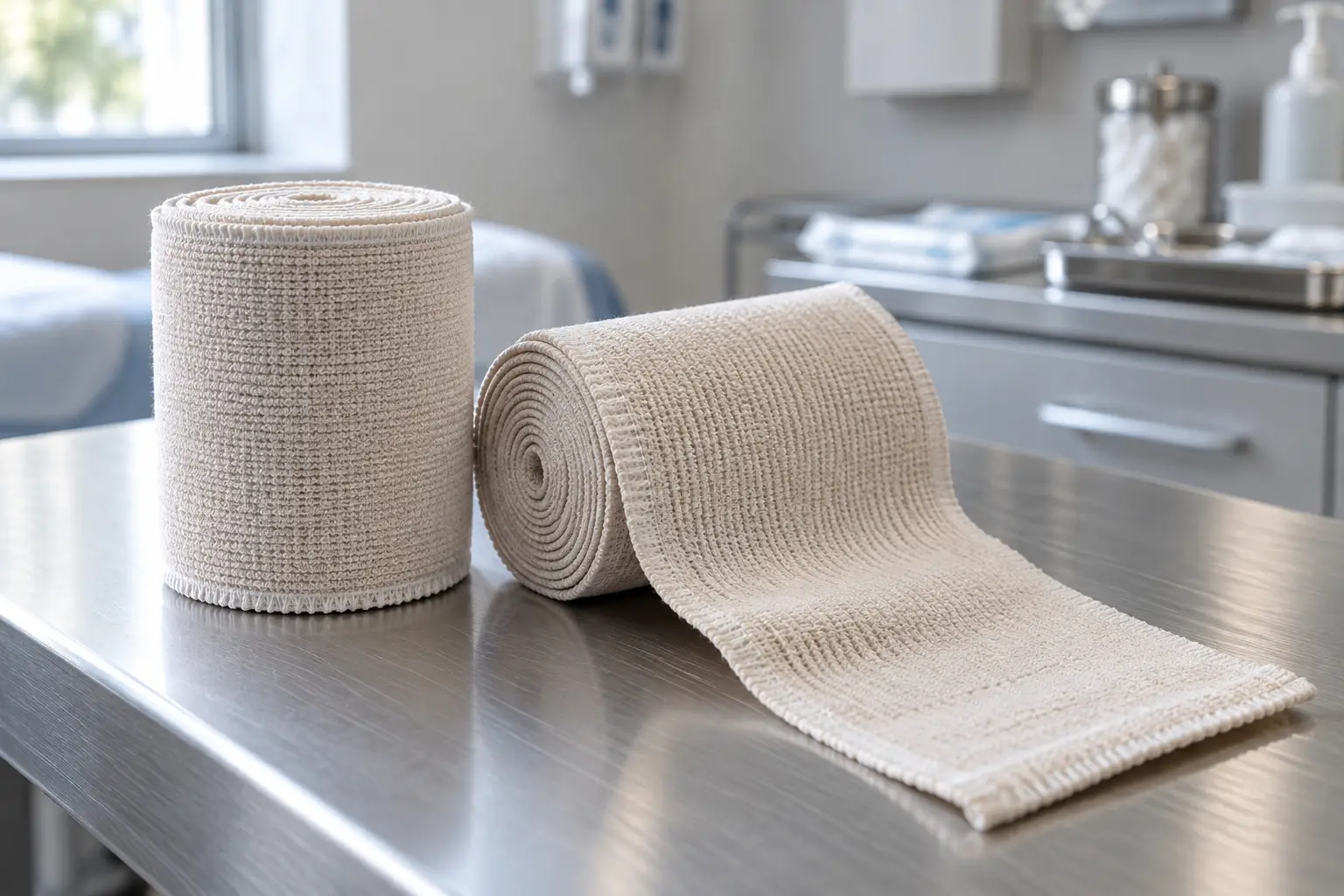
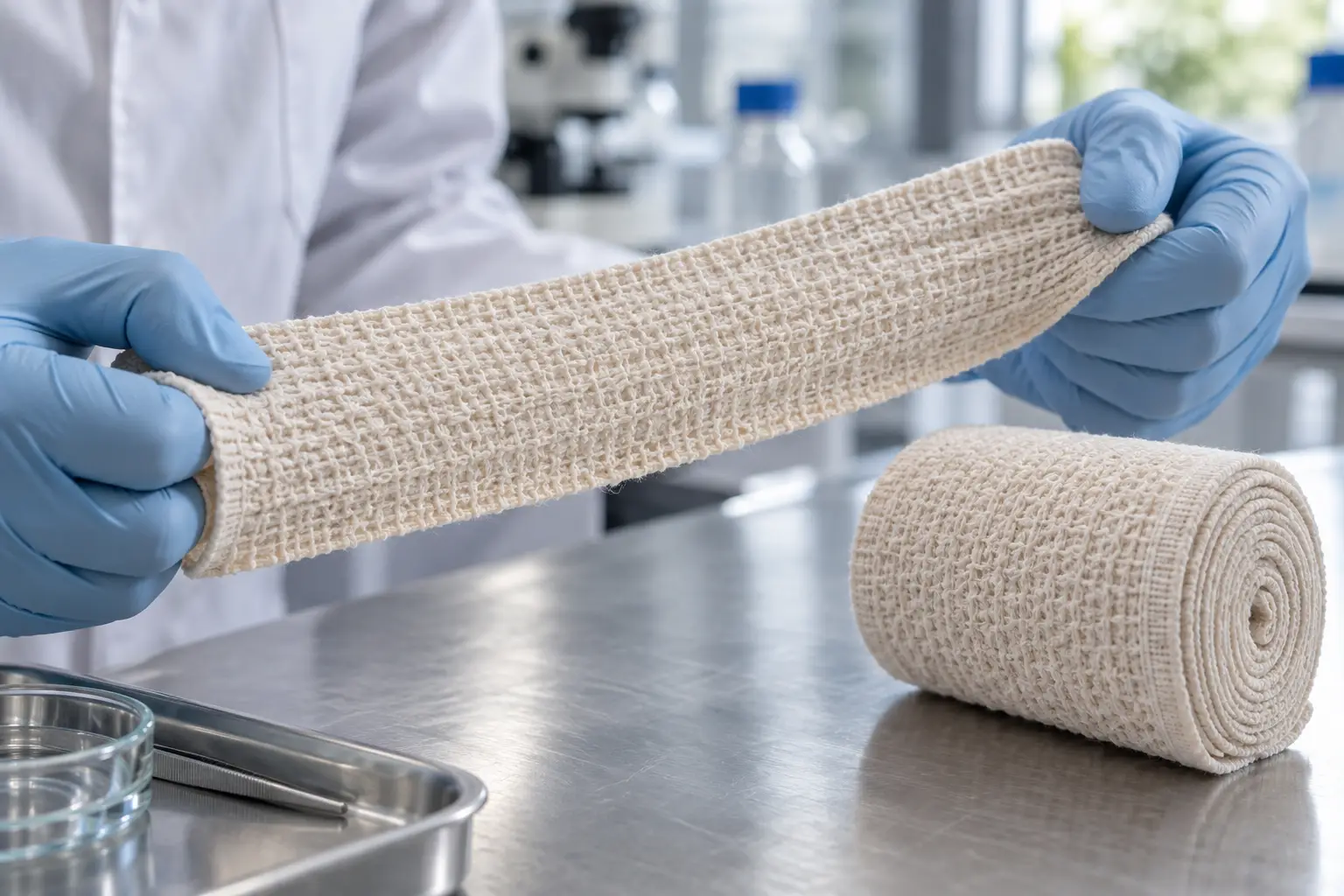
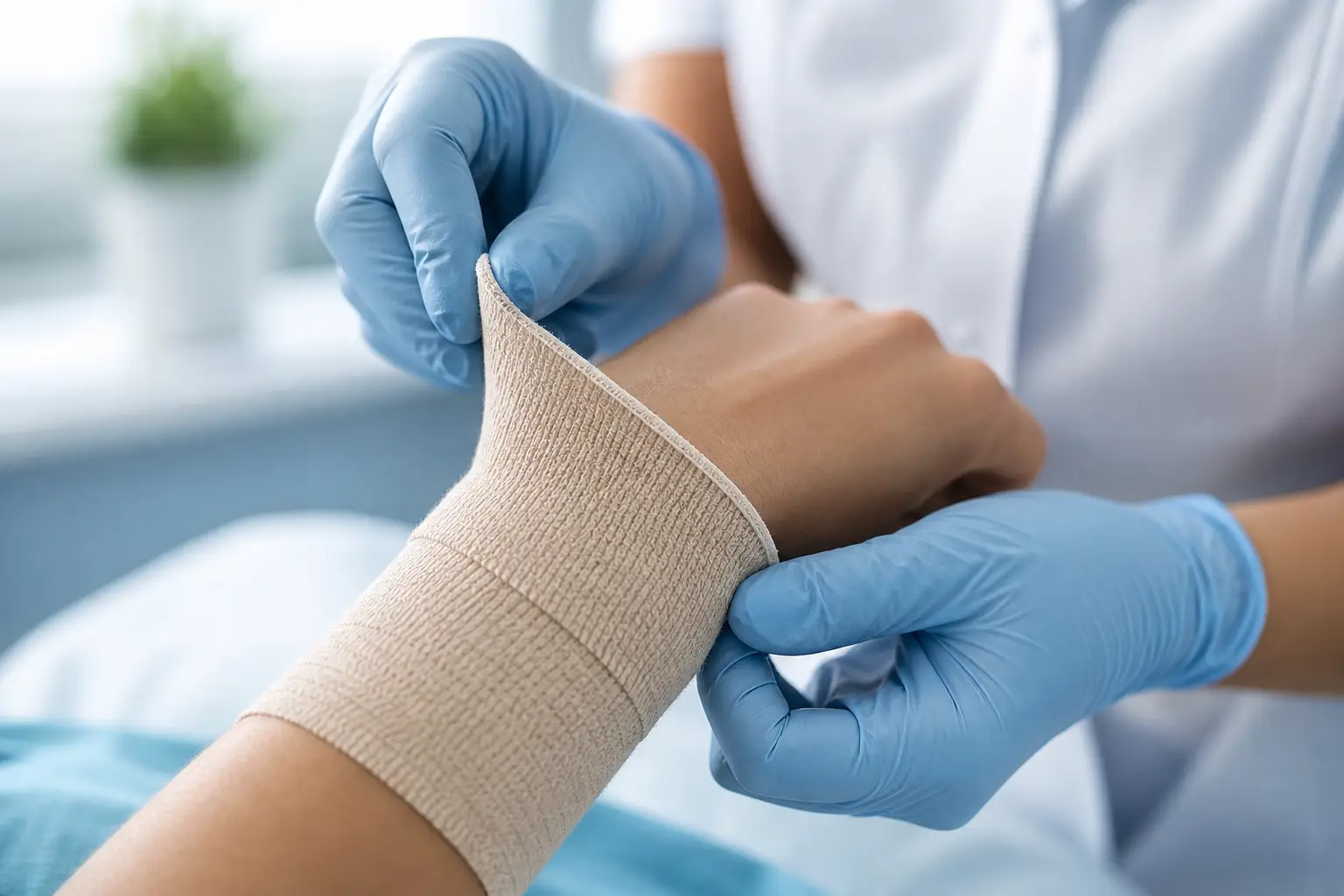
Walk into any busy sports rehabilitation clinic or orthopedic recovery ward around 8:00 AM, and you will see physical therapists and orthopedic nurses meticulously wrapping swollen knees, sprained ankles, and fresh post-op joints. The tension feels firm, the anatomical contour looks crisp, and the joint feels completely supported.
Now, visit that exact same ward at 1:00 PM.
More often than not, those wraps look completely different. They have sagged down toward the ankle bones, bunched up uncomfortably behind the knee crease, and turned slack. What began as a firm, targeted compression wrap has degraded into little more than a loose strip of cloth. The patient complains that the joint feels unsupported, edema begins creeping back into the periarticular tissue, and busy clinicians waste ten to fifteen minutes re-wrapping, adjusting, and taping down an exhausted roll of fabric.
This constant loss of pressure is not caused by poor wrapping technique. In almost every clinical audit we conduct, the failure comes straight down to fiber fatigue. When healthcare facilities buy standard commercial rolls instead of a properly engineered permanent high elastic compression bandage, they trap themselves in a daily cycle of tape waste, clinical downtime, and inconsistent pressure profiles.
Let’s break down what “permanent elasticity” actually means at the textile loom level, why conventional crepe weaves fail under dynamic joint movement, and how an industrial-grade permanent high elastic compression bandage delivers continuous, predictable recoil week in and week out.
The Root Problem: Why Conventional Crepe Wraps Lose Their Bite
Most hospital procurement teams assume all elastic wraps are roughly interchangeable. On paper, both cheap hospital-grade wraps and a high-performance permanent high elastic compression bandage claim “high stretch” and “elastic support.” Yet under clinical stress, their physical behavior diverges rapidly.
Conventional crepe bandages generate stretch through basic mechanical crimping. Manufacturers twist standard cotton yarns, weave them under light tension, and allow the fabric to shrink during wet finishing to create an accordion-like surface texture. When you pull the wrap, you are simply flattening out those woven crimps. The fabric elongates easily enough, but it possesses almost zero internal restorative energy.
Add real-world clinical stressors—patient ambulation, muscular expansion during physical therapy, limb perspiration, and autoclave sterilization cycles—and standard crepe yarn quickly enters what textile engineers call viscoelastic creep. The molecular polymer chains within untreated fibers slowly slip past one another under constant mechanical strain. Once those internal fibers shift, they do not snap back.
The clinical consequences for sports rehabilitation chains and orthopedic surgical centers are immediate:
- Sub-bandage pressure collapse: Once the wrap slackens by just 10% to 15%, therapeutic interface pressure drops below the threshold needed to control venous pooling and interstitial lymphatic swelling.
- Dynamic shear and skin irritation: A loose wrap slips against the epidermal layer during limb movement, creating friction blisters over bony prominences.
- Skyrocketing consumable budgets: Cheap bandages become single-use by default. After three or four stretches, therapists simply toss them in the biohazard bin, driving up annualized supply spending.
To solve this, sports rehabilitation chains and orthopedic surgical centers are turning toward a true tension retention elastic bandage built on the principles of permanent elasticity.
Defining “Permanent Elasticity” in Medical Textiles
The term sounds like an oxymoron. No material lasts forever. Yet in technical textile manufacturing, “permanent elasticity” represents a specific engineering benchmark: the ability of a woven fabric to undergo hundreds of high-elongation extension cycles and repeatedly return to its original resting length without structural hysteresis or tension decay.
Under German medical textile guidelines such as DIN 61632 (which governs long-stretch and high-elastic wraps) and international ASTM D4964 testing standards for elastic fabric tension and elongation, an authentic permanent high elastic compression bandage must achieve an elongation capacity exceeding 140% to 180%, while maintaining a recovery force retention rate above 85% even after repeated laundering and thermal stress.
| Bandage Performance Parameter | Standard Institutional Crepe Bandage | MediTapes Permanent High Elastic Compression Bandage |
|---|---|---|
| Primary Stretch Mechanism | Mechanical yarn crimp only | Covered elastomer core yarns paired with high-twist warp threads |
| Elongation Limit | ~70% to 90% maximum stretch | 160% to 190% sustained working stretch |
| Tension Half-Life | Drops by ~40% within 3 hours of wear | Retains over 85% baseline tension across 12+ hours |
| Elastic Recovery Mechanism | Weak mechanical recoil (rapid plastic deformation) | True thermo-mechanical elastomer snap-back |
When an orthopedic center deploys an authentic permanent high elastic compression bandage, therapists gain a predictable tool. Whether the wrap is applied at sunrise or after a grueling rehabilitation session, the elastomeric core continues pulling back against limb swelling, maintaining the exact pressure gradient set by the clinician.

Heavy Duty High Elastic Bandage Wholesale – CE/ISO Certified Supplier
Sourcing a reliable High Elastic Bandage manufacturer? Our heavy-duty bandages provide strong, consistent elasticity. As a CE/ISO certified supplier, we guarantee quality elastic compression bandages for bulk orders. Perfect for treating varicose veins and sports injuries. Custom sizes available.
Inside the Weave: How Heavy-Duty Construction Generates Lasting Tension
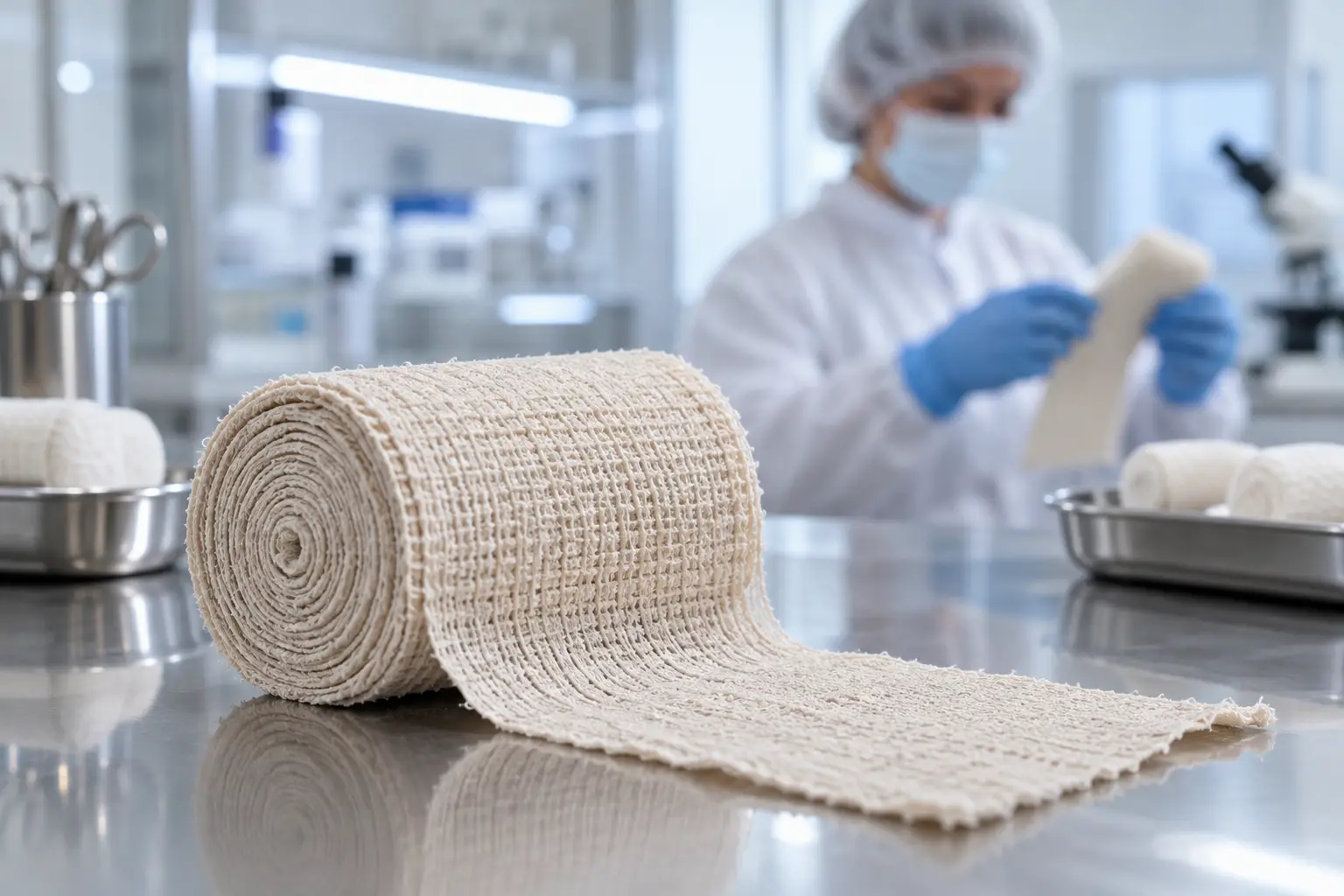
How does an industrial medical textile mill engineer this durability? It comes down to yarn architecture, raw material selection, and shuttleless loom setup. As a specialized reusable heavy duty bandage manufacturer, MediTapes approaches tension retention not as an afterthought, but as an integrated mechanical system.
1. Dual-Core Covered Elastic Yarns
Standard cheap wraps frequently expose raw, bare rubber threads or low-grade polyurethane filaments directly within the weave. When these bare filaments contact body sweat, skin oils, or commercial laundry detergents, the rubber oxidizes, hardens, and cracks.
In contrast, our permanent high elastic compression bandage utilizes core-spun, double-covered elastomeric yarns. The active core—an industrial-grade elastodiene or high-grade polyurethane core filament—is wrapped twice in opposing helical directions by protective cotton and high-tenacity polyamide fibers. This protective helical sheath acts as a physical barrier against friction, skin sebum, and chemical oxidation, ensuring the internal elastomeric engine retains its molecular integrity over months of use.
2. High-Twist Warp Geometry (Alternating S and Z Twists)
True crepe texture is not stamped into the fabric with embossed heat rollers; it is engineered through torsional physics.
During the warping stage, heavy-duty yarns are spun with an exceptionally high number of twists per meter (TPM). We deliberately alternate beams of S-twist (left-handed) and Z-twist (right-handed) yarns across the loom width. When the woven fabric undergoes tension-free thermal wet finishing, these opposing torsional forces fight against each other, snapping the weave into a micro-puckered, heavy-duty structure.
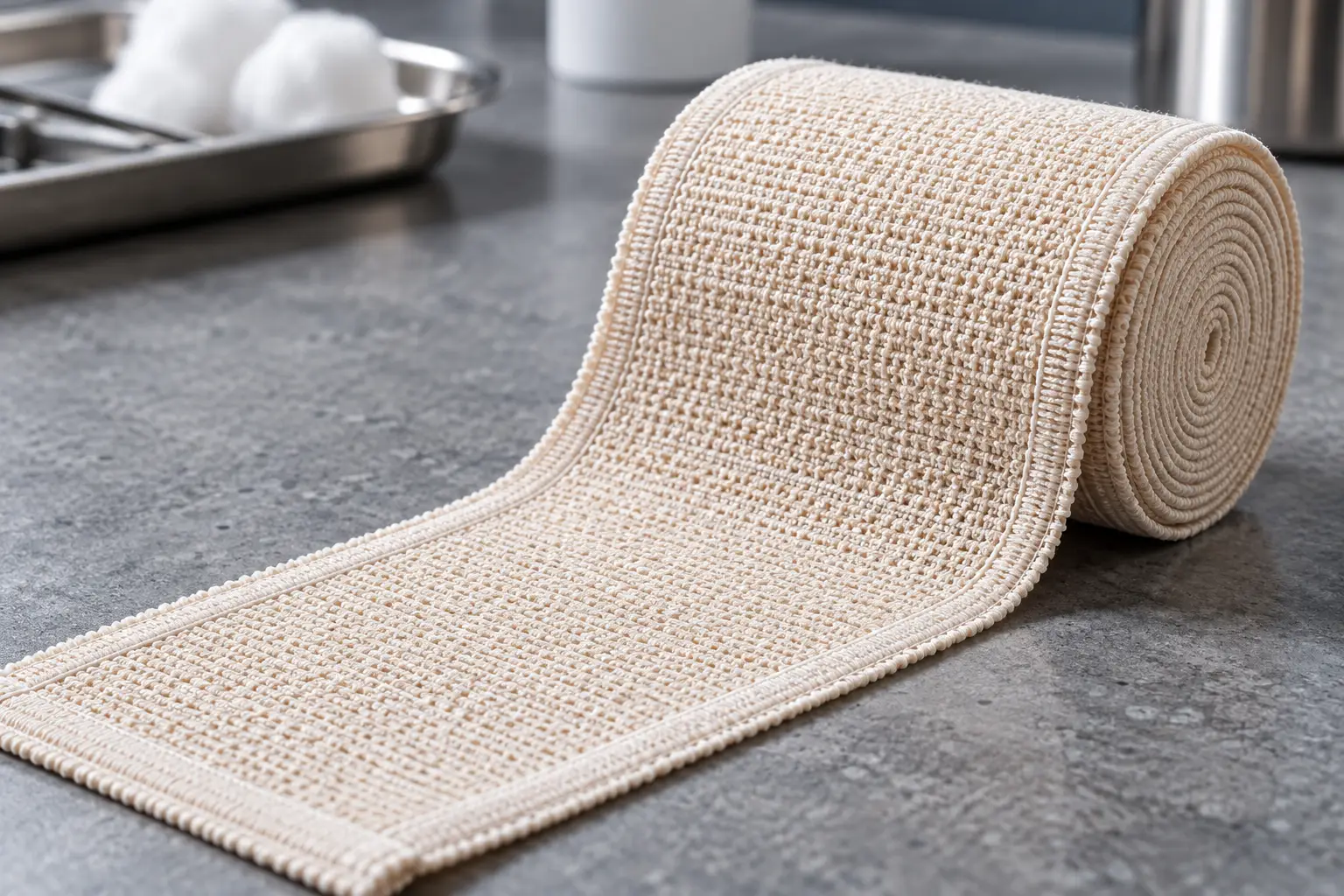
This gives the permanent high elastic compression bandage its characteristic pebbled grip. When wrapped around a muscular limb, the micro-crepe ridges interlock against adjacent layers, preventing the bandage turns from sliding sideways during violent athletic drills or deep joint flexion.
3. Reinforced Non-Fraying Selvedges
Nothing ruins an expensive wrap faster than edge curling and unraveling warp threads. Lower-tier manufacturers cut massive master rolls into strips with heated knives, leaving melted, rough synthetic edges that scratch patients and fray after two hospital laundry cycles. A proper permanent high elastic compression bandage features woven, reinforced selvedges on dedicated narrow-fabric looms. The edges flex naturally around muscular contours without digging into soft tissue or curling outward.
The Physics of Tension Decay: Sub-Bandage Pressure and Laplace’s Law
Medical compression is not guesswork; it is applied physics. Clinicians rely on Laplace’s Law to calculate the sub-bandage pressure delivered to an injured limb:
Sub-Bandage Pressure (mmHg) = [Tension (N) * Number of Layers * 4630] / [Limb Circumference (cm) * Bandage Width (cm)]
Notice the most volatile variable in that equation: Tension (N).
Limb circumference remains relatively constant over a single hour. Bandage width is fixed. The number of layers is locked during application. Therefore, if your elastic material relaxes and loses tension under dynamic stress, your sub-bandage pressure collapses simultaneously. Detailed clinical findings on sub-bandage pressure dynamics verify that without stable tension, therapeutic compression ceases to function.
Dynamic Flexion Testing: Tension Retention Decay Over 12 Hours
- Baseline (Hour 0): Both wraps calibrated to a target starting tension of 10.0 N on an automated anatomical cylinder.
- Hour 2: Standard crepe drops to 6.2 N (-38%); the permanent high elastic compression bandage maintains 9.8 N (-2%).
- Hour 4: Standard crepe plunges to 4.1 N (-59%); the permanent high elastic compression bandage maintains 9.5 N (-5%).
- Hour 8: Standard crepe bottoms out at 2.4 N (-76%, clinical failure); the permanent high elastic compression bandage holds steady at 9.1 N (-9%).
- Hour 12: Standard crepe is completely flaccid at 1.8 N (-82%); the permanent high elastic compression bandage holds 8.8 N (retaining 88% of baseline therapeutic tension).
In sports physical therapy, clinical protocols often target resting pressures between 20 to 30 mmHg for acute sprains to contain intra-articular effusion without compromising arterial inflow. When an athletic trainer uses a run-of-the-mill bandage, dynamic ankle dorsiflexion stretches the wrap repeatedly. Within ninety minutes, tension drops by 35% to 50%, sending sub-bandage pressure well below therapeutic ranges.
Using a validated tension retention elastic bandage guarantees that the Tension factor in Laplace’s equation stays stable across the patient’s entire waking day. The patient receives consistent therapeutic benefit without requiring three separate rewound applications per shift. For clinics seeking reliable solutions across diverse skin types, choosing a specialized latex-free high elastic bandage delivers this exact tension profile without triggering contact dermatitis in sensitive patients.
Technical Benchmarking: Standard Crepe vs. Permanent High Elastic Compression Bandage
To give procurement managers and clinical directors a transparent picture, here is an empirical laboratory breakdown comparing standard institutional crepe against our heavy-duty permanent high elastic compression bandage:
| Clinical & Mechanical Metric | Standard Institutional Crepe | MediTapes Permanent High Elastic Compression Bandage | Practical Value for Clinics |
|---|---|---|---|
| Fiber Architecture | 100% cotton with low-twist mechanical crimp | High-twist cotton warp + double-covered elastomeric core | MediTapes wrap preserves active elastic recoil under continuous joint motion. |
| Maximum Working Elongation | 60% – 85% | 160% – 185% | Greater extension range accommodates severe post-trauma swelling shifts. |
| Tension Decay (4 Hours Active) | 42% – 58% tension loss | Less than 12% tension loss | Eliminates mid-day re-wrapping sessions in busy orthopedic wards. |
| Washing & Reusability Lifespan | Degrades after 2–4 wash cycles | Withstands 40+ wash & autoclave cycles | Slashes replacement expenditures for high-volume facilities. |
| Interlayer Slip Resistance | Low; turns slide during movement | High; micro-crepe textured warp locks layers | Stays securely positioned on tapered anatomical sites (knees, ankles, elbows). |
| Material Classification | Short-stretch, mechanical crimp | Long-stretch, high-recoil permanent elastic | Compliant with international orthopedic support and compression standards. |
When healthcare systems order durable crepe bandage bulk consignments, looking solely at initial roll cost is misleading. A wrap that costs $0.65 but survives two applications costs significantly more per patient day than an industrial-grade permanent high elastic compression bandage that costs $1.80 and easily withstands forty clinic visits.

Elastic Bandage with Metal Clips – High Stretch First Aid Support
Secure fit guaranteed with our High Elastic Bandage featuring durable metal clips. This high-stretch elastic bandage is easy to apply for immediate compression. A staple for emergency response teams. Bulk buy our high elastic compression bandages for cost-effective inventory restocking.
Field Notes from the Clinic Floor: How an Orthopedic Network Fixed Bandage Waste
Consider the operational case of a twelve-location sports medicine and physical therapy group operating across the Pacific Northwest.
The organization was consuming roughly 3,500 disposable crepe bandages per month across its post-op knee and acute rehabilitation departments. Physical therapists reported consistent frustration: wraps applied after morning joint mobilization loosened before patients finished their home exercises, leading to frequent patient complaints about unstable feeling joints and slipping ice packs.
From a finance perspective, the company was writing off over $26,000 annually in discarded bandages. Their local distributor kept supplying low-cost crimped rolls, arguing that bandages are fundamentally disposable consumables.
The orthopedic network’s clinical director challenged that approach and piloted the MediTapes heavy-duty high elastic bandage alongside our dedicated permanent high elastic compression bandage line.
12-Month Clinic Network Procurement Audit Results:
- Monthly Bandage Consumption: Dropped from 3,500 single-use units to 650 reusable units.
- Mid-Session Slippage Complaints: Reduced by 88% across all twelve regional rehabilitation facilities.
- Autoclave Reusability: Exceeded 35 commercial laundry and sterilization cycles per roll without loss of working tension.
- Net Supply Cost Savings: Documented $14,200 in net operational savings during Year 1, fully accounting for linen washing overhead.
The physical therapists noticed the difference immediately. The structured, heavy-duty weave allowed them to secure bulky post-surgical dressings and ice sleeves with consistent tension that stayed anchored through 90-minute exercise sessions. The patient received sustained, graduated compression, and the clinic stopped filling waste bins with stretched-out fabric.
Clinical Versatility: Matching the Right Wrap to the Pathology
Different medical situations call for distinct fastener configurations and physical dimensions. An experienced reusable heavy duty bandage manufacturer designs product lines to address specific orthopedic scenarios:
1. High-Mobility Joint Support and Edema Control
For active sports rehabilitation involving ankles, knees, and shoulders, our core permanent high elastic compression bandage remains the clinical benchmark. The long-stretch characteristics deliver high dynamic working pressure during muscle contraction while yielding comfortably during resting phases, making it an exceptional permanent elasticity medical wrap for ambulatory rehabilitation.
2. Clinical Immobilization with Secure Fastening
In fast-paced orthopedic fracture clinics, clinicians need reliable physical retention that will not pop off during sleep. Choosing an elastic bandage with metal clips gives practitioners rapid, dependable mechanical locking over thick primary cast paddings, ensuring the permanent high elastic compression bandage holds its exact baseline tension across the limb contour.
3. General Post-Surgical Dressing Retention
When securing primary absorbent pads over expansive surgical sites, therapists often deploy a balanced standard high elastic bandage. It provides consistent tension without generating excessive resting pressures, protecting delicate microvascular anastomoses and fragile skin grafts from ischemic injury while still maintaining active wrap recoil.
Care, Laundering, and Autoclaving: Protecting Elastic Lifespan
Even the most robust permanent high elastic compression bandage can be ruined if the hospital laundry treats it like basic bed linen. To preserve the molecular structure of double-covered elastomeric yarns over dozens of patient applications, procurement and nursing teams should follow strict care protocols:
- Water Temperature Control: Wash in warm water not exceeding 40°C (104°F). Extreme water temperatures accelerate the chemical aging of internal core filaments over time.
- Detergent Selection: Avoid heavy chlorine bleaches, industrial enzymatic spotters, and fabric softeners. Softeners coat the high-twist crepe fibers, lubricating the yarns and destroying the micro-crepe interlocking grip that prevents slippage.
- Drying Protocol: Never hang a saturated permanent high elastic compression bandage vertically on a drying line. The weight of pooled water stretches out the longitudinal warp threads while wet, causing unnecessary structural deformation. Always lay the bandages flat on a horizontal drying rack, or tumble dry on an ultra-low, delicate cycle.
- Autoclave Sterilization: If clinical protocols require autoclaving between surgical patients, steam sterilize at 121°C (250°F) using short exposure cycles. Our heat-stabilized polyamide-cotton yarn sheaths shield the inner elastic core against thermal degradation during standard hospital cycles.
Why Leading Healthcare Providers Partner with MediTapes
Sourcing medical textiles at scale requires more than finding a vendor with low roll prices. It demands manufacturing consistency, verified regulatory compliance, and a partner that understands the mechanical nuances of wound care and post-operative orthopedics.
At MediTapes, we control the entire manufacturing process—from selecting high-twist combed cotton yarns and wrapping elastomeric cores, to high-density shuttleless weaving and tension-controlled finishing.
- Global Quality Standards: Every roll we manufacture adheres strictly to ISO 13485 medical device quality standards, ensuring clean, bio-compatible, defect-free rolls batch after batch.
- Compression Integrity: Our high-elastic products meet internationally recognized criteria for compression therapy, aligning with evidence-based protocols established by bodies like the European Wound Management Association guidelines.
- Custom OEM & Wholesale Capabilities: Whether you are an orthopedic hospital chain looking for custom-branded packaging, specific width requirements (from 5 cm up to 20 cm), or seeking durable crepe bandage bulk container programs, we build solutions to match your supply chain footprint.
- Complete Product Portfolio: From our premier permanent high elastic compression bandage to self-securing wraps and hypo-allergenic synthetic blends, we keep clinical operations running smoothly.

Latex-Free High Elastic Bandage – Skin-Friendly Wound Dressing Wrap
Minimize allergic reactions with our Latex-Free High Elastic Bandage. This hypoallergenic elastic bandage is safe for sensitive skin while providing firm compression. Essential for First Aid Kits and emergency care. Secure your supply of skin-friendly high elastic bandages today. Soft and secure.
Frequently Asked Questions (FAQ)
What is the primary difference between a short-stretch bandage and a permanent high elastic compression bandage?
The main difference lies in elongation capacity and resting pressure. Short-stretch bandages extend only 30% to 70% and provide high working pressure (resistance during muscle movement) with low resting pressure, making them standard for chronic lymphedema and venous ulcers. A permanent high elastic compression bandage extends over 140% to 180%, maintaining a continuous, elastic recoil that provides sustained resting and working tension. This makes it ideal for sports injuries, joint stabilization, and surgical dressing retention where the bandage must dynamically expand and contract with the limb.
How does a permanent high elastic compression bandage prevent dynamic slippage during physical therapy?
It prevents slippage through two mechanisms: continuous restorative force and a high-twist crepe texture. Standard wraps lose tension as the limb expands, causing them to loosen and drop. A permanent high elastic compression bandage constantly pulls inward to maintain uniform contact with the skin. Simultaneously, alternating S-twist and Z-twist yarns create micro-ridges across the surface of the fabric that mechanically grip overlapping layers, stopping transverse sliding.
Can your permanent high elastic compression bandage withstand multiple autoclave sterilization cycles?
Yes. Unlike cheap elastic wraps that use exposed, heat-sensitive rubber filaments, our heavy-duty bandages utilize high-grade, double-covered elastomeric cores wrapped in heat-stabilized cotton and polyamide yarns. When autoclaved according to standard clinical parameters (steam sterilization at 121°C), the bandage retains over 85% of its structural elasticity and tension recovery even after multiple decontamination runs.
How does purchasing durable crepe bandage bulk reduce total operating costs for clinics?
While the upfront unit cost of a permanent high elastic compression bandage is slightly higher than an economy single-use wrap, its multi-use durability drastically reduces cost-per-application. Standard bandages are frequently discarded after 1 to 3 uses because the crimp flattens out. A durable MediTapes wrap can be laundered, re-rolled, and reapplied 30 to 40 times without losing therapeutic tension, reducing annualized consumable spending by up to 60%.
Upgrade Your Clinical Compression Standards Today
If your sports medicine facilities, physical therapy centers, or surgical units are tired of dealing with slipping wraps, sagging joints, and ballooning consumable budgets, it is time to upgrade your textile standards.
Experience the mechanical rebound of a true tension retention elastic bandage. Discover how our engineered yarn geometry and covered elastomer core transform everyday patient outcomes while lowering your overall supply chain overhead.
- Explore our full range in the high elastic bandage collection to see complete technical specs across all widths and lengths.
- Request physical product evaluation samples for your clinical team to test directly on the clinic floor.
- Discuss custom OEM specifications, bulk container pricing, or tailored clinic supply programs.
Take the guesswork out of sub-bandage pressure. To request a wholesale quote or order a trial package of our permanent high elastic compression bandage, contact our textile specialists directly or reach out via email at info@meditapes.com. Our engineering and B2B procurement team will respond within 24 business hours with detailed specifications, testing data, and volume tiered pricing.