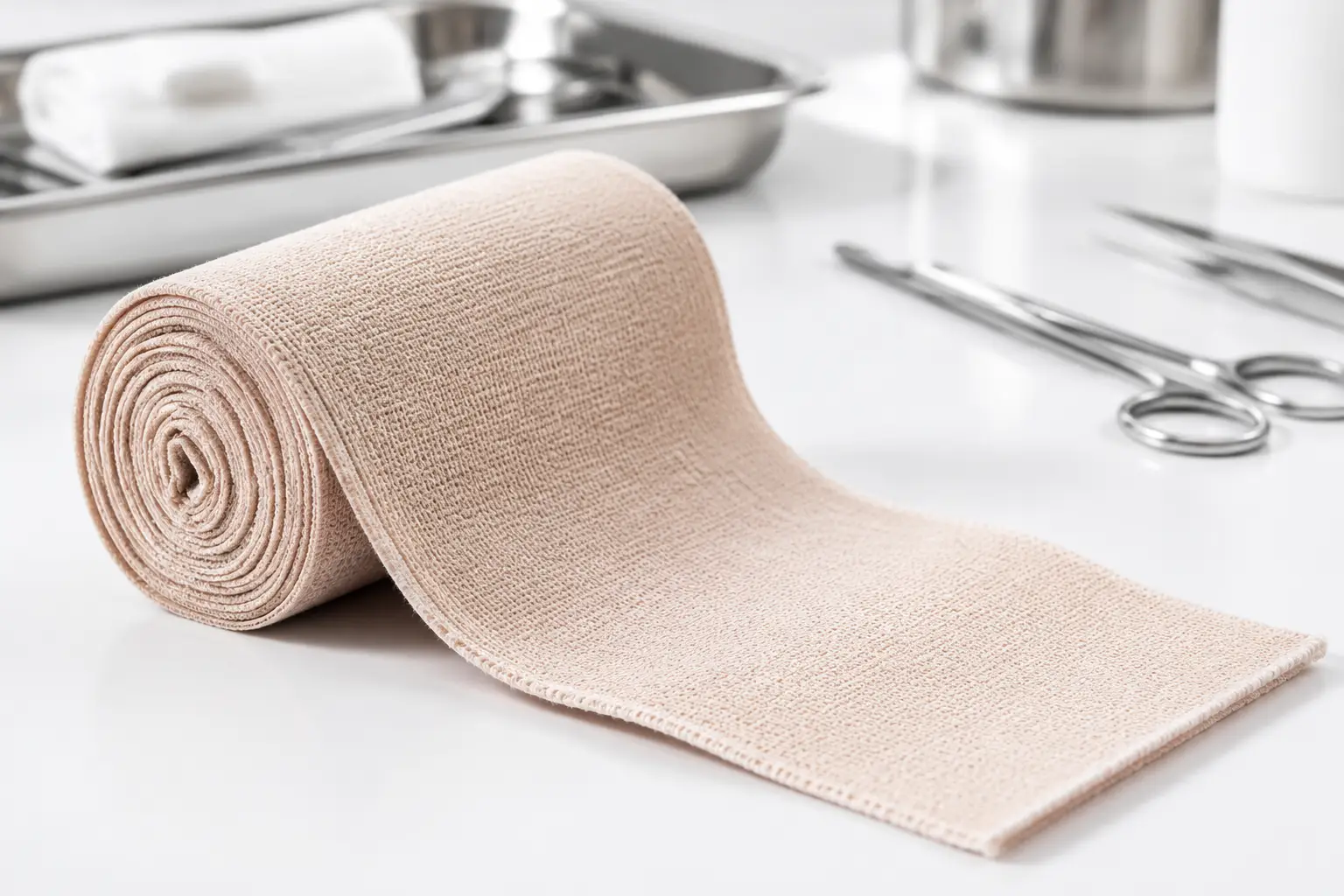
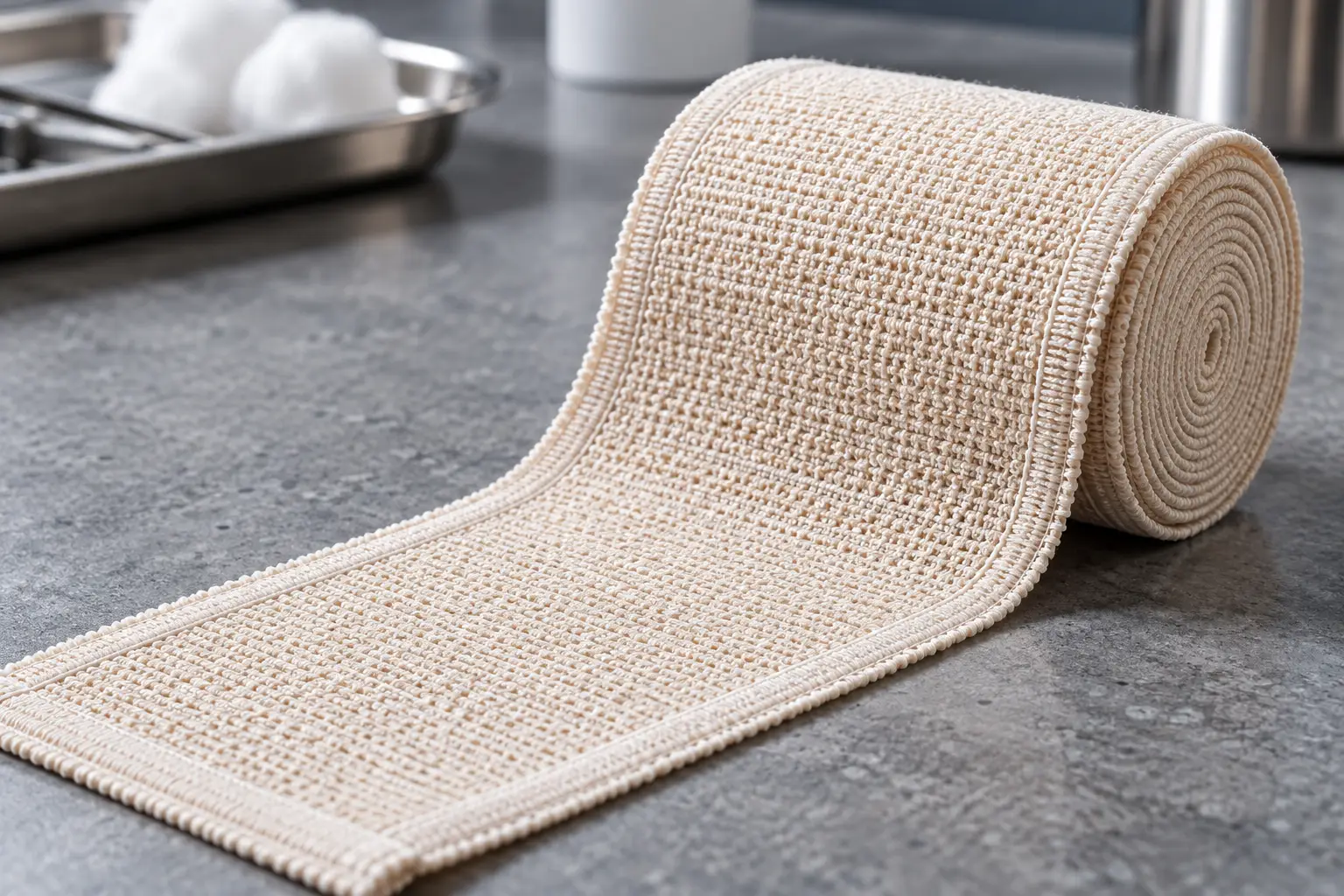
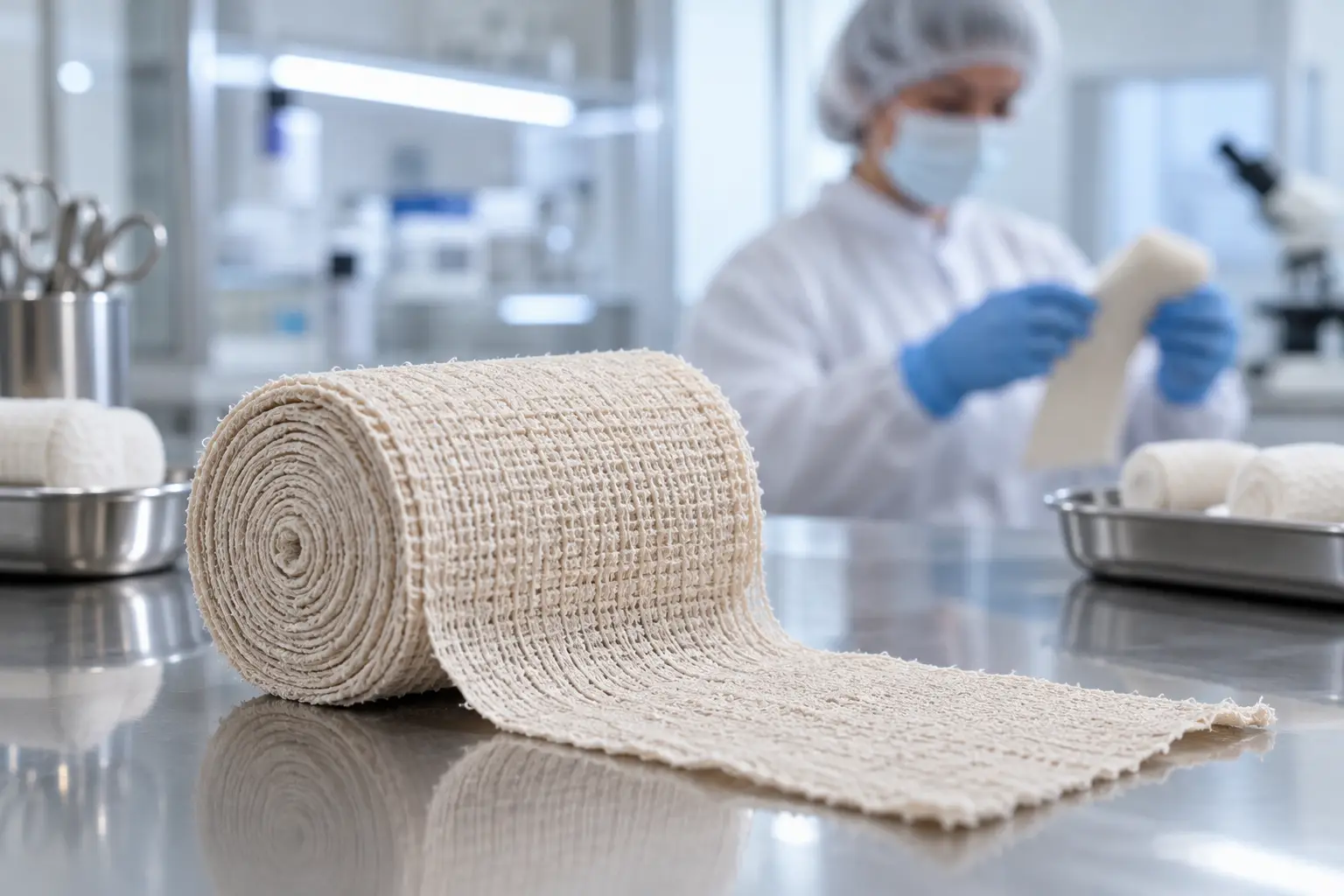
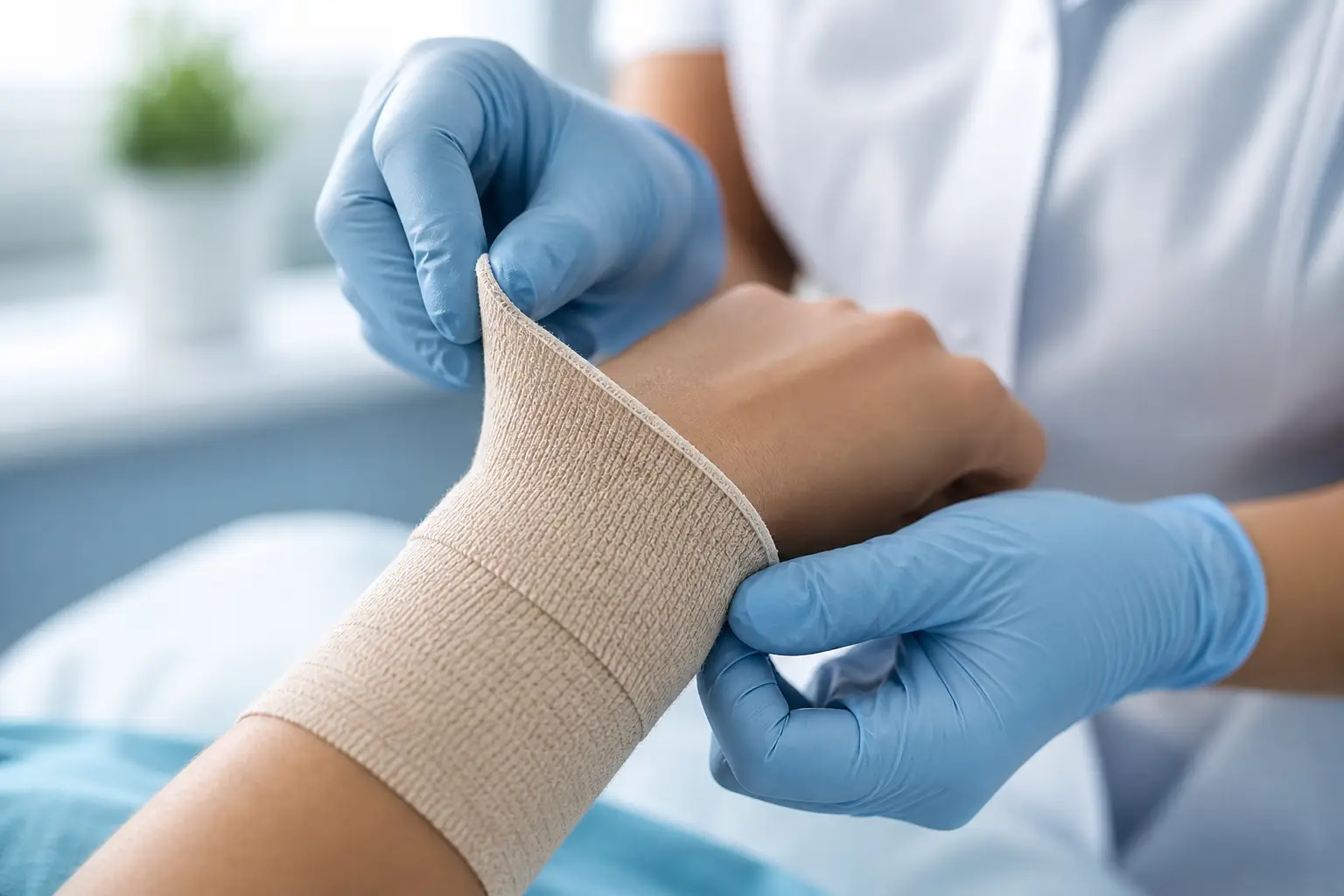
Una venda compresiva utilizada en el cuidado de las venas varicosas tiene dos funciones. La obvia es aplicar presión controlada a la pierna. La menos obvia es ser lo suficientemente aceptable como para que el paciente realmente se la use.
La segunda parte es fácil de subestimar durante la adquisición.
Un envoltorio blanco brillante puede funcionar perfectamente desde un punto de vista técnico, pero puede destacar bajo la ropa, mostrar la suciedad rápidamente y hacer que el paciente se sienta visiblemente “médico”. Una venda elástica de crepe de color piel es menos conspicua. Para los pacientes que necesitan ir al trabajo, viajar o pasar tiempo en público, esa pequeña diferencia estética puede influir en la aceptación diaria.
Sin embargo, el color solo no hace una buena venda para el tratamiento de venas varicosos. Los compradores también deben examinar la capacidad de compresión, elasticidad, ancho, recuperación, diseño de bordes, materiales de contacto con el empaque y la capacitación necesaria para una aplicación segura.
Hay otro punto que vale la pena decir claramente: un producto de crepe elástico no debe tratarse automáticamente como un sistema de compresión clínica. La presión real depende de la especificación del producto y de cómo se aplique. Un equipo de adquisición debe solicitar evidencia, no confiar en la palabra “elástico” impresa en una caja.
Esta guía explica cómo las instituciones médicas pueden evaluar una venda elástica de crepe de color piel, cuándo se puede considerar una compresión moderada o alta, y por qué las preferencias de apariencia del paciente pertenecen a la discusión de compra.
¿Por qué se usa la compresión en el cuidado de las venas varicosas?
Las venas varicosas se desarrollan cuando las válvulas venosas no funcionan eficazmente y la sangre se acumula en las venas superficiales. Los síntomas comunes incluyen dolor, pesadez, picazón, hinchazón, calambres nocturnos y molestias después de estar de pie prolongadamente.
La compresión externa puede reducir el diámetro venoso, apoyar el retorno venoso y ayudar a manejar el edema. Por lo tanto, una venda compresiva correctamente seleccionada puede usarse para el control de síntomas, manejo del edema, apoyo post-procedimiento o tratamiento de úlceras venosas bajo un protocolo clínico apropiado.
La Guías de 2022 de la Sociedad Europea de Cirugía Vascular recomiendan la compresión para varias presentaciones de enfermedad venosa crónica, pero la presión y el formato de tratamiento dependen de la condición del paciente. La compresión no es una solución única para todos.
La distinción entre el manejo de síntomas y el tratamiento definitivo también es importante. Orientación de NICE sobre venas varicosas afirma que la media compresiva no debe ofrecerse como tratamiento permanente para las venas varicosas cuando el tratamiento intervencionista es adecuado. Los pacientes con sangrado, cambios cutáneos, trombosis venosa superficial o úlceras venosas deben ser derivados a un servicio vascular.
En otras palabras, una venda compresiva puede ser útil, pero no debería convertirse en una razón para retrasar la evaluación vascular.
¿Por qué elegir una venda elástica de crepe de color piel?
Una venda elástica de crepe de color piel no crea mejor presión venosa simplemente por su color. No hay evidencia clínica sólida que demuestre que el material beige o de tono piel acelere directamente la curación de las venas.
La ventaja real es práctica: discreción.
Los pacientes pueden usar una venda compresiva durante muchas horas, a veces en visitas de tratamiento repetidas. Si el envoltorio es menos visible debajo de una falda, pantalones cortos, uniforme de trabajo o calzado abierto, algunos pacientes pueden sentirse más cómodos continuando el tratamiento. Esto es especialmente relevante para adultos en edad laboral y pacientes que no gustan la apariencia hospitalaria de una venda blanca brillante.
Una apariencia menos clínica
Un vendaje médico de tono de piel puede parecer menos obvio en público. No se adaptará a todas las complexiones, y los equipos de compras deben evitar describir un tono beige como “color de piel universal”. Esta afirmación es obsoleta y, francamente, inexacta.
Sin embargo, una venda compresiva de tono neutro o beige a menudo es menos conspicuous que la blanca. Algunos proveedores pueden ofrecer varios tonos neutros, lo que brinda a las organizaciones de salud una opción más inclusiva.
Mejor apariencia durante el uso prolongado
Las vendas blancas muestran rápidamente polvo, pelusa, manchas menores y marcas de calzado. Una venda elástica de color piel puede mantener una apariencia más limpia entre cambios.
Esto no es una autorización para extender el uso más allá del protocolo clínico. Una venda compresiva sucia, mojada, estirada o contaminada aún necesita reemplazarse. El beneficio es solo visual, no higiénico.
Potencial apoyo para la aceptación del paciente
La adherencia al tratamiento de compresión se ve influenciada por la comodidad, el calor, la dificultad para aplicar el producto, la apariencia, el costo y la comprensión del paciente de por qué se necesita la compresión. El color es solo una parte de esa mezcla.
Una venda compresiva discreta puede eliminar una objeción evitable. No puede resolver el dolor causado por presión excesiva, bordes enrollados, picazón, aplicación incorrecta o tamaño inadecuado.
Por lo tanto, los equipos de compras deben ver el color de la piel como una característica de la experiencia del paciente, no como un sustituto del rendimiento clínico.
El color de la piel no es lo mismo que la idoneidad clínica
Aquí es donde a veces los compradores se quedan atrapados.
Dos productos pueden describirse ambos como una venda elástica de color piel, pero comportarse muy diferente en la extremidad. Uno puede ofrecer recuperación elástica confiable después de estirarse. Otro puede perder tensión después de caminar durante una hora. Un tercero puede estar destinado principalmente a esguinces y retención de apósitos, no a compresión venosa sostenida.
Antes de aprobar una venda compresiva para venas varicosas, verifique su uso previsto y documentación de apoyo.
| Punto de selección | Lo que el comprador debe verificar | Por qué es importante |
|---|---|---|
| Uso previsto | Compresión venosa, soporte, retención de apósitos o fijación general | Un vendaje de fijación puede no proporcionar compresión terapéutica |
| Comportamiento de estiramiento | Estiramiento corto, estiramiento largo o extensibilidad definida por el fabricante | El estiramiento afecta la presión de reposo y de trabajo |
| Recuperación elástica | Tensión retenida después de extensiones repetidas | Una mala recuperación puede causar pérdida de presión |
| Anchos disponibles | Comúnmente 5 cm, 7.5 cm, 10 cm o 15 cm | El ancho debe adaptarse al pie, tobillo, pantorrilla o muslo |
| Construcción del borde | Bordes tejidos, terminados o resistentes a los deshilachados | Reduce hilos sueltos y puntos de presión local |
| Contacto con la piel | Información sobre composición de fibras, tintes, estado de la latex y biocompatibilidad | Ayuda a gestionar el riesgo de alergias e irritaciones |
| Evidencia de presión | Método de prueba, método de aplicación, capas y modelo de extremidad | “Alta compresión” significa poco sin condiciones de prueba |
| Embalaje | Envase individual, estado de esterilidad, número de lote, caducidad o vida útil | Apoya la trazabilidad y la política de control de infecciones |
| Instrucciones de reutilización | Uso único, reuso para un solo paciente o lavable | Afecta los cálculos de costo y el flujo de trabajo clínico |
| Estado regulatorio | Documentación de dispositivos médicos específica del mercado | Requerido antes de la compra institucional |
Compradores evaluando Opciones de vendaje elástico de crepe de MediTapes deberían solicitar los detalles técnicos del artículo y tamaño exactos bajo consideración. Las descripciones de la familia de productos son útiles, pero la especificación aprobada debe relacionarse con el SKU individual que se está comprando.
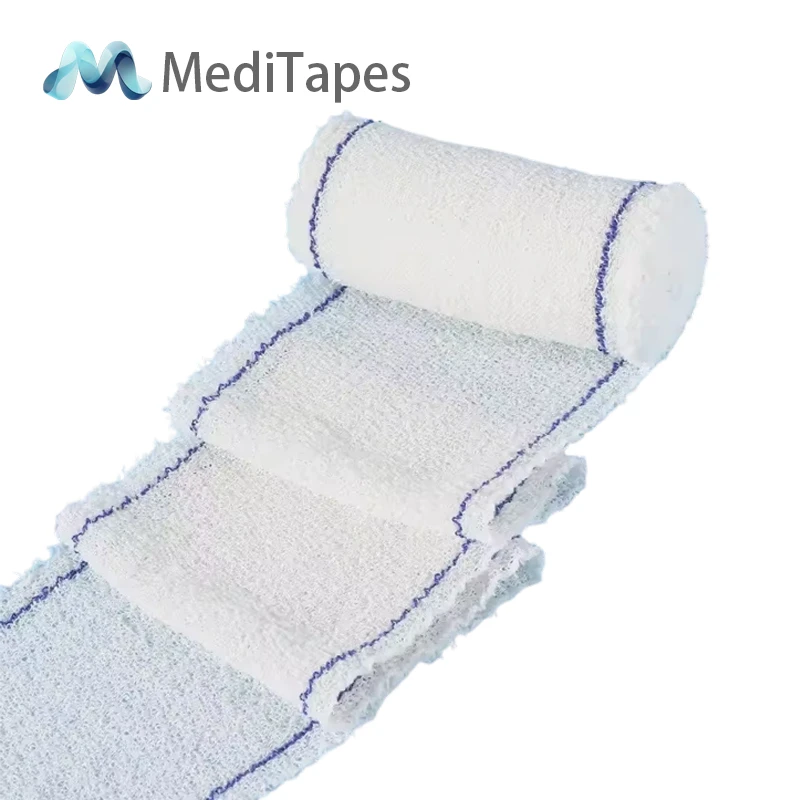
Vendaje de crepé elástico de algodón médico para el cuidado y soporte de heridas
Nuestra venda elástica de crepé de algodón médico ofrece una transpirabilidad superior y una compresión constante. Ideal para fijar apósitos y dar soporte a distensiones. Esta venda elástica de crepé es lavable, reutilizable y proporciona un agarre firme sin deslizarse. Perfecta para clínicas profesionales de cuidado de heridas.
Cómo un vendaje compresivo produce presión
La presión compresiva se ve afectada por la tensión del vendaje, el número de capas, el ancho del vendaje, el solapamiento, la circunferencia del miembro, la rigidez del material y el movimiento del paciente.
Una forma simplificada de la relación modificada de Laplace es:
La presión es proporcional a la tensión × número de capas, dividido por la circunferencia del miembro × ancho del vendaje.
Una expresión comúnmente utilizada es:
P = (T × N × 4620) ÷ (C × W)
Donde:
- P = presión subvendaje aproximada en mmHg
- T = tensión del vendaje en kilogramo-fuerza
- N = número de capas efectivas
- C = circunferencia del miembro en centímetros
- W = ancho del vendaje en centímetros
La constante y las unidades deben coincidir con el método utilizado. Esta fórmula es una herramienta didáctica, no una garantía de la presión producida en una pierna real.
Las piernas no son cilindros perfectos. El tobillo contiene tendones y prominencias óseas, la forma de la pantorrilla varía, y la presión cambia cuando el paciente está de pie o caminando. Los rellenos, errores de solapamiento, arrugas y cambios de tensión durante la aplicación pueden alterar todos los resultados.
Por eso comprar un vendaje compresivo sin planificar la capacitación del personal es una falsa economía.
Compresión moderada vs alta: Qué necesitan saber los compradores
Las etiquetas de presión no están estandarizadas globalmente. Un producto “Clase 2” en un sistema nacional puede no equivaler a Clase 2 en otro. El mismo problema ocurre con palabras como leve, moderado, firme y alto.
Para comparaciones de adquisición, la presión real en mmHg es más útil que una clase de marketing, pero incluso un valor en mmHg debería indicar dónde y cómo se midió.
| Descripción de presión práctica | Aproximación de la presión del tobillo | Contexto clínico típico | Precaución en la adquisición |
|---|---|---|---|
| Compresión ligera | Menos de 20 mmHg | Síntomas leves o pacientes incapaces de tolerar más presión | Puede ser insuficiente para edema venoso significativo |
| Compresión moderada | Aproximadamente 20–40 mmHg | Varices sintomáticas, edema o cuidado post-procedimiento seleccionado | Requiere evaluación vascular y aplicación correcta |
| Compresión fuerte | Aproximadamente 40 mmHg o más | Cuidado de úlceras venosas o enfermedad venosa avanzada bajo protocolo | Mayor riesgo si el suministro arterial está comprometido |
| Compresión modificada | Establecido por protocolo de especialista | Enfermedad arterial y venosa mixta | No debe improvisarse a partir de una venda de compresión estándar |
Estos rangos son amplios intencionalmente. Las pautas locales, hallazgos vasculares, diseño del producto y el juicio clínico tienen prioridad.
Cuando se puede seleccionar compresión moderada
La compresión moderada a menudo se considera cuando el objetivo del tratamiento es manejar el dolor, la hinchazón o el edema venoso en un paciente con circulación arterial adecuada.
Una vendaje de compresión moderada también puede usarse después de un procedimiento venoso si el protocolo del clínico tratante lo indica. La duración varía según la intervención y el estado del paciente, por lo que los documentos de adquisición no deben hacer afirmaciones genéricas sobre el tratamiento.
Para pacientes móviles, el comportamiento del material durante el movimiento es relevante. Un vendaje de compresión que se sienta cómodo mientras el paciente está acostado puede comportarse diferente al caminar.
Cuando se puede necesitar mayor compresión
La mayor compresión se asocia comúnmente con el manejo de úlceras venosas en las piernas y una hipertensión venosa más avanzada. Evidencia resumida por Cochrane sobre compresión para úlceras venosas en las piernas respalda la compresión como componente fundamental del cuidado de úlceras venosas.
Pero un vendaje de compresión de alta presión requiere más que una decisión de compra. Necesita:
- Una evaluación vascular documentada
- Un sistema de vendaje adecuado
- Personal clínico capacitado
- Procedimientos definidos de aplicación y revisión
- Monitoreo para dolor, entumecimiento, cambio de color y lesión cutánea
- Instrucciones claras de escalonamiento
No se debe asumir que una venda elástica genérica proporcione compresión reproducible de alta calidad. Si la aplicación prevista es el tratamiento de úlceras venosas, los compradores deben preguntar si el producto está validado como parte de un sistema de compresión de un solo componente o multicomponente.
Verificar la circulación arterial antes de aplicar compresión
La compresión puede ser peligrosa cuando el flujo sanguíneo arterial está significativamente reducido.
Los equipos clínicos comúnmente usan el índice de presión braquial-tibial, o ABPI, junto con la evaluación del pulso, síntomas, antecedentes médicos y, a veces, presión del dedo o análisis de onda Doppler. El ABPI se calcula como:
ABPI = presión sistólica más alta en el tobillo ÷ presión sistólica más alta en el braquio.
Un número ABPI nunca debe interpretarse de forma aislada. La diabetes, la enfermedad renal crónica, el edema y la calcificación arterial pueden producir resultados engañosos. Podría ser necesario medir la presión dedo-braquio o realizar una evaluación vascular especializada.
Las diferentes directrices utilizan umbrales algo diferentes, pero un marco clínico común es:
| Hallazgo vascular | Implicación general para la compresión |
|---|---|
| ABPI alrededor de 0.8–1.3 | Se puede considerar compresión estándar si la evaluación general es adecuada |
| ABPI alrededor de 0.5–0.8 | Solo se puede considerar compresión reducida o modificada bajo un protocolo adecuado |
| ABPI por debajo de aproximadamente 0.5 | Generalmente se evita la compresión hasta que se realice una evaluación vascular urgente |
| ABPI por encima de aproximadamente 1.3 | Posibles vasos no compresibles; podría requerirse más pruebas vasculares |
Estos valores no son una prescripción. Son un contexto de adquisición. Cada organización de salud debe seguir su propio camino aprobado.
Se debe retirar un vendaje de compresión y revisar al paciente si causa dolor creciente, entumecimiento, dedos fríos, palidez inusual, cianosis, pérdida de sensación o hinchazón rápidamente creciente. Los síntomas graves o repentinos necesitan atención clínica urgente.
Elasticidad, rigidez y la diferencia entre tipos de vendajes
No todos los vendajes de compresión responden al movimiento de la misma manera.
Vendajes elásticos de largo estiramiento
Los productos de largo estiramiento se extienden considerablemente y tienden a producir una presión de reposo más sostenida. Pueden adaptarse al movimiento y a los cambios en la forma de la extremidad, pero la presión puede volverse excesiva si el vendaje se aplica con demasiada tensión.
Muchos productos de crepe elástico caen dentro de esta amplia categoría, aunque los datos de prueba del fabricante deberían resolver la cuestión.
Vendas de estiramiento corto
Los productos de estiramiento corto tienen menor extensibilidad y mayor rigidez. A menudo crean una presión de reposo más baja y una presión de trabajo más alta cuando los músculos de la pierna se contraen durante la caminata.
Se utilizan frecuentemente en el manejo del edema y las úlceras venosas por parte de profesionales capacitados. No son automáticamente mejores que una venda de compresión elástica; simplemente se comportan de manera diferente.
Sistemas multicomponentes
Un sistema multicomponente combina capas con diferentes funciones, como acolchado, absorción, retención y compresión. Estos sistemas pueden proporcionar una compresión terapéutica más predecible cuando se aplican según las instrucciones.
Si un comprador necesita una venda de compresión para un protocolo formal de úlcera venosa, comparar una sola venda elástica de crepe con un sistema multicomponente validado no es una comparación de manzanas a manzanas.
Vendaje de crepé elástico de spandex de alta resistencia – Fábrica libre de látex
Adquiera vendas de crepé elásticas de spandex de alta resistencia directamente de fábrica. Diseñada para una compresión fuerte en ortopedia, esta venda de crepé sin látex minimiza las reacciones alérgicas. Su elasticidad duradera garantiza un soporte a largo plazo para esguinces graves y recuperación posquirúrgica.
Especificación de compra práctica
Un útil pliego de condiciones debe describir el rendimiento en lugar de pedir solo “vendas elásticas beige”.”
Para una venda elástica de crepe de color piel, incluya lo siguiente:
- Uso clínico previsto: Indique si la venda de compresión es para soporte, manejo de edema, cuidado post-procedimiento o un protocolo venario definido.
- Composición del material: Solicite porcentajes de algodón, viscosa, poliéster, hilado elastomérico u otras fibras.
- Declaración de látex: Pregúntese si el látex de caucho natural está presente en el producto o el empaque.
- Especificación de estiramiento: Requiere un rango de extensibilidad definido y método de prueba.
- Rendimiento de recuperación: Pregúntese cómo devuelve la venda de compresión su longitud original después de estirarse.
- Dimensiones: Confirme la longitud relajada, la longitud estirada, el ancho y las tolerancias permitidas.
- Datos de presión: Solicitar presión de prueba, circunferencia del lado, superposición, capas, tensión y equipo de prueba.
- Control de color: Establecer un rango de tonos aceptable entre los lotes de producción.
- Calidad de los bordes: Buscar bordes limpios, deshilachado mínimo y sin costuras duras.
- Evidencia de contacto con la piel: Solicitar información de seguridad biológica adecuada según la naturaleza y duración del contacto.
- Embalaje y trazabilidad: Requerir identificación de lote, detalles de fabricación e instrucciones claras.
- Documentación regulatoria: Confirmar el cumplimiento de las reglas de dispositivos médicos del mercado de destino.
La evaluación biológica relevante puede referirse al Marco ISO 10993-1, pero una referencia por sí sola no demuestra que se haya completado cada evaluación requerida. El proveedor debe vincular la evidencia con la venda compresiva terminada y sus condiciones reales de contacto con la piel.
Tarjeta de evaluación de muestra para compradores médicos
Una tarjeta de evaluación ponderada ayuda a evitar que el precio más bajo por unidad decida todo.
| Categoría de evaluación | Peso sugerido |
|---|---|
| Documentación de uso previsto y regulatoria | 20% |
| Rendimiento de compresión y elasticidad | 20% |
| Propiedades de confort y contacto con la piel | 15% |
| Facilidad y consistencia en la aplicación | 15% |
| Opciones de apariencia y tono de piel | 10% |
| Embalaje, trazabilidad y vida útil | 10% |
| Costo total por episodio de tratamiento | 10% |
Puntuación total = suma de la puntuación de la categoría × peso de la categoría.
No compare solo el precio por rollo. Una vendaje compresión más barato puede requerir más capas, un reemplazo más frecuente o más tiempo de enfermería. Esos costos pueden anular el ahorro inicial.
Una evaluación clínica breve suele ser más informativa que una revisión de escritorio. Pida al personal capacitado que evalúe la manipulación, la conformabilidad, el deslizamiento, el deshilachado, el confort y la facilidad de lograr una aplicación consistente. Cualquier ensayo con pacientes debe cumplir con los requisitos de gobernanza locales.
Un escenario de adquisición realista
Considere una comunidad vascular que actualmente solo almacena vendajes elásticos blancos. El personal informa que algunos pacientes ambulatorios retiran el vendaje visible antes de volver al trabajo. El clinic está considerando un vendaje médico de tono de piel como alternativa.
La respuesta errónea sería cambiar de producto basándose en el color y asumir que mejorará la adherencia.
Un mejor proceso se ve así:
- Confirme qué pacientes necesitan realmente una vendaje compresiva en lugar de medias compresivas u otro tratamiento.
- Compare la elasticidad, recuperación, ancho, contenido de fibra y uso previsto del nuevo producto con la vendaje existente.
- Pruebe si el personal capacitado puede aplicarla consistentemente usando la técnica normal de la clínica.
- Pregunte a los pacientes sobre la comodidad, visibilidad bajo la ropa, calor y disposición para seguir usándola.
- Registre reacciones adversas en la piel, deslizamiento, enrollado y cambios no planeados en la vendaje.
- Revise el consumo total y el tiempo de enfermería en lugar de depender únicamente del precio de compra.
Este es un ejemplo compuesto, no un ensayo clínico afirmado. Refleja el tipo de pequeño problema operativo que puede determinar si una nueva vendaje compresiva tiene éxito después de la compra.
¿La lección probable? El color puede eliminar una barrera social, pero el confort y la calidad de la aplicación aún deciden si el producto se mantiene en la pierna.
Preguntas para hacer a un proveedor de vendajes compresivos
Antes de realizar un pedido de volumen, envíe al proveedor un cuestionario técnico. Las preguntas útiles incluyen:
- ¿El producto está destinado y registrado para compresión terapéutica, soporte general o retención de vendaje?
- ¿Cuál es la extensibilidad declarada y qué método se utiliza para medirla?
- ¿Cuánta elasticidad queda después de estiramientos repetidos?
- ¿Puede proporcionar datos de presión para métodos de aplicación específicos?
- ¿Se mide la presión en un cilindro rígido, un modelo de pierna o participantes humanos?
- ¿Contiene el vendaje compresivo látex de goma natural?
- ¿Qué tintas y fibras entran en contacto con la piel del paciente?
- ¿Es el producto estéril o no estéril?
- ¿Es de uso único, reutilizable para un paciente o lavable?
- ¿Cómo debe limpiarse y secarse, si se permite la reutilización?
- ¿Cómo se controlan el color y la elasticidad entre lotes?
- ¿Qué documentos de calidad y regulación están disponibles?
- ¿Se pueden proporcionar muestras de evaluación antes de la aprobación de la oferta?
Un proveedor que no puede explicar si su producto es un vendaje de soporte o un vendaje compresivo terapéutico no está preparado para una licitación seria.
MediTapes ofrece una gama dedicada de productos de vendaje de crepe elástico para compradores profesionales. Los equipos de compra pueden utilizar los puntos de especificación de esta guía para discutir dimensiones, empaquetado, aplicación prevista y requisitos de marca blanca.
Instrucciones al Paciente Todavía Importan
Incluso el mejor vendaje compresivo puede fallar cuando el paciente recibe instrucciones vagas.
Before the patient leaves, the clinical team should explain:
- Why compression has been recommended
- How long the bandage should remain in place
- Whether the patient may walk, exercise, bathe, or sleep in it
- How to keep the compression bandage dry
- What amount of pressure or tightness is expected
- Which warning signs require removal or urgent review
- When the next dressing or bandage check is due
- Whether the product may be reused
Instructions should be specific. “Come back if it feels wrong” is not enough.
Patients should know that worsening pain, numbness, cold toes, blue or pale skin, sudden swelling, or difficulty moving the toes may indicate a problem. They should also know whom to contact outside normal clinic hours.
Errores comunes en la adquisición
Buying on Color Alone
A skin color elastic crepe bandage may look better, but appearance cannot compensate for poor recovery, inconsistent dimensions, rough edges, or missing documentation.
Treating Every Elastic Wrap as a Venous Product
Some crepe wraps are designed mainly for sprains, support, or dressing fixation. Do not call one a compression bandage for varicose veins unless its intended use and performance support that claim.
Comparing Pressure Classes Across Different Standards
Class numbers can mislead. Compare actual pressure ranges, test methods, and application instructions.
Ignoring Application Skill
Pressure varies with technique. A high-quality compression bandage applied badly can create uneven pressure, slipping, or a tourniquet effect.
Forgetting Patient Diversity
Un tono beige no es adecuado para todos los tonos de piel. Si la discreción es un objetivo importante de adquisición, pregunte sobre varios colores neutros en lugar de asumir que un solo tono sirve para todos.
Prometiendo una mejor adherencia sin medirla
Un vendaje médico de tono de piel puede ser más aceptable, pero debe evaluarse. Registre el retiro prematuro, quejas, cambios no planificados y la comodidad reportada por el paciente antes de hacer afirmaciones amplias.
Recomendación final de compra
Para las instituciones médicas, el mejor vendaje elástico de crepe de color de piel no es simplemente el que se mezcla más ordenadamente con la piel. Es el producto que combina una apariencia menos llamativa con calidad de material documentada, comportamiento de compresión apropiado, dimensiones utilizables, contacto seguro con la piel, fabricación consistente y suministro confiable.
Comience definiendo el camino clínico. Decida si necesita compresión moderada para el manejo de síntomas y edema, compresión más fuerte dentro de un protocolo de úlcera venosa, o un vendaje de soporte más ligero. Luego verifique los requisitos de evaluación arterial y la competencia del personal.
Una vez cubiertos esos aspectos básicos, el color de piel se convierte en un diferenciador valioso. Puede hacer que el vendaje de compresión parezca menos médico, se mantenga visualmente presentable y se adapte más cómodamente a la rutina normal del paciente. Esto puede parecer un detalle menor, pero los pacientes viven con el producto después de que termina la reunión de adquisición.
Si su organización está comparando especificaciones, formatos de empaque o opciones de suministro a granel, revise el Rango de vendajes elásticos de crepe MediTapes. Para muestras, documentación, personalización o una cotización comercial, contacte al equipo de MediTapes o envíe un correo electrónico a MediTapes.
Un vendaje de compresión técnicamente sólido es el punto de partida. Un producto que los pacientes estén dispuestos a seguir usando es lo que hace que la decisión de compra funcione en la vida real.

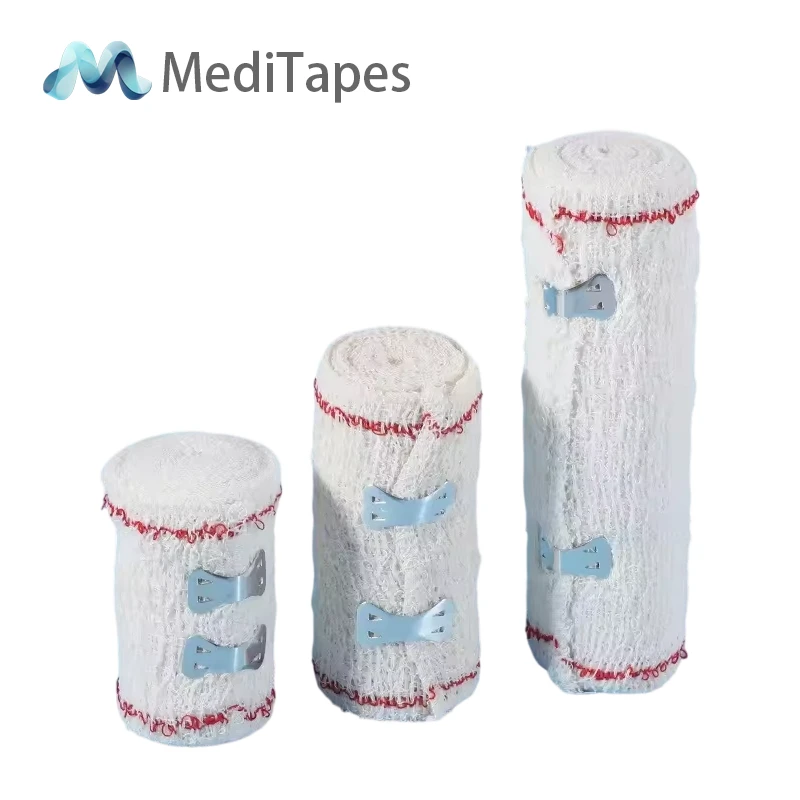
Rollo de vendaje de crepé elástico estéril con clips – Disponibilidad OEM
Vendaje de crepé elástico estéril certificado con clips metálicos o elásticos seguros. Ofrecemos personalización OEM para el tamaño y el embalaje. Este vendaje de crepé elástico de alta calidad garantiza una protección estéril para heridas quirúrgicas. Su retención confiable y textura suave lo hacen esencial para botiquines de primeros auxilios.
Preguntas frecuentes
¿Es una venda elástica de crepé de color piel clínicamente superior a una venda blanca?
No solo por el color. Si ambos productos tienen los mismos materiales y rendimiento, el efecto de presión no debería depender de si el vendaje de compresión es blanco o beige.
La versión en color piel puede ser menos visible bajo la ropa y puede parecer más limpia durante su uso. Esto puede favorecer la aceptación del paciente, pero el rendimiento clínico aún debe confirmarse mediante las especificaciones y la evaluación del producto.
¿Qué presión debe proporcionar un vendaje de compresión para las venas varicosas?
No existe una única presión adecuada para cada paciente. La compresión moderada, generalmente de unos 20–40 mmHg en el tobillo, puede utilizarse en algunos pacientes con enfermedad venosa sintomática o edema. Se puede aplicar una compresión más fuerte en el tratamiento de úlceras venosas bajo un protocolo especializado.
La decisión depende de la evaluación vascular, el diagnóstico, los síntomas, el estado de la piel, la movilidad, la tolerancia y las directrices locales. Las etiquetas de presión también varían según los estándares, por lo que los compradores deben verificar el rango real de mmHg y el método de prueba.
¿Puede utilizarse una venda elástica de crepé como vendaje de alta compresión?
Solo si el producto está destinado a ese uso y la presión requerida puede aplicarse de forma segura y reproducible. Un vendaje de crepé elástico general no debe considerarse automáticamente como un sistema médico de alta compresión.
Solicite datos de presión, instrucciones de aplicación, condiciones de prueba y documentación regulatoria. Para los protocolos de tratamiento de úlceras venosas, un sistema multicomponente validado puede ser más apropiado.
¿Es segura la compresión para un paciente con enfermedad arterial periférica?
La compresión puede ser insegura o requerir modificaciones cuando la circulación arterial está comprometida. El paciente debe recibir una evaluación vascular adecuada antes de aplicar un vendaje de compresión.
El ITB (índice tobillo-brazo) se utiliza comúnmente, pero puede no ser fiable en pacientes con diabetes, enfermedad renal o arterias calcificadas. Puede ser necesaria la medición de la presión en el dedo del pie, el análisis de ondas Doppler o una evaluación por un especialista.
¿Debe ser estéril un vendaje de compresión?
No siempre. Un vendaje de compresión utilizado sobre un apósito primario intacto puede suministrarse de forma no estéril, dependiendo del protocolo clínico. Los productos que tienen contacto directo con la herida tienen requisitos diferentes.
La licitación debe indicar claramente si se requiere esterilidad. Los compradores también deben verificar la integridad del envase, la trazabilidad, las condiciones de almacenamiento y si el vendaje de compresión está designado para un solo uso.
¿Cómo pueden los compradores comparar dos vendas de crepé elásticas de color piel?
Compare el uso previsto, las dimensiones, la elasticidad, la recuperación elástica, la evidencia de presión, la composición de las fibras, el estado del látex, la calidad de los bordes, la documentación del contacto con la piel, el embalaje, el estado regulatorio y el costo total del tratamiento.
También vale la pena realizar una evaluación de usuario controlada. El manejo por parte del personal y la comodidad del paciente pueden revelar diferencias que no resultan evidentes en una ficha técnica.
¿Puede MediTapes proporcionar información para compras institucionales?
Las instituciones médicas, los importadores y los distribuidores pueden ponerse en contacto con MediTapes para obtener información sobre productos y compras. Incluya el ancho requerido, la longitud estirada o no estirada, la cantidad de pedido prevista, el formato de embalaje, el mercado de destino y la aplicación prevista.
Cuanto más específica sea la solicitud, más fácil será comparar la venda de compresión propuesta con sus requisitos clínicos y de adquisición.