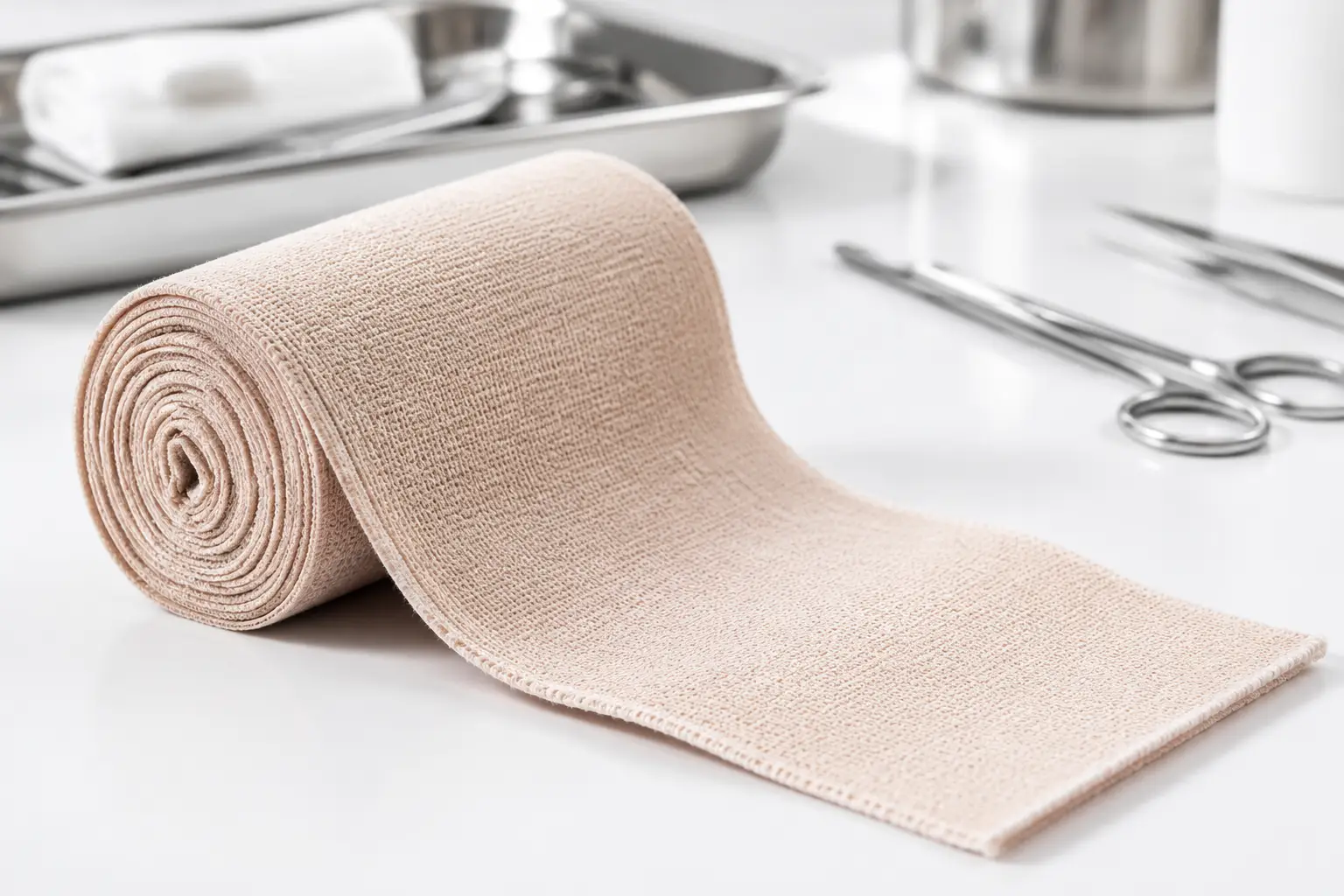
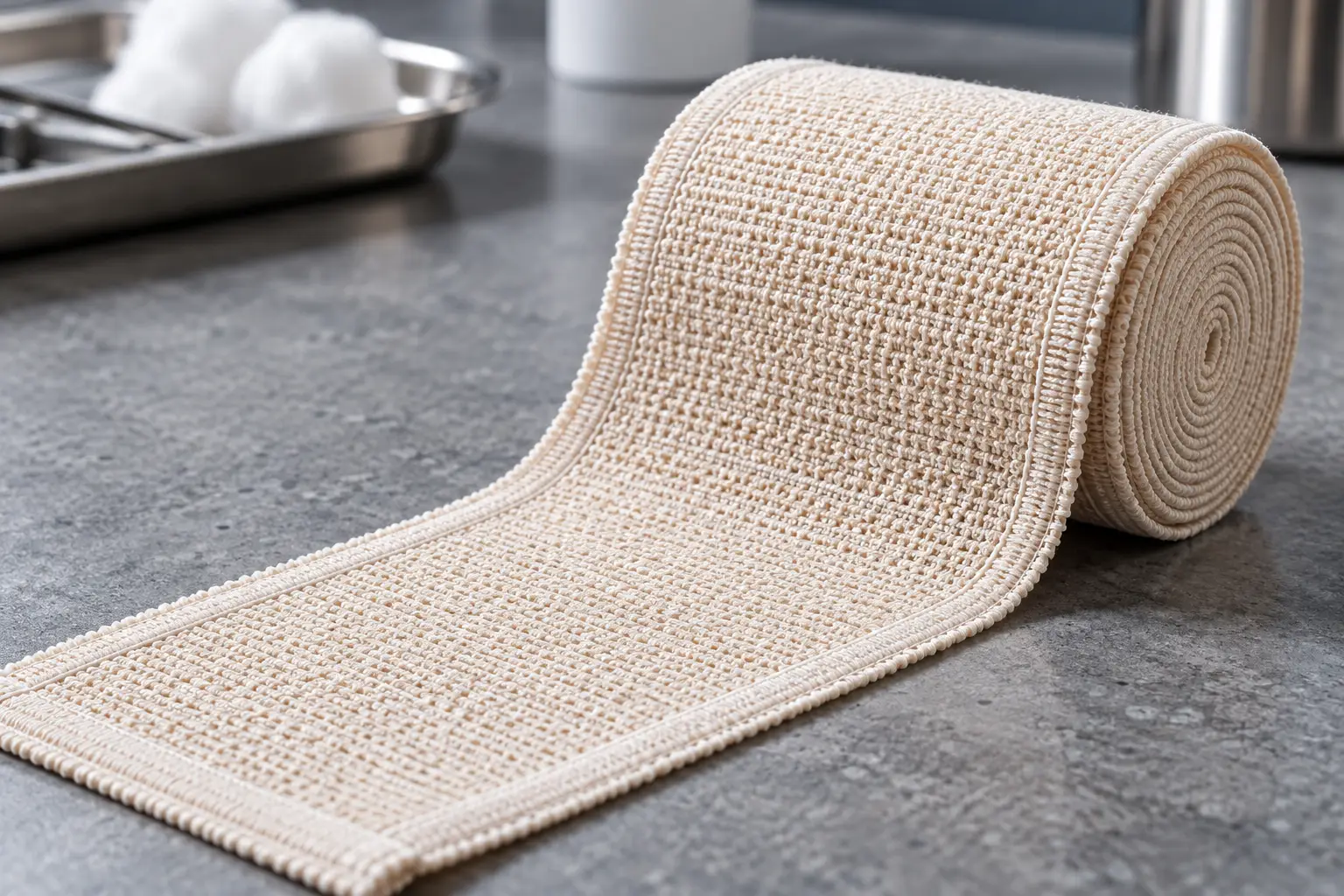
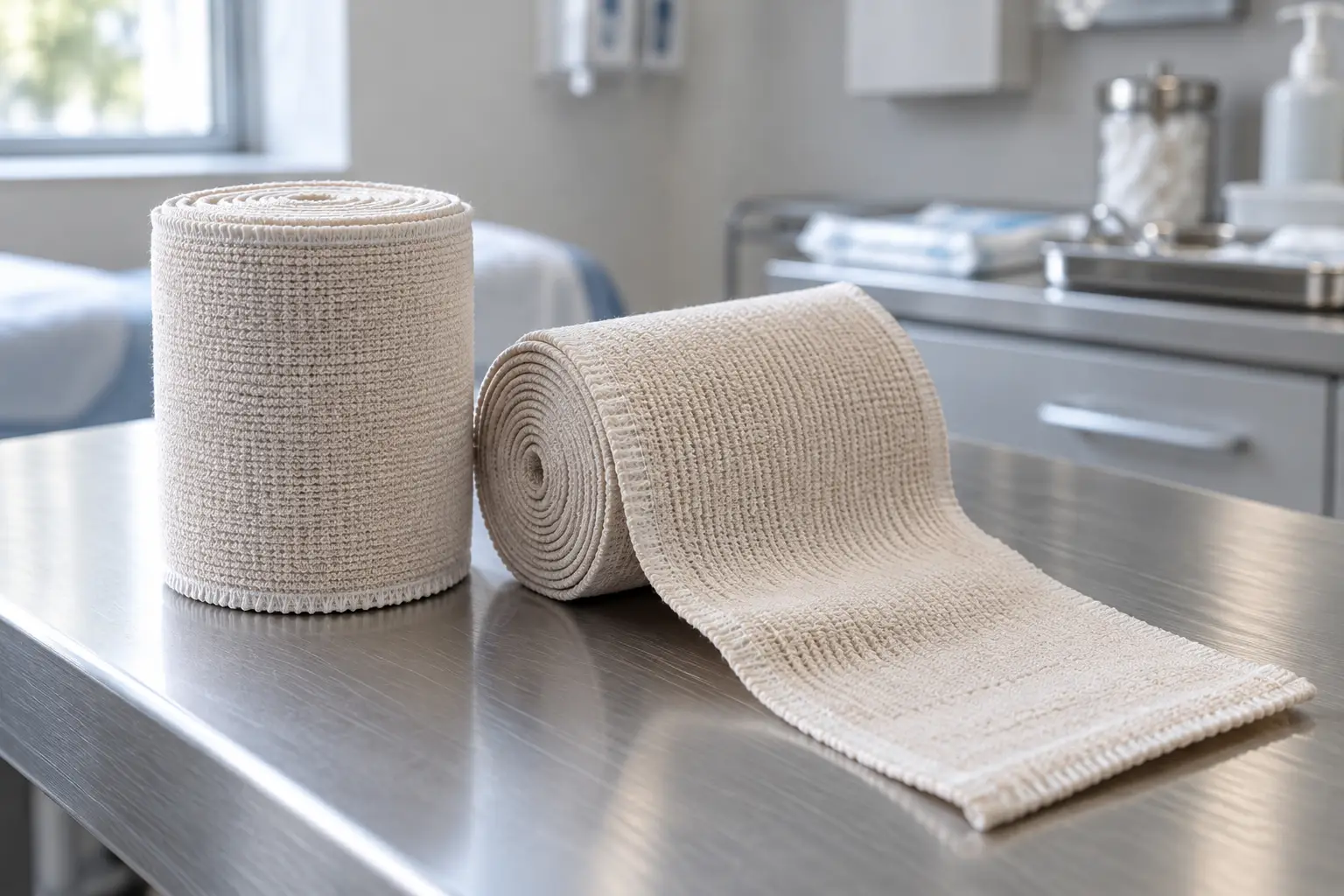
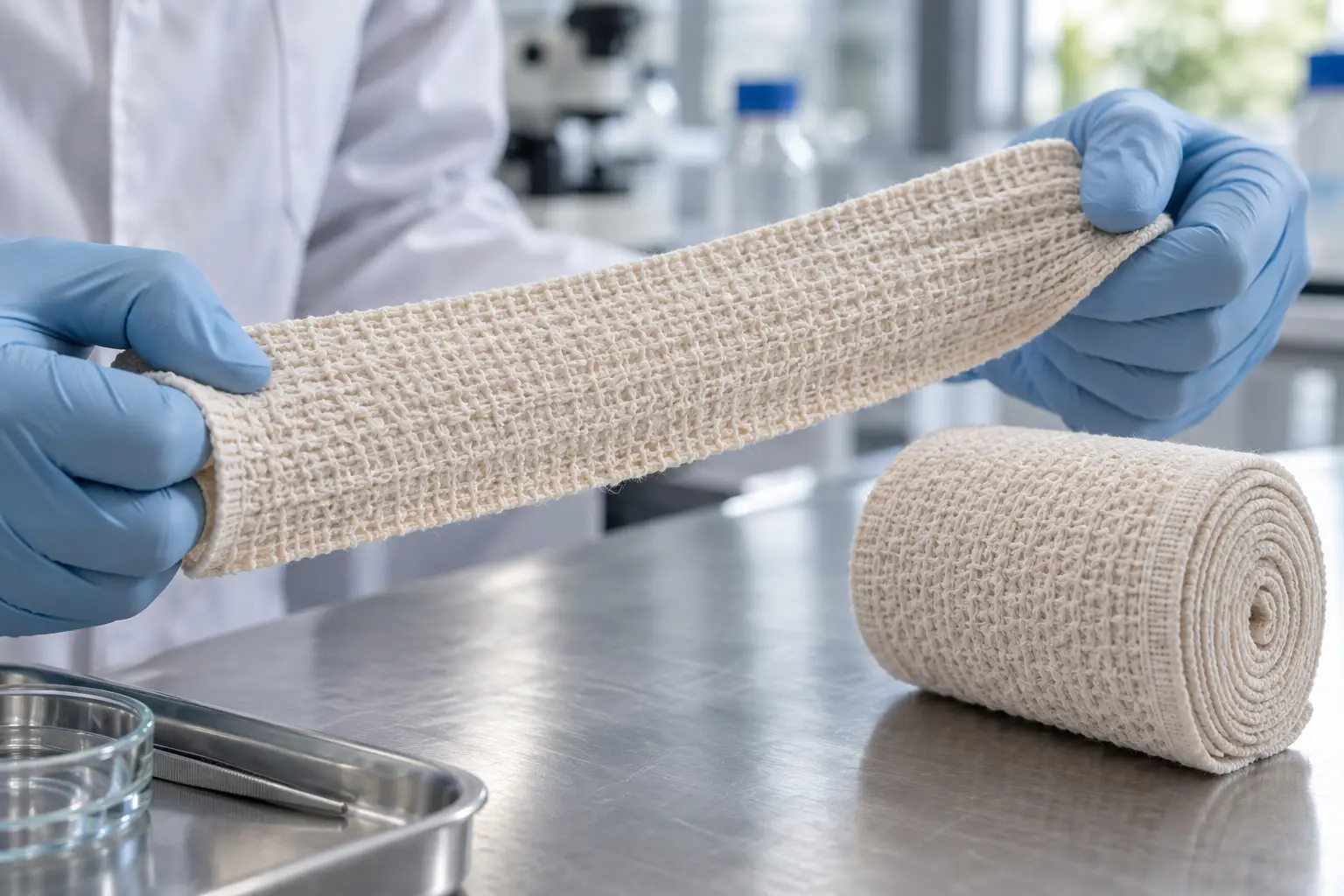
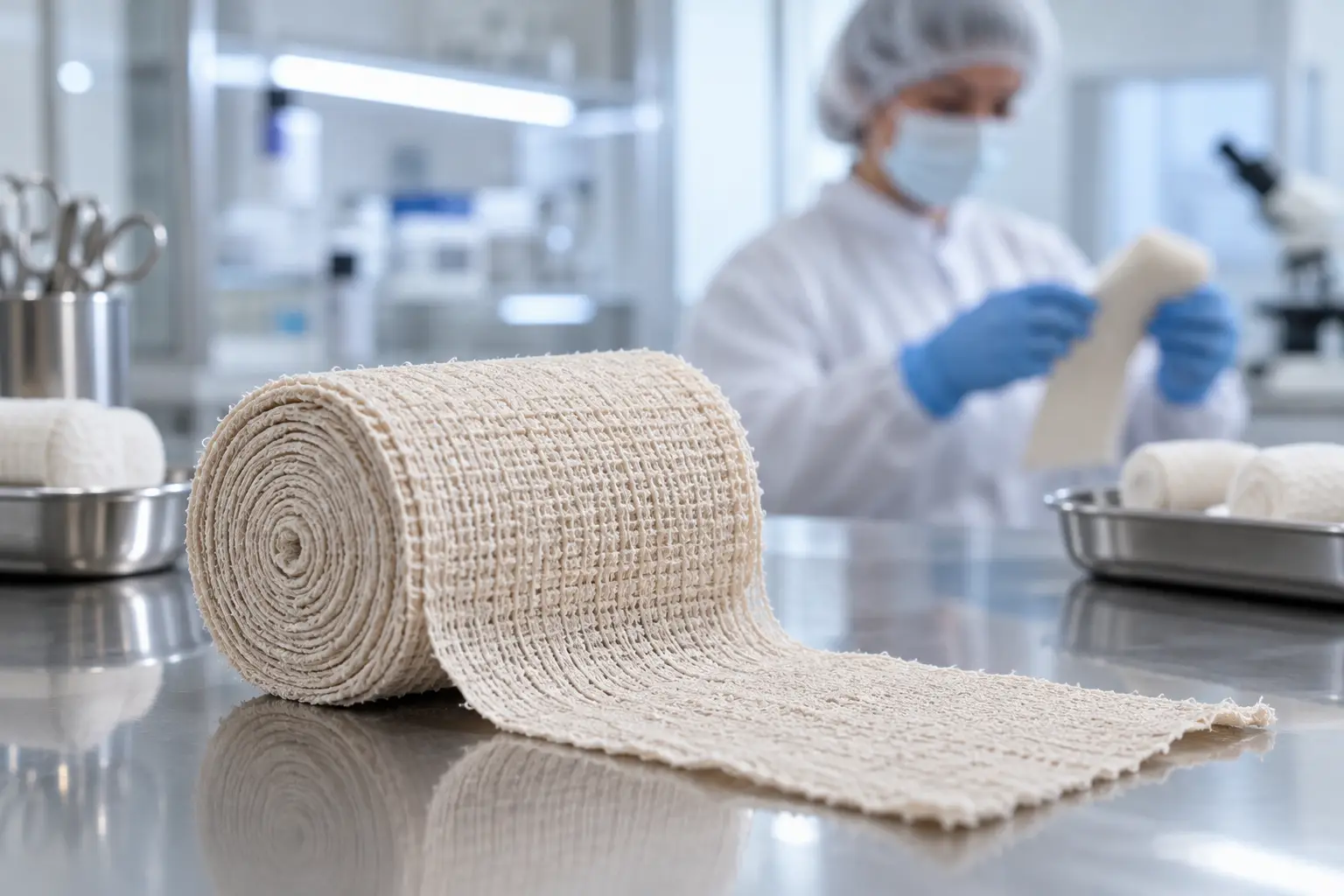
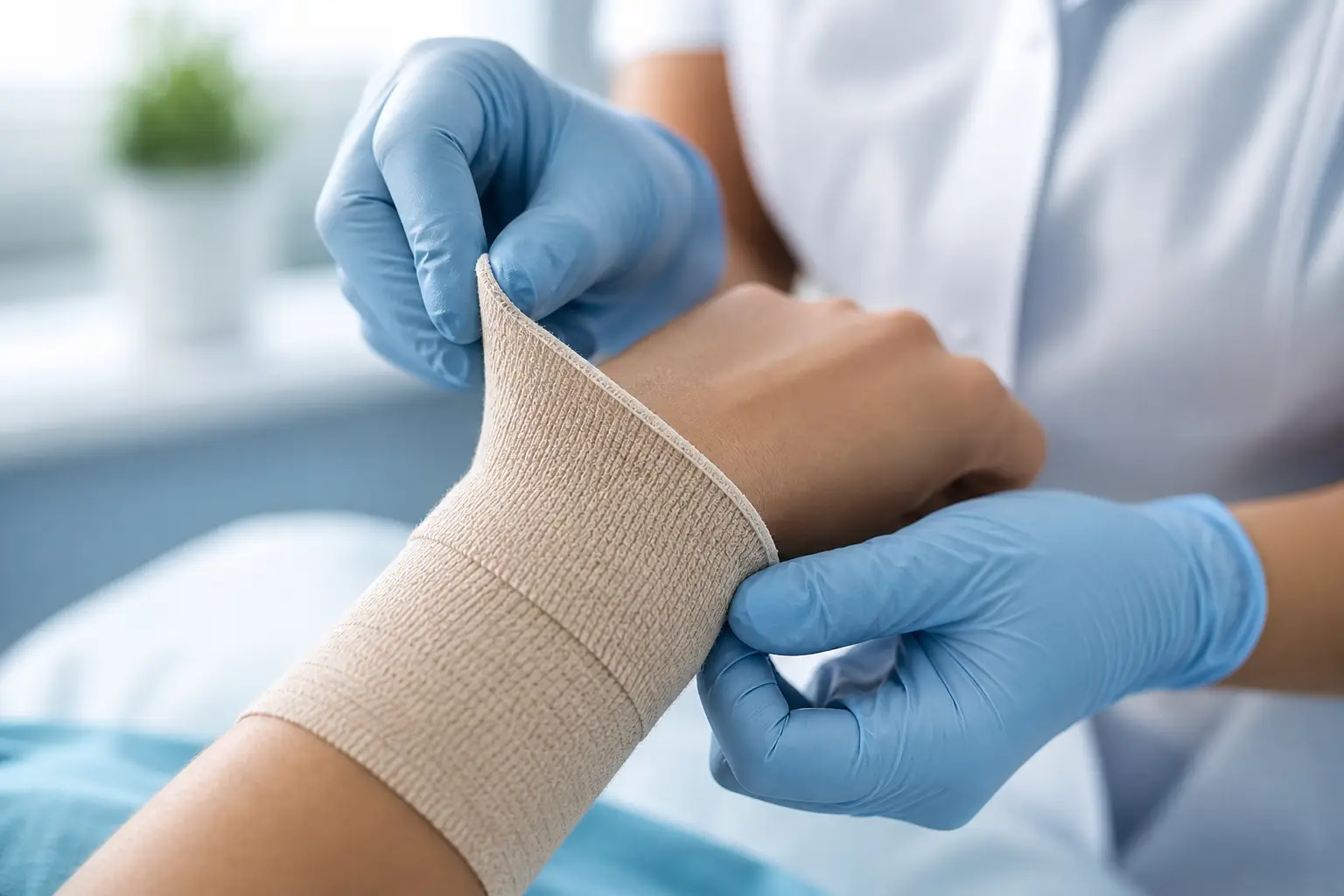
A compression bandage used in varicose vein care has two jobs. The obvious one is to apply controlled pressure to the leg. The less obvious job is to remain acceptable enough that the patient will actually wear it.
That second part is easy to underestimate during procurement.
A bright white wrap may work perfectly well from a technical standpoint, but it can stand out under clothing, show dirt quickly, and make a patient feel visibly “medical.” A skin color elastic crepe bandage is less conspicuous. For patients who need to go to work, travel, or spend time in public, that small aesthetic difference can influence day-to-day acceptance.
Still, color alone does not make a good varicose vein treatment bandage. Buyers also need to examine pressure capability, elasticity, width, recovery, edge design, skin contact materials, packaging, and the training required for safe application.
There is another point worth saying plainly: an elastic crepe product should not automatically be treated as a clinical compression system. The actual pressure depends on the product specification and how it is applied. A procurement team should ask for evidence, not rely on the word “elastic” printed on a box.
This guide explains how medical institutions can evaluate a skin color elastic crepe bandage, when moderate or higher compression may be considered, and why patient appearance preferences belong in the purchasing discussion.
Why Compression Is Used in Varicose Vein Care
Varicose veins develop when venous valves do not work effectively and blood pools in superficial veins. Common symptoms include aching, heaviness, itching, swelling, night cramps, and discomfort after prolonged standing.
External compression can reduce venous diameter, support venous return, and help manage edema. A correctly selected compression bandage may therefore be used for symptom control, edema management, post-procedure support, or venous ulcer treatment under an appropriate clinical protocol.
The 2022 European Society for Vascular Surgery guidelines recommend compression for several presentations of chronic venous disease, but the pressure and treatment format depend on the patient’s condition. Compression is not a one-size-fits-all prescription.
The distinction between symptom management and definitive treatment also matters. NICE guidance on varicose veins states that compression hosiery should not be offered as a permanent treatment for varicose veins when interventional treatment is suitable. Patients with bleeding, skin changes, superficial vein thrombosis, or venous ulcers should be referred to a vascular service.
In other words, a compression bandage can be useful, but it should not become a reason to delay vascular assessment.
Why Choose a Skin Color Elastic Crepe Bandage?
A skin color elastic crepe bandage does not create better venous pressure merely because of its color. There is no solid clinical evidence showing that beige or skin-tone material directly accelerates vein healing.
The real advantage is practical: discretion.
Patients may wear a compression bandage for many hours, sometimes over repeated treatment visits. If the wrap is less visible below a skirt, shorts, work uniform, or open footwear, some patients may feel more comfortable continuing treatment. This is especially relevant for working-age adults and patients who dislike the hospital appearance of a bright white bandage.
A Less Clinical Appearance
A skin tone medical wrap can look less obvious in public. It will not match every complexion, and procurement teams should avoid describing one beige shade as “universal skin color.” That claim is outdated and, frankly, inaccurate.
Even so, a neutral tan or beige compression bandage is often less conspicuous than white. Some suppliers can provide several neutral shades, which gives healthcare organizations a more inclusive option.
Better Appearance During Extended Wear
White bandages show dust, lint, minor staining, and shoe marks quickly. A skin color elastic crepe bandage can maintain a cleaner-looking appearance between changes.
This is not permission to extend use beyond the clinical protocol. A soiled, wet, stretched, or contaminated compression bandage still needs to be replaced. The benefit is visual only, not hygienic.
Potential Support for Patient Acceptance
Adherence to compression treatment is influenced by comfort, heat, difficulty putting the product on, appearance, cost, and the patient’s understanding of why compression is needed. Color is only one part of that mix.
A discreet compression bandage may remove one avoidable objection. It cannot solve pain from excessive pressure, rolling edges, itching, poor application, or an incorrect size.
Procurement teams should therefore view skin color as a patient-experience feature, not a substitute for clinical performance.
Skin Color Is Not the Same as Clinical Suitability
This is where buyers sometimes get caught.
Two products may both be described as a skin color elastic crepe bandage, yet behave very differently on the limb. One may offer reliable elastic recovery after stretching. Another may lose tension after walking for an hour. A third may be intended mainly for sprains and dressing retention rather than sustained venous compression.
Before approving a compression bandage for varicose veins, check its intended use and supporting documentation.
| Selection point | What the buyer should verify | Why it matters |
|---|---|---|
| Intended use | Venous compression, support, dressing retention, or general fixation | A fixation wrap may not provide therapeutic compression |
| Stretch behavior | Short-stretch, long-stretch, or manufacturer-defined extensibility | Stretch affects resting and working pressure |
| Elastic recovery | Tension retained after repeated extension | Poor recovery can cause pressure loss |
| Available widths | Commonly 5 cm, 7.5 cm, 10 cm, or 15 cm | Width must suit the foot, ankle, calf, or thigh |
| Edge construction | Woven, finished, or fray-resistant edges | Reduces loose threads and local pressure points |
| Skin contact | Fiber composition, dyes, latex status, biocompatibility information | Helps manage allergy and irritation risks |
| Pressure evidence | Test method, application method, layers, and limb model | “High compression” means little without test conditions |
| Packaging | Individual pack, sterility status, lot number, expiry or shelf life | Supports traceability and infection-control policy |
| Reuse instructions | Single use, single-patient reuse, or washable | Affects cost calculations and clinical workflow |
| Regulatory status | Market-specific medical device documentation | Required before institutional purchase |
Buyers evaluating elastic crepe bandage options from MediTapes should request technical details for the exact item and size under consideration. Product-family descriptions are useful, but the approved specification should relate to the individual SKU being purchased.
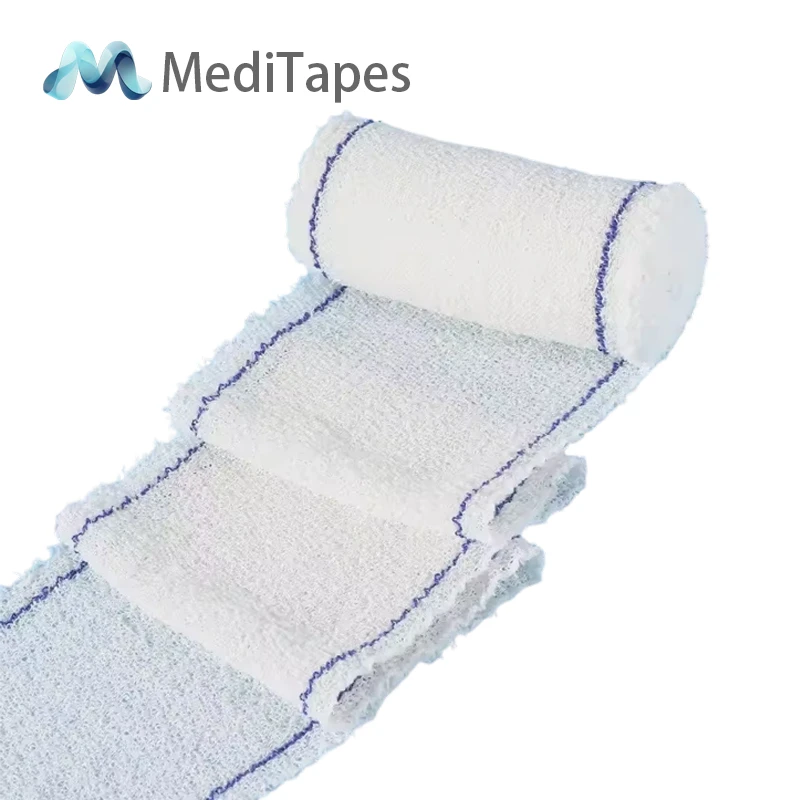
Medical Cotton Elastic Crepe Bandage for Wound Care & Support
Our Medical Cotton Elastic Crepe Bandage offers superior breathability and consistent compression. Ideal for securing dressings and supporting strains. This elastic crepe bandage is washable, reusable, and provides firm grip without slipping. Perfect for professional wound care clinics.
How a Compression Bandage Produces Pressure
Compression pressure is affected by bandage tension, the number of layers, bandage width, overlap, limb circumference, material stiffness, and patient movement.
A simplified form of the modified Laplace relationship is:
Pressure is proportional to tension × number of layers, divided by limb circumference × bandage width.
One commonly used expression is:
P = (T × N × 4620) ÷ (C × W)
Where:
- P = approximate sub-bandage pressure in mmHg
- T = bandage tension in kilogram-force
- N = number of effective layers
- C = limb circumference in centimeters
- W = bandage width in centimeters
The constant and units must match the method being used. This formula is a teaching tool, not a guarantee of the pressure produced on a real leg.
Legs are not perfect cylinders. The ankle contains tendons and bony prominences, calf shape varies, and pressure changes when the patient stands or walks. Padding, overlap errors, wrinkles, and tension changes during application can all alter the result.
That is why buying a compression bandage without planning staff training is a false economy.
Moderate vs High Compression: What Buyers Need to Know
Pressure labels are not globally standardized. A “Class 2” product in one national system may not equal Class 2 in another. The same problem occurs with words such as mild, moderate, firm, and high.
For procurement comparisons, actual pressure in mmHg is more useful than a marketing class, but even an mmHg figure should state where and how it was measured.
| Practical pressure description | Approximate ankle pressure | Typical clinical context | Procurement caution |
|---|---|---|---|
| Light compression | Below 20 mmHg | Mild symptoms or patients unable to tolerate more pressure | May be insufficient for significant venous edema |
| Moderate compression | About 20–40 mmHg | Symptomatic varicose veins, edema, or selected post-procedure care | Requires vascular assessment and correct application |
| Strong compression | About 40 mmHg or more | Venous ulcer care or advanced venous disease under protocol | Higher risk if arterial supply is impaired |
| Modified compression | Set by specialist protocol | Mixed arterial and venous disease | Should not be improvised from a standard compression bandage |
These ranges are broad on purpose. Local guidelines, vascular findings, product design, and clinician judgment take priority.
When Moderate Compression May Be Selected
Moderate compression is often considered when the treatment goal is to manage aching, swelling, or venous edema in a patient with adequate arterial circulation.
A moderate compression bandage may also be used after a venous procedure if the treating clinician’s protocol calls for it. Duration varies by intervention and patient condition, so procurement documents should not make blanket treatment claims.
For mobile patients, the material’s behavior during movement is relevant. A compression bandage that feels comfortable while the patient is lying down may behave differently during walking.
When Higher Compression May Be Needed
Higher compression is commonly associated with venous leg ulcer management and more advanced venous hypertension. Evidence summarized by Cochrane on compression for venous leg ulcers supports compression as a core component of venous ulcer care.
But a high-pressure compression bandage requires more than a purchasing decision. It needs:
- A documented vascular assessment
- A suitable bandaging system
- Trained clinical staff
- Defined application and review procedures
- Monitoring for pain, numbness, color change, and skin injury
- Clear escalation instructions
A generic elastic crepe wrap should not be assumed to provide reproducible high compression. If the intended application is venous ulcer treatment, buyers should ask whether the product is validated as part of a single-component or multicomponent compression system.
Check Arterial Circulation Before Applying Compression
Compression can be dangerous when arterial blood flow is significantly reduced.
Clinical teams commonly use ankle-brachial pressure index, or ABPI, together with pulse assessment, symptoms, medical history, and sometimes toe pressure or Doppler waveform analysis. ABPI is calculated as:
ABPI = highest ankle systolic pressure ÷ highest brachial systolic pressure.
An ABPI number should never be interpreted in isolation. Diabetes, chronic kidney disease, edema, and arterial calcification may produce misleading results. Toe-brachial pressure or specialist vascular assessment may be needed.
Different guidelines use somewhat different thresholds, but a common clinical framework is:
| Vascular finding | General implication for compression |
|---|---|
| ABPI around 0.8–1.3 | Standard compression may be considered if the overall assessment is suitable |
| ABPI around 0.5–0.8 | Reduced or modified compression may be considered only under an appropriate protocol |
| ABPI below about 0.5 | Compression is generally avoided pending urgent vascular assessment |
| ABPI above about 1.3 | Possible non-compressible vessels; further vascular testing may be required |
These values are not a prescription. They are procurement context. Every healthcare organization should follow its own approved pathway.
A compression bandage should be removed and the patient reviewed if it causes escalating pain, numbness, cold toes, unusual pallor, cyanosis, loss of sensation, or rapidly increasing swelling. Severe or sudden symptoms need urgent clinical attention.
Elasticity, Stiffness, and the Difference Between Bandage Types
Not every compression bandage responds to movement in the same way.
Long-Stretch Elastic Bandages
Long-stretch products extend considerably and tend to produce more sustained resting pressure. They can accommodate movement and changes in limb shape, but pressure can become excessive if the bandage is applied with too much tension.
Many elastic crepe products fall somewhere in this broad category, though the manufacturer’s test data should settle the question.
Short-Stretch Bandages
Short-stretch products have lower extensibility and higher stiffness. They often create lower resting pressure and higher working pressure when calf muscles contract during walking.
They are frequently used in edema and venous ulcer management by trained professionals. They are not automatically better than an elastic compression bandage; they simply behave differently.
Multicomponent Systems
A multicomponent system combines layers with different functions, such as padding, absorbency, retention, and compression. These systems may provide more predictable therapeutic compression when applied according to instructions.
If a buyer needs a compression bandage for a formal venous ulcer pathway, comparing a single elastic crepe roll with a validated multicomponent system is not an apples-to-apples comparison.
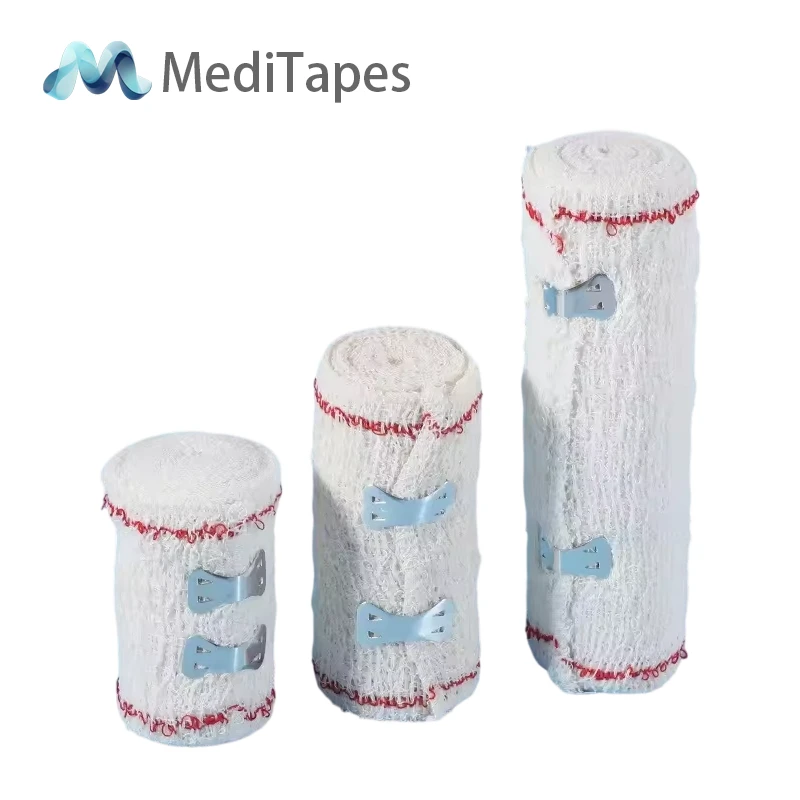
Heavy Duty Spandex Elastic Crepe Bandage – Latex Free Factory
Source premium Heavy Duty Spandex Elastic Crepe Bandage directly from the factory. Designed for strong compression in orthopedics, this latex-free crepe bandage minimizes allergic reactions. Durable elasticity ensures long-term support for severe sprains and post-surgical recovery.
A Practical Procurement Specification
A useful tender should describe performance instead of asking only for “beige elastic bandages.”
For a skin color elastic crepe bandage, include the following items:
- Intended clinical use: State whether the compression bandage is for support, edema management, post-procedure care, or a defined venous pathway.
- Material composition: Request percentages of cotton, rayon, polyester, elastomeric yarn, or other fibers.
- Latex declaration: Ask whether natural rubber latex is present in the product or packaging.
- Stretch specification: Require a defined extensibility range and test method.
- Recovery performance: Ask how well the compression bandage returns toward its original length after extension.
- Dimensions: Confirm relaxed length, stretched length, width, and allowed tolerances.
- Pressure data: Request test pressure, limb circumference, overlap, layers, tension, and test equipment.
- Color control: Set an acceptable shade range between production lots.
- Edge quality: Look for clean edges, minimal fraying, and no hard seams.
- Skin-contact evidence: Request appropriate biological safety information based on the nature and duration of contact.
- Packaging and traceability: Require lot identification, manufacturing details, and clear instructions.
- Regulatory documents: Confirm compliance with the destination market’s medical device rules.
Relevant biological evaluation may refer to the ISO 10993-1 framework, but an ISO reference alone does not prove that every required evaluation has been completed. The supplier should connect the evidence to the finished compression bandage and its actual skin-contact conditions.
Sample Evaluation Scorecard for Medical Buyers
A weighted scorecard helps prevent the lowest unit price from deciding everything.
| Evaluation category | Suggested weight |
|---|---|
| Intended-use and regulatory documentation | 20% |
| Compression and elasticity performance | 20% |
| Comfort and skin-contact properties | 15% |
| Ease and consistency of application | 15% |
| Appearance and skin-tone options | 10% |
| Packaging, traceability, and shelf life | 10% |
| Total cost per treatment episode | 10% |
Total score = sum of category score × category weight.
Do not compare only the price per roll. A cheaper compression bandage may require more layers, more frequent replacement, or longer nursing time. Those costs can wipe out the initial saving.
A short clinical evaluation is usually more informative than a desk review. Ask trained staff to assess handling, conformability, slippage, fraying, comfort, and ease of achieving a consistent application. Any trial involving patients must follow local governance requirements.
A Realistic Procurement Scenario
Consider a community vascular clinic that currently stocks only white elastic wraps. Staff report that some ambulatory patients remove the visible wrap before returning to work. The clinic is considering a skin tone medical wrap as an alternative.
The wrong response would be to switch products based on color and assume adherence will improve.
A better process looks like this:
- Confirm which patients genuinely need a compression bandage rather than compression hosiery or another treatment.
- Compare the new product’s stretch, recovery, width, fiber content, and intended use with the existing bandage.
- Test whether trained staff can apply it consistently using the clinic’s normal technique.
- Ask patients about comfort, visibility under clothing, heat, and willingness to continue wearing it.
- Record adverse skin reactions, slippage, rolling, and unplanned bandage changes.
- Review total consumption and nursing time rather than relying on purchase price alone.
This is a composite example, not a claimed clinical trial. It reflects the kind of small operational issue that can determine whether a new compression bandage succeeds after purchase.
The likely lesson? Color may remove a social barrier, but comfort and application quality still decide whether the product stays on the leg.
Questions to Ask a Compression Bandage Supplier
Before placing a volume order, send the supplier a technical questionnaire. Useful questions include:
- Is the product intended and registered for therapeutic compression, general support, or dressing retention?
- What is the stated extensibility, and which method is used to measure it?
- How much elastic recovery remains after repeated stretching?
- Can you provide pressure data for specific application methods?
- Is pressure measured on a rigid cylinder, a leg model, or human participants?
- Does the compression bandage contain natural rubber latex?
- What dyes and fibers contact the patient’s skin?
- Is the product sterile or non-sterile?
- Is it single use, reusable for one patient, or washable?
- How should it be cleaned and dried, if reuse is permitted?
- How are lot-to-lot color and elasticity controlled?
- What quality and regulatory documents are available?
- Can evaluation samples be provided before tender approval?
A supplier that cannot explain whether its product is a support wrap or a therapeutic compression bandage is not ready for a serious clinical tender.
MediTapes provides a dedicated range of elastic crepe bandage products for professional buyers. Purchasing teams can use the specification points in this guide to discuss dimensions, packaging, intended application, and private-label requirements.
Patient Instructions Still Matter
Even the best compression bandage can fail when the patient receives vague instructions.
Before the patient leaves, the clinical team should explain:
- Why compression has been recommended
- How long the bandage should remain in place
- Whether the patient may walk, exercise, bathe, or sleep in it
- How to keep the compression bandage dry
- What amount of pressure or tightness is expected
- Which warning signs require removal or urgent review
- When the next dressing or bandage check is due
- Whether the product may be reused
Instructions should be specific. “Come back if it feels wrong” is not enough.
Patients should know that worsening pain, numbness, cold toes, blue or pale skin, sudden swelling, or difficulty moving the toes may indicate a problem. They should also know whom to contact outside normal clinic hours.
Common Procurement Mistakes
Buying on Color Alone
A skin color elastic crepe bandage may look better, but appearance cannot compensate for poor recovery, inconsistent dimensions, rough edges, or missing documentation.
Treating Every Elastic Wrap as a Venous Product
Some crepe wraps are designed mainly for sprains, support, or dressing fixation. Do not call one a compression bandage for varicose veins unless its intended use and performance support that claim.
Comparing Pressure Classes Across Different Standards
Class numbers can mislead. Compare actual pressure ranges, test methods, and application instructions.
Ignoring Application Skill
Pressure varies with technique. A high-quality compression bandage applied badly can create uneven pressure, slipping, or a tourniquet effect.
Forgetting Patient Diversity
One beige shade is not a match for every skin tone. If discretion is a major procurement objective, ask about multiple neutral colors instead of assuming a single shade serves everyone.
Promising Better Adherence Without Measuring It
A skin tone medical wrap may be more acceptable, but it should be evaluated. Track premature removal, complaints, unplanned changes, and patient-reported comfort before making broad claims.
Final Buying Recommendation
For medical institutions, the best skin color elastic crepe bandage is not simply the one that blends into the skin most neatly. It is the product that combines a less conspicuous appearance with documented material quality, appropriate compression behavior, usable dimensions, safe skin contact, consistent manufacturing, and reliable supply.
Start by defining the clinical pathway. Decide whether you need moderate compression for symptom and edema management, stronger compression within a venous ulcer protocol, or a lighter support wrap. Then verify arterial-assessment requirements and staff competence.
After those basics are covered, skin color becomes a worthwhile differentiator. It can make the compression bandage look less medical, stay visually presentable, and fit more comfortably into a patient’s normal routine. That may sound like a minor detail, but patients live with the product after the procurement meeting ends.
If your organization is comparing specifications, packaging formats, or bulk supply options, review the MediTapes elastic crepe bandage range. For samples, documentation, customization, or a commercial quotation, contact the MediTapes team or email MediTapes.
A technically sound compression bandage is the starting point. A product patients are willing to keep wearing is the part that makes the purchasing decision work in real life.

Sterile Elastic Crepe Bandage Roll with Clips – OEM Available
Certified Sterile Elastic Crepe Bandage featuring secure metal or elastic clips. We offer OEM customization for size and packaging. This high-grade elastic crepe bandage ensures sterile protection for surgical wounds. Reliable retention and soft texture make it essential for first aid kits.
Frequently Asked Questions
Is a skin color elastic crepe bandage clinically better than a white bandage?
Not because of color alone. If both products have the same materials and performance, the pressure effect should not depend on whether the compression bandage is white or beige.
The skin-color version may be less visible under clothing and may look cleaner during wear. That can support patient acceptance, but clinical performance must still be confirmed through product specifications and evaluation.
What pressure should a compression bandage provide for varicose veins?
There is no single pressure suitable for every patient. Moderate compression, broadly around 20–40 mmHg at the ankle, may be used in some patients with symptomatic venous disease or edema. Stronger compression may be used in venous ulcer care under a specialist protocol.
The decision depends on vascular assessment, diagnosis, symptoms, skin condition, mobility, tolerance, and local guidelines. Pressure labels also vary between standards, so buyers should verify the actual mmHg range and test method.
Can an elastic crepe bandage be used as a high-compression bandage?
Only if the product is intended for that use and the required pressure can be applied safely and reproducibly. A general elastic crepe wrap should not automatically be treated as a high-compression medical system.
Ask for pressure data, application instructions, test conditions, and regulatory documentation. For venous ulcer pathways, a validated multicomponent system may be more appropriate.
Is compression safe for a patient with peripheral arterial disease?
Compression may be unsafe or may require modification when arterial circulation is impaired. The patient should receive an appropriate vascular assessment before a compression bandage is applied.
ABPI is commonly used, but it may be unreliable in patients with diabetes, kidney disease, or calcified arteries. Toe pressure, Doppler waveforms, or specialist assessment may be required.
Should a compression bandage be sterile?
Not always. A compression bandage used over an intact primary dressing may be supplied non-sterile, depending on the clinical protocol. Direct wound-contact products have different requirements.
The tender should clearly state whether sterility is required. Buyers should also check packaging integrity, traceability, storage conditions, and whether the compression bandage is designated for single use.
How can buyers compare two skin color elastic crepe bandages?
Compare intended use, dimensions, stretch, elastic recovery, pressure evidence, fiber composition, latex status, edge quality, skin-contact documentation, packaging, regulatory status, and total treatment cost.
It is also worth running a controlled user evaluation. Staff handling and patient comfort can reveal differences that are not obvious in a specification sheet.
Can MediTapes provide information for institutional purchasing?
Medical institutions, importers, and distributors can contact MediTapes for product and purchasing information. Include the required width, stretched or unstretched length, expected order quantity, packaging format, destination market, and intended application.
The more specific the request, the easier it is to compare the proposed compression bandage against your clinical and procurement requirements.