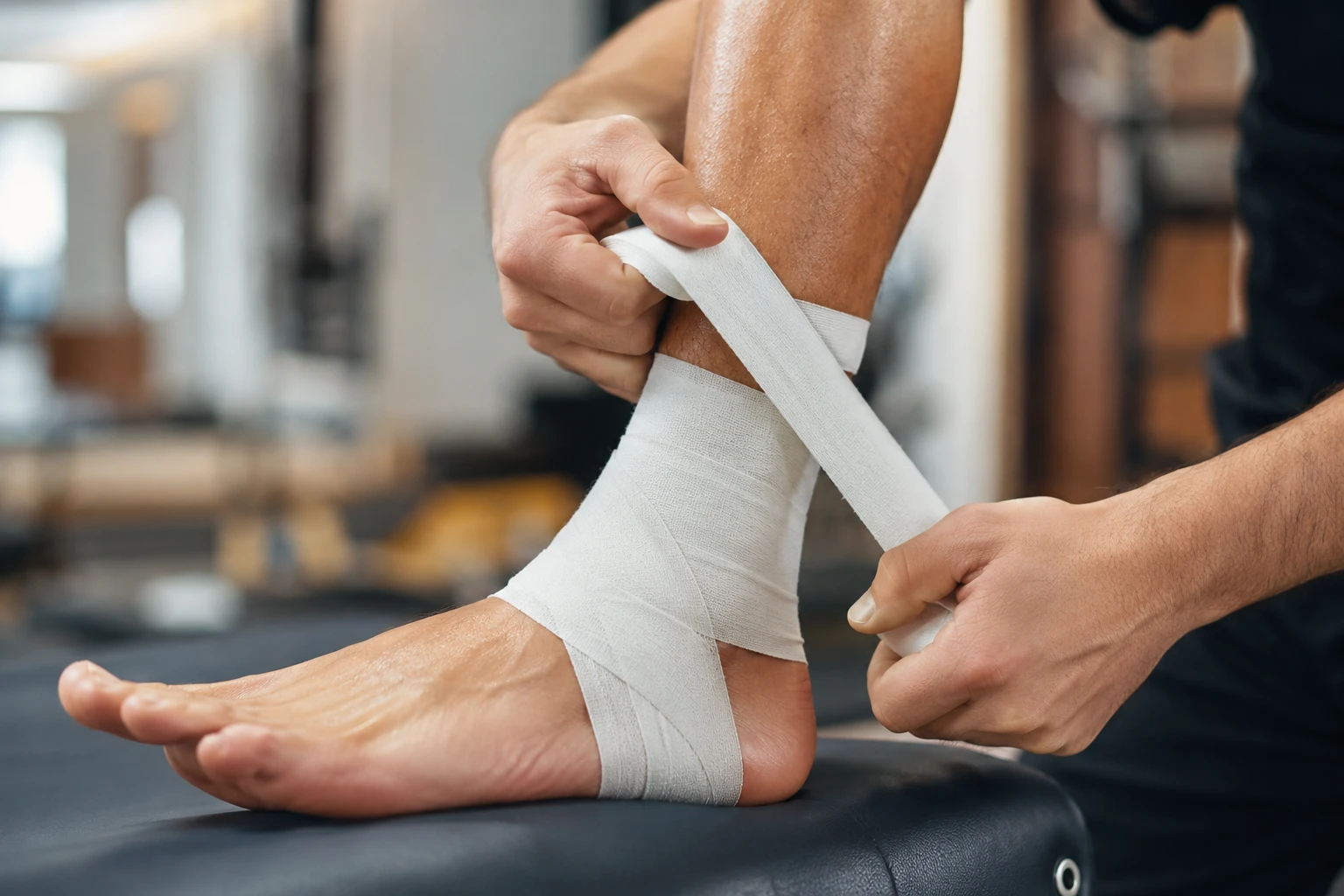
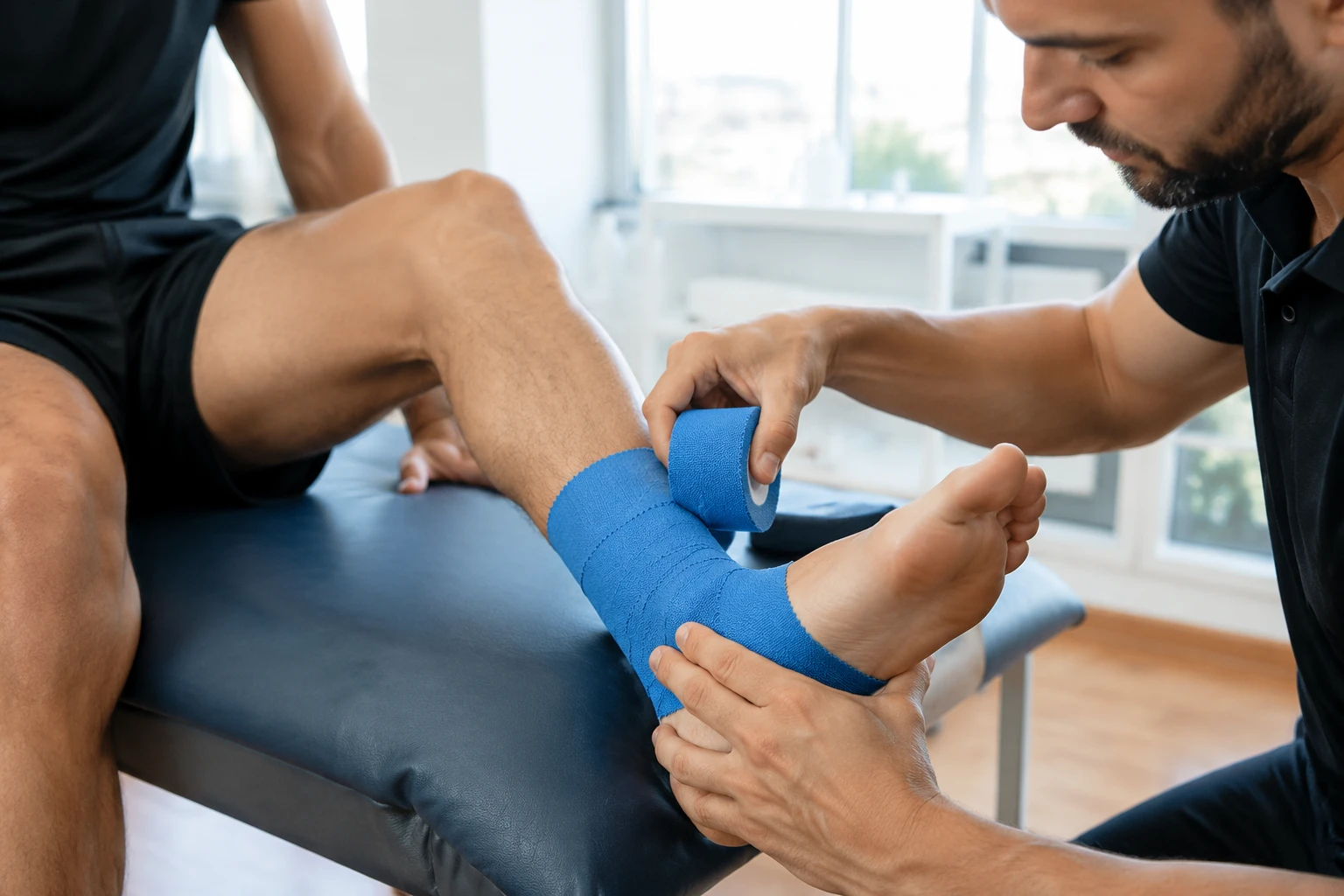
Choosing the correct McConnell taping rigid tape determines whether a physical therapy patient walks out of a clinic pain-free or ends up with a slipped, useless strip of adhesive after five minutes of movement. If you run a medical or orthopedic supply distribution business, stocking low-quality McConnell taping rigid tape is a fast track to lost accounts and frustrated clinic managers. Physical therapists have zero tolerance for tapes that stretch, peel, or cause skin tears.
We will look at why premium McConnell taping rigid tape is the ultimate tool for joint correction, what physical features make or break its clinical performance, and how B2B wholesalers can select products that keep medical buyers coming back.
Why Clinics Demand Authentic McConnell Taping Rigid Tape
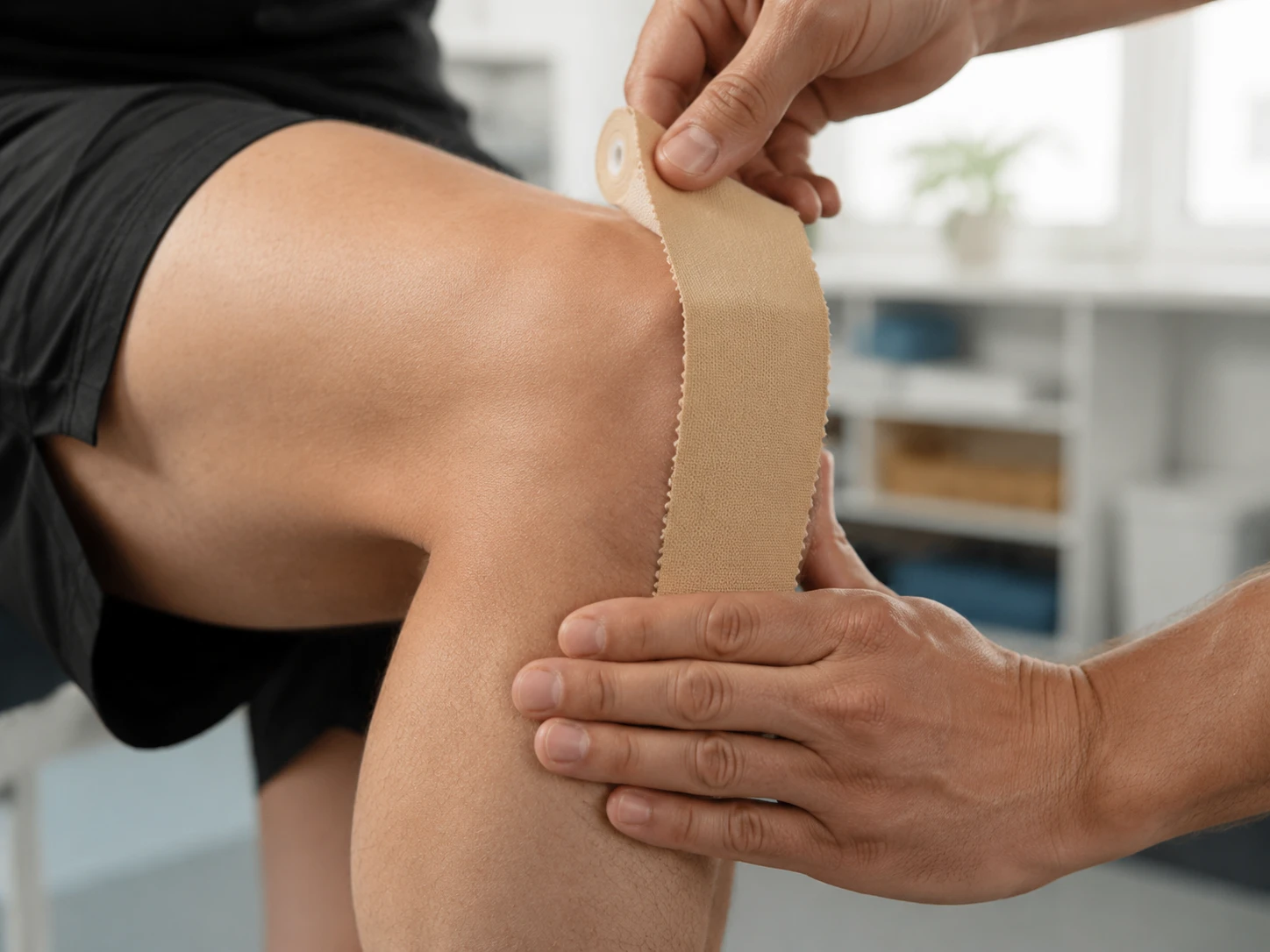
Physical therapists use McConnell taping rigid tape to lock down the kneecap (patella) and physically force it back into its correct tracking groove. Jenny McConnell, an Australian physiotherapist, developed this technique in the 1980s specifically for managing Patellofemoral Pain Syndrome (PFPS). The biomechanics are straightforward but demanding. The tape must pull the patella medially, hold it against immense muscular forces from the quadriceps, and keep it there during loaded squats, running, or stair climbing.
Unlike stretchy kinesiology products, McConnell taping rigid tape must have zero give. Kinesiology tape is great for muscle facilitation and light sensory feedback, but it does absolutely nothing for structural mechanical realignment. If the McConnell taping rigid tape yields even a single millimeter under load, the correction is lost, and the patient’s knee pain returns instantly.
For B2B buyers supplying orthopedic clinics, the message is simple: you cannot sell a generic, stretchy athletic wrap as a professional McConnell taping tape. Clinicians need a specialized, heavy-duty rigid knee support tape that holds up under maximum stress.
The Biomechanical Science Behind McConnell Taping Rigid Tape
Let’s look at the actual clinical studies involving McConnell taping rigid tape. A major systematic review published in the British Journal of Sports Medicine (Barton et al., 2014) analyzed the mechanical and clinical outcomes of patellar taping. The researchers concluded that tailored patellar taping—which strictly controls lateral glide, tilt, and spin—provides immediate, large-scale pain reduction for patients suffering from anterior knee pain.
Another clinical trial published in the Journal of Orthopaedic & Sports Physical Therapy (JOSPT) showed that a 4-week daily program combining patellar taping and targeted exercises significantly improved functional outcomes compared to exercise alone. During these trials, researchers used a high-strength McConnell taping rigid tape over a protective underwrap to hold the patella in its corrected position.
Without an authentic McConnell taping rigid tape, you simply cannot replicate these clinical results. The mechanical correction from the McConnell taping rigid tape relieves pressure on the lateral femoral condyle, reduces pain, and allows the patient to perform physical therapy exercises without discomfort. This means the tape is not just a passive support; it is an active facilitator of rehab.
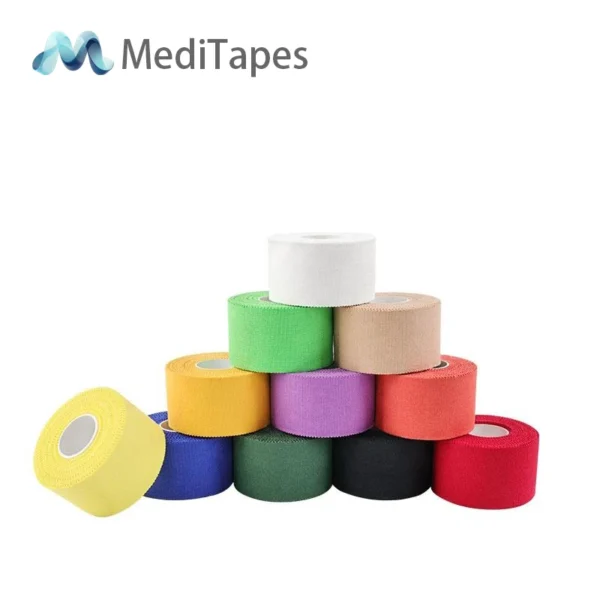
Strapazierfähiges Baumwoll-Sporttape, starres Klebeband für Knöchelbandagen
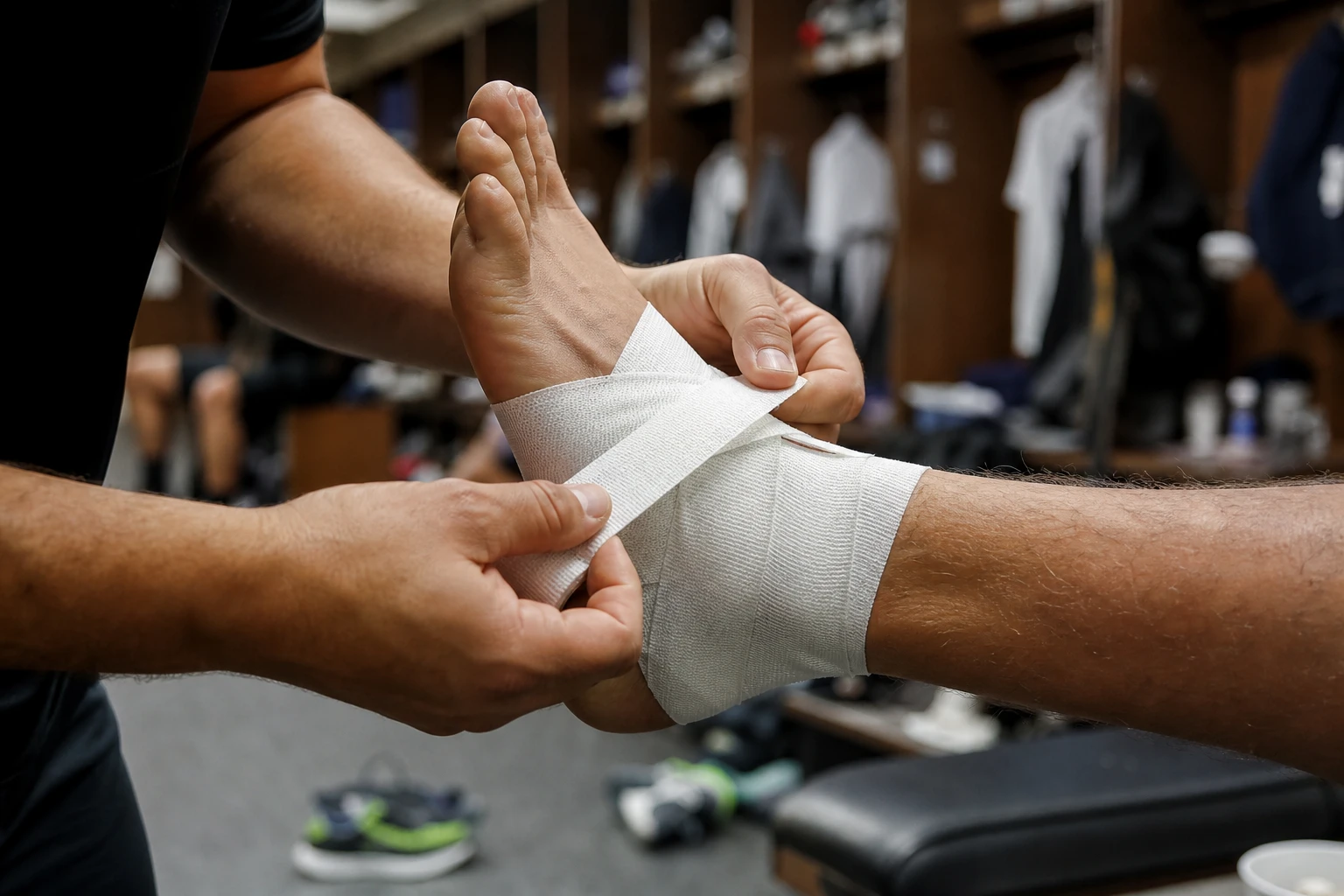
Sorgen Sie für Spitzenleistung mit strapazierfähigem Baumwoll-Sporttape. Dieses starre Klebeband wurde speziell für Knöchelverbände und Gelenkunterstützung entwickelt und hält Schweiß sowie intensiven Bewegungen stand. Unser langlebiges Baumwoll-Sporttape ist die erste Wahl zur Vorbeugung von Sportverletzungen.
Material Engineering of Premium McConnell Taping Rigid Tape
When we analyze a professional McConnell taping rigid tape, the backing material and the adhesive matrix are the two most critical components. If either is subpar, the tape fails its clinical objective. Not all fibers are created equal for McConnell taping rigid tape, and as a distributor, you need to understand the difference.
Rayon vs. Cotton in McConnell Taping Rigid Tape Backing
The fabric backing provides the tensile strength of the tape. Cotton is decent, but premium McConnell taping rigid tape relies on high-grade synthetic rayon. Rayon fibers give McConnell taping rigid tape about three times the tensile strength of standard cotton.
While cotton fibers are soft and breathe reasonably well, they possess natural elasticity that causes them to stretch slightly under continuous tension. Rayon, on the other hand, is completely rigid. It does not yield under the heavy pull required to realign a misaligned patellar joint. Additionally, rayon-based McConnell taping rigid tape resists moisture and sweat much better than cotton.
Many distributors sell cotton options like our Farbiges Sporttape aus Baumwollgewebe, which are fantastic for general joint taping, light strapping, and moderate sports protection. However, for elite knee correction and heavy-duty patellar realignment, a rayon-based McConnell taping rigid tape is the gold standard that physiotherapists demand.
Tensile Strength and Mechanical Support in McConnell Taping Rigid Tape
Tensile strength is what prevents McConnell taping rigid tape from tearing under joint load. In the adhesive tape industry, we measure this by pulling the tape longitudinally until it breaks.
For high-stress applications, a professional McConnell taping rigid tape must withstand massive forces. The standard formula to express this technical threshold is:
Tensile Strength (N/cm) = Breaking Force (Newtons) / Tape Width (centimeters)
A top-tier rayon rigid knee support tape should offer a tensile strength of at least 120 N/cm (or roughly 30 to 40 lbs per inch of width). This formula is how manufacturers rate the strength of McConnell taping rigid tape. If a manufacturer cannot provide these metrics, they are likely selling low-density cotton under the guise of medical-grade rigid tape.
Adhesive Requirements for McConnell Taping Rigid Tape
The adhesive on a McConnell taping rigid tape needs to be aggressive. When a therapist pulls the patella medially, they apply a high-tension load. If the glue on the McConnell taping rigid tape fails, the tape will slide off the protective underwrap (often Fixomull or Hypafix).
A medical-grade, hot-melt zinc oxide adhesive provides the aggressive tack needed for McConnell taping rigid tape. This adhesive must be dry-coated and porous to allow perspiration to escape, preventing the skin from macerating under the tape during long-term wear. Sweat shouldn’t compromise the McConnell taping rigid tape performance, meaning the adhesive matrix must remain stable even in humid or sweaty conditions.
| Tape Characteristic | Premium Rayon Rigid Tape | Standard Cotton Rigid Tape | Kinesiology Elastic Tape |
|---|---|---|---|
| Trägermaterial | 100% High-Tensile Rayon | 100% Woven Cotton | Cotton-Spandex Blend |
| Elastizität | 0% (Completely Rigid) | Minimal (1-3% stretch under heavy load) | High (up to 140-180% stretch) |
| Zugfestigkeit | High (over 120 N/cm) | Moderate (approx. 70-80 N/cm) | Low (designed to stretch) |
| Adhesive Style | Aggressive Zinc Oxide | Standard Hot-Melt Adhesive | Acrylic Hypoallergenic Wave |
| Primary Clinical Use | Joint Immobilization & McConnell Taping | General Sports Strapping & Joint Support | Muscle Facilitation & Lymphatic Drainage |
Why B2B Wholesalers Fail with Cheap Imitations of McConnell Taping Rigid Tape
Sourcing a low-cost alternative instead of genuine McConnell taping rigid tape is a recipe for high product returns, bad reviews, and lost market share. Physiotherapy clinics test McConnell taping rigid tape to its limits. During a typical rehab session, a patient might perform dozens of single-leg squats, step-ups, and lunges.
If your wholesale McConnell taping rigid tape stretches during use, the kneecap slips lateral. The therapist has to strip the tape, throw it away, and reapply a new piece. This wastes clinic time, wastes material, and irritates the patient.
Furthermore, a poor-quality McConnell taping rigid tape will leave sticky residue on the protective underwrap or, worse, on the patient’s skin. This is a common complaint from therapists using cheap Chinese imports that use non-medical grade industrial glues. Over time, these low-quality adhesives cause contact dermatitis, which is a massive liability for any healthcare provider. Importing cheap tape instead of medical-grade McConnell taping rigid tape is a quick way to lose clinic accounts to competitors who invest in quality.
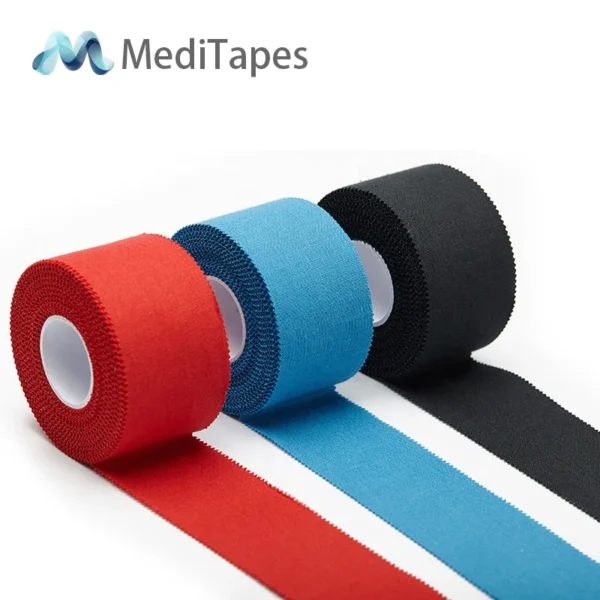
OEM-Hersteller von Sport-Tapes aus Baumwollgewebe in kundenspezifischen Farben
Bauen Sie Ihre Marke mit unserem farbigen Baumwollgewebe-Sporttape auf. Als führendes Werk bieten wir OEM-Dienstleistungen für individuelle Breiten, Längen und Verpackungen an. Dieses stark haftende Baumwoll-Sporttape kann an die Teamfarben angepasst werden. Werden Sie unser Partner für eine zuverlässige Fertigung.
Sourcing Metrics for Bulk McConnell Taping Rigid Tape Purchases
When importing McConnell taping rigid tape, look at the specifications rather than just comparing price per roll. Here are the key technical standards you need to demand from your manufacturer:
- Adhesive Mass: Ensure the coating weight of the zinc oxide adhesive is consistent across the entire roll. Patchy glue means unpredictable clinical holds.
- Serrated Edges (Pinked Edges): Therapists do not have time to use scissors mid-treatment. The McConnell taping rigid tape must have clean, micro-serrated edges so it tears easily by hand both lengthwise and crosswise.
- Porous Structure: Hold a roll up to the light. You should see tiny perforations in the weave. This breathability is essential for patients wearing the patellofemoral tape for 24 to 48 hours.
- FDA, CE, and ISO 13485 Compliance: Since these products are used in medical settings, proper regulatory registration is mandatory for trouble-free customs clearance and wholesale distribution in North America and Europe.
We measure McConnell taping rigid tape performance using standardized ASTM tests for peel adhesion and tensile strength. For wholesalers, buying McConnell taping rigid tape means checking these test certificates. Make sure your McConnell taping rigid tape manufacturer offers detailed lab reports validating their material claims.
Success Stories: Upgrading to Premium McConnell Taping Rigid Tape
Let’s look at a real-world scenario from our experience working with regional medical supply distributors. A prominent medical distributor in Germany was struggling with a high rate of customer churn among physical therapy clinics. They were purchasing a budget cotton rigid tape and marketing it as a suitable McConnell taping tape.
After several clinic buyers complained that the tape was stretching and peeling off during active knee rehabilitation, the company decided to upgrade to a high-grade rayon McConnell taping rigid tape. They worked with us to private-label a premium, 38mm-wide rayon tape coated with medical-grade, hypoallergenic zinc oxide adhesive.
The results were immediate. Their clinic clients reported that the new McConnell taping rigid tape stayed locked in place for up to 48 hours without causing skin reactions or losing joint correction. The distributor saw their return rate drop from a painful 7.4% to under 0.2% within six months. This swap proved that premium McConnell taping rigid tape is a retention tool for medical distributors who want to dominate the clinical physical therapy market.
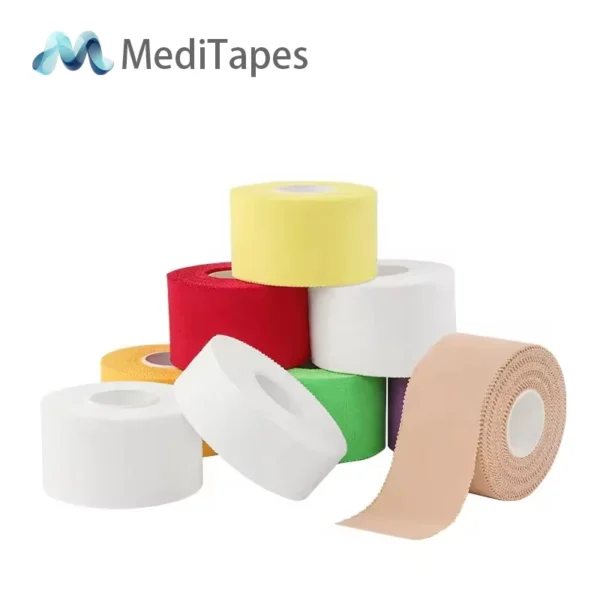
Zinkoxid-Sporttape, medizinisches starres Baumwolltape für die Physiotherapie
Medizinisches Zinkoxid-Sporttape bietet maximale Gelenkimmobilisierung. Dieses unelastische, starre Baumwolltape ist latexfrei und hypoallergen, was es sicher für empfindliche Haut macht. Ein unverzichtbares Baumwoll-Sporttape für Physiotherapiepraxen und Rehabilitationszentren.
FAQ About Sourcing McConnell Taping Rigid Tape
Why is rayon preferred over cotton for McConnell taping rigid tape?
Rayon gives the McConnell taping rigid tape unparalleled tensile strength and absolutely zero stretch. Cotton is softer but can yield slightly under the heavy loads required to hold a kneecap in place. For maximum clinical correction, rayon is the preferred fabric.
How long does the adhesive on McConnell taping rigid tape last?
A high-quality McConnell taping rigid tape uses zinc oxide adhesive that should maintain its bond for at least 24 to 48 hours. It must withstand moisture, sweat, and friction from clothing without peeling at the corners.
Can McConnell taping rigid tape be applied directly to the skin?
Usually, McConnell taping rigid tape is applied over a hypoallergenic underwrap tape (such as Fixomull or Hypafix). Because the rigid tape’s zinc oxide adhesive is incredibly strong, applying it directly to the skin can cause irritation or pain upon removal. Using the two-tape system protects the skin while maintaining joint alignment.
What is the shelf life of medical-grade rigid sports tapes?
Typically, a high-quality zinc oxide rigid tape has a shelf life of 2 to 3 years when stored in a cool, dry place. Wholesalers should check that their manufacturer uses stable hot-melt adhesive formulations that do not dry out or melt during shipping and warehousing.
Partner with MediTapes for Your McConnell Taping Rigid Tape Needs
If you want to grow your medical wholesale business, you need products that perform flawlessly under pressure. We manufacture top-tier McConnell taping rigid tape designed for orthopedic clinics and sports medicine suppliers globally.
Bei Medi-Tapes, we focus on the rigorous technical demands of B2B buyers. Whether you need custom OEM private-label branding, specialized packaging, or bulk container shipments, we deliver high-tensile, zero-stretch rigid tapes that medical professionals trust.
To get samples of our McConnell taping rigid tape or to discuss your custom sourcing requirements, please visit our Kontaktseite or reach out to us directly via email at info@meditapes.com. Let’s work together to provide your clinic customers with the absolute best joint stability products on the market.