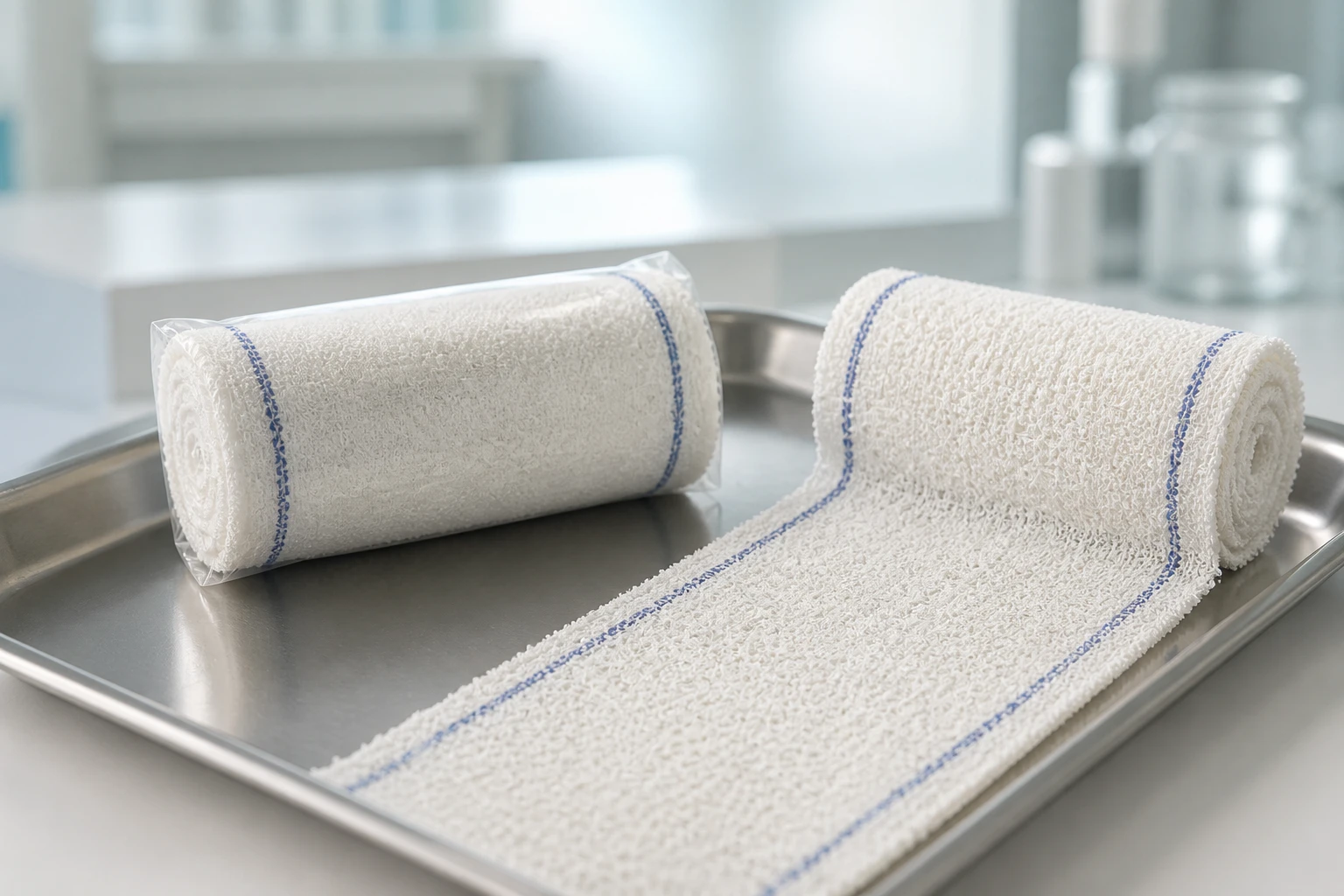
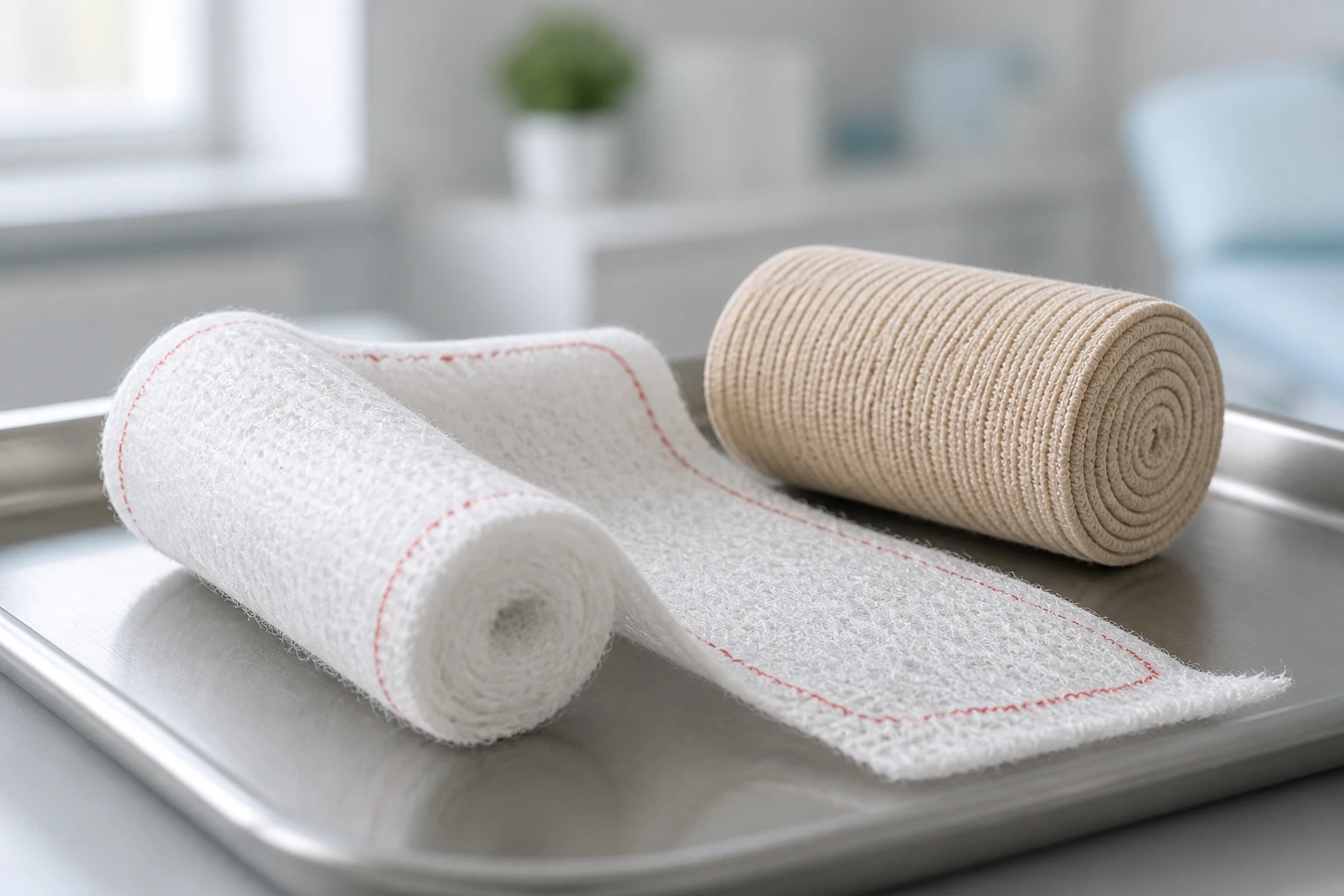
Wound care procurement teams frequently face a tough choice when purchasing retention and light compression wraps. Modern synthetic textiles and low-cost polyester blends flood the market, advertising cheaper unit pricing and massive stretch ratios. But seasoned clinical nurses and hospital buyers know that healing happens right against the skin. When a patient has fragile tissue, persistent drainage, or healing granulations, synthetic wraps often trap sweat, shed micro-lint, and stick painfully to delicate wound beds.
That is why experienced healthcare professionals continue to demand the classic pure cotton crepe bandage.
Manufactured from natural cellulose fibers woven with balanced mechanical twist tensions, a genuine pure cotton crepe bandage offers moisture management, breathability, and non-traumatic removal that synthetic filaments cannot replicate. For facilities handling post-operative incisions, light to moderate exudate drainage, and sensitive skin, stocking a reliable pure cotton crepe bandage is a practical clinical safeguard.
The Moisture Physics of the Pure Cotton Crepe Bandage
To see why the pure cotton crepe bandage consistently outperforms synthetic alternatives, look at the fiber under a microscope. Cotton is a hollow, naturally twisted cellulose tube with an open inner lumen. This organic structure uses natural capillary action to pull moisture inward along the fiber rather than letting sweat and wound fluid pool against vulnerable skin.
- Exudate Management Pathway:
- Fluid moves from the wound surface into the primary contact layer.
- Capillary wicking transfers moisture across into the pure cotton crepe bandage.
- The open-pore woven structure lets excess moisture vapor evaporate into the air.
When a wound produces light discharge under a synthetic wrap, the wrap forms a warm, humid barrier. Sweat and serous fluids have nowhere to go, causing periwound skin maceration. A pure cotton crepe bandage works like a breathable chimney. It absorbs excess fluid into its core structure while allowing airflow to evaporate moisture naturally.
Clinical Reality Check: Synthetic fibers like polyester and nylon are naturally water-repellent. Manufacturers coat them with chemical wetting agents to simulate absorption, but repeated autoclaving and fluid saturation wash these coatings away, leaving a slick plastic surface that slides off dressings.
According to official medical textile standards established by the British Pharmacopoeia, clinical-grade cotton textiles must meet exact specifications for water absorbency speed, sinking time, and fiber purity. A compliant pure cotton crepe bandage takes in fluid across its entire weave within seconds, keeping fluid from breaking through to secondary covers or pooling on healthy skin.
Why Light Exudate Wounds Demand a Pure Cotton Crepe Bandage
Managing low-to-moderate wound exudate is often trickier than dealing with heavy fluid discharge. With high-drainage wounds, thick specialty foams or alginate dressings handle the bulk of the fluid. But during the proliferation and healing phases—when drainage slows to a trickle—dressings can easily dry out and stick to the delicate wound bed.
- Adhesion and Linting Comparison:
- Synthetic & Blended Wraps: Hydrophobic fibers shed synthetic fuzz, embed into healing scabs, and cause painful, traumatic bandage changes.
- Pure Cotton Crepe Bandage: Long-staple cotton fibers stay tightly bound, wick smoothly without snagging, and permit clean, pain-free removal.
In these sensitive scenarios, using a pure cotton crepe bandage provides three crucial clinical benefits:
1. Eliminating Foreign-Body Reactions (Zero Linting)
Short synthetic staple yarns tend to fray when stretched over active joints. These loose microfibers break off and settle into the wound margin. When foreign synthetic fibrils land on granulating tissue, local macrophages treat them as irritants, sparking prolonged inflammation. A medical-grade pure cotton crepe bandage uses combed, long-staple cotton with clean woven selvedges, preventing stray threads from shedding onto sensitive skin.
2. Preventing Painful Bandage Adherence
When light exudate dries between dressing shifts, cheap wraps stick fast to tissue and underlying gauze. Tearing off a stuck synthetic wrap strips away freshly formed skin cells, resetting weeks of recovery. Because the pure cotton crepe bandage distributes moisture evenly without forming dry synthetic crusts, dressing changes remain clean and painless.
3. Thermoregulation and Skin Comfort
Under synthetic wraps, skin temperature climbs quickly, causing uncomfortable itching, sweat rashes, and periwound breakdown. The open weave of a pure cotton crepe bandage supports natural heat dissipation, keeping the skin cool and dry beneath long-term wraps.
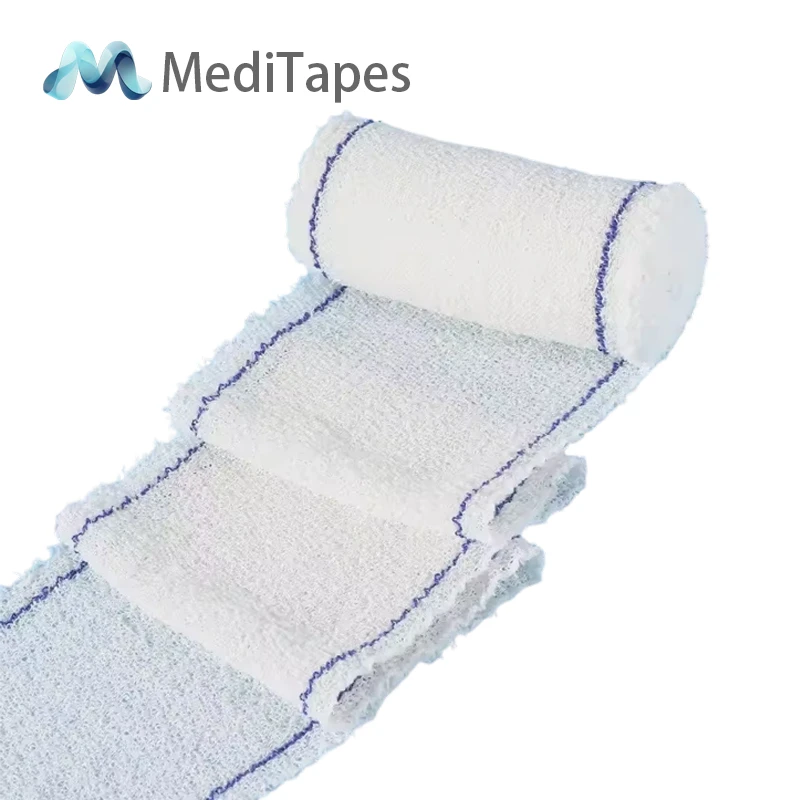
Medical Cotton Elastic Crepe Bandage for Wound Care & Support
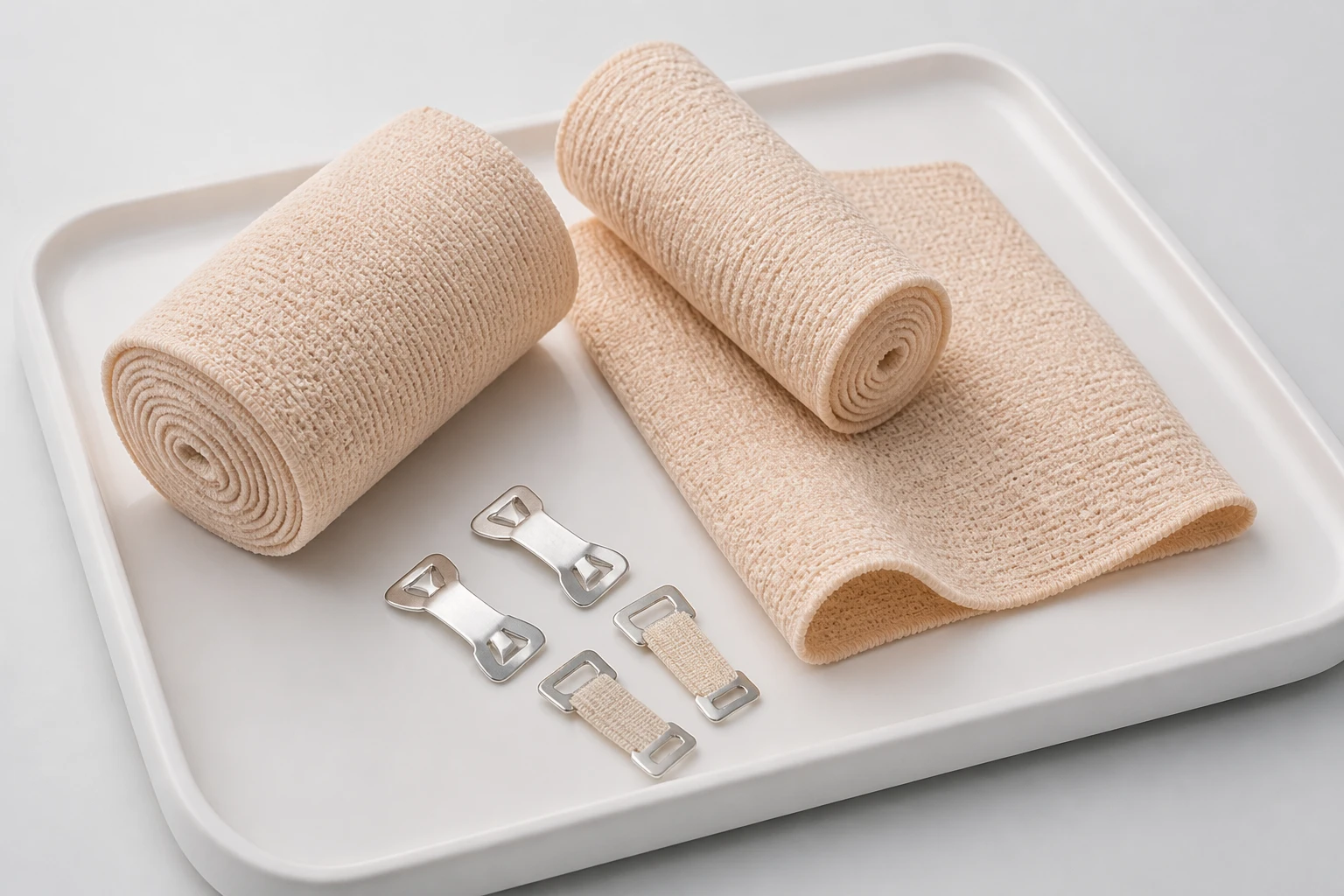
Our Medical Cotton Elastic Crepe Bandage offers superior breathability and consistent compression. Ideal for securing dressings and supporting strains. This elastic crepe bandage is washable, reusable, and provides firm grip without slipping. Perfect for professional wound care clinics.
Mechanical Elasticity Without Synthetic Elastomers
A frequent misunderstanding in procurement offices is assuming every elastic bandage needs polyurethane, spandex, or natural rubber latex. While high-compression wraps require elastomeric cores, a standard pure cotton crepe bandage produces its stretch through pure mechanical textile engineering.
- Manufacturing Flow for Natural Elasticity:
- Raw Combed Cotton Yarn
- High-Twist Spinning (Alternating S and Z Twist Directions)
- Specialized Crepe Loom Weaving
- Hot-Water Relaxation and Finishing
- Durable Elastic Recovery Without Rubber
The S- and Z-Twist Crepe Weave
The stretch in a pure cotton crepe bandage comes from combining warp threads spun in alternating clockwise (Z) and counter-clockwise (S) directions under high tension. When woven and treated with a hot-water finishing wash, these opposing yarns contract into a spring-like, crimped wave.
This mechanical construction offers notable advantages:
- Delivers 100% to 140% working elongation without requiring embedded elastic rubber.
- Provides gentle, predictable holding pressure without the dangerous pressure spikes seen in tight synthetic wraps.
- Retains breathable air pockets between the crimped cotton loops.
- Regains its natural stretch and shape after washing and steam autoclaving.
Calculating Sub-Bandage Pressure
Compression pressure applied by a pure cotton crepe bandage follows Laplace’s Law:
- Sub-Bandage Pressure (P) = (Tension in kgf × Overlap Layers × 4630) / (Limb Circumference in cm × Bandage Width in cm)
Because a pure cotton crepe bandage exhibits low resting tension (a short-to-medium stretch profile), it is far less likely to cause tissue ischemia or pressure damage during rest than high-tension synthetic wraps. Studies indexed by the NCBI / PubMed Central show that consistent sub-bandage pressure and breathability are essential to protect delicate skin from constriction during ongoing therapy.
Technical Specifications: Pure Cotton Crepe Bandage vs. Synthetic Blends
When evaluating incoming consignments, procurement teams must verify that hospital stock matches clinical and pharmacopeial standards. The comparison table below contrasts a standard pure cotton crepe bandage with typical polyester/PBT and mixed blends.
| Technical Parameter | Pure Cotton Crepe Bandage (100% Cotton) | Synthetic Blend Bandage (Polyester / PBT) | Cotton/Viscose Mixed Bandage |
|---|---|---|---|
| Material Composition | 100% Combed Pure Cotton | 100% Polyester or PBT blend | Cotton warp, Viscose/Rayon weft |
| Fabric Weight (GSM) | 75 – 115 g/m² (unextended) | 45 – 65 g/m² | 60 – 80 g/m² |
| Exudate Absorption Speed | Under 5 seconds | Over 30 seconds (often repels fluid) | 8 – 15 seconds |
| Moisture Absorption Capacity | Over 800% of dry weight | Under 180% of dry weight | Approx. 500% of dry weight |
| Elastic Generation | High-twist mechanical warp | Synthetic elastane / heat-set crimp | Twisted warp with viscose stretch |
| Linting & Shedding Risk | Minimal (woven selvedges) | Moderate to high (fiber breakage) | Moderate (viscose fraying) |
| Skin Sensitivity / Allergy | Hypoallergenic, 100% latex-free | Risk of synthetic contact dermatitis | Low-to-moderate |
| Sterilization Compatibility | Steam Autoclave (121°C/134°C), EO, Gamma | Heat sensitive (shrinks in steam) | EO, limited steam cycles |
| Edge Construction | Fast/woven selvedge (non-fraying) | Cut edge or ultrasonic seal | Cut or overlocked edge |
Every batch of MediTapes pure cotton crepe bandage products is manufactured to meet rigorous international quality systems, complying with ASTM International textile standards and certified under ISO 13485 medical device regulations.
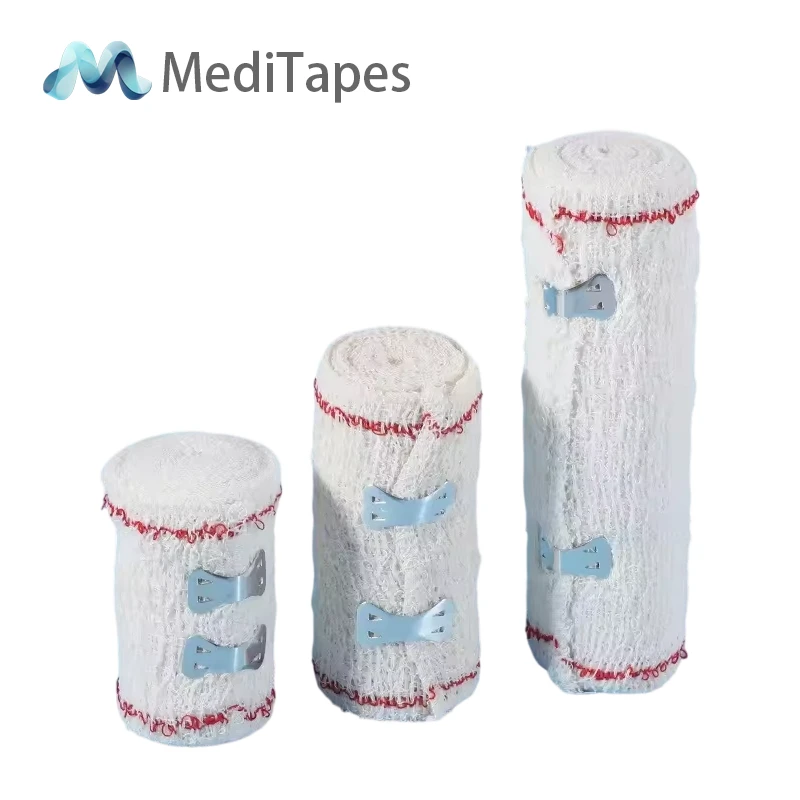
Heavy Duty Spandex Elastic Crepe Bandage – Latex Free Factory
Source premium Heavy Duty Spandex Elastic Crepe Bandage directly from the factory. Designed for strong compression in orthopedics, this latex-free crepe bandage minimizes allergic reactions. Durable elasticity ensures long-term support for severe sprains and post-surgical recovery.
Practical Applications for the Pure Cotton Crepe Bandage
A dependable pure cotton crepe bandage plays an essential role across several hospital departments:
- Key Clinical Applications:
- Retention of primary gauze and hydrogel pads.
- Secondary wrap over a highly absorbent wound dressing.
- Mild compression for sprains, strains, and joint swelling.
- Secure wrapping for fragile geriatric and pediatric skin.
- Post-operative limb support and splint padding retention.
1. Secondary Wrap Over a Highly Absorbent Wound Dressing
When caring for draining ulcers or surgical incision lines, clinicians place a highly absorbent wound dressing over the open wound. Wrapping this with a pure cotton crepe bandage keeps the primary pad snug against the body without compressing its absorbent core. The breathable cotton weave allows the primary dressing to manage fluid levels without trapping sweat against surrounding skin.
2. Mild Compression for Joint Strains and Sprains
For minor joint injuries and soft-tissue swelling, an elastic pure cotton crepe bandage provides comfortable, contouring support. It stretches smoothly over knees, wrists, and ankles without slipping, rolling, or cutting off circulation during everyday movement.
3. Protecting Fragile Geriatric and Pediatric Skin
Parchment-thin geriatric skin tears easily when exposed to heavy adhesive tapes or tight synthetic bands. A soft pure cotton crepe bandage spreads holding tension across a wide surface area, avoiding shear friction while keeping the skin dry and healthy.
4. Emergency Field Kits and First Aid
In field emergency bags, versatility is vital. A pure cotton crepe bandage remains reliable in heat, dust, and humid conditions. Unlike nylon wraps that slide out of place when wet, cotton grips securely even when handling blood or wound drainage.
Sourcing and Quality Checkpoints for B2B Buyers
For hospital procurement officers, medical distributors, and aid organizations, sourcing medical textiles means balancing unit pricing against real clinical reliability. Saving a few cents per roll on low-grade synthetic wraps often leads to higher infection rates, dressing slips, and nurse dissatisfaction.
- Textile Quality Chain:
- Combed Pure Cotton Yarn
- Uniform Crepe Weave Density
- Sealed, Woven Selvedge Edges
- Reliable In-Clinic Performance
When auditing a prospective pure cotton crepe bandage supplier, check these four technical criteria:
1. Confirm True 100% Cotton Content
Some manufacturers cut costs by mixing recycled viscose or polyester into their yarns while still branding the product as “cotton crepe.” You can check fiber purity by requesting a full laboratory Certificate of Analysis (CoA) or doing a simple burn test: pure cotton burns to a fine gray ash with a burning-paper scent, while synthetics melt into hard, dark plastic beads.
2. Inspect Edge Construction
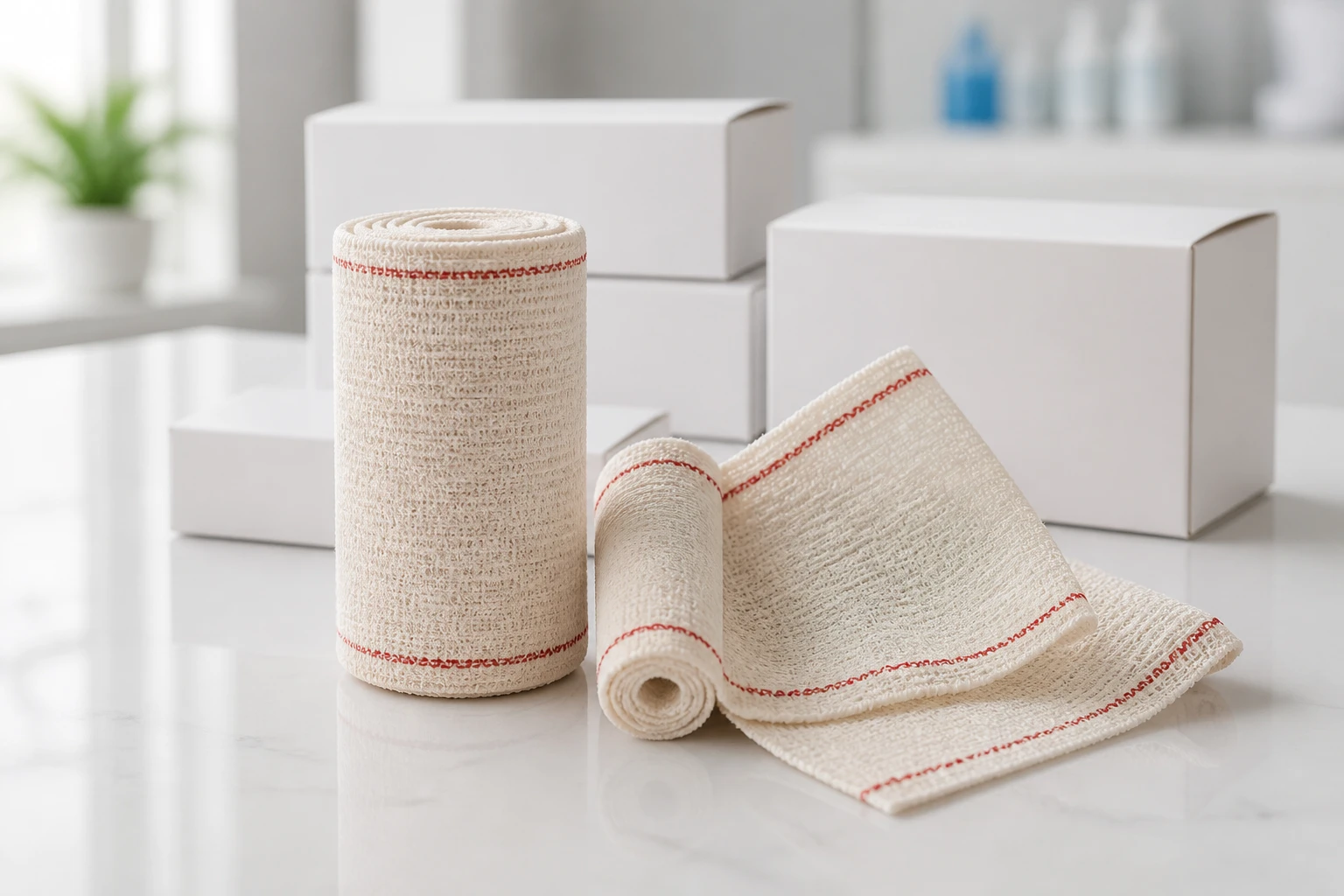
Always choose a pure cotton crepe bandage that has finished, woven selvedges. Inexpensive bulk bandages cut from wide parent sheets often have raw, glued edges that unravel during wrapping, leaving loose threads across open dressings and surgical trays.
3. Check Autoclave and Washing Durability
In public healthcare and developing regions, bandages are washed and autoclaved repeatedly to save costs. A high-twist pure cotton crepe bandage can be washed in warm water, laid flat to dry, and steam-autoclaved multiple times without losing its elasticity. Synthetic wraps, on the other hand, often warp or lose their stretch after high-temperature sterilization.
4. Verify Moisture Absorption Rates
Ensure the sample absorbs water droplets instantly. If water beads on the surface for more than five seconds, the bandage has either been blended with synthetic fibers or treated with heavy finishing starches that hinder clinical absorption.
Hospital Case Overview: Reducing Dressing Slippage and Skin Breakdown
A 400-bed regional hospital experienced recurring dressing slippage and periwound skin problems in its outpatient wound care department after switching to a low-cost synthetic stretch bandage.
- The Problem: Non-absorbent synthetic wraps trapped sweat, slipped down patients’ limbs, and required multiple dressing changes per day.
- The Clinical Solution: Replaced synthetic wraps with a verified 100% pure cotton crepe bandage offering 100 g/m² density and woven selvedges.
- The Measurable Outcome: Dressing slippage dropped by 74%, and average daily dressing changes decreased from 2.8 to 1.4 times per patient.
Observations from the Ward
Staff reported that the synthetic bandages slid down patients’ legs within hours of application because trapped perspiration acted as a lubricant. Moisture pooling around venous leg ulcers caused skin maceration, requiring frequent dressing replacements.
Once the ward switched back to the MediTapes pure cotton crepe bandage line, the natural cotton fibers absorbed sweat and drainage immediately. The bandage maintained its grip on underlying dressings, kept skin dry, and cut daily dressing changes in half, saving significant nursing time and material costs.
Step-by-Step Multi-Layer Dressing Routine
Getting dependable clinical results depends on using the proper bandaging sequence. A pure cotton crepe bandage functions best when applied as part of a clean multi-layer dressing protocol:
- Layer 1 (Contact Layer): Non-adherent dressing, paraffin gauze, or hydrogel placed directly over the wound bed.
- Layer 2 (Absorbent Pad): Highly absorbent wound dressing or medical gauze and bandages composite pad to collect drainage.
- Layer 3 (Retention & Support): Pure cotton crepe bandage wrapped with 50% overlap to hold dressings firmly in place.
- Step 1: Cleanse the Wound Site – Flush the wound and periwound area with sterile saline or wound wash.
- Step 2: Apply the Primary Layer – Position a sterile, non-adherent dressing directly across the wound bed.
- Step 3: Add Absorbent Padding – For draining wounds, place a secondary absorbent gauze pad over the primary contact layer.
- Step 4: Wrap with Pure Cotton Crepe Bandage – Anchor the pure cotton crepe bandage below the dressing with two circular foundation turns. Continue wrapping upward in a spiral or figure-eight pattern with 50% overlap, maintaining smooth, even tension without stretching to maximum limit.
- Step 5: Secure the Wrap – Fasten the final end with medical tape or elastic bandage clips. Never place clips or knots directly over injured tissue or bony areas.
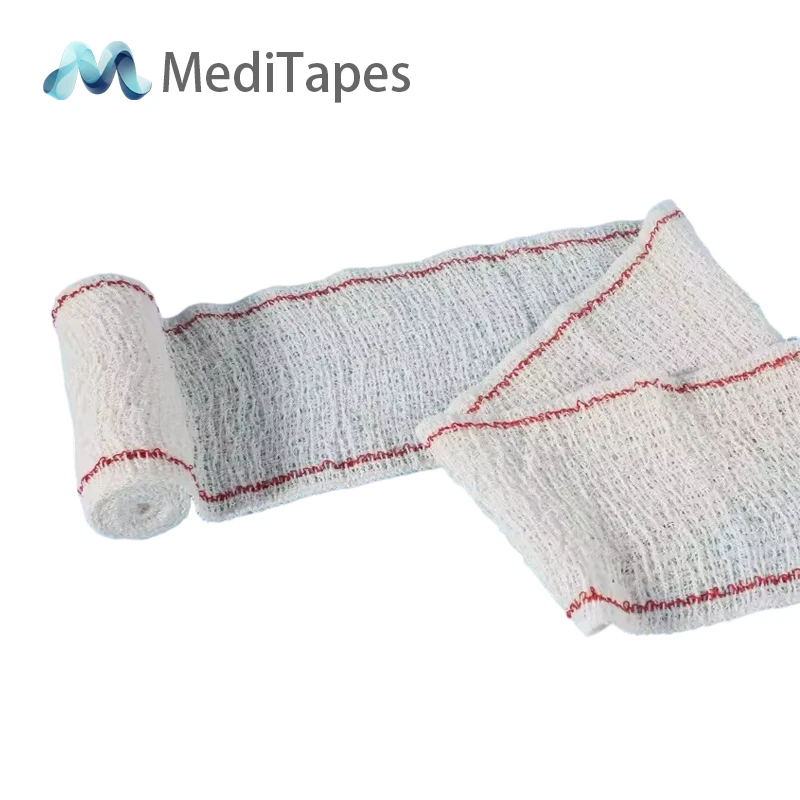
Wholesale Breathable Elastic Crepe Bandage for Sports Injuries
Bulk buy Breathable Elastic Crepe Bandage designed for sports recovery. This lightweight crepe bandage conforms easily to body contours like knees and ankles. It reduces swelling while allowing skin to breathe. A top choice for athletic trainers needing reliable sports injury support.
Frequently Asked Questions (FAQ)
What makes a pure cotton crepe bandage different from a standard PBT elastic bandage?
A pure cotton crepe bandage is woven from 100% natural cotton yarns and generates its elasticity through high-twist spinning rather than synthetic plastics. Cotton provides rapid exudate absorption, natural breathability, and reliable steam autoclave stability. A PBT (Polybutylene Terephthalate) bandage is a lightweight synthetic wrap that stretches easily but has minimal fluid absorbency, making it prone to trapping sweat and slipping over moist wounds.
Can a pure cotton crepe bandage be washed and autoclaved for reuse?
Yes. A genuine 100% pure cotton crepe bandage is fully washable and reusable. Washing the bandage in warm soapy water and allowing it to air-dry flat restores the mechanical crimp of the high-twist yarns. The cotton fibers can withstand repeated steam autoclaving at 121°C or 134°C without breaking down or losing their elastic properties.
Is a pure cotton crepe bandage safe for patients with latex allergies?
Yes. A standard pure cotton crepe bandage is 100% latex-free. Its elastic recovery comes entirely from high-twist S and Z yarn weaving geometry rather than embedded rubber or latex elastomeric cords. This makes it completely safe for patients and healthcare workers with Type I natural rubber latex sensitivities.
How does a pure cotton crepe bandage help prevent periwound skin maceration?
Unlike non-absorbent synthetic wraps that hold trapped moisture against the skin, a pure cotton crepe bandage absorbs perspiration and light wound drainage through natural capillary action. Its open, breathable weave lets moisture vapor evaporate freely into the surrounding air, keeping the skin beneath dry and intact.
Sourcing Medical-Grade Bandages with MediTapes
Consistent wound care outcomes start with dependable, hospital-tested textiles. When protecting skin integrity, managing moisture, and preventing bandage slippage, settling for cheap blended wraps leads to higher dressing consumption and patient discomfort.
MediTapes manufactures and exports premium pure cotton crepe bandage supplies, cohesive elastic wraps, and clinical gauze dressings to hospitals, healthcare distributors, and relief agencies around the world.
- Why Choose MediTapes Products:
- 100% Combed Pure Cotton: No synthetic fillers, minimal linting, and rapid moisture absorption.
- Certified Quality Standards: Manufactured in compliance with ISO 13485 quality frameworks with complete lot traceability.
- B2B Customization: Available in standard clinical widths (5 cm, 7.5 cm, 10 cm, 15 cm) with custom packaging, private branding, and sterile or non-sterile formats.
- Reliable Bulk Supply: High manufacturing capacity and dependable inventory management to support long-term distribution contracts.
Explore our complete catalog of medical cotton elastic crepe bandage products for technical datasheets, or contact our procurement team directly at info@meditapes.com to request product samples, factory pricing, and compliance documentation.