If you run procurement for a lymphedema clinic, a hospital network, or a medical distribution enterprise, you already know the frustration. You order a batch of compression bandages, hand them over to your physical therapists, and within two weeks, the complaints start rolling in. The bandages lose their elasticity after three hot washes. The edges fray. Or worse, the sub-bandage pressure drops so fast that severe fluid accumulation returns to the patient’s lower limb before their next appointment.
Finding reliable lymphedema wrapping supplies wholesale isn’t just about matching item numbers on a purchase order. It comes down to physics, textile engineering, and clinical safety. When dealing with complex lymphatic conditions and chronic swelling, buying sub-par materials leads directly to clinical failure and wasted budget.
In this technical guide, we will break down everything you need to know when evaluating lymphedema wrapping supplies wholesale, from Laplace’s Law calculations to tensile fatigue testing and fabric construction.
Understanding Sub-Bandage Pressure: The Physics Behind Edema Control
To evaluate any lymphedema wrapping supplies wholesale offer, you first need to understand how compression actually works on human tissue. Compression therapy relies on applying external mechanical force to skin and underlying vessels. This reduces microvascular filtration, increases lymphatic drainage, and improves venous return.
However, achieving the right sub-bandage pressure isn’t magic—it is governed by fluid dynamic principles and textile mechanics.
Breaking Down Laplace’s Law for Practical Clinical Use
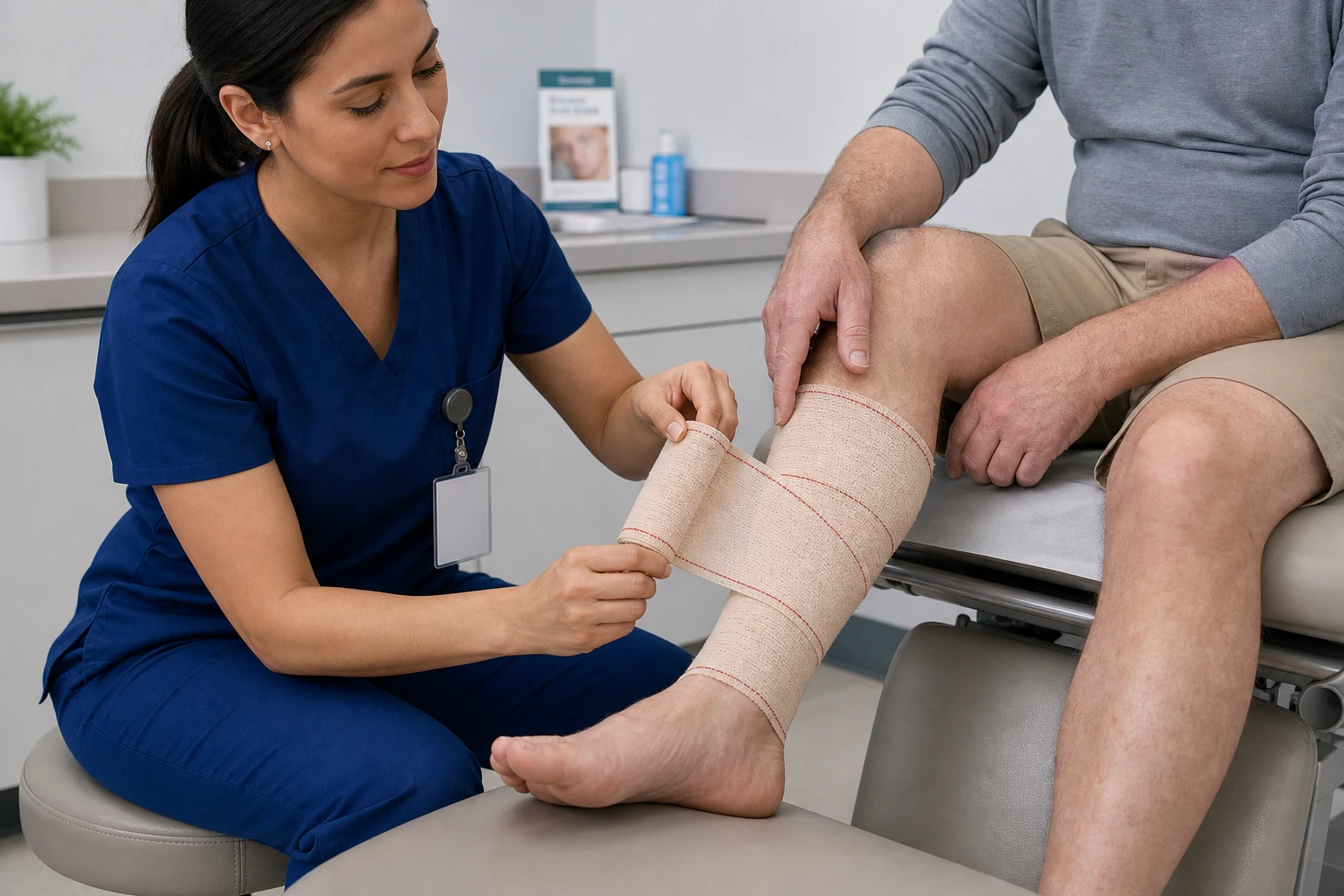
The scientific foundation of medical compression wrapping relies on the Law of Laplace. When your clinicians apply a compression bandage for edema, the interface pressure created on the patient’s limb depends on five distinct variables.
Here is the practical mathematical formula used by biomedical engineers and clinical specialists to calculate sub-bandage pressure:
Pressure (in mmHg) = (Bandage Tension in kgf * Number of Overlapping Layers * 4630) / (Limb Circumference in cm * Bandage Width in cm)
Where:
- Pressure is the interface force expressed in millimeters of mercury (mmHg).
- Bandage Tension is the pulling force applied during wrapping, measured in kilograms-force (kgf).
- Number of Overlapping Layers is the count of fabric plies covering a single point on the limb (a standard 50 percent overlap equals 2 layers).
- Limb Circumference is the distance around the leg or arm at the target application zone, measured in centimeters.
- Bandage Width is the nominal width of the fabric roll, measured in centimeters.
- 4630 is the mathematical constant used to convert these metric force and area units into standard mmHg pressure readings.
Let’s look at a quick real-world calculation. Suppose a physical therapist wraps an ankle with a circumference of 22 cm using a 10 cm wide short-stretch bandage. They apply 2 layers with a steady tension of 0.15 kgf.
Using the formula:
Pressure = (0.15 * 2 * 4630) / (22 * 10)
Pressure = 1389 / 220
Pressure = 6.31 mmHg per layer set, giving approximately 12.6 to 38 mmHg depending on total overlap and fabric stiffness!
Why does this matter when sourcing lymphedema wrapping supplies wholesale? Because if your vendor supplies fabric with inconsistent tensile stiffness or uneven width, your clinical team cannot predict or maintain consistent sub-bandage pressure across patient care teams.
Resting Pressure vs. Working Pressure: Why It Matters for Lymphedema
One of the biggest mistakes wholesale buyers make is confusing resting pressure with working pressure.
- Resting Pressure is the continuous force exerted by the elastic material on the tissues when the patient is sitting or lying completely still.
- Working Pressure is the temporary spike in resistance created when the underlying muscles contract against an unyielding, rigid fabric sleeve during movement or walking.
For lymphedema management, high working pressure combined with low resting pressure is the clinical gold standard. Why? High resting pressure shuts down superficial capillaries during sleep and causes painful tissue ischemia. High working pressure, on the other hand, creates a solid wall during calf muscle contraction, forcing lymphatic fluid upward through deep channels.
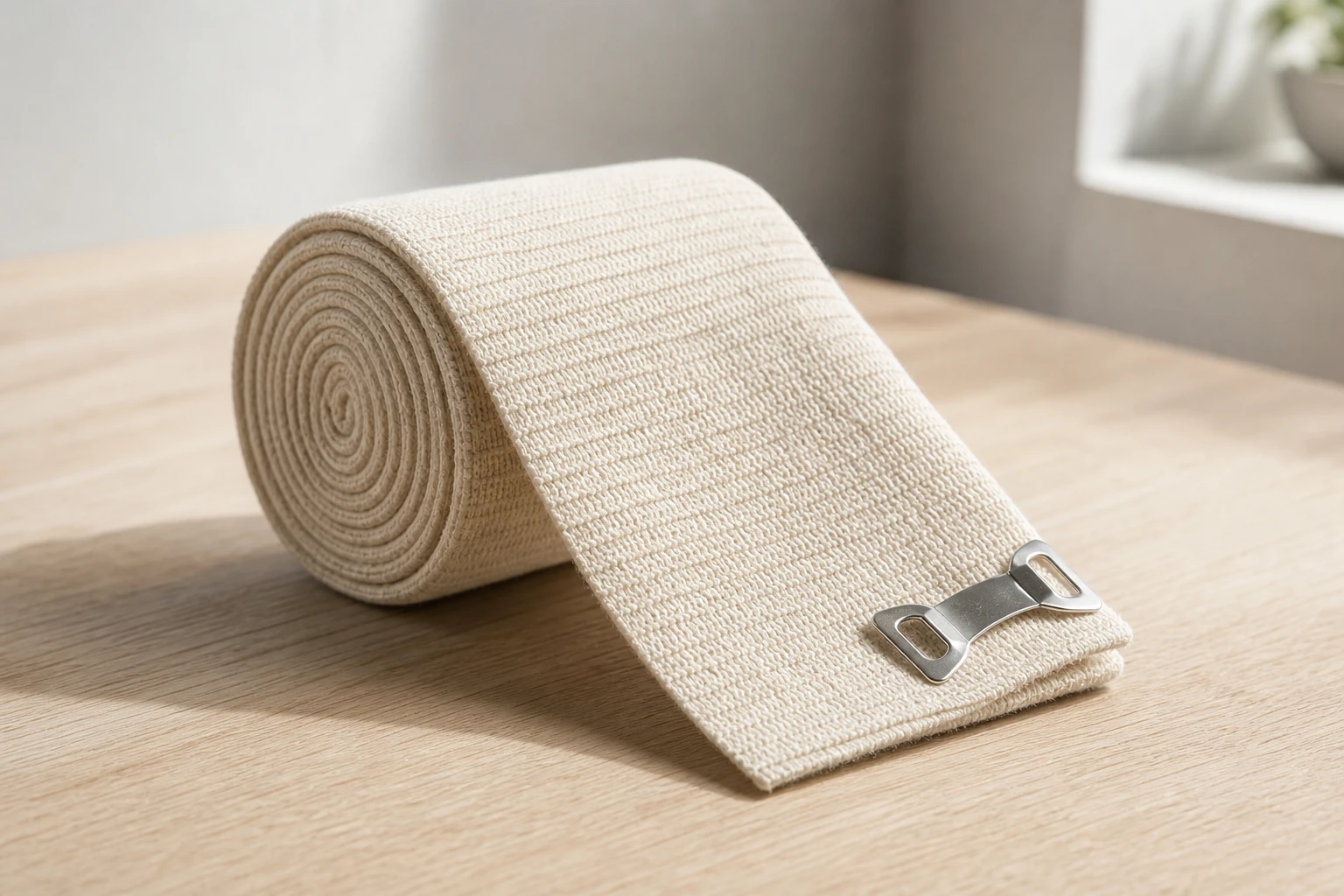
When reviewing lymphedema wrapping supplies wholesale, short-stretch bandages (elasticity under 100 percent) deliver high working pressure with safe resting pressure. Conversely, a high elastic crepe bandage (elasticity over 130 percent) provides continuous resting pressure, which works great for mobile patients needing orthopedic support or acute low-pressure swelling control, but requires careful application in severe lymphatic edema.
Technical Specs Sheet: Comparing Bandage Types for B2B Buyers
When buying lymphedema wrapping supplies wholesale, you will encounter several product classifications under standards like DIN 61632 (European standard for surgical cotton crepe dressings) and BS 7505 (British standard for elastic properties of non-adhesive extensible bandages).
The table below breaks down the technical differences across the key medical wrapping products available in the wholesale marketplace:
| Feature / Spec | Short-Stretch Cotton Crepe | High Elastic Crepe Bandage | Multi-Layer Compression System | Orthopedic Compression Wraps |
|---|---|---|---|---|
| Max Stretch Capability | 40% – 90% (DIN 61632) | 130% – 180% | 100% – 140% | 120% – 160% |
| Working Pressure Level | Very High (> 45 mmHg) | Moderate (20 – 30 mmHg) | High to Ultra-High | Low to Moderate |
| Resting Pressure Level | Low (< 15 mmHg) | Moderate to High | Sustained Moderate | Low |
| Fiber Composition | 100% Woven Cotton | Cotton / Spandex Blend | Multi-component Foam / Elastic | Synthetic Poly / Rubber |
| Autoclave & Wash Cycle Life | 40+ cycles at 95°C | 20 to 30 gentle washes | Single-use / Limited reuse | 15 to 20 standard washes |
| Primary Clinical Indication | Stage 2/3 Lymphedema, Venous Ulcers | Traumatic Swelling, Varicose Veins | Severe Chronic Edema | Joint Sprains, Post-Op Support |
| Wholesale Sourcing Intent | lymphedema wrapping supplies wholesale | high elastic crepe bandage | Specialized Lymphedema Bundles | orthopedic compression wraps |
Understanding these distinctions ensures you select the precise product line for your facility’s operational workflow and patient care needs.
Sourcing Lymphedema Wrapping Supplies Wholesale: Quality Criteria & Stretch Durability
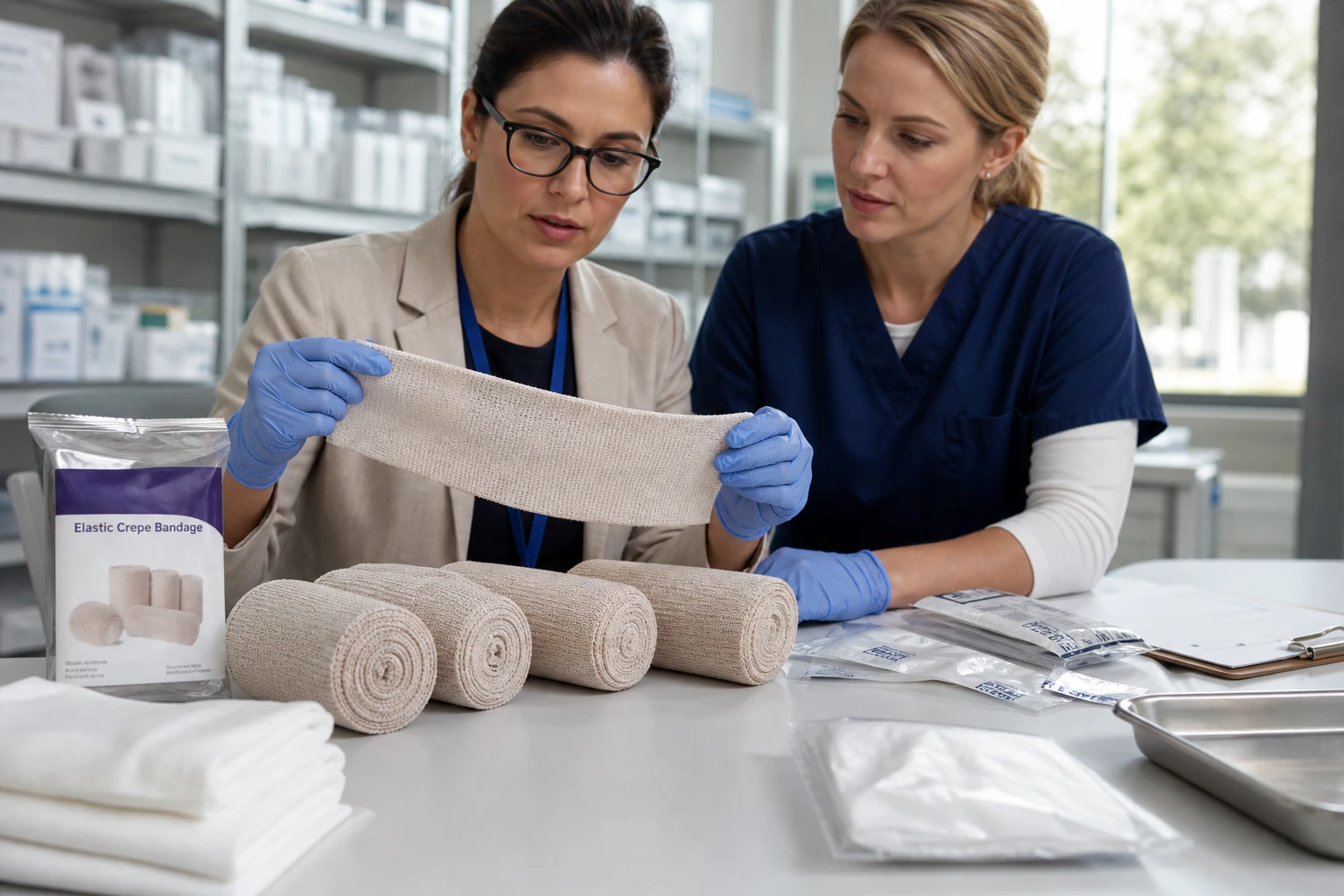
If you are evaluating suppliers for lymphedema wrapping supplies wholesale, glossy brochures won’t protect your clinic from product failures. You need to verify raw manufacturing parameters before committing to container-load orders or long-term supply contracts.
Tensile Fatigue and Elastomeric Degradation
Elastic decay is the single biggest point of failure in compression bandages. When a wrapping material is stretched and released thousands of times during daily wear and laundering, its internal yarn fibers degrade.
When sourcing lymphedema wrapping supplies wholesale, ask your manufacturer for hysteresis loop test results. In a standard tensile fatigue test:
- A 50 mm strip of bandage fabric is stretched to 80 percent of its maximum elongation on a mechanical tester.
- The fabric is held at full extension for 60 seconds, then allowed to relax.
- This cycle is repeated 100 consecutive times.
High-quality materials retain at least 88 percent of their original elastic recovery force after 100 cycles. Low-grade products made from cheap synthetic fillers drop below 60 percent recovery force rapidly. This causes the wrap to sag and slip down the leg, rendering the treatment ineffective.
Edge Construction and Weave Density
Have you ever seen a clinic toss out dozens of rolls because the edges turned into a tangled mess after two washes? That happens when vendors use cheap hot-knife slit edges instead of true woven fast edges.
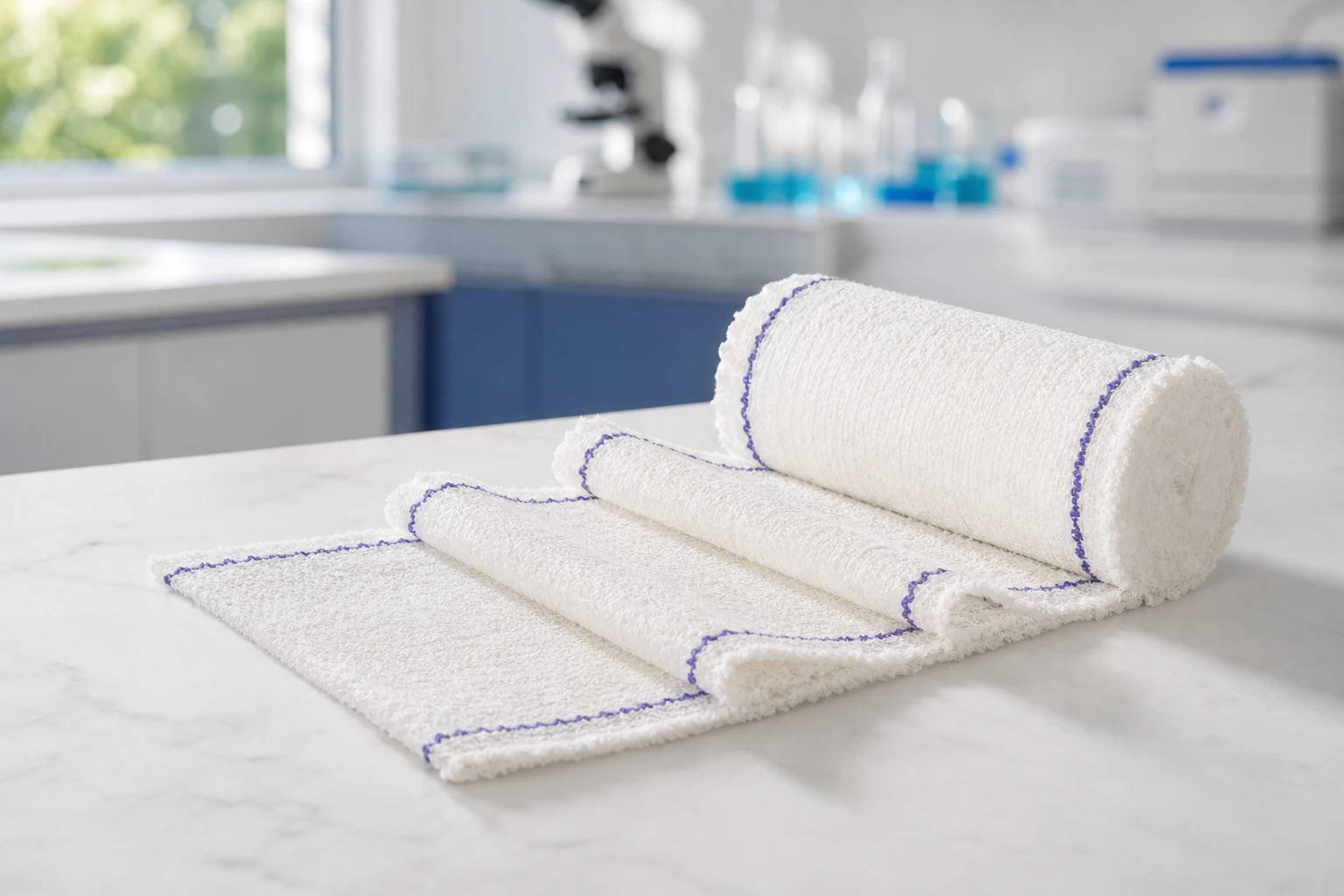
When procuring lymphedema wrapping supplies wholesale, check that the fabric features woven selvedges (looped edges). Woven edges lock the warp threads in place, preventing frayed strings from unraveling in industrial laundry equipment. Additionally, check warp thread count—higher thread count per centimeter provides balanced lateral stability, stopping the bandage from narrowing (roping) under stretch.
Biocompatibility and Regulatory Standards
Patients with chronic edema frequently suffer from skin breakdown, lymphorrhea, or sensitive stasis dermatitis. Wrapping these patients in uncertified synthetic materials can trigger immediate contact dermatitis or allergic reactions.
Ensure your supplier of lymphedema wrapping supplies wholesale complies with international medical standards:
- ISO 10993-5 / ISO 10993-10: Verified non-cytotoxic, non-irritating, and non-sensitizing on human skin models.
- MDR (EU) 2017/745 Class I Compliance: Essential for medical device distribution across European and international markets.
- OEKO-TEX Standard 100 Class I: Ensures total absence of harmful chemical residue, heavy metals, or bleaching agents.
Controversial Industry Debate: Synthetic Elastane vs. 100% Pure Woven Cotton Crepe
Ask three lymphedema specialists about the ideal fiber blend, and you will get three different heated opinions. This brings us to an ongoing debate in the medical textile sector: Should clinics buy 100% pure cotton short-stretch bandages, or modern elastane-blended high-elasticity wraps?
The Case for 100% Pure Woven Cotton Crepe
Traditionalists in lymphology strongly advocate for 100% pure cotton crepe bandages manufactured to DIN 61632 specifications.
- Pros: Pure cotton derives its elasticity entirely from highly twisted warp threads (crêpe weave) rather than synthetic rubber or polyurethane. This means it can be boiled and autoclaved at 134°C for sterile environments without melting the internal core. It is extraordinarily breathable, highly absorbent for exuding wounds, and offers ideal stiff resistance for high working pressure.
- Cons: Cotton crepe requires proper washing at high temperatures to restore its crimp structure. If washed cold or laid flat incorrectly, it loses shape faster than synthetic fibers.
The Case for Elastane-Blended High Elastic Wraps
On the other side of the aisle, modern clinical directors often prefer purchasing a high elastic crepe bandage made with cotton and elastane micro-filaments.
- Pros: These wraps deliver smooth, sustained resting pressure that conforms easily to irregular limb contours without slipping. They are far easier for patients to self-apply at home during maintenance phases, requiring less technical wrapping skill.
- Cons: Synthetic elastomeric threads deteriorate rapidly if exposed to oil-based ointments, chlorine bleaches, or temperatures over 95°C.
Our Verdict for Buyers: If your supply network caters primarily to acute decongestive therapy clinics handling severe lymphedema, prioritize 100% cotton short-stretch rolls when searching for lymphedema wrapping supplies wholesale. If your buyers focus on post-surgical edema, sports rehabilitation, or outpatient maintenance, stocking a quality high elastic crepe bandage line gives you better versatility and broader market demand.
Practical Case Scenario: How a European Lymphedema Rehab Network Solved Bandage Fatigue
To see how these technical requirements play out in real life, let’s look at an anonymized real-world scenario involving a clinical rehabilitation network operating 14 outpatient centers across Western Europe.
The Challenge
The network was purchasing generic lymphedema wrapping supplies wholesale through a standard regional distributor. However, their clinical directors raised urgent flags:
- Bandages were losing up to 40% of their tension within 48 hours of application.
- Physical therapists were spending extra time re-wrapping limbs mid-week, cutting into patient appointment slots.
- Washing facilities reported edge unraveling after just 5 to 7 wash cycles at 80°C, inflating annual replacement costs by over €42,000.
The Solution
The procurement department audited their vendor specifications and replaced their unbranded stock with factory-tested medical compression rolls from a dedicated manufacturer. They implemented strict incoming criteria:
- Transitioning to 100% cotton short-stretch rolls with fast woven edges for phase 1 decongestive therapy.
- Integrating high-performance orthopedic compression wraps for joint-adjacent wrapping zones requiring multi-directional flex.
- Demanding batch-tested elasticity compliance under DIN 61632 standards.
The Results
After six months of tracking across all 14 treatment centers:
- Re-wrapping frequency dropped by 34%, freeing up over 120 hours of clinical staff time monthly.
- Fabric survival increased from an average of 6 washes to over 45 wash cycles without tension loss.
- Total annual supply expenditures dropped by 18.5%, despite paying slightly more per roll for premium-grade construction.
This proves that going cheap on initial unit price for lymphedema wrapping supplies wholesale is a classic false economy. Sourcing high-durability, technically compliant products saves serious money on total operating costs.
How MediTapes Delivers Consistent Compression Integrity for Wholesale Partners
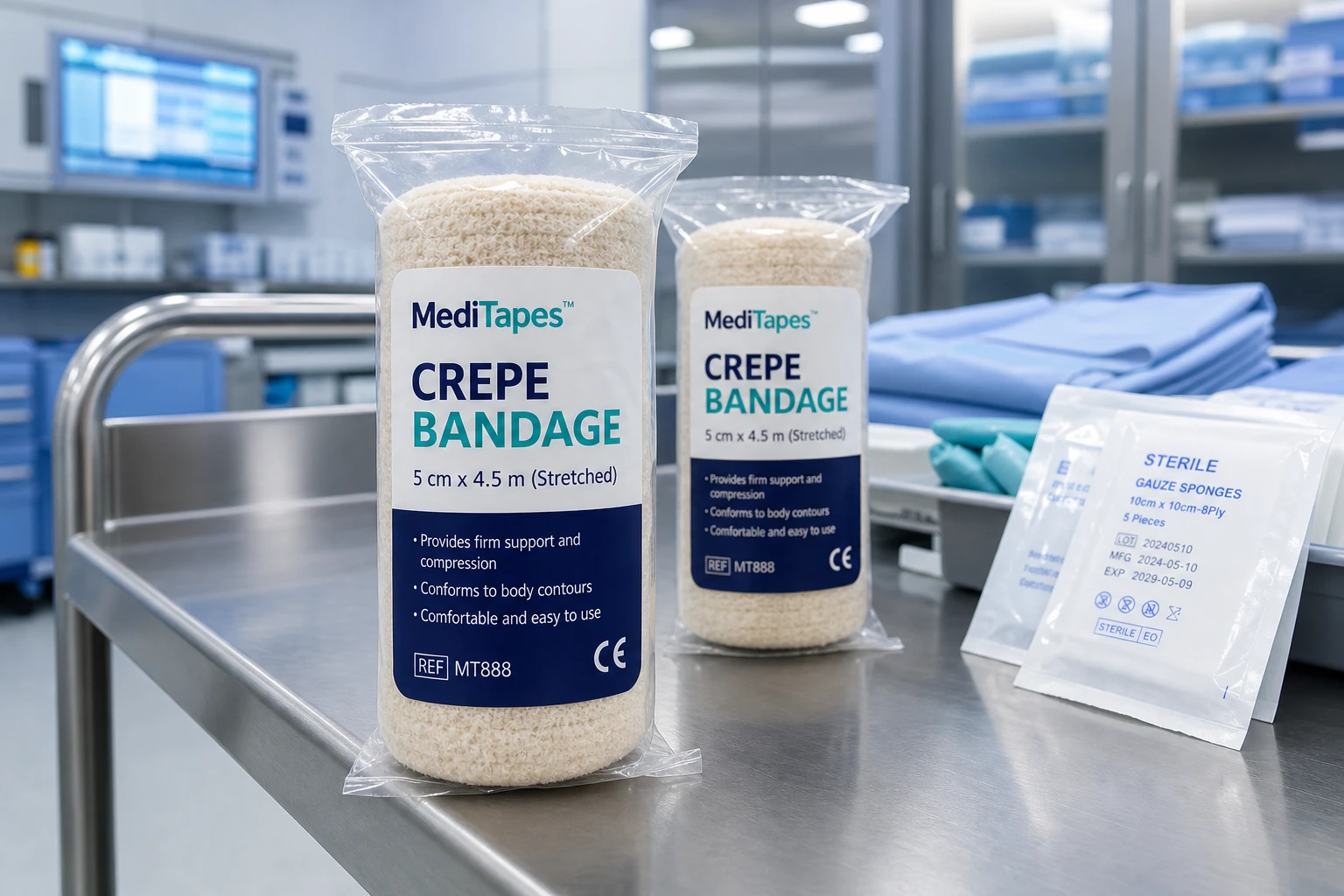
At MediTapes, we understand the exact technical demands faced by procurement managers, hospital buyers, and medical supply distributors. As a specialized manufacturer of medical tape and elastic compression bandages, we don’t cut corners on fiber density, weave integrity, or elastic performance.
Whether you are expanding your clinical inventory with a robust compression bandage for edema line or sourcing high elastic crepe bandage products for international distribution, our production facilities are engineered for consistency.
Here is why global healthcare buyers trust us for lymphedema wrapping supplies wholesale:
- Strict Tensile Calibration: Every batch undergoes automated mechanical stretch testing to guarantee reliable pressure distribution according to Laplace’s Law.
- Reinforced Fast-Edge Weaving: Our advanced weaving looms craft clean, looped selvedges that resist fraying even under repeat high-temperature washing cycles.
- Full OEM & Bulk Customization: From specific roll widths (5 cm, 7.5 cm, 10 cm, 15 cm) to custom stretched lengths and private label clinical packaging, we tailor our manufacturing to your market demands.
- Complete Regulatory Peace of Mind: Our products meet international quality management standards, making importation and distribution simple across global healthcare markets.
If you are tired of dealing with inconsistent tension, premature elastic fatigue, and high product return rates, it is time to upgrade your sourcing network.
Frequently Asked Questions (FAQ)
Q1: What is the ideal stretch percentage when ordering lymphedema wrapping supplies wholesale?
For acute decongestive lymphedema therapy (Phase 1), short-stretch bandages with a maximum elongation of 40% to 90% are recommended. They provide high working pressure during muscle contraction while maintaining safe resting pressure. For low-grade swelling or orthopedic support, long-stretch bandages with elongation exceeding 130% can be used under clinical supervision.
Q2: How can I test if a high elastic crepe bandage sample meets durability expectations?
Conduct a simple wash and stretch test. Measure a 1-meter sample unstretched. Wash it at 60°C to 90°C using standard laundry detergent, dry flat, and measure its unstretched length and maximum stretch limit. Repeat for 10 cycles. Quality products should recover within 5% of their original dimensions and maintain uniform tension without roping along the edges.
Q3: What is the main difference between a compression bandage for edema and standard orthopedic compression wraps?
While both provide external support, a dedicated compression bandage for edema is engineered specifically to yield low resting pressure and high resistance against fluid accumulation (short-stretch characteristic). Standard orthopedic compression wraps are typically long-stretch products designed to stabilize joints and hold ice packs or dressings, exerting higher resting tension that may not be suitable for overnight lymphedema wrapping.
Q4: Are latex-free materials necessary when procuring lymphedema wrapping supplies wholesale?
Yes, absolutely. Patients receiving long-term compression therapy wear bandages against their skin for extended periods. Natural rubber latex can cause severe contact sensitization and allergic reactions over time. Sourcing 100% cotton or synthetic poly-elastane latex-free wraps eliminates liability and ensures patient safety across all clinical settings.
Upgrade Your Clinical Compression Inventory Today
When managing chronic swelling conditions, compromise is not an option. Your healthcare clients and physical therapy staff deserve reliable, durable, and precise compression tools that perform consistently wrap after wrap.
Partnering with MediTapes gives you direct factory access to premium-grade lymphedema wrapping supplies wholesale, competitive bulk pricing, and dedicated OEM support.
Here is how you can take action today:
- Explore Our Catalog: Browse our specialized high elastic crepe bandage category to find the exact specs for your distribution channel.
- Request Physical Samples: Experience our weave density, edge construction, and elastomeric recovery firsthand before placing your bulk order.
- Get a Custom B2B Quote: Reach out to our technical supply team via the MediTapes contact page or email us directly at info@meditapes.com with your volume requirements.
Don’t let sub-par bandages drain your clinical budget and compromise patient care. Contact MediTapes today and secure top-tier compression products for your wholesale network!