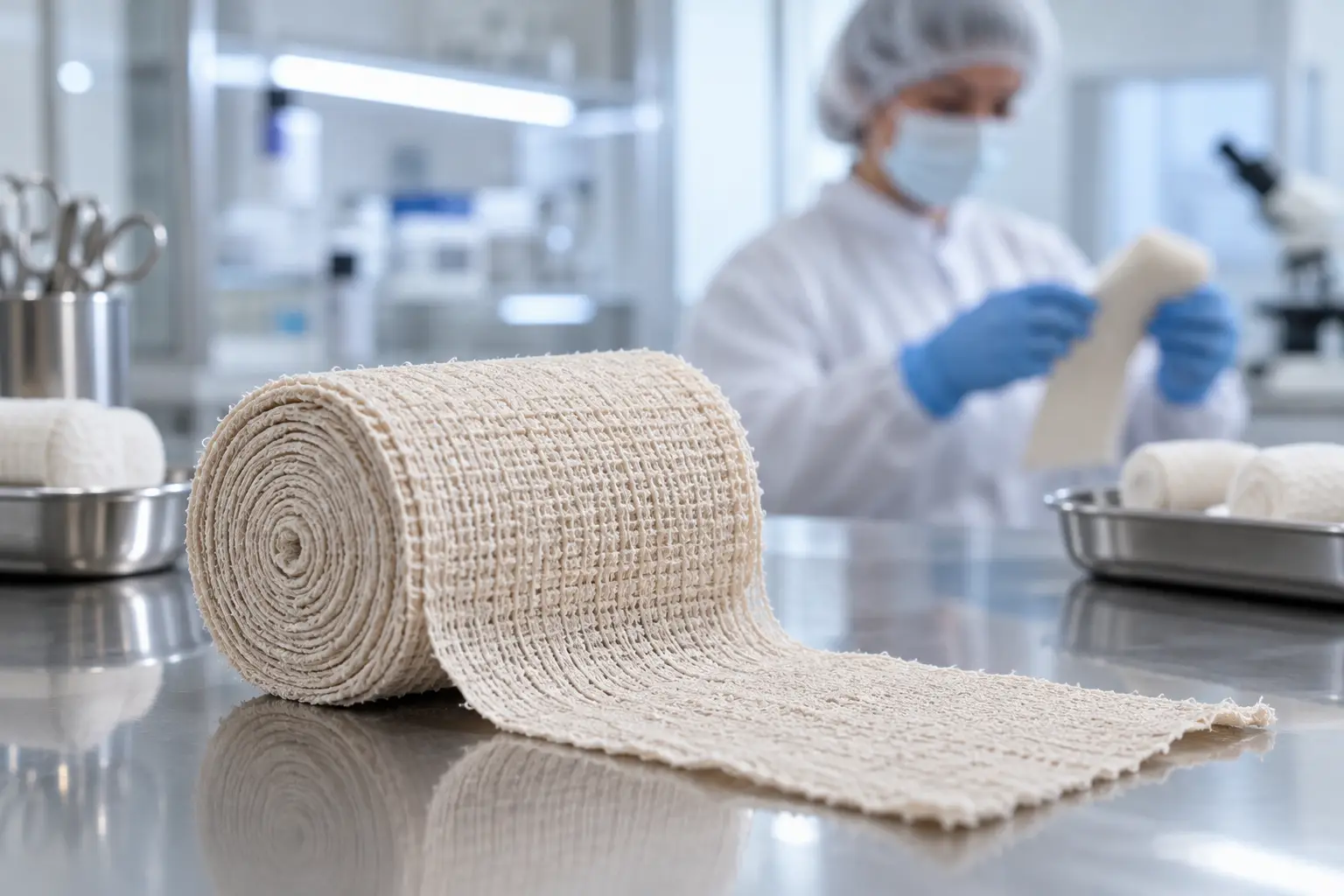
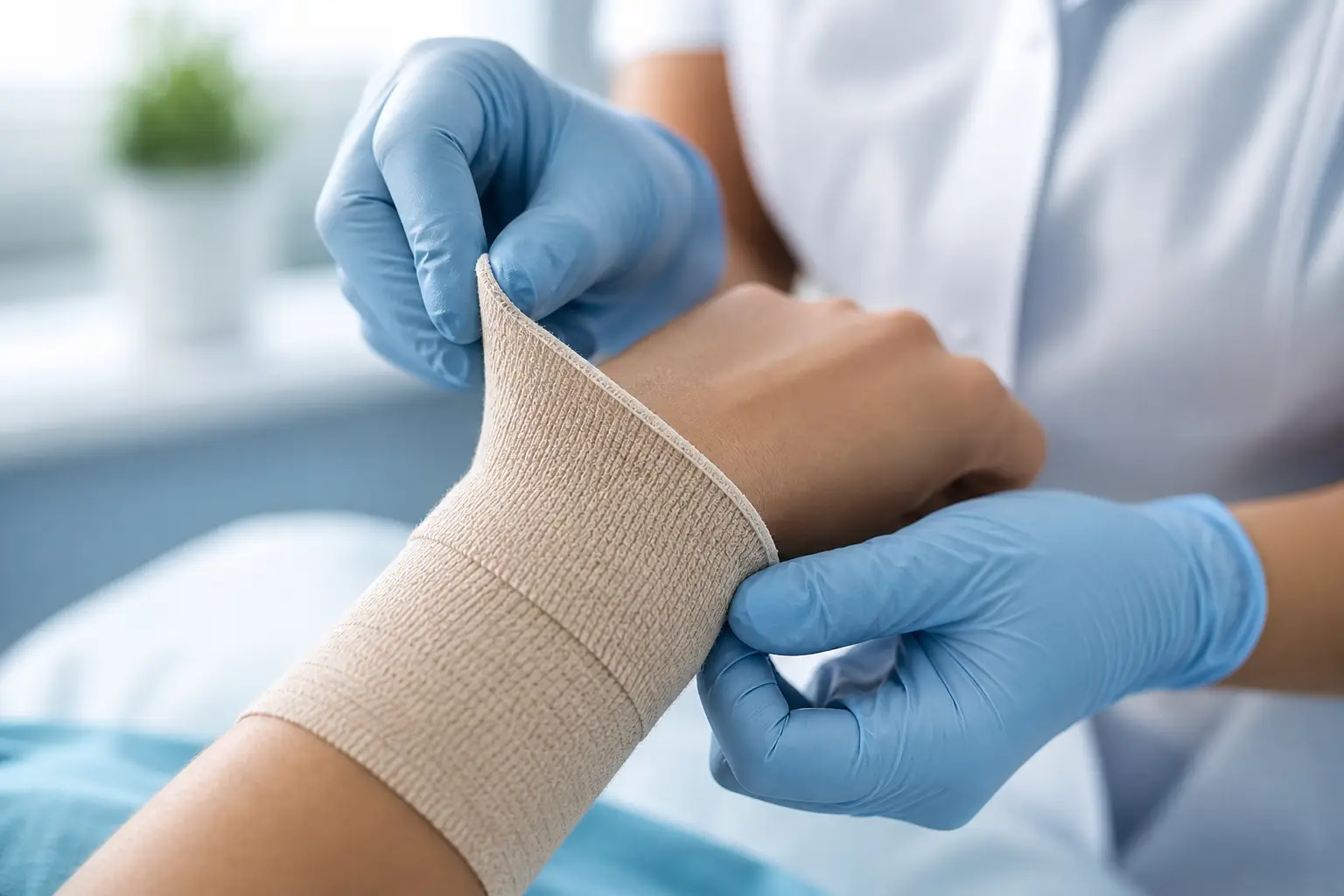
Look, I’ve been in this game long enough to see grown men cry over a rejected bid.
You spend months prepping documents, aligning with logistics, and calculating margins down to the penny. You submit the bid, feeling good. Then, two weeks later—Bam. Rejected. Not because your price was too high, but because your medical tape tender specifications were off by a fraction of a millimeter or the adhesive shear strength wasn’t documented correctly.
It hurts.
As we head into 2026, hospital tenders are getting weirdly specific. The days of just writing “Surgical Tape, 1 inch” and hoping for the best? Those are gone. Dead.
I’m going to walk you through the top 10 specs that actually matter when you are dealing with hospital tender specs. I’m writing this from the perspective of someone who has stared at way too many technical sheets at MediTapes, so I know what the procurement officers are actually hunting for.
Let’s cut the fluff and get into the technicals.
The Reality of Medical Consumables Procurement in 2026
Before we hit the list, let’s be real for a second. Hospitals are broke. Or at least, they act like they are. They want champagne quality on a beer budget.
When you are acting as the distributor, you are the bridge. You need a manufacturer who doesn’t just give you a product, but gives you the data to back it up. If you are aiming for medical consumables procurement contracts, you can’t just sell “tape.” You are selling adherence, breathability, and shelf-life guarantees.
Here is the kicker: Most distributors lose because they copy-paste specs from Alibaba. Don’t do that.

OEM Surgical PE Tape Manufacturer – Hospital Grade Medical Supply
As a premier factory, we offer customizable OEM Surgical PE Tape solutions for global brands. Our hospital-grade Surgical PE Tape meets international standards (CE/ISO). Partner with us for wholesale Surgical PE Tape with customized widths, lengths, and packaging to fit your market.
Key Features:
– OEM/ODM Customization.
– CE/ISO Certified Factory.
1. Peel Adhesion Strength (The Make or Break)
This is the big one. If the tape falls off a patient’s arm, you get sued. If it pulls the skin off an elderly patient (skin stripping), you also get sued.
In your medical tape tender specifications, you need to define the “Peel Adhesion to Steel” usually measured in Newtons per centimeter (N/cm) or Newtons per 25mm.
- Zinc Oxide Plaster: You usually want high adhesion here. Look for > 1.0 N/cm.
- Paper/Micropore Tape: Needs to be gentler. Around 0.3 to 0.6 N/cm is the sweet spot.
- PE (Transpore) Tape: Moderate adhesion, usually 0.4 to 0.8 N/cm.
Technical Tip: Don’t just list a number. Mention the test method. “Tested in accordance with ISO 29862:2007 (Self adhesive tapes – Determination of peel adhesion properties).” If you put that standard in your tender doc, the hospital bio-engineer will nod in approval.
2. Moisture Vapor Transmission Rate (MVTR)
Sounds boring, right? It’s not. This is about breathability.
If you are pitching non-woven paper tapes (the standard surgical tape), the hospital wants to know if the skin can breathe. If the MVTR is too low, the patient gets maceration (that white, wrinkly, soggy skin).
For a winning bid, your medical tape tender specifications should claim an MVTR of at least:
500 g/m^2 / 24h
If you can push it to 1000 g/m^2 / 24h, highlight that. It’s a competitive advantage.
3. Tensile Strength and Elongation
I once saw a tender for orthopedic strapping tape where the distributor forgot to specify tensile strength. The hospital tested a sample, and it snapped under moderate load. Rejection city.
For rigid taping (like sports medicine or post-op support), you need high tensile strength.
- Formula for success: Tensile Strength > 50 N / 2.5cm.
For elastic tapes (like Kinesio or heavy fabric adhesive), you need to specify the Elongation at Break.
- Standard: 110% – 130% stretch capability.
Make sure your Surgical Tape Series matches these loads. You can check our specific load ratings at MediTapes Surgical Tapes.
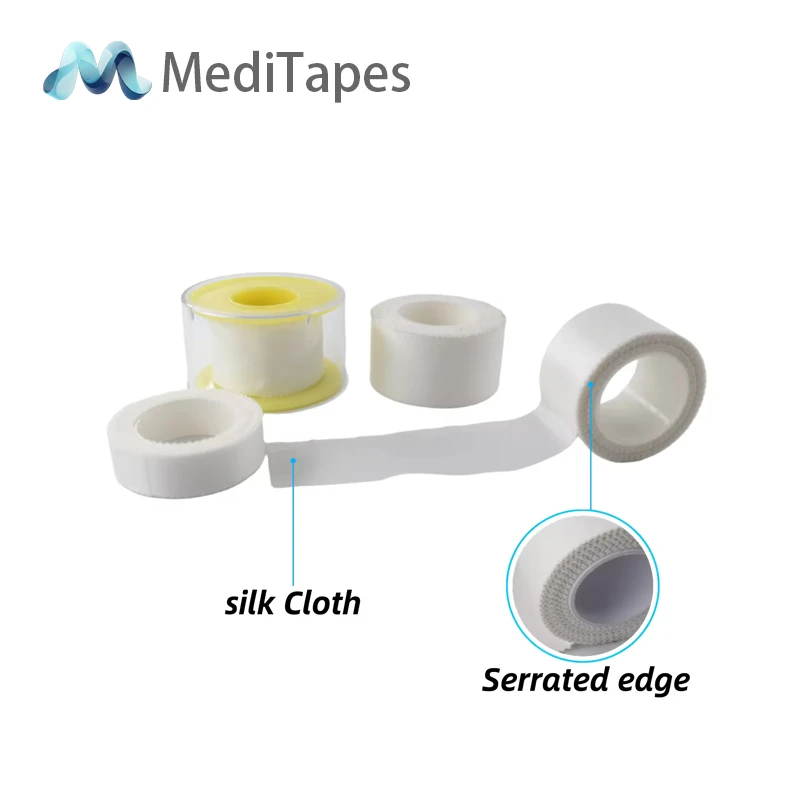
Durable Silk Surgical Tape – Latex-Free, Breathable & Skin-Friendly for Secure Dressing Fixation
Our Durable Silk Surgical Tape is meticulously designed for optimal patient comfort and secure dressing fixation. This premium silk surgical tape is latex-free and highly breathable, minimizing skin irritation and allowing for extended wear. It features strong, reliable adhesion suitable for securing a wide range of medical dressings, catheters, and tubes. Ideal for post-operative care and general wound management, this medical silk tape ensures a firm hold without compromising skin integrity. Enhance patient care with our skin-friendly and effective solution.
4. The Exact “Surgical Tape Sizes”
“Approximates” don’t fly in 2026.
If a tender asks for surgical tape sizes of 2.5cm x 5m, and you send a roll that is actually 2.4cm x 4.8m (because the factory tried to save money), you will get flagged during the sample audit.
Common Government Tender Sizes:
- 1.25cm x 9.1m (1/2 inch)
- 2.50cm x 9.1m (1 inch)
- 5.00cm x 9.1m (2 inch)
- 7.50cm x 9.1m (3 inch)
Note: In Europe and parts of Asia, they demand metric accuracy. In the US, they might accept inch-based variations. Know your region. At MediTapes, we can slash rolls to exact millimeter requirements, which usually shocks the procurement officers (in a good way).
5. Hypoallergenic and Biocompatibility Reports
You can’t just write “Hypoallergenic” on the box and call it a day. That word means nothing without a report.
To win a large medical consumables procurement bid, you must attach a summary of the ISO 10993 Biological Evaluation.
Specifically, you need to confirm:
- Cytotoxicity: (ISO 10993-5) – Does it kill cells? (Hope not).
- Sensitization: (ISO 10993-10) – Does it cause an allergic reaction?
- Irritation: (ISO 10993-10) – Does it make skin angry?
If your current supplier can’t give you these reports, find a new one. Or just contact us at MediTapes Contact. We have piles of these reports.
6. Aging and Shelf Life Stability
Hospitals are terrible at inventory management. They might buy a box of tape and leave it in a hot warehouse for two years.
Your medical tape tender specifications need to guarantee a shelf life. The standard used to be 3 years. In 2026, many top-tier hospitals are asking for 5 years.
The Formula for Accelerated Aging:
To prove a 5-year shelf life without waiting 5 years, we use the Arrhenius equation in our lab. Basically, we cook the tape at 55 degrees Celsius for X weeks to simulate Y years.
Your spec sheet should say: “Shelf life: 5 Years (Validated via ASTM F1980 Accelerated Aging protocols).”

Cotton Surgical Tape with Zinc Oxide Adhesive for Wound Dressing
Secure fixation with premium cotton surgical tape. This breathable tape uses strong zinc oxide adhesive, ideal for securing heavy dressings and catheters. Our cotton surgical tape is tearable by hand and conforms easily to body contours. Trusted by hospitals for reliable wound care management.
7. Spool and Core Dimensions
This is a stupid detail that trips people up.
Many hospitals use standard desktop dispensers. You know, those heavy blue or white plastic things? If your tape core (the inner plastic ring) is the wrong diameter, it won’t fit their dispensers.
- Standard Core Inner Diameter: 25mm to 26mm.
If you supply a “compact travel roll” with a 15mm core to a hospital ward, the nurses will hate you. And nurses influence the next tender. Ensure your medical tape tender specifications explicitly state the core ID.
8. Residue-Free Removal
There is nothing worse than pulling tape off a patient and leaving a black, sticky goop behind. It collects dirt and bacteria.
This is subjective, but you can quantify it in specs.
- Spec Requirement: “Adhesive transfer to substrate < 5% upon removal after 24 hours dwell time.”
Most cheap tapes fail this. They turn into a gooey mess after 24 hours of body heat.
9. Sterilization Compatibility
Are you selling non-sterile rolls (for the ward) or sterile packs (for the O.R.)?
If you are selling non-sterile rolls that the hospital plans to include in their own custom surgical kits (CSK), your tape must be compatible with their sterilization method.
- EtO (Ethylene Oxide): Most porous tapes are fine.
- Gamma Radiation: Be careful. Gamma turns some cheap adhesives yellow and brittle.
Your spec sheet must state: “Compatible with EtO Sterilization cycles.”
10. Packaging Waste Specs (The Green Wave)
It’s 2026. Sustainability is huge.
Government tenders are now awarding points for “Reduced Packaging.” If your medical tape tender specifications show that you use 100% recycled cardboard for the inner boxes and have removed unnecessary plastic shrink wrap, you might win the bid even if your price is 2% higher.
We call this the “Green Premium.”
Quick Comparison Table: Tape Types vs. Critical Specs
To help you visualize this, here is a breakdown of what matters for which tape.
| Tape Type | Key Spec 1 | Key Spec 2 | Primary Usage |
|---|---|---|---|
| Non-Woven (Paper) | MVTR (Breathability) | Low Adhesion (Gentle) | General fixation, fragile skin |
| PE (Transpore) | Bi-directional Tear | Transparency | IV tubing, quick checks |
| Silk / Cloth | Tensile Strength | High Adhesion | Heavy tubing, splints |
| Zinc Oxide | Shear Strength | Long-term wear | Sports, orthopedics |
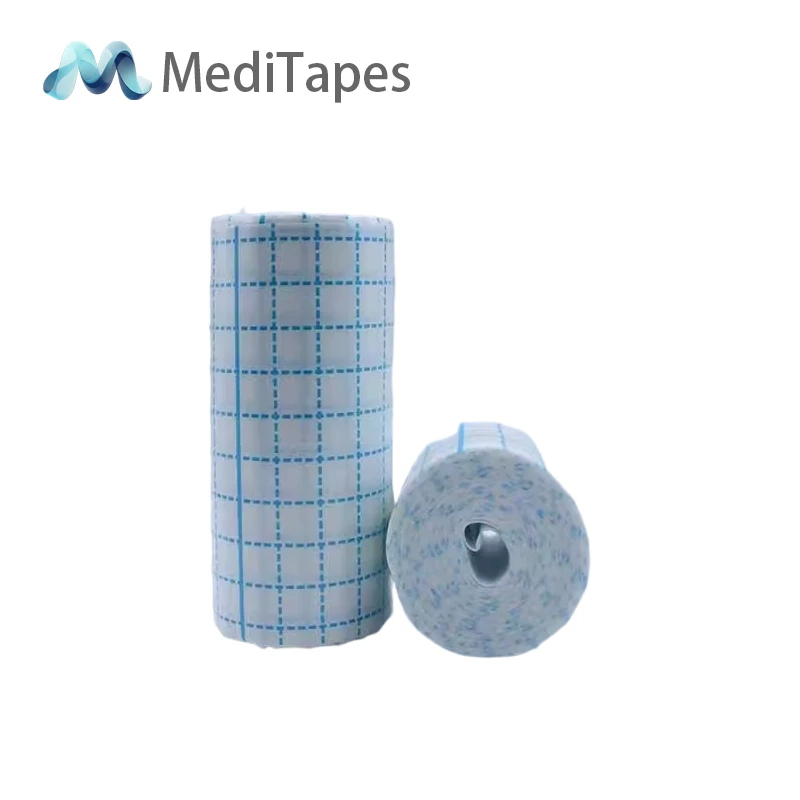
Breathable Non-woven Surgical Tape Roll – Medical Adhesive Dressing
This breathable non-woven surgical tape roll provides secure fixation for gauze and devices. Designed for sensitive skin, the non-woven fabric dressing roll allows air permeability to prevent maceration. Its strong yet gentle adhesive makes it perfect for post-operative care and frequent dressing changes.
A Real World Example (Anonymous)
I want to share a story about a partner of ours—lets call him “Dave.” Dave runs a distribution company in Southeast Asia.
He was trying to crack a Ministry of Health tender for 3 years. Failed every time. He was listing his medical tape tender specifications as “Standard Hospital Grade.”
We sat down with Dave. We rewrote his specs. Instead of “Standard Grade,” we wrote:
“Substrate: 100% Rayon Non-woven, Porosity >60%, Adhesive: Acrylate-based pressure sensitive, Latex-free, 180-deg Peel Strength: 3.5N/25mm (+/- 0.5N).”
It looked technical. It looked professional. It looked like he knew what he was talking about.
He won the bid. It was worth $450k USD.
The product was the same. The specification strategy changed.
Calculating the True Cost for the Tender
When you fill out that tender pricing column, don’t just guess. You need to know your precise cost per meter to figure out your margin.
Here is a simple text-based formula I use to calculate competitiveness:
Cost Efficiency Index (CEI) = (Total Roll Length in Meters * Width in cm) / Unit Price
If your competitor is selling a 5-meter roll for $0.50, and you are selling a 10-meter roll for $0.80, your CEI is better.
- Competitor: (5 * 2.5) / 0.50 = 25
- You: (10 * 2.5) / 0.80 = 31.25
(Higher is better value).
Use this logic in your cover letter. Explain to the hospital that while your “Per Roll” price is higher, your “Per Meter” cost is lower. Procurement guys love this math.
Why MediTapes?
Look, I’m biased, but I’m also right. At MediTapes, we focus heavily on the B2B market. We don’t sell to consumers in pharmacies. We build specs for tenders.
When you work with us, we provide the Technical Data Sheets (TDS) and the Material Safety Data Sheets (MSDS) with your company logo on them (if you want private label). We help you draft the medical tape tender specifications so they align perfectly with what we manufacture.
It’s about making your life easier.
You can check out our full range of specs here: Surgical Tape Series.

Flexible PU Film Retention Roll – Waterproof IV & Cannula Fixation
Ensure stability with our Flexible PU Film Retention Roll, specifically engineered for Waterproof IV & Cannula Fixation. The ultra-thin polyurethane film acts as a bacteria barrier, reducing infection risks. Its elasticity allows patients full range of motion, making it a staple for post-operative care and catheter security.
FAQ: Common Tender Questions
Q1: What happens if the hospital demands a specific brand like 3M in the tender?
A: This happens. However, most government laws require “Or Equivalent” clauses. You can submit your bid as an “Alternative Solution” provided your medical tape tender specifications match or exceed the named brand. You usually need to provide a side-by-side comparison table to prove equivalency.
Q2: How do I handle sample requests during a tender?
A: Never send a generic sample. Send the EXACT batch that matches your spec sheet. Label the samples clearly with the item code used in the tender document. If the label doesn’t match the paperwork, they throw it out.
Q3: Can we request custom lengths for a tender (e.g., 3 meters instead of 5)?
A: Yes. In fact, offering a non-standard length like 3m can sometimes lower the “Unit Price” enough to win the bid, while still giving the hospital enough tape for single-patient use. We do this all the time at MediTapes.
Final Thoughts
Writing medical tape tender specifications isn’t exactly the most thrilling job in the world. I get that. But it is the difference between a warehouse full of dead stock and a warehouse that’s constantly shipping.
In 2026, details win.
You need the right adhesion data, the right certification, and the right partner who understands the headache of government paperwork.
Don’t go into your next bid blind. Let us help you structure the specs so they are bulletproof.
Ready to crush your next tender?
- Contact us directly: info@meditapes.com
- Get a Quote: Visit our Contact Page
- Browse the goods: See our Surgical Tape options