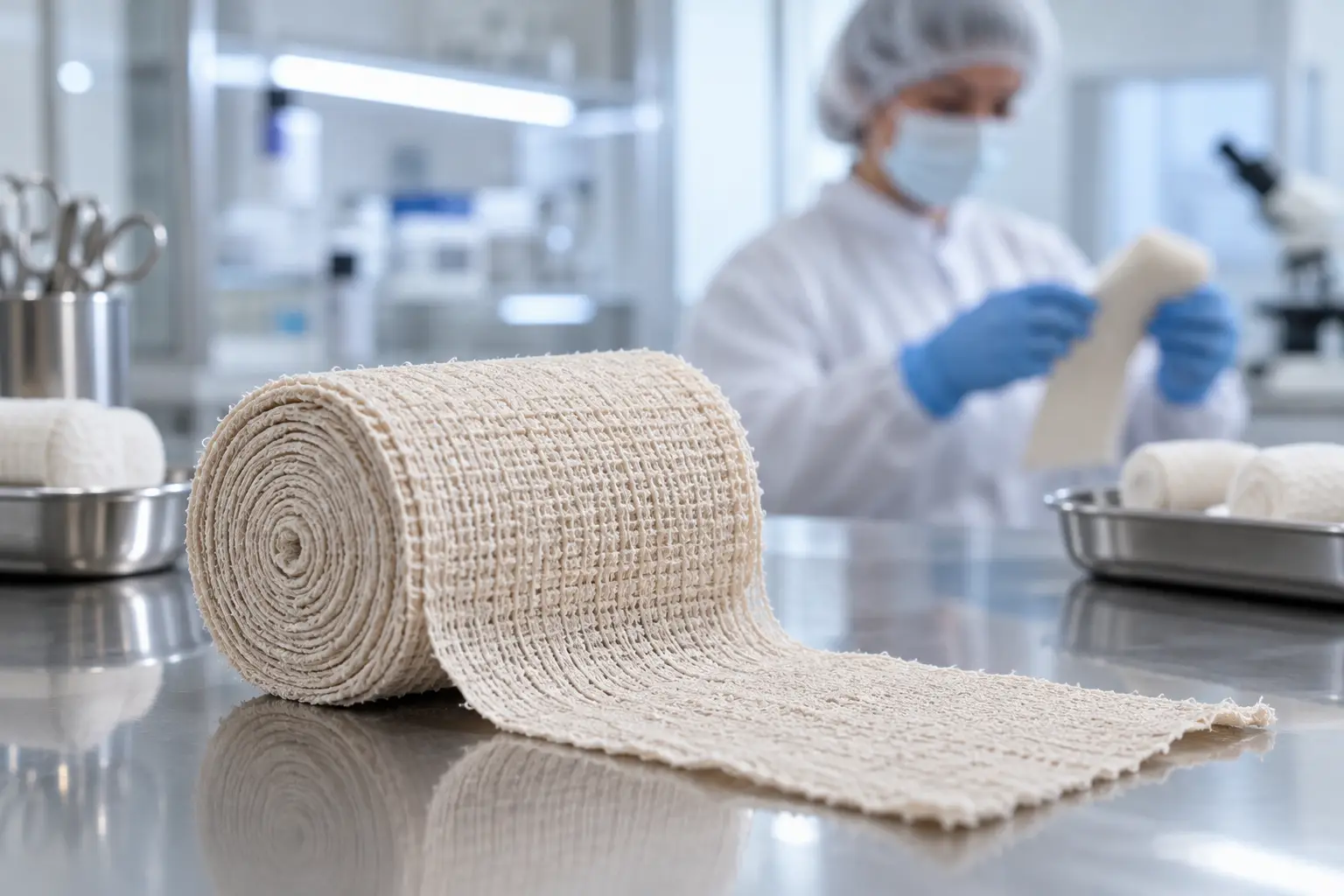
If you manage procurement for a sports brand, medical supply company, or clinical distributor, the choice of hot melt vs zinc oxide tape isn’t just a technical detail. It is a massive business decision that directly impacts your brand reputation, return rates, and bottom-line profits. Making the wrong move in the hot melt vs zinc oxide tape decision can lead to clinical failures, frustrated athletes, and warehouses full of unsellable inventory.
Let’s get real about hot melt vs zinc oxide tape. Every overseas factory claims their tape sticks perfectly and never causes irritation. But if you have been importing sports medicine supplies for any length of time, you know that is marketing fluff. When active athletes sweat or physical therapists apply tight strapping under heavy joint stress, cheap adhesives slip. They melt, they leave a sticky, nasty black residue on the skin, and they cause painful red rashes.
So why does the hot melt vs zinc oxide tape debate continue to keep B2B buyers up at night? It is because of the classic struggle to balance initial procurement cost with actual field performance. To make an informed decision, we need to look past the sales brochures. We will explore the chemical differences, run some cost-of-failure math, reveal how some factories cut corners, and help you select the exact adhesive formula for your target buyers.
The Science of Adhesion: Hot Melt vs Zinc Oxide Tape Basics
When you analyze the raw chemistry of hot melt vs zinc oxide tape, you are looking at two completely different adhesive technologies. A lot of buyers get confused when evaluating hot melt vs zinc oxide tape because both rolls feel sticky when you pull them out of the box at room temperature. Under the microscope, the structural behavior of hot melt vs zinc oxide tape is totally different.
Adhesive Layer Breakdown
- Hot Melt: Synthetic Rubber Polymers (SIS/SBS) + C5/C9 Hydrocarbon Tackifiers + Plasticizer Oils.
- Zinc Oxide: Natural Rubber Latex + Solid Rosin Ester Resins + 10% to 20% Pure Zinc Oxide Powder.
Fabric Backing Layer
- Woven Cotton or Rayon fibers (typically ranging from 30-thread to 60-thread density).
To understand the core dynamics of hot melt vs zinc oxide tape, we have to look at how these glues are prepared and coated onto the fabric backing.
Hot melt is a thermoplastic pressure-sensitive adhesive. It uses synthetic block copolymers, usually Styrene-Isoprene-Styrene (SIS) or Styrene-Butadiene-Styrene (SBS), blended with synthetic tackifying resins. This adhesive is solid at room temperature. To apply it, the factory heats the block copolymers to about 150°C to 180°C in a melting tank. The molten liquid is then extruded through a slot die directly onto the cotton fabric and cooled instantly using chilled steel rollers. This high-speed, solvent-free process keeps production costs very low, which is why hot melt sports tape is so widely available in the retail market.
In contrast, traditional zinc oxide adhesive is a solvent-based, natural rubber formulation. The process starts with raw natural rubber sheets that are mechanically masticated to break down their molecular weight. Then, solid rosin resins, antioxidants, and a heavy dose of pure zinc oxide powder (usually between 10% and 20% of the total adhesive weight) are dissolved in organic solvents like hexane or toluene.
This liquid compound is coated onto the fabric, which then travels through a massive, multi-stage drying oven to evaporate the solvents safely. This slow, energy-intensive process requires sophisticated solvent recovery systems. It is more expensive and heavily regulated, but it yields a highly stable, long-chain polymer adhesive matrix.
When evaluating hot melt vs zinc oxide tape, remember that hot melt relies on a physical cooling phase to bond, while natural rubber zinc oxide relies on long-chain chemical cohesion. This fundamental difference explains why one adhesive softens and slips when skin gets warm and wet, while the other maintains its grip.
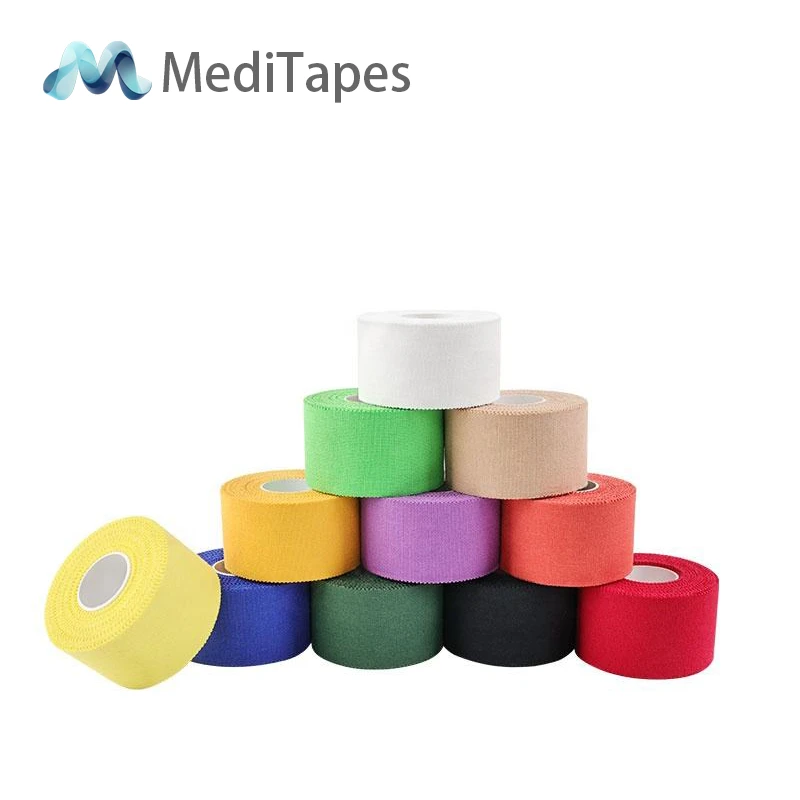
Heavy Duty Cotton Sports Tape Rigid Adhesive Tape for Ankle Wraps
Ensure peak performance with heavy-duty Cotton Sports Tape. Specifically designed for ankle wraps and joint support, this rigid adhesive tape withstands sweat and intense movement. Our durable cotton sports tape is the top choice for preventing sports injuries.
Hot Melt Sports Tape: The High-Tack Budget Saver
Now let’s look closer at the first major option in the hot melt vs zinc oxide tape landscape. If your business focuses on high-volume, cost-sensitive retail channels, this is where hot melt vs zinc oxide tape economics look very appealing.
Synthetic Rubber Adhesive (SIS Copolymer) -> High Initial Tack -> Lower Unit Cost
Why Hot Melt Sports Tape is the Go-To Retail Formula
In lab tests, hot melt sports tape shows extremely high initial tack, which is often called “quick stick.” Because synthetic rubber polymers are highly compliant at room temperature, they conform to dry skin almost instantly with very little pressure.
If you are selling to budget gyms, amateur youth leagues, or mass-market discount retailers, hot melt sports tape is the most cost-effective choice. It allows you to maintain healthy retail margins while keeping the retail price low enough for casual consumers.
The manufacturing process for hot melt is highly automated and uses no volatile solvents. This means factories can run lines at high speeds with minimal downtime. If you need to quickly stock a promotional line of sports wraps, hot melt keeps your initial investment low.
However, hot melt has some distinct performance limits. In our comparison testing of hot melt vs zinc oxide tape under high-humidity conditions, synthetic hot melt adhesives struggled. When an athlete sweats, the water gets trapped between the non-porous synthetic rubber glue and the skin. This moisture barrier breaks down the bond of the SIS synthetic rubber.
Worse yet, as body heat climbs past 37°C during intense physical activity, the synthetic polymers soften. The tape begins to slip under tension, leaving the athlete’s joints unsupported and leaving behind a sticky, gummy residue that can be very difficult to wash off.
Natural Rubber Zinc Oxide Tape: Finding the Best Glue for Athletic Tape
Let’s shift focus to the premium side of the hot melt vs zinc oxide tape market. If your target audience includes professional athletic trainers, elite sports clubs, physical therapists, or orthopedic specialists, the hot melt vs zinc oxide tape choice is much simpler. These professionals almost always demand a true zinc oxide adhesive.
Natural Rubber + Zinc Oxide Powder -> High Cohesion -> Zero Residue & Sweat Resistance
Why Professionals Demand True Zinc Oxide Adhesive
So what makes natural rubber zinc oxide the industry standard and the best glue for athletic tape? It comes down to how it performs under extreme, real-world sports conditions.
When a physiotherapist applies rigid strapping tape to support a badly sprained ankle for a rugby match, that tape is subjected to massive shear forces. The natural rubber in this side of the hot melt vs zinc oxide tape comparison provides exceptional cohesive strength. The long, natural rubber polymer chains do not stretch or shear under continuous mechanical load.
The real benefit, however, comes from the zinc oxide powder blended into the natural rubber. Zinc oxide is a classic skin protectant. It helps prevent Medical Adhesive-Related Skin Injury (MARSI), which includes painful skin stripping and blisters.
The zinc oxide powder neutralizes acidic sweat and blocks moisture, which helps prevent itching and redness. This skin-friendly quality is a major selling point when comparing hot melt vs zinc oxide tape. The zinc oxide creates a breathable, dry barrier that keeps the adhesive stable even when an athlete is sweating heavily. When the game is over, the tape peels off cleanly in one piece, leaving no sticky residue behind. That is the premium experience professional athletes expect.
The downside is the cost. Sourcing premium natural rubber latex and processing it with industrial solvent lines adds time and expense to production. For procurement managers, this translates to a higher price per roll.
Tape Adhesive Comparison: Hot Melt vs Zinc Oxide Tape Performance
To help you compare your options, we have compiled a direct tape adhesive comparison matrix. If you are preparing a proposal for your procurement team, you can use this data to support your purchasing decisions.
Performance Comparison Matrix
| Performance Metric | Hot Melt Sports Tape (Synthetic Rubber) | Natural Rubber Zinc Oxide Tape (Solvent-Based) | Standard Industry Test Method |
|---|---|---|---|
| Initial Tack (Quick Stick) | Very High (Adheres instantly to dry skin) | Moderate (Requires body heat to fully bond) | PSTC-101 / ASTM D3330 |
| Shear Strength (Holding Power) | Moderate (Can slip under heavy joint stress) | Extremely High (Natural rubber resists shearing) | PSTC-107 / ASTM D3654 |
| Sweat & Moisture Resistance | Low to Moderate (Water breaks synthetic bond) | High (Zinc oxide absorbs sweat moisture) | In-House Wet-Chamber Testing |
| Skin Irritation Risk (MARSI) | Moderate to High (Synthetic resins can irritate) | Low (Zinc oxide calms and protects skin) | ISO 10993-10 Skin Sensitization |
| Adhesive Residue on Skin | High (Often leaves sticky black residue) | Zero (Peels away cleanly in one piece) | Visual Peel Residue Rating |
| Service Temperature Range | 10°C to 38°C (Adhesive soft above 38°C) | -10°C to 65°C (Stable across temperatures) | Thermal Shear Test |
| Storage Shelf Life | 12 to 18 Months (Prone to oxidation) | 36+ Months (Stable when stored properly) | Accelerated Aging Testing |
| Relative Production Cost | Baseline (1.0x Cost Index) | Premium (1.5x to 1.9x Cost Index) | Average Factory Invoice |
As this hot melt vs zinc oxide tape comparison shows, hot melt sports tape is highly effective for short-term, low-sweat uses where unit price is the main factor. But for heavy-duty support and professional-grade performance, the hot melt vs zinc oxide tape balance shifts toward solvent-based natural rubber zinc oxide.
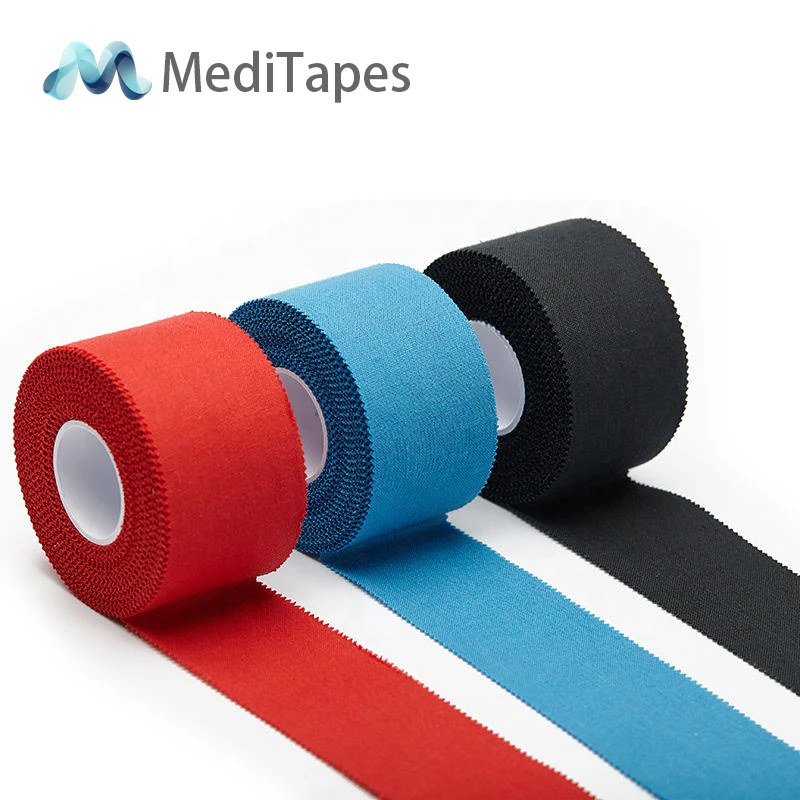
OEM Custom Color Cotton Fabric Sports Tape Manufacturer Factory
Build your brand with our Color Cotton Fabric Sports Tape. As a leading factory, we offer OEM services for custom widths, lengths, and packaging. This high-adhesion cotton sports tape can be customized to match team colors. Partner with us for reliable manufacturing.
The Math: Calculations to Balance Cost and Performance
To evaluate the financial impact of hot melt vs zinc oxide tape, look beyond the upfront invoice price. A common procurement mistake is buying the cheapest roll available, only to lose those savings on customer returns, refund requests, and damage to your brand.
Let’s look at the financial side of hot melt vs zinc oxide tape using a couple of simple, practical formulas.
Formula 1: Adhesive Performance Value (APV)
We use this formula to measure how an adhesive performs relative to its clean removal:
APV = (PSTC-101 Peel Strength * Sweat Retention Factor) / Residue Score
- Peel Strength: Measured in Newtons per 24mm (N/24mm) under PSTC-101 standards.
- Sweat Retention Factor: A value from
0.1(slips off immediately when wet) to1.0(maintains full bond under heavy sweating). - Residue Score: Rated from
1(perfectly clean peel) to5(heavy sticky residue left on the skin).
Let’s plug in typical industry averages for both options:
- Hot Melt Tape: Peel Adhesion =
14 N/24mm, Sweat Retention =0.3, Residue Score =4APV = (14 * 0.3) / 4 = 1.05
- Zinc Oxide Tape: Peel Adhesion =
11 N/24mm, Sweat Retention =0.9, Residue Score =1APV = (11 * 0.9) / 1 = 9.90
Even though the hot melt tape shows higher initial peel strength on dry surfaces, its real-world performance value under athletic stress is much lower due to sweat failure and skin residue.
Now let’s look at the Total Cost of Procurement (TCP) per 10,000 rolls, which factors in defect rates and customer retention costs:
Formula 2: Total Cost of Procurement (TCP)
TCP = (Unit Price * 10,000) + (Defect Rate * 10,000 * Replacement Cost) + Brand Reputation Penalty
Let’s compare two business scenarios.
Scenario A: Importing Budget Hot Melt Sports Tape
- Unit Price: $0.80 per roll
- Defect/Return Rate: 8% (due to sweat slippage and skin rashes during summer)
- Replacement Cost (including shipping & customer service time): $4.50 per returned roll
- Brand Reputation Penalty (estimated from lost repeat customers): $2,500
TCP = ($0.80 * 10,000) + (0.08 * 10,000 * $4.50) + $2,500
TCP = $8,000 + $3,600 + $2,500 = $14,100
Effective Cost Per Roll = $1.41
Scenario B: Sourcing Premium Natural Rubber Zinc Oxide Tape
- Unit Price: $1.25 per roll
- Defect/Return Rate: 0.2% (highly stable, skin-safe formula)
- Replacement Cost: $4.50 per returned roll
- Brand Reputation Penalty: $0 (high customer retention and positive word-of-mouth)
TCP = ($1.25 * 10,000) + (0.002 * 10,000 * $4.50) + $0
TCP = $12,500 + $90 + $0 = $12,590
Effective Cost Per Roll = $1.26
These calculations show how a metric-driven hot melt vs zinc oxide tape analysis can help you save money. Even though the premium zinc oxide tape had a 56% higher upfront unit price, the final cost of procurement was actually $1,510 lower per batch because you avoided the costs of complaints, refunds, and lost buyers.
The Hybrid Scam: Spotting Fake Hot Melt vs Zinc Oxide Tape Labels
Here is an industry secret that many low-tier factories and trading companies won’t tell you: some suppliers mislabel their adhesive specifications.
With the growing demand for skin-safe athletic tapes, some factories make a hybrid adhesive. They take a cheap synthetic hot melt base, add a tiny amount of zinc oxide powder (often less than 2%) to turn the glue white, and then market it as “premium zinc oxide tape” at a higher price.
This practice can confuse buyers and blur the lines of hot melt vs zinc oxide tape. The buyer pays a premium price but receives none of the natural rubber cohesive strength or sweat resistance. If you want to protect your business from mislabeled products, you can run these two simple tests in your office.
Test 1: The Smell Test
- Real Natural Rubber Zinc Oxide Tape: Has a strong, distinctive, sweet, and medicinal rubber smell. This is the classic athletic training room scent.
- Cheap Hot Melt Tape: Is virtually odorless or has a light, plasticky, paraffin-wax smell. If your “zinc oxide tape” has no rubber scent, it is highly likely a synthetic hot melt adhesive.
Test 2: The Oven Test
- Cut a 10cm strip of tape and stick it to a clean piece of cardboard or plastic.
- Place it inside a toaster oven or heating chamber set to 50°C (122°F) for 30 minutes.
- Remove it and try to peel it off.
True natural rubber zinc oxide tape will maintain its dry, firm structural hold. If the adhesive has melted into a gooey, sticky mess that slides off the backing, you are holding a hot melt formula. True zinc oxide adhesives do not soften or break down at normal body and weather temperatures.
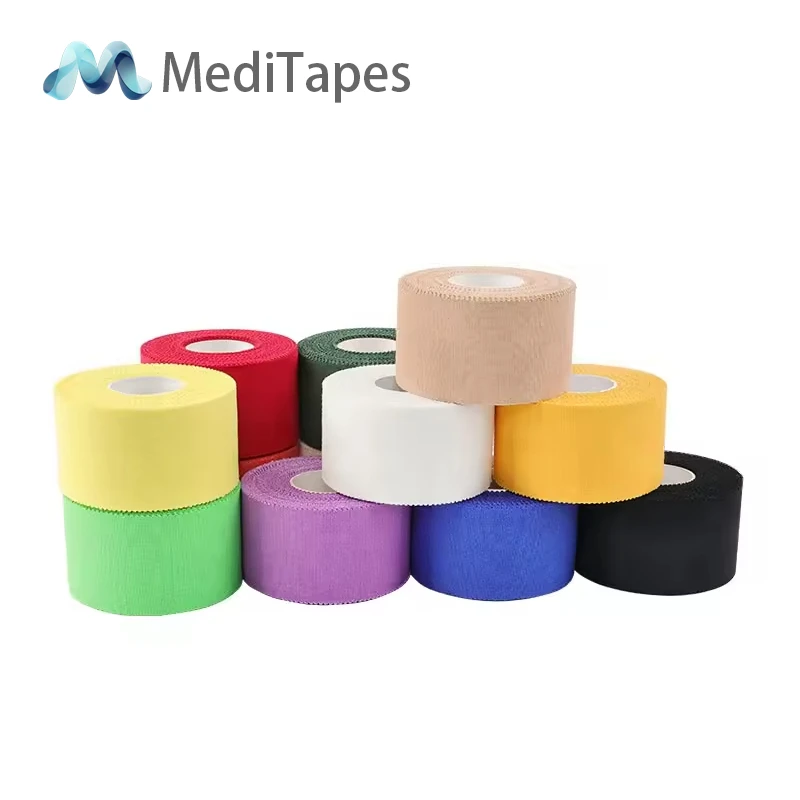
Serrated Edge Cotton Athletic Tape for Boxing & Climbing Protection
Protect hands and joints with our premium Cotton Athletic Tape. Designed with a serrated edge, this cotton sports tape tears easily without scissors. Perfect for boxing wrapping and climbing, offering superior grip and support. Available in red, blue, black, and more.
Market Strategy: Matching Hot Melt vs Zinc Oxide Tape to Your Buyers
As a B2B importer, your choice of hot melt vs zinc oxide tape should align with who is buying from you. It is important to find the right balance of cost and performance for each segment of your market.
Choosing by Target Market
- Target Market: Low-End Retail & Gyms
- Preferred Choice: Hot Melt Sports Tape
- Key Focus: Bright colors, high initial stickiness, and low retail price points.
- Recommended Product: color cotton fabric sports tape. This line uses a refined hot melt formulation to offer excellent initial tack in a wide range of vibrant colors for retail shelves.
- Target Market: Elite Sports Clubs, Physiotherapists, & Medical Distributors
- Preferred Choice: Natural Rubber Zinc Oxide Tape
- Key Focus: High sweat resistance, skin safety, and clean removal with zero residue.
- Recommended Product: Heavyweight rigid cotton or rayon backing with solvent-based zinc oxide adhesive.
If you try to sell hot melt tape to professional medical staff, they will quickly notice any sweat slippage or skin irritation. This can put your contracts and reputation at risk. High-margin clinical buyers are often willing to pay more for consistent quality.
Why Environmental Regulations are Changing the Market
There is another factor shifting the hot melt vs zinc oxide tape landscape: environmental regulations.
Because solvent-based zinc oxide adhesives require organic solvents like toluene or hexane, factories must invest in advanced solvent recovery and air filtration systems. In recent years, environmental enforcement in manufacturing hubs has closed down several low-tier factories that were dumping solvent vapors into the air.
This has made true natural rubber zinc oxide tape harder to source from uncertified suppliers. It is crucial to partner with an established, compliant manufacturer like MediTapes that has fully licensed, eco-friendly solvent recovery facilities. This ensures a stable, long-term supply chain that won’t be suddenly interrupted by factory closures.
Frequently Asked Questions About Hot Melt vs Zinc Oxide Tape
Q1: Which is cheaper, hot melt vs zinc oxide tape?
When comparing the upfront unit cost of hot melt vs zinc oxide tape, hot melt is always the more economical choice. On average, a standard roll of synthetic hot melt sports tape costs 30% to 50% less to produce than a true solvent-based natural rubber zinc oxide roll. This is because hot melt coating lines run at higher speeds, require less energy, and do not use expensive organic solvents or high concentrations of active zinc oxide powder.
Q2: Does hot melt vs zinc oxide tape cause skin irritation?
Yes, in the hot melt vs zinc oxide tape safety profile, hot melt carries a higher risk of causing skin irritation (such as contact dermatitis or skin stripping). The synthetic resins used in hot melt do not breathe well and can trap moisture against the skin. True zinc oxide tape uses natural rubber and active zinc oxide powder, which helps soothe the skin, neutralizes sweat acidity, and reduces redness and allergic reactions.
Q3: How can I tell hot melt vs zinc oxide tape apart in my warehouse?
The easiest way to identify hot melt vs zinc oxide tape without a laboratory is through the scent and heat test. Natural rubber zinc oxide tape has a distinct, medicinal rubber smell. Hot melt tape is virtually odorless or has a light, plasticky scent. Additionally, if you heat a strip of hot melt tape to 50°C (122°F), the adhesive will soften and become gooey, while real zinc oxide adhesive remains dry and stable.
Q4: What is the best choice for sweaty conditions in hot melt vs zinc oxide tape?
For high-moisture and heavy-sweat situations, the winner of the hot melt vs zinc oxide tape matchup is zinc oxide. Natural rubber-based zinc oxide adhesives feature high internal cohesion that does not break down when exposed to sweat, water, or high body humidity. In contrast, synthetic hot melt adhesives can lose their grip and slide off the skin once moisture gets trapped underneath the tape.

Wholesale Rigid Strapping Tape Color Cotton Sports Tape Bulk Supply
Sourcing high-quality Color Cotton Sports Tape for your inventory? Our rigid strapping tape features serrated edges for easy tearing and strong fixation. Ideal for bulk orders, this breathable cotton sports tape ensures durability for athletes. Contact for wholesale rates.
Ready to Upgrade Your Inventory? Let’s Talk Hot Melt vs Zinc Oxide Tape
If you are still weighing the pros and cons of hot melt vs zinc oxide tape for your next import shipment, you don’t have to navigate it alone.
At MediTapes, we have spent years refining our adhesive formulations in our state-of-the-art facilities. We do not use cheap, generic glue recipes. Whether you need a cost-effective, high-visibility retail product or an elite-grade, hospital-safe strapping tape, we formulate and coat everything in-house to ensure consistent quality.
We understand that every market has unique requirements. A formula that works well for a professional European rugby league might be too expensive for a discount retail chain. That is why our team offers complete customization. We can adjust the adhesive coat weight (measured in grams per square meter, or GSM), tune the peel adhesion levels to your target market, and provide retail-ready packaging that helps your brand stand out.
Let us help you find the right hot melt vs zinc oxide tape balance to keep your margins healthy and your customers satisfied.
To get started, head over to our contact page to contact the MediTapes team directly, or drop us an email at info@meditapes.com. Tell us about your target audience, and we will send you a complete B2B pricing sheet along with a free custom sample kit so you can run your own office tests. Let’s work together to build a reliable supply chain.