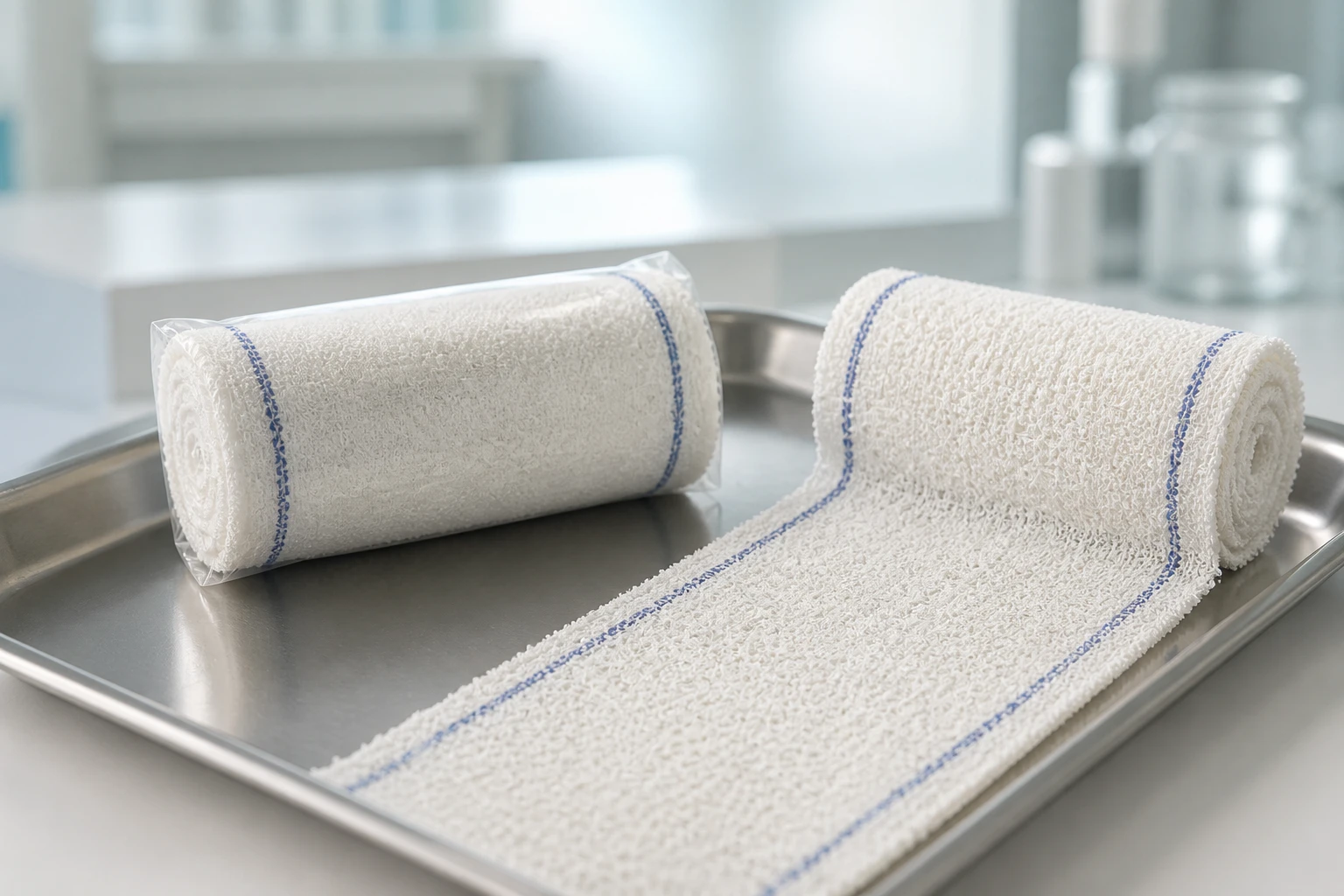
Anyone who has spent ten minutes in an orthopedic clinic or an emergency room knows the frustration: a patient gets wrapped with a standard bandage, walks around for three hours, and returns with the fabric sagging down their ankle like a loose sock. The pressure drops, swelling returns, and the dressing needs reapplication.
In medical manufacturing and procurement, we hear the same complaint over and over again from hospital supply leads. Traditional woven wraps feel nice and soft right out of the polybag, but their mechanical life is short. This brings us straight to the material engineering behind the venda crepé de spandex—a textile solution that completely changes how compression therapy behaves over 12 to 24 hour wear cycles.
When you analyze how a venda crepé de spandex performs under constant dynamic strain, the contrast against pure cotton or rubber weaves is night and day. This breakdown covers polymer physics, yarn construction, hysteresis curves, and why switching to an engineered vendaje de compresión duradero solves clinical pressure loss once and for all.
The Hidden Cost of “Bandage Creep”: What Happens at the Limb Interface?
Before getting into the chemistry, let us look at the mechanical problem we are actually trying to solve. When a nurse or physical therapist wraps an edema patient or an unstable joint, they are applying force across a cylinder.
Según Laplace’s Law applied to medical compression, sub-bandage interface pressure is determined by yarn tension, the number of overlapping layers, bandage width, and limb circumference:
P = (T * n * 4630) / (C * W)
Donde:
- P = Sub-bandage interface pressure in millimeters of mercury (mmHg)
- T = Bandage application tension in Newtons (N)
- n = Number of overlapping layers
- C = Circumference of the target limb in centimeters (cm)
- W = Width of the bandage in centimeters (cm)
- 4630 = Constant mathematical conversion factor for standardized textile units
Looking at this formula, limb circumference is fixed. Bandage width is fixed. If the overlap stays constant, interface pressure depends entirely on Tension (T).
If the fabric experiences structural elongation—what polymer engineers call mechanical “creep”—tension drops precipitously. Within two hours, a standard 30 mmHg sub-bandage pressure can drop down to 12 mmHg. The wrap stays physically wrapped on the patient’s arm or leg, but therapeutically, it has completely failed.
This is why hospitals and distributors are actively transitioning toward high-recovery medical textiles like the MediTapes engineered line of venda elástica de crepé products. A properly built venda crepé de spandex prevents this tension drop-off.
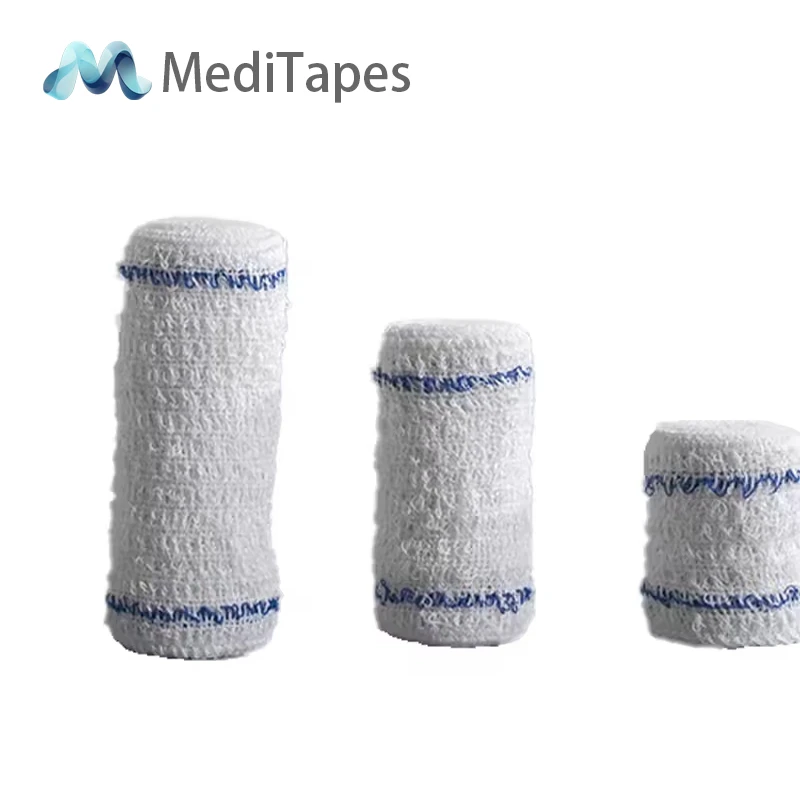
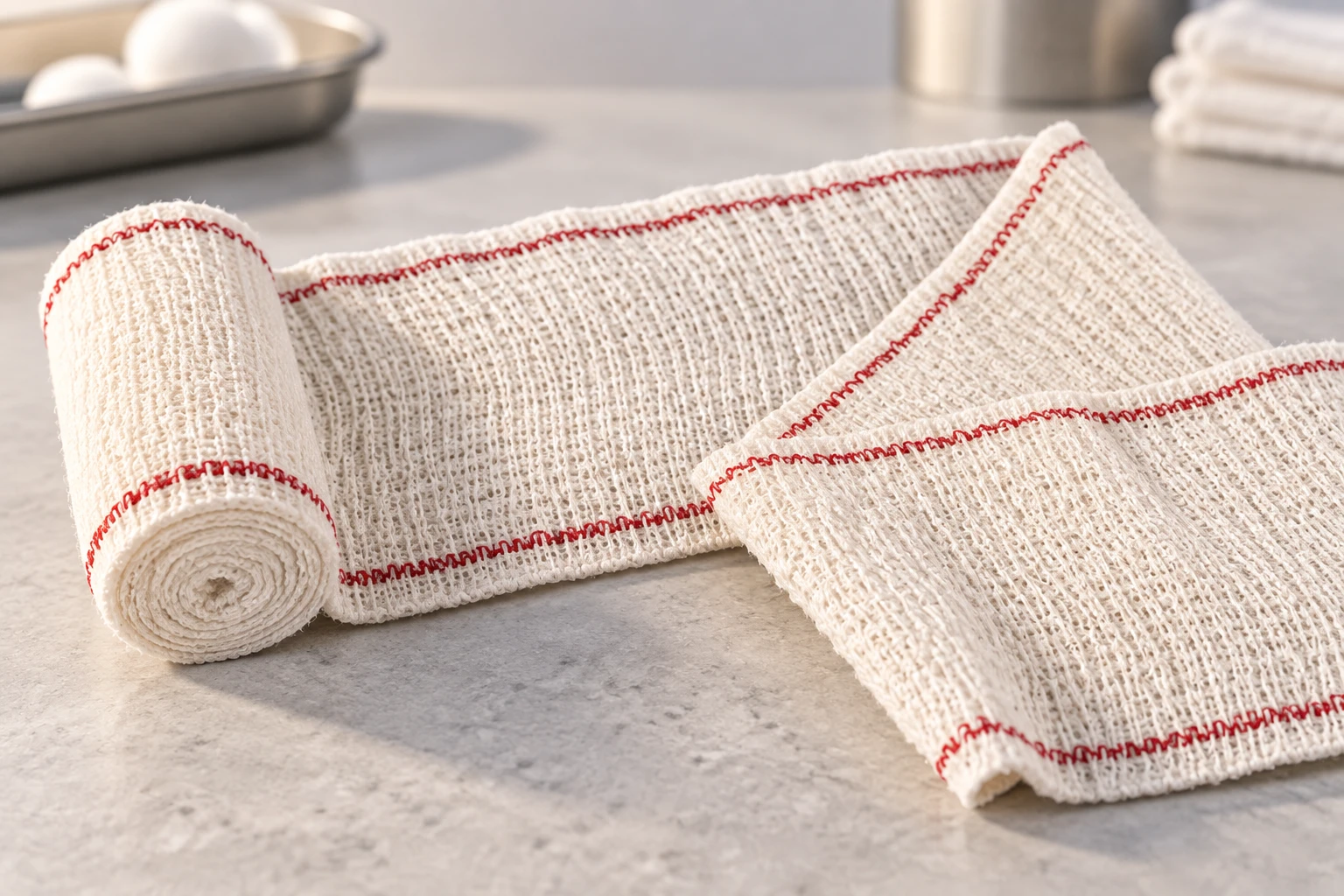
Vendaje de crepé elástico color piel para el tratamiento de venas varicosas
Venda de crepé elástica color piel para venas varicosas | Meta descripción de MediTapes: Vendas de crepé elásticas color piel al por mayor para el tratamiento de venas varicosas y control de edemas. Rollos de compresión discretos y transpirables disponibles en varios anchos. MediTapes ofrece precios directos de fábrica para suministros de soporte vascular. Contáctenos para pedidos al por mayor.
Cotton vs. Spandex: The Molecular Battle for Elastic Memory
To understand why a 100% cotton crepe bandage loses tension so fast while a modern venda crepé de spandex stays snug, you have to look at the fibers under a microscope.
Molecular Behavior Under Mechanical Stress
Cotton Cellulosic Microfibrils:
Composed of rigid glycosidic chains held by hydrogen bonds. Under sustained tensile stress, these hydrogen bonds break and the microfibrils slip past one another permanently. This leads directly to plastic creep with zero spontaneous snap-back.
Spandex Segmented Polyurethane Copolymer:
Composed of soft, coiled amorphous polyether segments linked by rigid, crystalline diisocyanate hard blocks. Under tensile stress, the soft segments uncoil freely, while the crystalline hard blocks act as permanent molecular anchor points. When tension releases, the hard blocks snap the soft segments right back to their zero-strain state.
1. Traditional Cotton Crepe: Mechanical Crimping Without True Polymer Elasticity
Traditional cotton crepe contains zero elastomeric yarn. Its “stretch” comes entirely from high-twist warp yarns (S-twist and Z-twist arranged alternatively) and a wet finishing process that shrinks the fabric to create surface ripples or “crepe.”
When you stretch a cotton crepe wrap:
- You are simply uncoiling the mechanical kinks put into the cotton yarn during weaving.
- Natural cotton fibers are made of crystalline cellulose chains linked by hydrogen bonds.
- Under sustained tension, those hydrogen bonds break and slide past one another. They do not snap back to their zero-strain position on their own.
- The result is permanent plastic deformation. Once overstretched or worn for half a shift, cotton crepe remains elongated until washed in boiling water to mechanically shrink the fibers again.
2. Spandex (Elastane): Segmented Polyurethane Block Copolymers
In contrast, a venda crepé de spandex integrates synthetic elastane filaments directly into the warp structure. Spandex is a segmented block copolymer consisting of alternating soft and hard polymer segments [1]:
- The Soft Segments (Long Polyether Chains): These segments are naturally tangled and coiled in an amorphous state. When tensile load is applied, these coils straighten out easily, providing massive elongation (up to 400% to 600%) with minimal resistance.
- The Hard Segments (Rigid Diisocyanate/Urea Units): These crystalline blocks act as physical cross-links. They do not slide; they anchor the polymer chains in place. When the tensile force is released, these hard domains pull the soft amorphous chains right back into their original disordered, coiled state.
Because of this dual-phase chemistry, a quality venda crepé de spandex delivers near-perfect elastic recovery rather than plastic deformation.
Hysteresis and Dynamic Strain: What the Lab Data Proves
In textile testing labs, we run continuous cyclic extension-recovery tests according to standardized methods like ASTM D4964 for tension and elongation of elastic fabrics y ISO 13934 fabric tensile testing.
A universal testing machine clamps a 100 mm swatch of bandage material, elongates it to 60% or 80% strain at a constant rate (e.g., 300 mm/min), holds it for a dwell period, and then relaxes the sample back to zero load. This cycle repeats anywhere from 10 to 500 times.
| Métrica de rendimiento | Traditional 100% Cotton Crepe | Rubber/Latex-Threaded Crepe Bandage | Venda de crepé elástica de spandex de alta resistencia |
|---|---|---|---|
| Primary Elastic Mechanism | Mechanical S/Z warp twist | Cross-linked polyisoprene core | Polyurethane block copolymer (Elastane) |
| Immediate Elastic Recovery (Cycle 1) | 62% – 71% | 88% – 93% | 96% – 99% |
| Elastic Recovery after 100 Cycles | Under 45% (severe sagging) | 81% (rubber fatigue) | 94% – 97% |
| Tensile Creep Rate (8 hr under load) | Very High (over 35% tension loss) | Moderate (15% tension loss) | Exceptionally Low (under 4% tension loss) |
| Allergy & Skin Sensitivity Risks | Non-allergenic (pure cotton) | High (Latex Type I & IV allergies) | Hypoallergenic (latex-free elastane) |
| Sterilization Resistance (Steam Autoclave) | High shrinkage, stiffens | Degrades quickly (rubber rots/hardens) | High thermal stability up to 135°C |
| Hand-feel & Breathability | Soft, highly breathable | Heavy, thick, sweat-trapping | Soft cotton surface, lightweight, breathable |
The mechanical superiority of a venda crepé de spandex shows up clearly in the work recovery equation. The mathematical formula for elastic recovery index in fabric testing is defined as:
Recovery (%) = [(L1 – L2) / (L1 – L0)] * 100
Donde:
- L0 = Original gauge length of the bandage sample in millimeters (mm)
- L1 = Maximum extended length under specified tensile force in millimeters (mm)
- L2 = Recovered length after release of force and specified relaxation time in millimeters (mm)
In comparative bench tests, cotton crepe typically registers a recovery score between 40% and 55% after repeated cycles. A una venda de crepé elástica de elastano de alta resistencia consistently records 94% to 98% under identical mechanical parameters. That retained energy is what maintains working compression on a moving joint.
Core-Spun vs. Bare Filament: How We Engineer Softness Without Sacrificing Strength
A common objection from clinical buyers is: “If you put synthetic elastane into the bandage, won’t it lose that classic soft, breathable cotton feel that patients tolerate well?”
The answer lies in yarn spinning technology. You never weave naked spandex filaments directly into a clinical wrap. Doing so would cause skin friction, uneven tension distribution, and localized pinch points.
The Anatomy of Core-Spun Yarn (CSY)
Outer Cotton Sheath (100% Skin Contact):
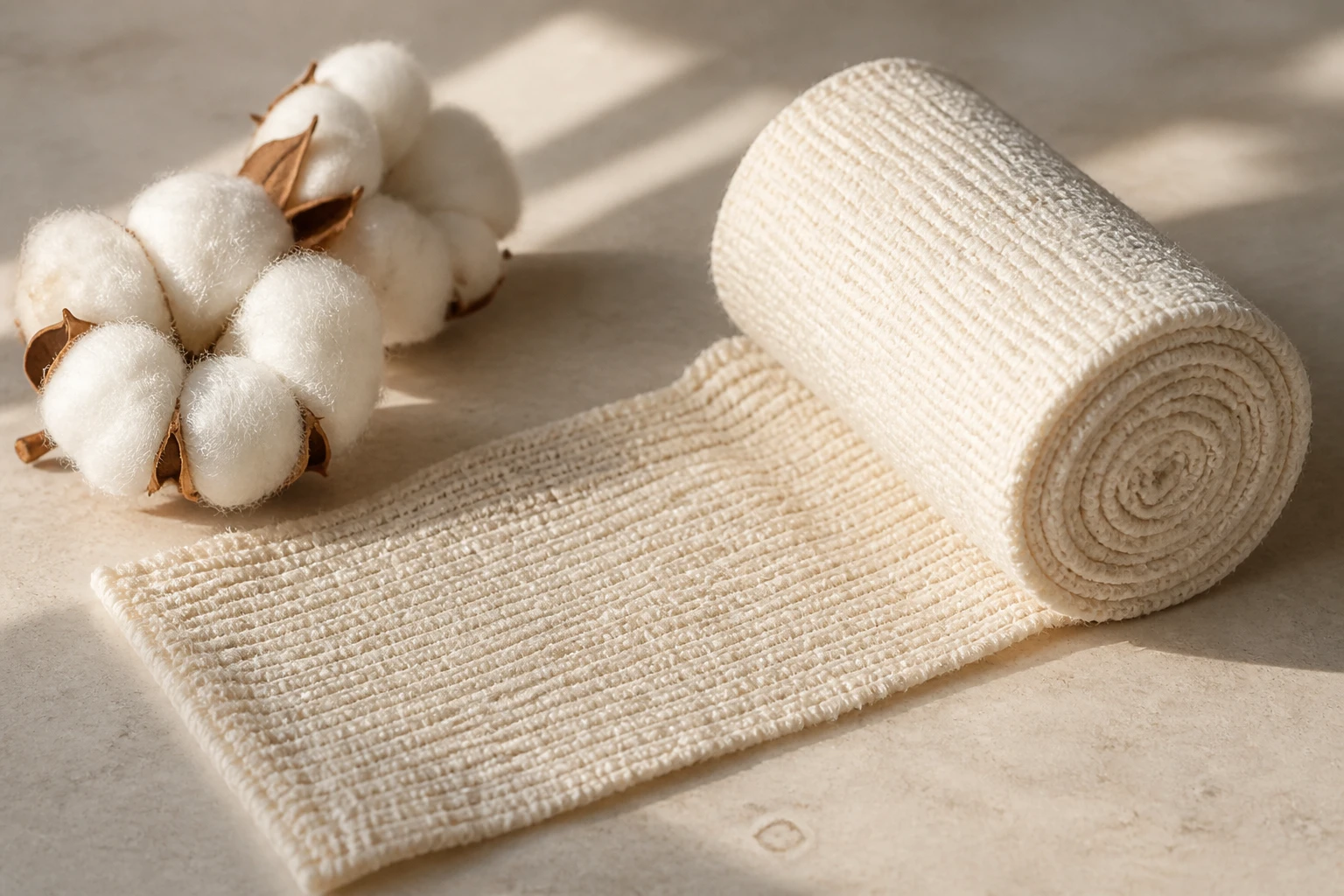
Long-staple natural cotton fibers are spun around the core, forming a protective, highly breathable, absorbent outer layer. Patients only feel natural cotton against their skin.
Inner Elastane Core (High-Denier Muscle):
Un filamento continuo de elastano de poliuretano de alta calidad (70D a 210D) recorre el centro de forma recta, proporcionando retroceso mecánico continuo y memoria sin tocar la piel.
En la fabricación de alta gama, esta estructura de filamento envuelto alrededor del núcleo ofrece las siguientes ventajas de rendimiento:
- El núcleo: El filamento interno genera fuerza de retroceso sostenida y memoria estructural a lo largo de cientos de ciclos de extensión.
- The Sheath: The natural cotton exterior absorbs wound exudate and perspiration while preventing skin abrasion or allergic reactions.
When a patient wears a venda crepé de spandex, the only material contacting their skin is pure natural cotton. The synthetic elastane works silently inside the yarn sheath, generating sustained recoil force without ever touching the patient’s epidermis.
This hybrid construction makes the product an ideal elastic recovery medical wrap that combines soft clinical hand-feel with industrial-grade mechanical tension.
Spandex vs Rubber Bandage: Why Polyurethane Wins the War on Fatigue
For decades, if a hospital needed serious compression that cotton could not deliver, they ordered rubber-elastic wraps. But rubber (natural polyisoprene or synthetic SBR) has major technical flaws when measured against elastane. A realistic spandex vs rubber bandage comparison reveals several clear engineering advantages:
1. Resistance to Heat, Washing, and Body Oils
Natural rubber breaks down quickly when exposed to body sweat, skin lipids, topical ointments, and medical laundering detergents. Its unsaturated polymer backbone is prone to oxidative cleavage and cross-link degradation. Put a rubber-threaded bandage through three high-temperature autoclave or wash cycles, and the rubber threads snap inside the casing, leaving brittle white flakes.
Spandex, being a synthetic polyurethane, is chemically resistant to lipids, perspiration, and washing detergents. A venda crepé de spandex can be washed, boiled, or autoclaved repeatedly without embrittlement or loss of elastic modulus.
2. Elimination of Type I Latex Reactions
Natural rubber latex contains proteins that trigger Type I immediate hypersensitivity reactions, a massive liability in modern medical environments. Using a venda crepé de spandex eliminates latex allergy concerns completely, making hospital purchasing decisions safe for all patients.
3. Strength-to-Denier Efficiency
Polyurethane elastane possesses a far higher tensile strength per unit density than extruded rubber thread. We can build a thinner, lighter, more conformable vendaje de compresión duradero with spandex that delivers identical or superior interface pressure to a heavy, bulky rubber wrap.

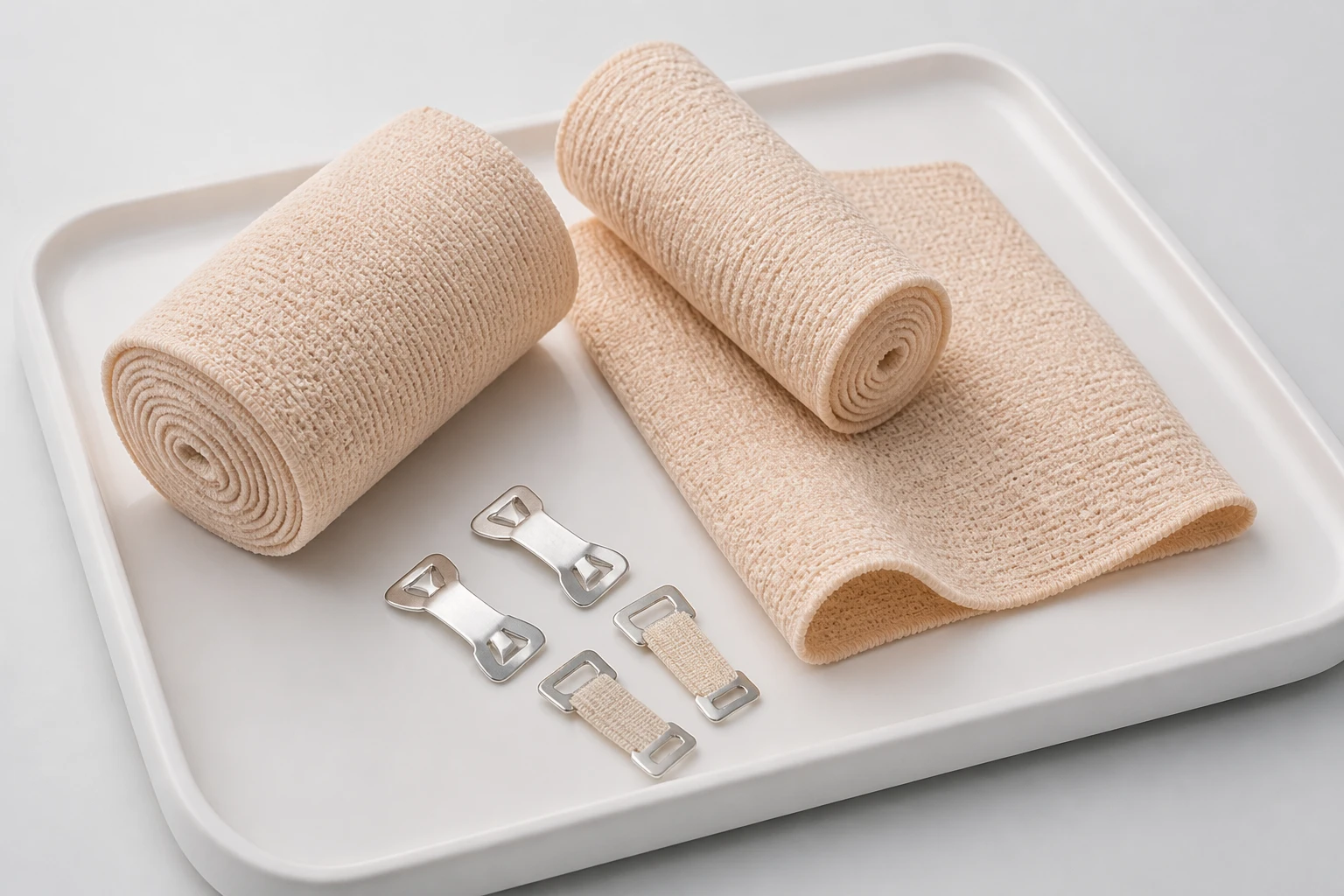
Rollo de vendaje de crepé elástico estéril con clips – Disponibilidad OEM
Vendaje de crepé elástico estéril certificado con clips metálicos o elásticos seguros. Ofrecemos personalización OEM para el tamaño y el embalaje. Este vendaje de crepé elástico de alta calidad garantiza una protección estéril para heridas quirúrgicas. Su retención confiable y textura suave lo hacen esencial para botiquines de primeros auxilios.
Real-World Case: Solving Pressure Drop in Lymphedema Wrap Protocols
Consider an outpatient lymphedema clinic managing lower-limb edema in high-mobility patients.
The Clinical Problem
The clinic originally used traditional cotton crepe wraps applied at 35 mmHg target resting pressure. Within 4 hours of normal walking, patients consistently reported the bandages loosening at the calf and bunching around the ankle. Pressure probe readings under the cotton bandages showed an average drop of 54% interface tension (falling from 35 mmHg to 16 mmHg) before lunchtime.
| Wear Time (Hours) | Cotton Crepe Interface Pressure (mmHg) | Spandex Crepe Bandage Interface Pressure (mmHg) |
|---|---|---|
| 0 Hours (Initial Application) | 35.0 mmHg | 35.0 mmHg |
| 2 Hours (Light Walking) | 24.5 mmHg | 32.8 mmHg |
| 4 Hours (Normal Ambulation) | 16.1 mmHg | 30.5 mmHg |
| 8 Hours (Full Shift) | 12.4 mmHg | 28.5 mmHg |
| 12 Hours (End of Protocol) | 11.0 mmHg | 27.8 mmHg |
The Intervention
The facility swapped their standard cotton rolls for a core-spun venda crepé de spandex line supplied by MediTapes. Application protocols, practitioner wrapping technique, and layer counts remained identical.
The Clinical Results
- Tension Maintenance: Sub-bandage interface pressure maintained an average of 28.5 mmHg after 8 continuous hours of dynamic walking—a tension loss of only 18.5%, compared to 54% with cotton.
- Reduction in Re-wraps: Nursing staff reduced mid-day re-wrapping interventions by 72%, freeing up clinical staff hours.
- Comodidad del paciente: No skin marks or excessive sweat buildup were reported thanks to the cotton-sheathed core-spun yarn.
Cuando cambia a un una venda de crepé elástica de elastano de alta resistencia, el flujo de trabajo clínico se estabiliza porque el vendaje se comporta de manera consistente independientemente del movimiento del paciente.
Indicadores de Calidad: Cómo Inspeccionar un Vendaje de Crepé de Spandex Antes de la Adquisición
Para compradores de hospitales, mayoristas médicos y distribuidores de marca privada, verificar la calidad de la tela antes de pedir contenedores completos es fundamental. Aquí está qué inspeccionar:
| Parámetro de Inspección | Estándar Objetivo / Métrica de Laboratorio | Significado Práctico |
|---|---|---|
| Estructura del Hilo | 100% Núcleo de Spandex Core-Spun / Funda de Algodón | Evita que el elastano desnudo toque la piel, garantizando comodidad |
| Solidez del Borde | Borde tejido reforzado anti-deshilachado | Evita el deshilachado e hilos sueltos durante ciclos repetidos de lavado |
| Índice de Recuperación Elástica | Mayor o igual a 95% después de 100% de elongación | Garantiza la retención de compresión a largo plazo en pacientes activos |
| Densidad de Textura de Crepé | Patrón de tejido uniforme, sin zonas planas | Proporciona fricción antideslizante entre capas sin necesidad de clips metálicos |
| Seguridad Química | Cumple con OEKO-TEX Standard 100 y REACH | Confirma la ausencia de metales pesados dañinos, formaldehído o tintes agresivos |
Al revisar lotes de producción, tenga en cuenta estas tres verificaciones físicas:
- Construcción del Borde de Selvedge: Inspeccione los bordes cortados. Un vendaje de mala fabricación utiliza bordes de tejido abierto baratos que se deshilachan después de dos lavados. Un premium venda crepé de spandex presenta bordes rápidos tejidos y reforzados que resisten el deshilachado incluso cuando se estiran a su capacidad.
- Peso Real (GSM – Gramos por Metro Cuadrado): Asegúrese de que el GSM sin estirar cumpla con las especificaciones médicas (típicamente 75 gsm a 110 gsm dependiendo de si es soporte ligero o uso pesado). Los fabricantes inferiores reducen la densidad del algodón para reducir costos, lo que disminuye la absorción de sudor.
- Concentricidad del Hilo Central: Corte una sección transversal del hilo de urdimbre bajo aumento. El filamento de elastano debe estar centrado dentro de las fibras de algodón circundantes, asegurando coeficientes de fricción consistentes en toda la superficie del vendaje.
Si está adquiriendo suministros médicos, puede explorar nuestro catálogo técnico completo de venda elástica de crepé especificaciones directamente en nuestro sitio.
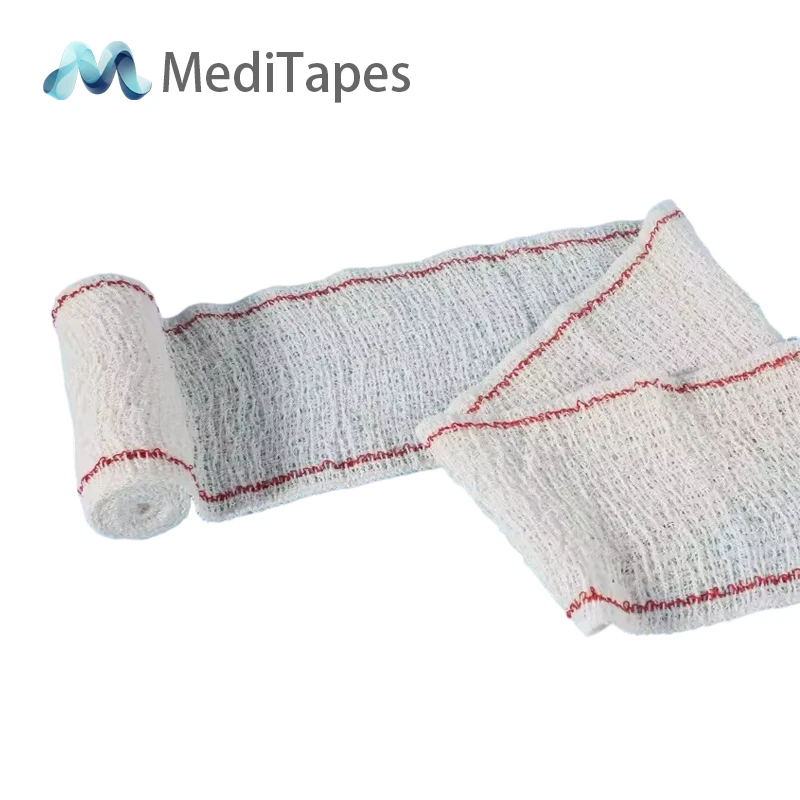
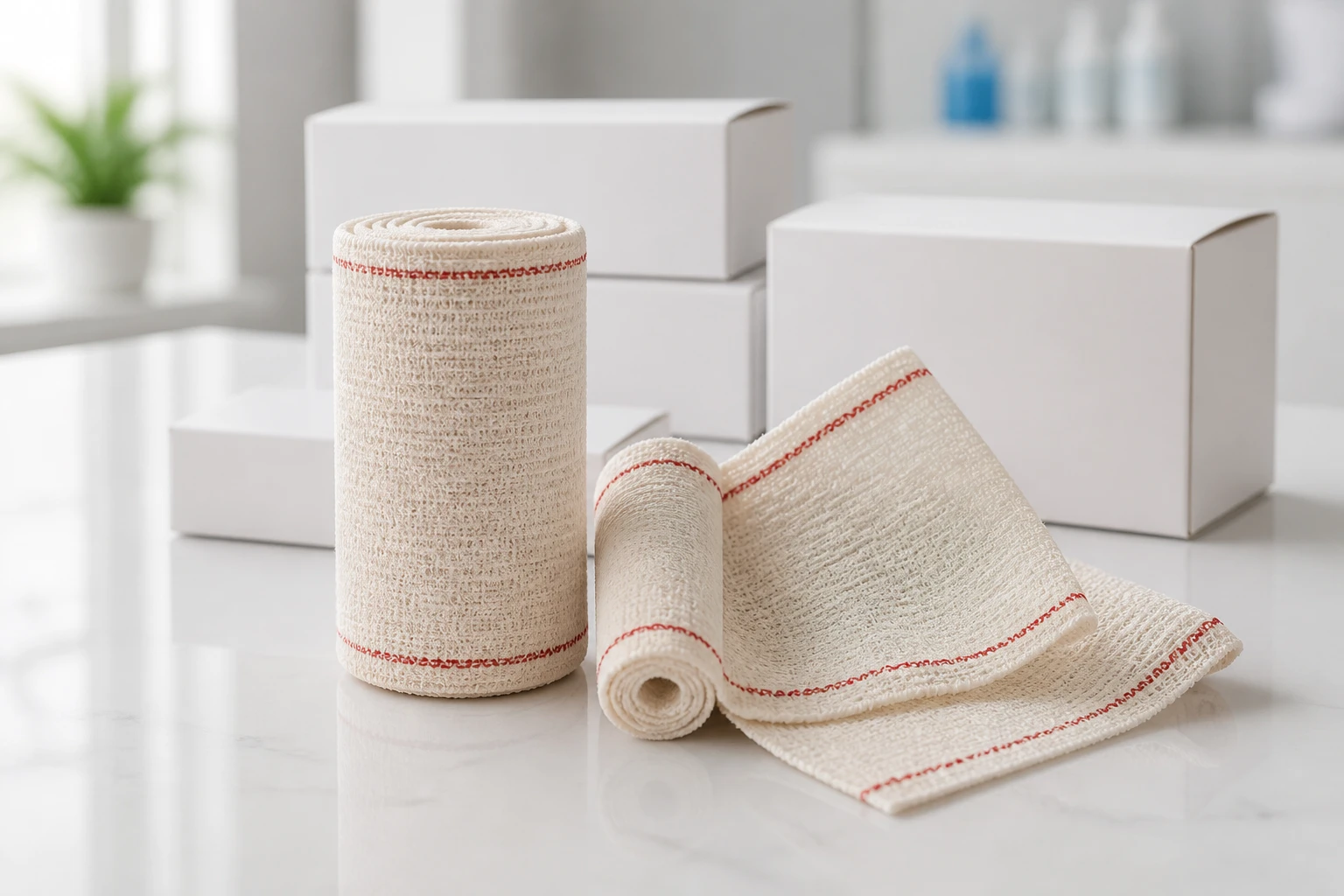
Vendaje de crepé elástico transpirable al por mayor para lesiones deportivas
Compra al por mayor de venda de crepé elástica y transpirable diseñada para la recuperación deportiva. Esta venda de crepé ligera se adapta fácilmente a los contornos del cuerpo como rodillas y tobillos. Reduce la hinchazón a la vez que permite que la piel respire. Una opción ideal para entrenadores deportivos que necesitan un soporte fiable para lesiones deportivas.
Preguntas frecuentes (FAQ)
What makes a spandex crepe bandage different from a standard elastic bandage?
A standard elastic bandage often relies on thick, synthetic elastic bands or rubber threads woven into a flat ribbon. A venda crepé de spandex utiliza hilos de algodón de alta torsión combinados con fibras de elastano de poliuretano core-spun. Esto le da la superficie texturizada y antideslizante de “crepé” que se adhiere a sí misma y evita el deslizamiento en las extremidades, mientras que el spandex proporciona tensión elástica consistente y a largo plazo sin la rigidez severa de los vendajes elásticos estándar.
¿Se puede lavar y reutilizar varias veces una venda de crepé de spandex?
Yes. Unlike cotton crepe wraps that lose their tension permanently once the crimp relaxes, a well-constructed vendaje de compresión duradero with an elastane core can be washed in warm water with mild detergent and dried flat. The polymer memory in the spandex pulls the crepe structure back to its original unstretched length without degrading the fabric.
¿Una venda de crepé de spandex contiene látex de caucho natural?
No. High-quality venda crepé de spandex products use synthetic polyurethane block copolymers (elastane/spandex) instead of natural rubber latex. This makes the wrap safe for patients and medical staff with Type I latex allergies, reducing clinical liability while offering superior creep resistance.
¿Cómo afecta la estabilidad de tensión de una venda médica de recuperación elástica a la curación?
When interface pressure drops due to fabric slackening, interstitial fluid accumulates in the injured tissue, worsening swelling and delaying recovery. An elastic recovery medical wrap powered by spandex maintains steady baseline pressure throughout dynamic movement, ensuring sustained venous return, joint stability, and consistent therapeutic support.
Modernice su Cadena de Suministro de Textiles Médicos con MediTapes
El rendimiento clínico se reduce a la ingeniería de materiales. Al envolver articulaciones lesionadas, manejar la hinchazón postoperatoria o tratar trastornos venosos, no puede permitirse vendajes que se aflojen después de dos horas de movimiento.
En MediTapes, fabricamos vendajes médicos de grado profesional, vendajes elásticos core-spun y consumibles ortopédicos diseñados para cumplir con estrictos estándares de rendimiento internacional. Ya sea que sea un distribuidor médico internacional que busca producción OEM/marca privada confiable o una red hospitalaria que busca reducir los ciclos de reemplazo de vendajes, nuestro equipo de ingeniería ofrece calidad probada.
- Looking for lab test reports, tension decay curves, or customized GSM options?
- Need bulk wholesale pricing on our certified spandex crepe bandage line?
Reach out to our technical team today through our página de contacto o envíe un correo electrónico directamente a info@meditapes.com. Let us help you provide superior compression performance that doctors and patients can rely on.