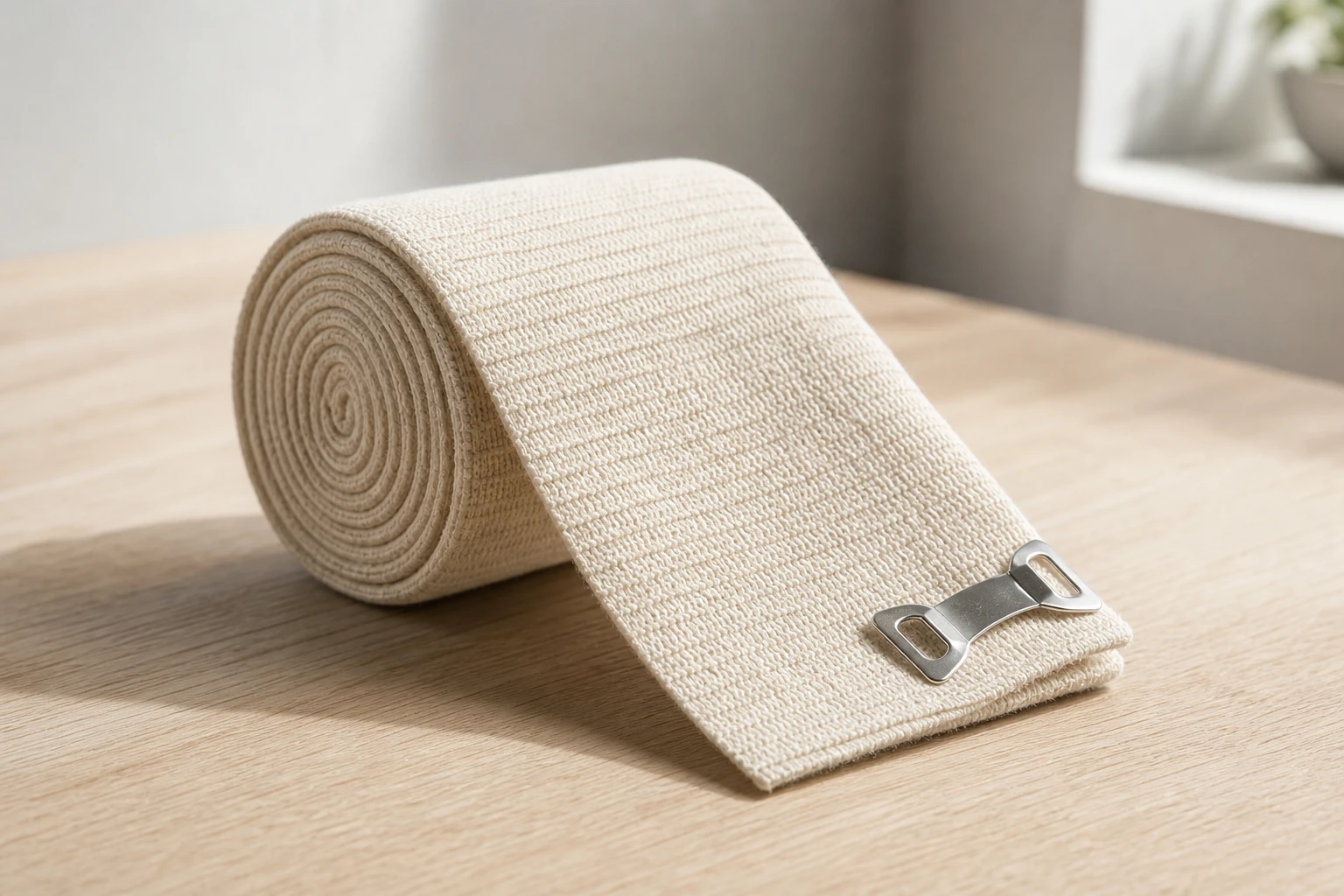
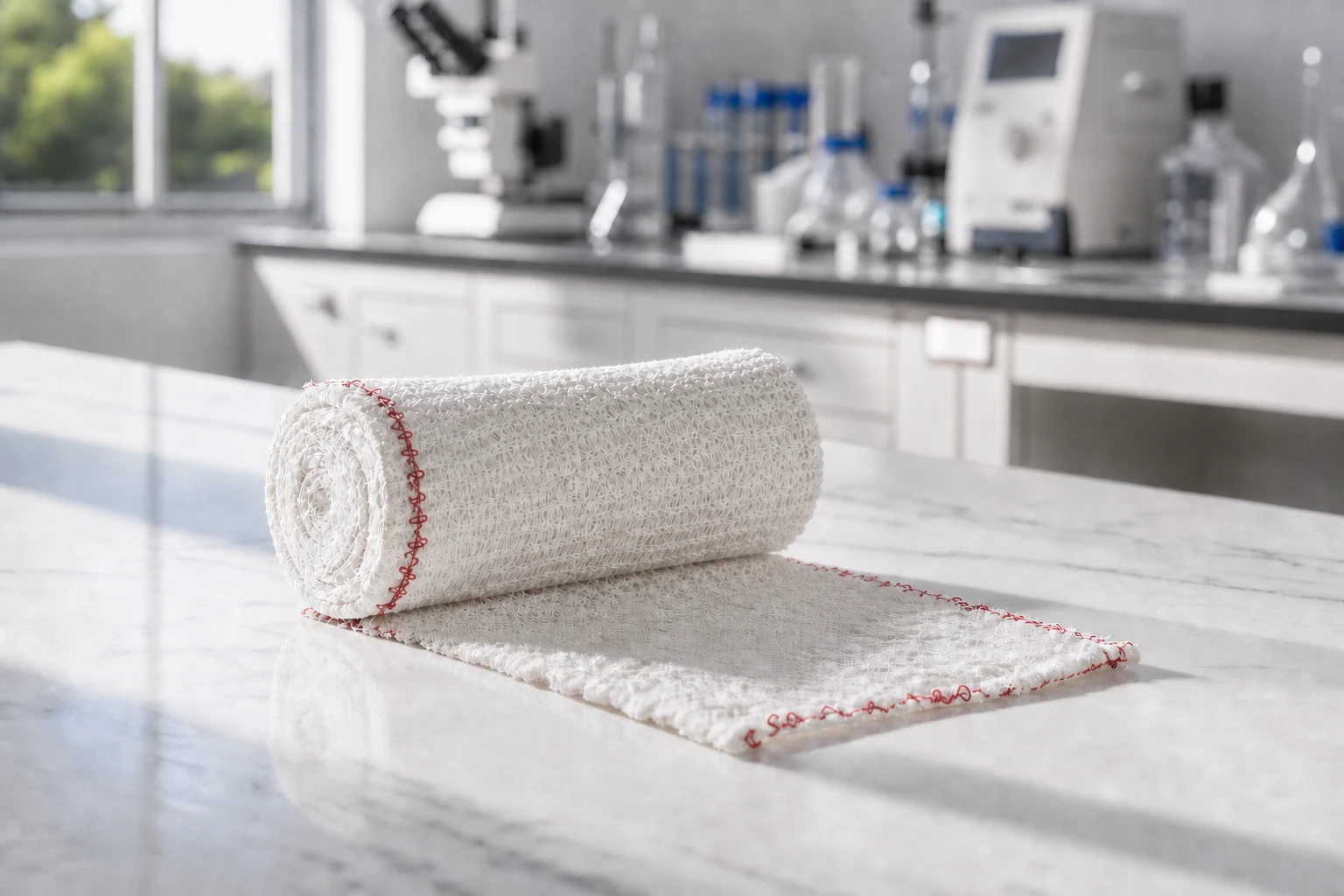
A bandage may look fine during a purchasing review and still cause problems on the ward. The fabric can feel soft in the hand, the price can fit the budget, and the supplier’s paperwork may appear complete. Then nurses begin reporting damp skin, redness, itching, or pale, wrinkled tissue beneath the wrap.
That is often a microclimate problem.
Moisture from sweat, wound exudate, washing, or an overly occlusive dressing system can become trapped against the skin. When the skin remains wet for too long, the outer layer softens and becomes more vulnerable to friction, pressure, adhesive trauma, and microbial damage. This condition is commonly called skin maceration.
For wound care nurses, breathable medical bandages are therefore not just a comfort upgrade. They are part of a broader skin maceration prevention strategy. For hospital buyers, the job is to identify products that offer useful airflow and moisture transfer without giving up support, consistency, cleanliness, or patient safety.
This guide explains what buyers should examine before approving a breathable elastic crepe bandage, how to compare supplier claims, and why material composition alone does not tell the full story.
What Is Skin Maceration?
Skin maceration happens when the skin is exposed to excessive moisture for an extended period. The affected area may appear white, grey, pale, soft, wrinkled, or swollen. In some patients, the first visible sign is persistent redness around the wound or beneath a dressing edge.
Macerated skin has weaker mechanical integrity than healthy, dry skin. It can be damaged more easily by rubbing, repositioning, repeated dressing changes, or the pressure created by a tight wrap.
A peer-reviewed review published in Advances in Skin & Wound Care describes moisture-associated skin damage as inflammation and erosion caused by prolonged exposure to moisture and irritants. The review covers wound exudate, perspiration, urine, stool, and other moisture sources. It is available through the U.S. National Library of Medicine’s PubMed Central database.
Not every case of pale skin is caused by the bandage itself. A heavily exuding wound, unsuitable primary dressing, poor wrap technique, or delayed dressing change can produce the same result. Still, breathable medical bandages can help prevent the secondary wrap from making an already damp environment worse.
Why Breathability Matters in Hospital Bandages
The skin does not stop producing heat and perspiration because a limb has been wrapped. A bandage system changes the small environment between the skin, primary dressing, padding, and outer layers. Clinicians often call this the skin microclimate.
Breathable medical bandages allow heat and water vapor to escape more readily than dense or highly occlusive alternatives. That can reduce the accumulation of sweat beneath the wrap, particularly during longer wear periods or in warm hospital environments.
This does not mean that breathable medical bandages should expose a wound to contamination. Breathability and barrier performance are separate characteristics. A good procurement decision balances:
- Air and water-vapor movement
- Required protection from the external environment
- Absorption provided by the primary dressing
- Mechanical support
- Wrap stability
- Patientenkomfort
- Skin sensitivity
- Intended wear time
- Clinical application
A breathable elastic crepe bandage is normally used for support, retention, light compression, or securing another dressing. It is not automatically an absorbent primary wound-contact layer. That distinction gets missed in product comparisons more often than it should.
The Connection Between Moisture and Skin Breakdown
The stratum corneum is the skin’s outer protective layer. Prolonged hydration causes this layer to swell and soften. The surface then becomes less resistant to friction and shear.
Think about wet paper compared with dry paper. The comparison is not biologically exact, but it explains why damp skin can tear or abrade with less force.
Moisture can also change skin pH and increase the effect of enzymes found in wound fluid. When exudate spreads onto the surrounding skin, proteolytic enzymes may contribute to tissue damage. Breathable medical bandages cannot correct poor exudate management, but they can avoid adding unnecessary heat and trapped perspiration to the problem.
Effective skin maceration prevention normally requires several controls working together:
- Select an appropriate absorbent primary dressing.
- Protect the periwound skin when clinically indicated.
- Use breathable medical bandages or secondary layers suited to the required wear time.
- Apply the wrap at the intended tension.
- Inspect the skin at a frequency based on patient risk.
- Replace wet, contaminated, loose, or clinically exhausted dressings.
A buyer who evaluates only the outer bandage is looking at one part of the system. A useful hospital bandage procurement process involves both purchasing staff and clinical users.
Breathable Medical Bandages vs. Occlusive Products
“Breathable” and “occlusive” are not simple good-or-bad labels. Occlusion can be clinically useful. Certain wound dressings deliberately maintain a moist wound environment because controlled moisture can support healing.
The problem is uncontrolled moisture on the surrounding skin.
| Product characteristic | Possible benefit | Possible risk | What buyers should check |
|---|---|---|---|
| Open woven construction | Better air circulation and flexibility | May provide less external barrier protection | Intended use and secondary dressing compatibility |
| High cotton content | Soft feel and moisture handling | Cotton can retain moisture once saturated | Fiber composition and drying behavior |
| Elastic construction | Conforms to limbs and joints | Excess tension may reduce comfort or circulation | Stretch, recovery, and application guidance |
| Dense synthetic construction | Durability and stable support | May retain more heat in some systems | Air-permeability and vapor-transfer evidence |
| Cohesive or adhesive surface | Reduced slippage | Possible skin sensitivity or residue | Adhesive chemistry and biocompatibility data |
| Waterproof outer layer | External fluid protection | Increased moisture accumulation beneath the layer | Maximum wear time and clinical indication |
Breathable medical bandages are often the better choice where airflow, softness, and routine skin inspection are priorities. An occlusive layer may still be required in specific procedures. The intended use should decide the product, not a blanket belief that more airflow is always better.
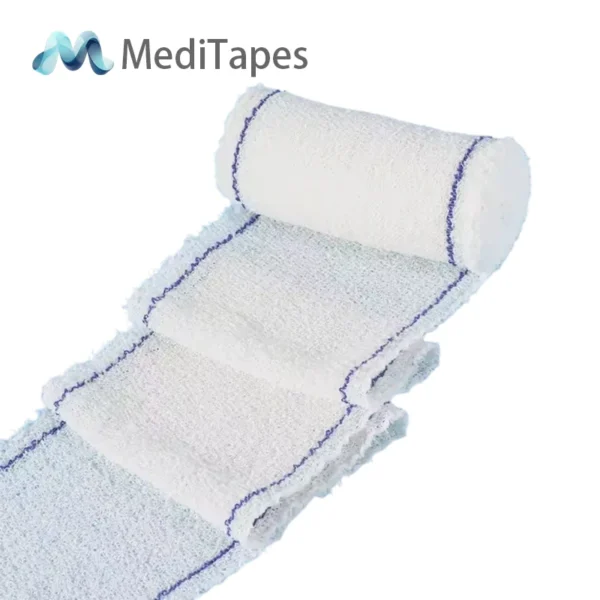
Medizinische elastische Baumwoll-Crepe-Bandage für Wundversorgung & Unterstützung
Unsere medizinische elastische Baumwoll-Crepe-Bandage bietet überlegene Atmungsaktivität und gleichmäßige Kompression. Ideal zum Fixieren von Verbänden und zur Unterstützung bei Zerrungen. Diese elastische Crepe-Bandage ist waschbar, wiederverwendbar und bietet festen Halt ohne zu verrutschen. Perfekt für professionelle Wundversorgungskliniken.
Why Cotton Is Popular With Wound Care Nurses
Cotton remains common in elastic crepe products because it is soft, familiar, flexible, and generally comfortable against intact skin. A medical cotton elastic crepe bandage may also feel less hot than a dense synthetic wrap.
However, “cotton” is not enough information for a serious tender.
Ask the supplier whether the stated composition refers to cotton by weight, surface fibers only, or the complete bandage construction. Elastic crepe products usually require elastic components or woven elastic threads to provide stretch and recovery. Two products marketed as cotton bandages can behave quite differently.
Breathable medical bandages made with a high proportion of cotton may be a strong option for patients with fragile or sensitive skin, but buyers should still examine:
- Full fiber composition
- Presence of latex or natural rubber
- Dyes and finishing agents
- Edge construction
- Loose fiber or lint generation
- Odor after opening
- Elastic recovery after use
- Behavior when damp
- Biocompatibility evidence
- Packaging cleanliness
A low-cost medical cotton elastic crepe bandage that becomes loose after one hour can increase nursing workload. A stiff product can create pressure points. Rough edges may rub the skin. Those practical issues do not show up in a unit-price spreadsheet.
Breathability Is Measurable, So Ask for Data
The word “breathable” is used loosely in product marketing. Hospital buyers should ask what the claim actually means.
Air Permeability
Air permeability measures how readily air passes through a material under a defined pressure difference. Results may be expressed in units such as liters per square meter per second, often written as L/m²/s.
A simplified expression is:
Air permeability = airflow volume ÷ test area ÷ time
The number is useful only when the supplier also identifies the test method, sample condition, pressure difference, and units. A bare number on a brochure cannot be compared reliably with a result produced under different conditions.
Moisture Vapor Transmission
Moisture vapor transmission rate, commonly shortened to MVTR, describes how much water vapor passes through a material over a stated area and time.
A simplified expression is:
MVTR = change in water mass ÷ test area ÷ test time
MVTR is often expressed as g/m²/24 h.
For breathable medical bandages, MVTR may be more relevant when the wrap is part of a multilayer dressing system. Air permeability alone does not reveal how effectively water vapor escapes from the full system.
Do not compare an uncovered crepe bandage result with a laminated dressing result and assume the higher figure makes one product clinically superior. The products serve different jobs.
Absorbency Is Not Breathability
A fabric can absorb liquid but release vapor slowly. Another material may absorb little liquid while allowing vapor to pass through quickly. These are different properties.
Breathable medical bandages should not be selected as a substitute for an absorbent primary dressing unless the manufacturer specifically identifies that use and provides supporting evidence.
What Hospital Buyers Should Request From Suppliers
A product specification sheet is only the start. For repeat hospital use, procurement teams need enough evidence to confirm consistency between samples, tenders, and delivered batches.
A practical request list for breathable medical bandages includes:
| Document or sample | Warum dies von Bedeutung ist |
|---|---|
| Technical data sheet | Confirms dimensions, composition, weight, stretch, and intended use |
| Instructions for use | Shows application method, warnings, contraindications, and reuse status |
| Biocompatibility information | Helps assess risks from skin contact |
| Quality-system certification | Shows whether production is managed under a medical-device quality system |
| Latex declaration | Supports allergy-risk screening |
| Material composition statement | Identifies cotton, elastic fibers, dyes, and other components |
| Test-method references | Makes performance claims easier to compare |
| Packaging specification | Confirms unit packaging, case quantity, labeling, and storage conditions |
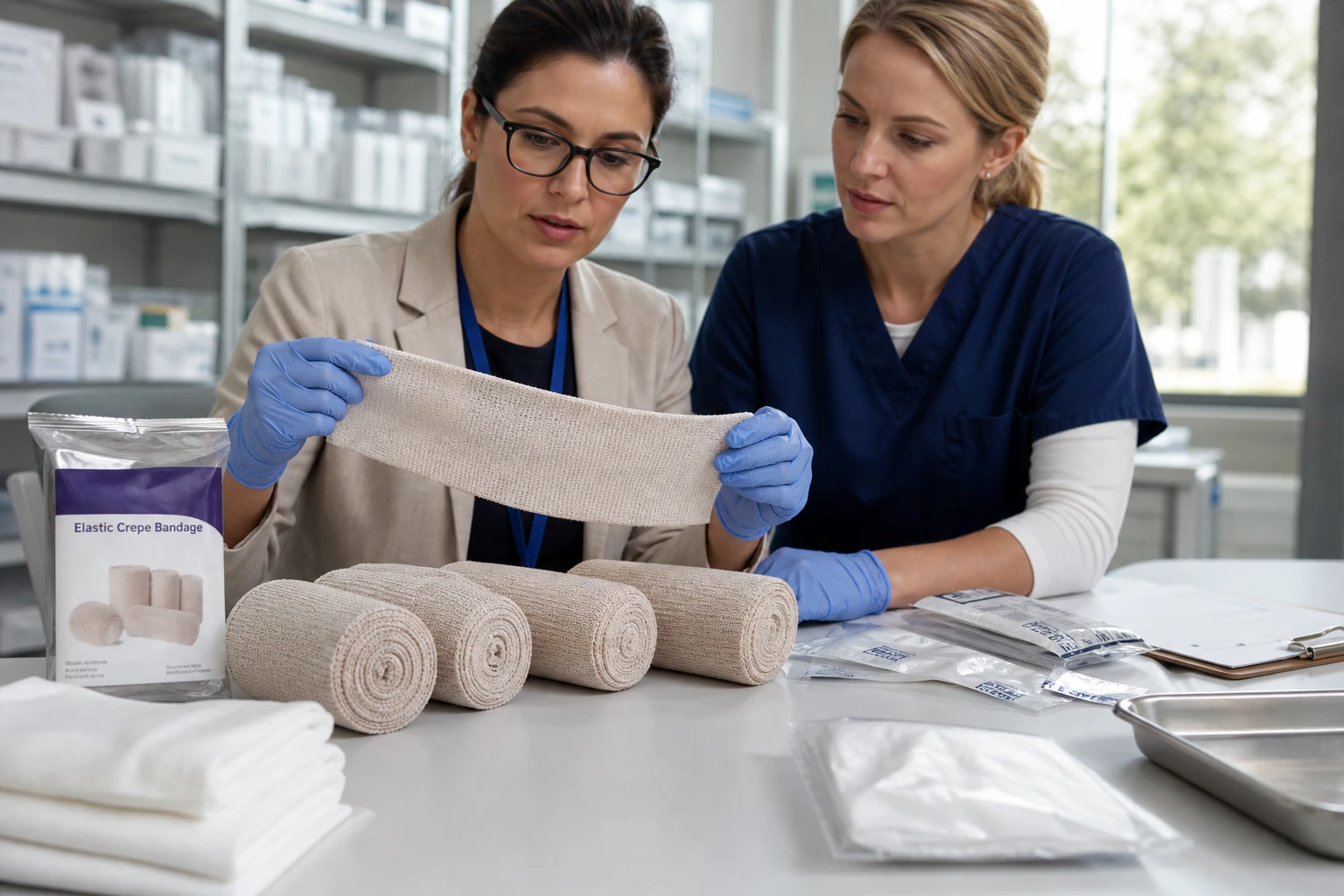
| Product samples | Allows nurses to assess feel, conformity, fraying, heat, and slippage |
| Batch traceability example | Shows whether complaints can be linked to production records |
| Shelf-life evidence | Supports inventory planning |
| Change-notification policy | Reduces surprises after approval |
ISO 13485 specifies quality-management-system requirements for organizations involved in medical devices. Buyers can review the standard’s scope through the International Organization for Standardization.
Biological evaluation should be considered in the context of the product’s contact type and duration. ISO 10993-1 provides a framework for biological evaluation within a risk-management process, as summarized by ISO’s official standard page.
A certificate alone does not prove that breathable medical bandages will suit every patient. It does show whether the supplier is working within a defined quality framework.
A Better Hospital Bandage Procurement Process
The most reliable decisions are made when clinical teams test realistic product use instead of choosing from brochures.
Step 1: Define the Clinical Job
Write down the intended application before requesting quotes. Is the bandage being used to retain a dressing, support a sprain, provide light compression, cover fragile skin, or secure padding?
Breathable medical bandages intended for dressing retention may need different stretch and recovery characteristics from products used for musculoskeletal support.
Step 2: Identify High-Risk Patients
Ask wound care nurses which patients are most likely to develop moisture-related problems. Common risk factors include:
- Heavy wound exudate
- Excessive perspiration
- Edema
- Fragile or aged skin
- Reduced sensation
- Limited mobility
- Incontinence
- Peripheral vascular disease
- Diabetes
- Long wear periods
- Previous sensitivity to adhesives or elastic materials
Breathable medical bandages may improve comfort for these groups, but compression and vascular status require separate clinical assessment.
Step 3: Build a Weighted Scorecard
Price should be one category, not the whole score.
An example scoring model is:
Total score = clinical performance × 0.35 + skin compatibility × 0.20 + quality evidence × 0.20 + supply reliability × 0.15 + cost × 0.10
The weighting should reflect local priorities. A specialist wound unit may place more weight on skin compatibility. A disaster-response hospital may increase the supply-reliability component.
Step 4: Run a Controlled User Evaluation
Give coded samples to a small group of nurses. Coding reduces brand and packaging bias. Ask each reviewer to assess the same characteristics:
- Weichheit
- Einfache Anwendung
- Conformability around joints
- Edge comfort
- Slippage
- Heat buildup
- Skin condition after removal
- Fraying
- Ease of tearing or cutting
- Compatibility with clips, tape, or retention systems
The evaluation should not involve unsuitable patients merely to test a product. Follow local clinical governance requirements and the manufacturer’s intended use.
Step 5: Evaluate Total Cost per Use
A cheaper bandage can become expensive if it needs frequent replacement, slips during wear, causes skin complaints, or takes longer to apply.
A basic comparison is:
Total cost per use = purchase cost + application labor + replacement cost + estimated waste cost
Complication costs are harder to assign directly, and procurement teams should avoid inventing numbers. Track actual complaint rates, unplanned changes, and product wastage after implementation instead.
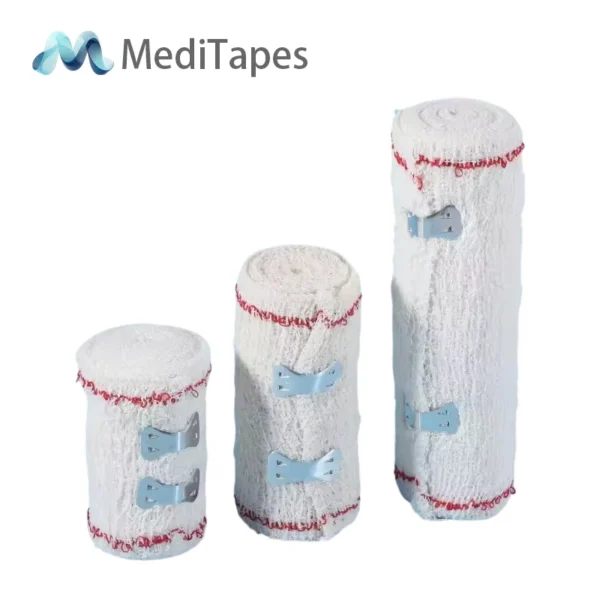
Strapazierfähige Spandex-Elastik-Kreppbandage – Latexfreie Herstellung
Beziehen Sie hochwertige, strapazierfähige Spandex-Elastik-Kreppbandagen direkt ab Werk. Diese latexfreie Kreppbandage wurde für starke Kompression in der Orthopädie entwickelt und minimiert allergische Reaktionen. Die dauerhafte Elastizität gewährleistet langfristige Unterstützung bei schweren Verstauchungen und in der postoperativen Erholung.
The Role of Elasticity and Application Tension
Breathability does not protect a patient from a badly applied wrap.
An elastic crepe bandage stores tension as it stretches. The pressure delivered to a limb depends on several factors, including the bandage tension, number of layers, limb circumference, and bandage width.
The basic relationship is commonly described through Laplace-based principles:
Pressure increases when bandage tension or the number of layers increases.
Pressure decreases when limb circumference or bandage width increases.
This explains why the same breathable elastic crepe bandage may apply more pressure around a narrow ankle than around a wider calf. It also explains why uncontrolled overlap and stretching can create uneven pressure.
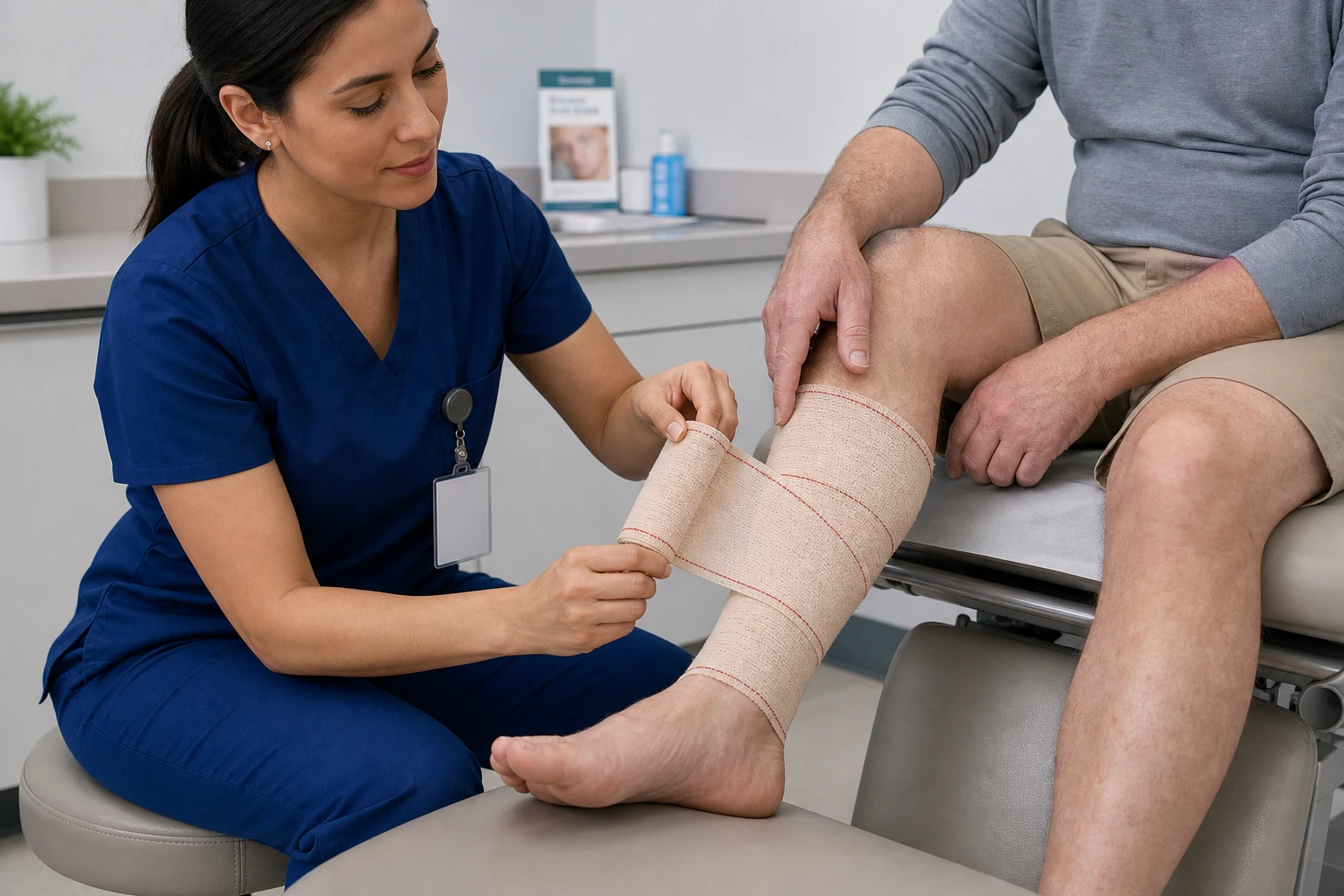
Breathable medical bandages used for support or retention should come with clear application instructions. Where therapeutic compression is required, hospitals should use a product designed and validated for that purpose, supported by trained clinical assessment.
A breathable elastic crepe bandage is not automatically a compression therapy system.
Common Procurement Mistakes
Buying by Cotton Percentage Alone
High cotton content may improve softness, but construction quality still matters. Look at weave consistency, stretch recovery, edge finishing, lint, and damp performance.
Accepting “Hypoallergenic” Without Detail
Hypoallergenic is not a guarantee that no patient will react. Ask which materials were evaluated, what testing supports the claim, and whether natural rubber latex is present.
Testing Only on a Hand or Forearm
A quick touch test says little about slippage, heat, edge pressure, or moisture after several hours. Breathable medical bandages should be assessed under their intended conditions of use.
Ignoring the Primary Dressing
If wound fluid is reaching the outer bandage, the complete dressing plan may need review. Changing to breathable medical bandages will not fix an absorbency mismatch by itself.
Treating Every Elastic Bandage as Interchangeable
Elastic crepe bandages, cohesive wraps, short-stretch bandages, long-stretch bandages, and compression systems are not identical. Substitution without clinical review can change delivered pressure and patient risk.
Choosing the Lowest Unit Price
Low unit cost can hide short roll lengths, inconsistent widths, poor elastic recovery, packaging failures, or higher replacement frequency. Compare cost per successful use.
An Anonymous Hospital Evaluation Scenario
Consider a general hospital receiving repeated nurse complaints about warmth and dampness beneath a secondary wrap. The patients had mixed wound types, so the team did not assume the bandage was the only cause.
Procurement and wound care staff reviewed the complete system. They checked the primary dressing, change frequency, wrapping tension, patient perspiration, and outer-bandage construction.
Three breathable medical bandages were evaluated as coded samples. Nurses recorded application feel, slippage, edge marks, heat, visible moisture, and skin condition at removal. One product felt exceptionally soft but lost tension quickly. Another maintained support but had rough edges. The third offered a more useful balance of softness, stability, and airflow.
The key lesson was not that one fiber always wins. The team got a better answer by testing breathable medical bandages as clinical products instead of choosing the sample with the nicest first touch.
That same approach works for large tenders. Start with documented requirements, involve the people applying the bandage, and keep the scoring criteria consistent.
Questions to Ask an Elastic Crepe Bandage Manufacturer
Before approving a new source, send the manufacturer a precise questionnaire.
- What is the complete fiber composition?
- Is natural rubber latex present anywhere in the product or packaging?
- What are the unstretched and stretched dimensions?
- How are width, weight, and elasticity controlled between batches?
- What evidence supports the breathable claim?
- Which air-permeability or MVTR method was used?
- Is the product sterile or non-sterile?
- Is it intended for single-patient or single-use application?
- What skin-contact biocompatibility evaluation is available?
- What are the storage temperature and humidity limits?
- How is each production lot identified?
- What is the complaint and corrective-action process?
- How much notice is given before material or process changes?
- Can pre-shipment samples be matched to mass-production specifications?
- What is the normal manufacturing lead time?
The answers reveal more than a polished catalogue does. A capable supplier should be able to explain the product’s intended use and limitations without turning every response into a sales claim.
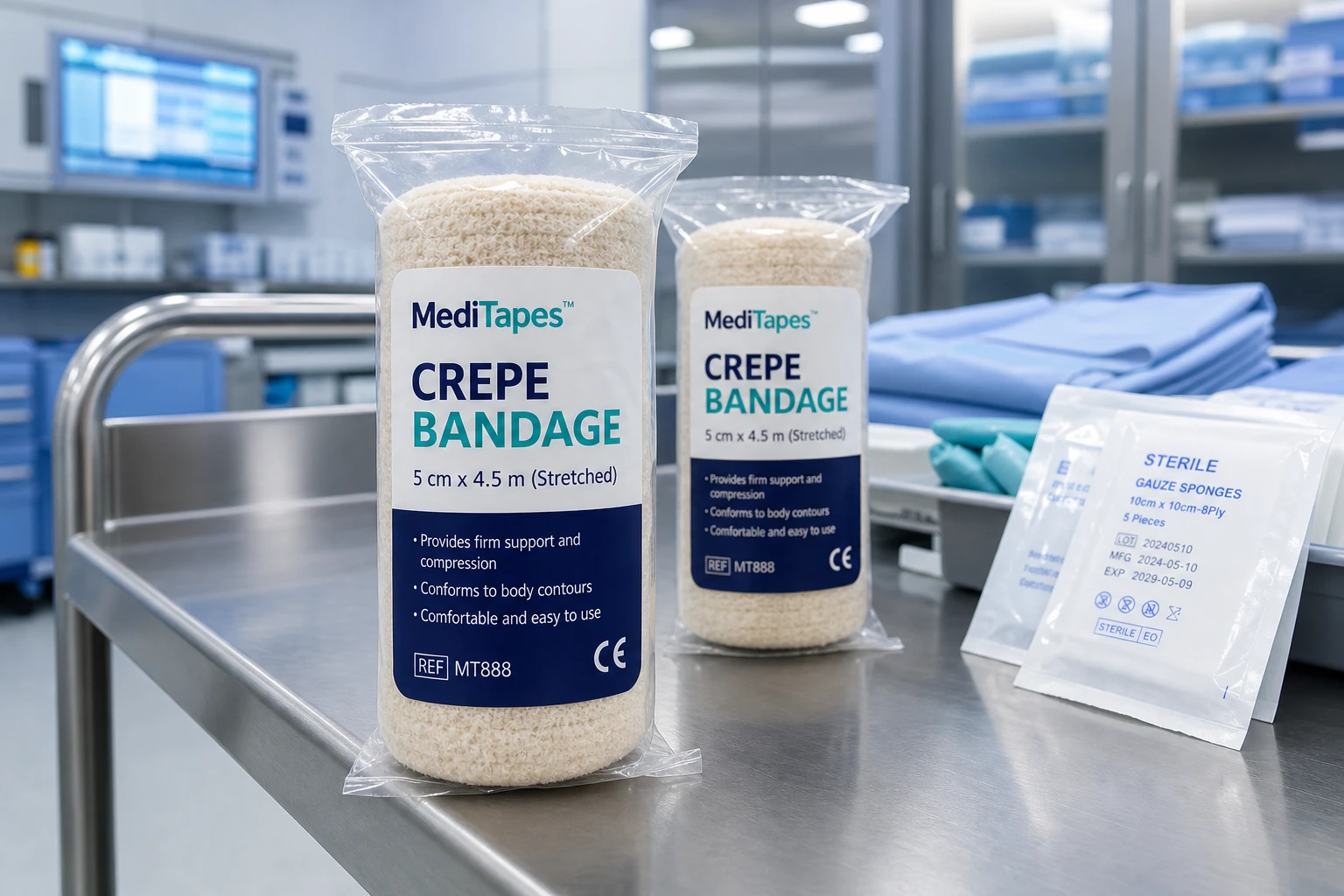
Hospital buyers comparing cotton-rich options can review MediTapes’ elastic crepe bandage product category and request the specifications needed for their own clinical and regulatory review.
How to Write a Useful Tender Specification
An overly vague specification invites inconsistent bids. An overly narrow specification may exclude workable alternatives or copy one supplier’s design.
A balanced specification for breathable medical bandages can cover:
- Intended clinical use
- Required width and roll length
- Tolerance for dimensions
- Minimum or target cotton content
- Latex status
- Stretch range
- Elastische Rückstellkraft
- Edge construction
- Fraying limits
- Packaging format
- Labeling requirements
- Shelf life at delivery
- Batch traceability
- Applicable regulatory status
- Biocompatibility documentation
- Breathability test method
- Sample-evaluation requirement
- Change-notification period
Avoid writing “highly breathable” without a measurement or evaluation method. Suppliers cannot quote consistently against an undefined adjective.
The tender should also state whether clips are acceptable. Loose metal clips can be unsuitable in some clinical environments. Many facilities prefer tape or another approved retention method.
Receiving Inspection Should Continue After Approval
Supplier qualification is not finished when the contract is signed. Delivered breathable medical bandages should be checked against the approved specification.
Receiving teams can sample:
- Roll width
- Rollenlänge
- Packaging integrity
- Label accuracy
- Batch number
- Expiry or manufacturing date
- Visible contamination
- Weave consistency
- Edge quality
- Geruch
- Stretch behavior
Clinical complaints should be logged by product code and batch. “The bandage was bad” is not enough for an investigation. Record what happened, where the product was used, how it was applied, the condition of the packaging, and whether retained samples are available.
This level of traceability helps the supplier investigate and helps the hospital distinguish an isolated application issue from a batch-related problem.
When Breathable Medical Bandages Are Not Enough
Breathable medical bandages can support moisture management, but they cannot compensate for every clinical problem.
Escalate for clinical review when:
- Exudate repeatedly reaches the bandage
- Skin becomes white, grey, swollen, blistered, or eroded
- Redness persists after removal
- The patient reports burning, numbness, or increasing pain
- Toes or fingers become cold, pale, blue, or swollen
- The wrap repeatedly slips or forms tight folds
- There is a suspected allergic reaction
- Odor, fever, or other infection concerns develop
The correct response may involve changing the primary dressing, increasing change frequency, adding periwound protection, adjusting wrap technique, or selecting a different bandage system.
Breathable medical bandages are one control within the care plan. They are not a stand-alone treatment for maceration.
Choosing a Supplier for Long-Term Hospital Use
Product performance matters, but B2B buyers also need predictable manufacturing and communication.
Ask how the supplier manages raw-material changes. A small change in elastic thread, cotton source, finishing chemistry, or weave can affect softness and stretch. Hospitals should receive notice before a significant product change, not discover it after nurses report different handling.
Supply capacity also deserves scrutiny. Confirm normal lead time, minimum order quantity, case packing, production capacity, export documents, and contingency planning. Request samples from representative production, not just a specially prepared sales roll.
MediTapes provides information on medical bandage and tape manufacturing for buyers assessing supply options. Hospitals, distributors, and procurement teams can use the MediTapes-Kontaktseite to request product details, samples, packaging options, or a quotation.
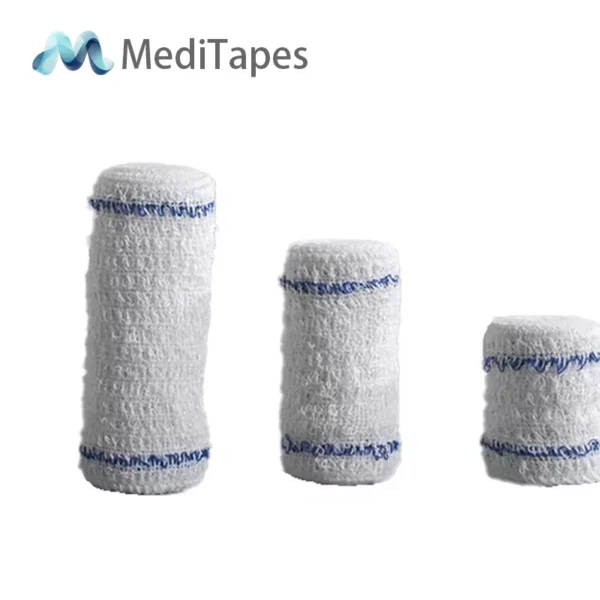
Hautfarbene elastische Kreppbandage zur Behandlung von Krampfadern
Hautfarbene elastische Kreppbandage für Krampfadern | MediTapes Meta-Beschreibung: Hautfarbene elastische Kreppbandagen im Großhandel für die Krampfaderbehandlung und Ödemkontrolle. Diskrete, atmungsaktive Kompressionsrollen in verschiedenen Breiten erhältlich. MediTapes bietet Preise direkt ab Werk für Gefäßstützmittel. Kontaktieren Sie uns für Großbestellungen.
A Practical Buying Decision
The best breathable medical bandages are not simply the products with the loosest weave or the highest cotton claim. Buyers need a stable balance of airflow, moisture-vapor movement, softness, conformability, elastic recovery, cleanliness, and reliable production.
Start by getting the clinical job straight. Then ask for measurable specifications, run a controlled nurse evaluation, review quality documents, and calculate cost per use instead of cost per roll.
For hospitals dealing with frequent redness or damp skin beneath wraps, this process creates a clear path forward:
- Attention: identify where moisture is being trapped.
- Interest: compare breathable medical bandages using clinical and technical evidence.
- Desire: test cotton-rich products that may improve comfort without sacrificing support.
- Action: request matched samples, documentation, and commercial terms.
To discuss a breathable elastic crepe bandage for hospital procurement, contact the MediTapes team oder send an email to MediTapes with the required sizes, material preferences, estimated order quantity, packaging needs, and destination market.
Frequently Asked Questions About Breathable Medical Bandages
Können atmungsaktive medizinische Verbände eine Hautmazeration vollständig verhindern?
Nein. Atmungsaktive medizinische Bandagen können unnötige Wärme- und Feuchtigkeitsansammlungen reduzieren, aber die Vorbeugung von Hautmazeration hängt auch von der Exsudatkontrolle, der Häufigkeit des Verbandswechsels, dem Schutz der Wundumgebung, der Wickelspannung, der Perspiration des Patienten und der klinischen Überwachung ab.
Wenn Flüssigkeit durch den Primärverband austritt, wird der bloße Wechsel der äußeren Bandage das Problem wahrscheinlich nicht lösen.
Ist eine medizinische elastische Kreppbandage aus Baumwolle für empfindliche Haut geeignet?
Es kann geeignet sein, da Material mit hohem Baumwollanteil oft weich und bequem ist. Dennoch sollten Käufer die vollständige Zusammensetzung, den Latex-Status, Farbstoffe, Veredelungsmittel, die Kantenkonstruktion und verfügbare Nachweise zur Biokompatibilität prüfen.
“Die Begriffe ”Baumwolle“ und ”hypoallergen“ sollten eine ordnungsgemäße Produktbewertung nicht ersetzen.
Was ist der Unterschied zwischen atmungsaktiven medizinischen Bandagen und saugfähigen Wundauflagen?
Atmungsaktive medizinische Bandagen bieten je nach Verwendungszweck in erster Linie Unterstützung, Fixierung, Schutz oder leichte Kompression. Saugfähige Wundauflagen sind darauf ausgelegt, Wundflüssigkeit aufzunehmen und zu regulieren.
Eine atmungsaktive Bandage kann das Entweichen von Wasserdampf begünstigen, dies bedeutet jedoch nicht, dass sie die Menge an Exsudat absorbieren kann, die von einer Wundauflage mit direktem Wundkontakt aufgenommen wird.
Wie sollten Krankenhäuser Angaben zur Atmungsaktivität vergleichen?
Fragen Sie nach dem Prüfverfahren, den Einheiten, dem Probenzustand, der Druckdifferenz und dem tatsächlichen Ergebnis. Luftdurchlässigkeit und MVTR messen unterschiedliche Parameter, daher sollten die Werte nur verglichen werden, wenn die Produkte und Methoden hinreichend vergleichbar sind.
Die Untersuchung klinischer Proben ist weiterhin sinnvoll, da sich das vollständige Verbandsystem anders verhalten kann als ein einzelnes, im Labor geprüftes Gewebe.
Bietet ein atmungsaktiverer Verband immer eine bessere Versorgung?
Nein. Sehr offenporige Materialien bieten möglicherweise weniger Schutz, eine geringere Stabilität oder andere Unterstützungseigenschaften. Die beste Wahl hängt von der Wunde, dem Patientenrisiko, dem Primärverband, der vorgesehenen Tragezeit und der erforderlichen mechanischen Leistung ab.
Atmungsaktivität ist ein Auswahlkriterium, aber nicht das einzige Kriterium.
Kann eine elastische Kreppbinde zur therapeutischen Kompression verwendet werden?
Nur wenn der beabsichtigte Verwendungszweck, die Leistungsdaten und das klinische Protokoll diese Anwendung unterstützen. Elastische Universal-Kreppbandagen können je nach Dehnung, Überlappung, Gliedmaßenform und Anwendertechnik einen variablen Druck erzeugen.
Verwenden Sie für die therapeutische Kompression ein geeignetes, validiertes System und geschultes klinisches Personal.
Welche Angaben sollte ein Käufer bei einer Angebotsanfrage machen?
Geben Sie die erforderliche Breite, Rollenlänge, Materialzusammensetzung, Latexanforderung, das jährliche oder monatliche Volumen, die Einzelverpackung, die Kartonmenge, den Bedarf an Eigenmarken, den Regulierungsmarkt, den Lieferort und die angeforderte Dokumentation an.
Klare Anforderungen führen zu genaueren Preisen und erleichtern den Vergleich konkurrierender Angebote.