Sie sitzen in einem stickigen Konferenzraum in einem Produktionszentrum und halten einen sauber aussehenden Verband in der Hand. Der Vertriebsmitarbeiter lächelt, schiebt einen Hochglanzkatalog über den Tisch und erzählt Ihnen, dass sie die beste Qualität in der Region bieten. Alles sieht großartig aus. Aber wenn Sie lange genug im B2B-Geschäft für medizinische Beschaffung tätig sind, wissen Sie, dass das, was man Ihnen im Showroom zeigt, selten das ist, was letztendlich in Ihrem Versandcontainer landet.
Wenn Sie ein Remote-Audit durchführen oder einen externen Qualitätsprüfer zu einer Fabrik für medizinische Kreppbandagen, schicken, müssen Sie die Marketing-Folien ignorieren. Sie benötigen harte, physische Zahlen. Nach Jahren des Umgangs mit medizinischen Textilien und der Lösung von Lieferketten-Katastrophen kann ich Ihnen sagen, dass sich die größten Qualitätsprobleme immer an drei Stellen verbergen: Gramm pro Quadratmeter (GSM), Elastizität und die billigen kleinen Clips, mit denen der Verband fixiert wird.
Wenn Sie Ihre Margen schützen und vermeiden wollen, einen Container voller unbrauchbarer, loser Verbände zu erhalten, benötigen Sie einen soliden Inspektionsplan. Die Überprüfung der tatsächlichen Flächengewicht (GSM) der Kreppbandage ist der absolut erste Schritt. Eine geringfügige Abweichung beim Stoffgewicht kann das Kompressionsprofil komplett ruinieren, was bedeutet, dass der Verband im klinischen Umfeld nicht funktioniert. In diesem Leitfaden werden wir uns ansehen, wie diese physischen Parameter geprüft werden, damit Sie sicherstellen können, dass Ihr Spezifikationsblatt für elastische Bandagen buchstabengetreu befolgt wird, anstatt nur blind darauf zu vertrauen.
Die nackte Wahrheit über GSM bei Kreppbandagen
Was genau ist Flächengewicht (GSM) der Kreppbandage und warum verursacht es so viele Diskussionen zwischen Einkäufern und Fabriken? Einfach ausgedrückt: Das Flächengewicht (GSM) der Kreppbandage stellt das Stoffgewicht pro Quadratmeter dar. Aber hier ist der knifflige Teil, den die meisten übersehen: Kreppbandagen sind hochgradig elastisch. Wenn ein Hersteller behauptet, dass sein Flächengewicht (GSM) der Kreppbandage 75 g beträgt, meint er dann 75 g pro Quadratmeter, wenn der Verband völlig entspannt ist, oder wenn er voll gedehnt ist?
Wenn Sie dieses Detail nicht in Ihrem Spezifikationsblatt für elastische Bandagen, angeben, wird eine unehrliche Fabrik dieses Schlupfloch definitiv ausnutzen. Sie werden weniger Garn verwenden, den Stoff auf dem Zuschneidetisch bis an seine absoluten Grenzen dehnen und Ihnen dann sagen, dass er Ihren Spezifikationen entspricht. In Wirklichkeit wird das entspannte Flächengewicht (GSM) der Kreppbandage viel zu niedrig sein. Sie erhalten am Ende einen dünnen, durchsichtigen Verband, der keinerlei Halt bietet. So verlieren Sie das Vertrauen Ihrer Kunden.
Um dies zu verhindern, muss Ihre Checkliste für das Fabrik-Audit eine praktische Live-Messung vorschreiben. Der Prüfer muss ein präzises Muster von 10 cm x 10 cm aus der Mitte der Rolle schneiden. Um das entspannte Flächengewicht (GSM) der Kreppbandage, zu berechnen, sollten sie diese einfache Textformel verwenden:
GSM der entspannten Kreppbandage = (Gewicht der Probe in Gramm * 10.000) / (Ungedehnte Länge in cm * Breite in cm)
Andererseits muss zur Berechnung des gedehnten Flächengewicht (GSM) der Kreppbandage, die Probe unter einer standardisierten Spannung auf ihre maximale Nennlänge gedehnt werden:
GSM-Wert einer gedehnten Kreppbandage = (Gewicht der Probe in Gramm * 10.000) / (Gedehnte Länge in cm * Breite in cm)
Die meisten B2B-Einkäufer erwarten einen standardmäßigen gedehnten Flächengewicht (GSM) der Kreppbandage von etwa 75 g bis 85 g für den täglichen Krankenhausgebrauch. Wenn Sie einen Fabrik für medizinische Kreppbandagen, auditieren, sollten diese über einen automatisierten GSM-Rundschneider und eine kalibrierte Digitalwaage direkt in der Produktionshalle verfügen. Wenn sie in ein anderes Gebäude laufen müssen, nur um eine Waage zu finden, ist das ein massives Warnsignal. Überprüfen Sie immer, ob der gemessene Flächengewicht (GSM) der Kreppbandage vor Beginn jeder Massenproduktion mit dem freigegebenen Referenzmuster (Golden Sample) übereinstimmt. Zu verstehen, wie Flächengewicht (GSM) der Kreppbandage mit der Fadenzahl zusammenhängt, gehört zu den Grundkenntnissen jedes B2B-Einkäufers.
Überprüfung von Elastizität und Dehnungserholung (Die Wahrheit dehnen)
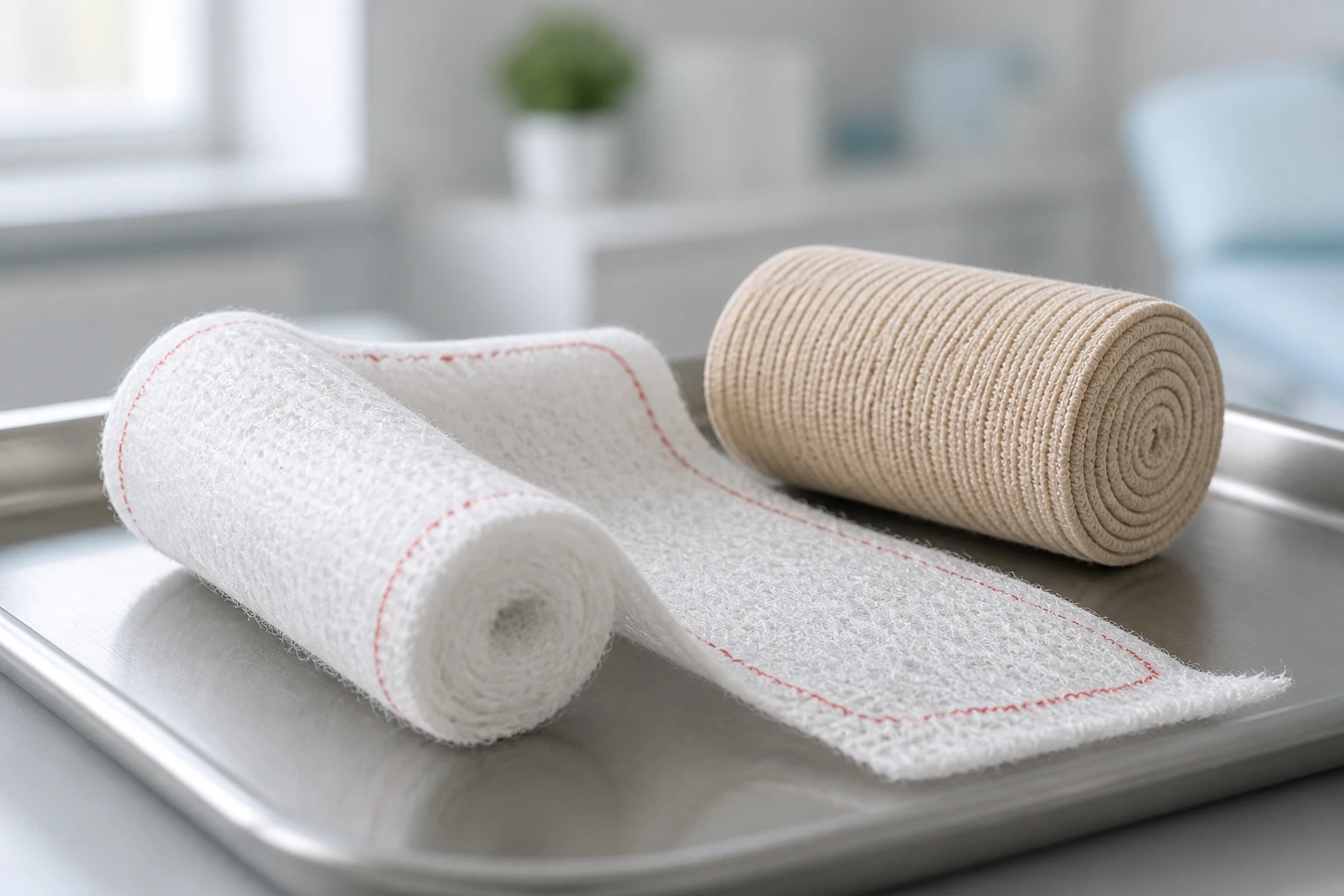
Hier ist eine kontroverse Meinung: Etwa 90% der Drittanbieter-Inspektionsstellen sind bei der Prüfung von Medizintextilien völlig nutzlos. Warum? Weil sie nur die Unterlagen prüfen und eine schnelle Sichtkontrolle durchführen. Sie testen nicht wirklich die physikalischen Grenzen des Materials. Wenn eine Bandage den perfekten Flächengewicht (GSM) der Kreppbandage hat, aber keine Elastizität besitzt, ist sie totes Gewicht. Sie hält nicht am Gliedmaß des Patienten und bietet nicht die gleichmäßige Kompression, die zur Behandlung von Verstauchungen oder Krampfadern erforderlich ist.
Wenn Sie einen Fabrik für medizinische Kreppbandagen, auditieren, müssen Sie untersuchen, wie die Dehnung getestet wird. Dies müssen Sie zusammen mit den standardmäßigen Flächengewicht (GSM) der Kreppbandage -Prüfungen verifizieren. Nach den Standards des Britischen Arzneibuchs (BP) sollte eine hochwertige Kreppbandage ein Dehnungsverhältnis von 1:1,8 bis 1:2,5 aufweisen. Das bedeutet, dass sich eine 1 Meter lange, entspannte Bandage reibungslos auf bis zu 1,8 oder 2,5 Meter dehnen lassen sollte, ohne dass die Baumwollfasern reißen oder die elastischen Fäden schnappen.
Wenn die Flächengewicht (GSM) der Kreppbandage hoch ist, aber die Elastizität zu niedrig, ist das Gewebe wahrscheinlich zu fest oder die Spandex-Qualität absoluter Müll. Wir sehen oft Fabriken, die versuchen Geld zu sparen, indem sie den Spandex-Anteil reduzieren, während sie den Ziel- Flächengewicht (GSM) der Kreppbandage mit billiger, schwerer Baumwolle beibehalten. Das führt zu einer schweren, aber steifen Bandage. Ein echter Experte wird dies bei einer physischen Analyse des Flächengewicht (GSM) der Kreppbandage.
sofort bemerken. Um dies während Ihres Remote-Audits festzustellen, stellen Sie sicher, dass der Inspektor die Elastizitätsrückgewinnungsrate testet. Verwenden Sie diese einfache textbasierte Formel, um die Rückgewinnungsrate zu überprüfen und sicherzustellen, dass sie mit Ihren Flächengewicht (GSM) der Kreppbandage Anforderungen übereinstimmt:
Elastizitätsrückgewinnungsrate % = ((Stretched Length – Recovered Length) / (Stretched Length – Original Length)) * 100
Let the inspector stretch the bandage to its maximum limit, hold it for 10 seconds, and then release it. A high-quality bandage from Medi-Tapes will recover to within 10% of its original unstretched length almost instantly. If the recovered length is too long, the bandage will sag after a few minutes of use on a patient. This test is just as critical as checking the baseline Flächengewicht (GSM) der Kreppbandage. If a factory fails this test, even if their Flächengewicht (GSM) der Kreppbandage is technically correct, you should reject the batch immediately. Understanding the relationship between elasticity and Flächengewicht (GSM) der Kreppbandage keeps you from buying useless stock.
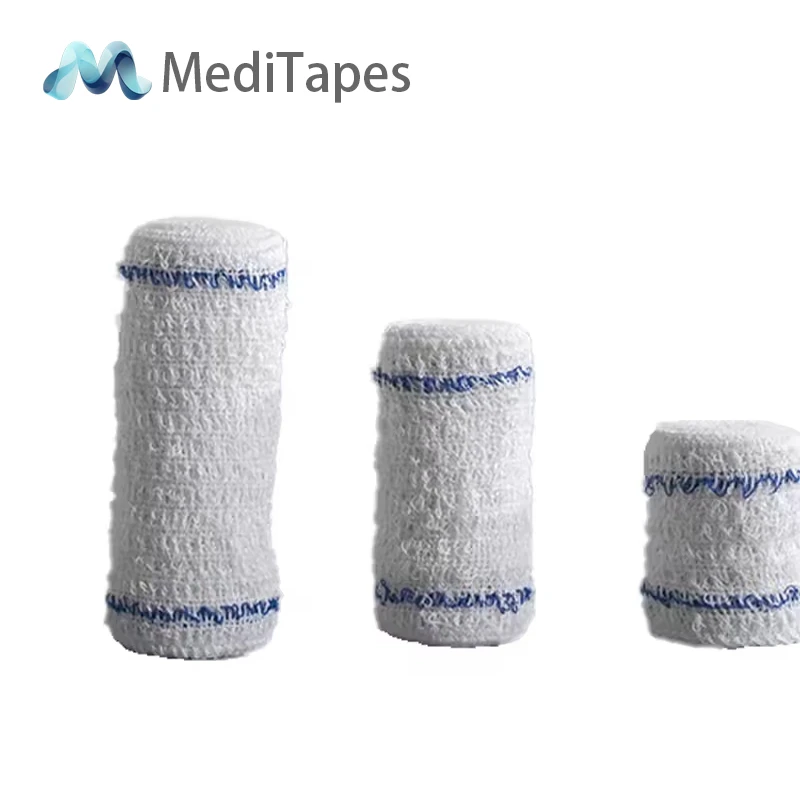
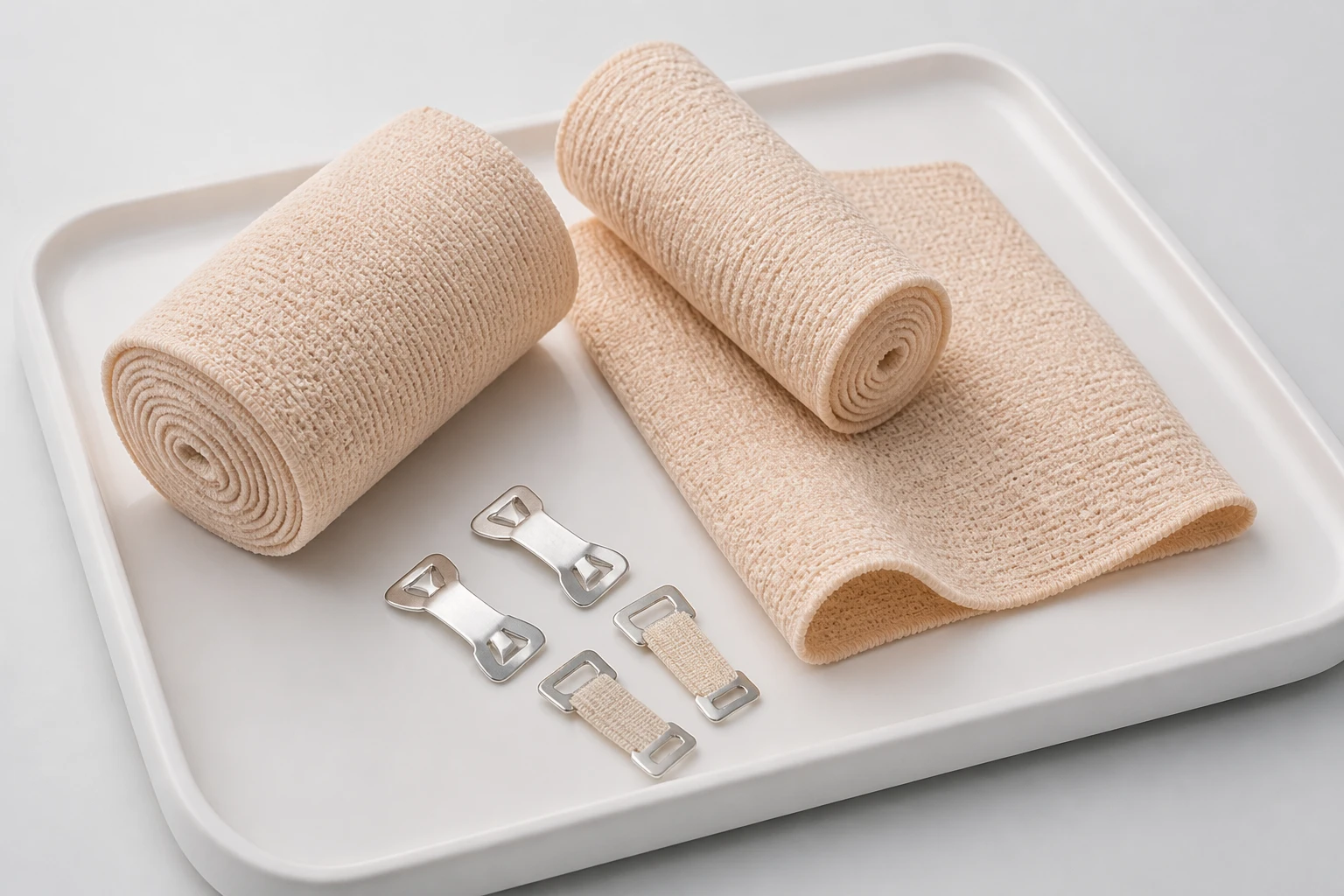
Hautfarbene elastische Kreppbandage zur Behandlung von Krampfadern
Hautfarbene elastische Kreppbandage für Krampfadern | MediTapes Meta-Beschreibung: Hautfarbene elastische Kreppbandagen im Großhandel für die Krampfaderbehandlung und Ödemkontrolle. Diskrete, atmungsaktive Kompressionsrollen in verschiedenen Breiten erhältlich. MediTapes bietet Preise direkt ab Werk für Gefäßstützmittel. Kontaktieren Sie uns für Großbestellungen.
Clips and Fasteners: The Hidden Quality Trap
While most of your focus might be on the fabric weight and the overall Flächengewicht (GSM) der Kreppbandage, do not ignore the clips. Many factories will quote a low price by cutting costs on the fasteners, regardless of your Flächengewicht (GSM) der Kreppbandage requirements. A typical Spezifikationsblatt für elastische Bandagen should specify the exact type and material of the clips.
For example, if you are ordering bandage metal clips wholesale, are they made of 100% rust-resistant aluminum, or cheap steel that will rust in a humid warehouse? We have seen cases where the fabric had a premium Flächengewicht (GSM) der Kreppbandage of 85, but the clips were so thin they bent like paper clips.
Bei der Beschaffung von bandage metal clips wholesale, always request material certificates. To check this during a factory audit, have the inspector test the clip tension and weight. A cheap 0.15mm aluminum clip is vastly different from a robust 0.3mm clip, yet both might be listed as “standard clips”. If the factory produces the clips in-house, inspect their stamping machines. If they source them from a third-party, check their incoming quality control (IQC) records to see if they test clip strength alongside the incoming Flächengewicht (GSM) der Kreppbandage checks.
For bandages with elastic band clips, inspect the latex or latex-free elastic band itself. The rubber should not degrade or lose its stretch after being stored in a hot warehouse. This is a common failure point that is completely unrelated to the Flächengewicht (GSM) der Kreppbandage, but equally devastating for the end-user. Always ask the factory to provide a separate spec sheet for the clips, alongside the main Flächengewicht (GSM) der Kreppbandage datasheet. A mismatch in the Flächengewicht (GSM) der Kreppbandage und das Clip-Gewicht wird zu Beschwerden von Krankenhaus-Einkäufern führen, selbst wenn Ihr Flächengewicht (GSM) der Kreppbandage absolut makellos ist.
Checkliste für physikalische Parameter bei Inspektionen durch Dritte
Wenn Sie eine Drittagentur mit der Inspektion eines Fabrik für medizinische Kreppbandagen, beauftragen, können Sie ihnen nicht einfach sagen, sie sollen “die Qualität prüfen”. Sie werden nur die Kartons zählen, ein paar schöne Fotos machen und die Arbeit beenden. Sie müssen ihnen eine hochspezifische Checkliste für physikalische Parameter geben, die sich auf das Flächengewicht (GSM) der Kreppbandage und die Gewebedichte bezieht.
Hier ist eine praktische Checkliste, die wir für Ihr nächstes Audit empfehlen und die sich auf das Verhältnis zwischen Verpackung, Gewebe und Flächengewicht (GSM) der Kreppbandage:
| Audit-Prüfpunkt | Zielspezifikation | Prüfverfahren | Relevanz für Flächengewicht (GSM) der Kreppbandage |
|---|---|---|---|
| Flächengewicht | 75g – 85g (Gedehnt) | 10cm x 10cm GSM-Probenschneider und Digitalwaage | Direkte Messung der Flächengewicht (GSM) der Kreppbandage |
| Gewebedichte | Kette: 12 Fäden/cm, Schuss: 5 Fäden/cm | Fadenzähler/Lupe auf entspanntem Gewebe | Geringe Dichte reduziert direkt die Flächengewicht (GSM) der Kreppbandage |
| Dehnungsrate | 130% – 180% | Zugprüfvorrichtung oder manueller Dehnungstest | Überdehntes Garn verringert die endgültige Flächengewicht (GSM) der Kreppbandage |
| Webkantenqualität | Feste, verriegelte, nicht ausfransende Kanten | Sichtprüfung während der Dehnung | Minderwertige Kanten führen zum Aufdröseln und Gewichtsverlust |
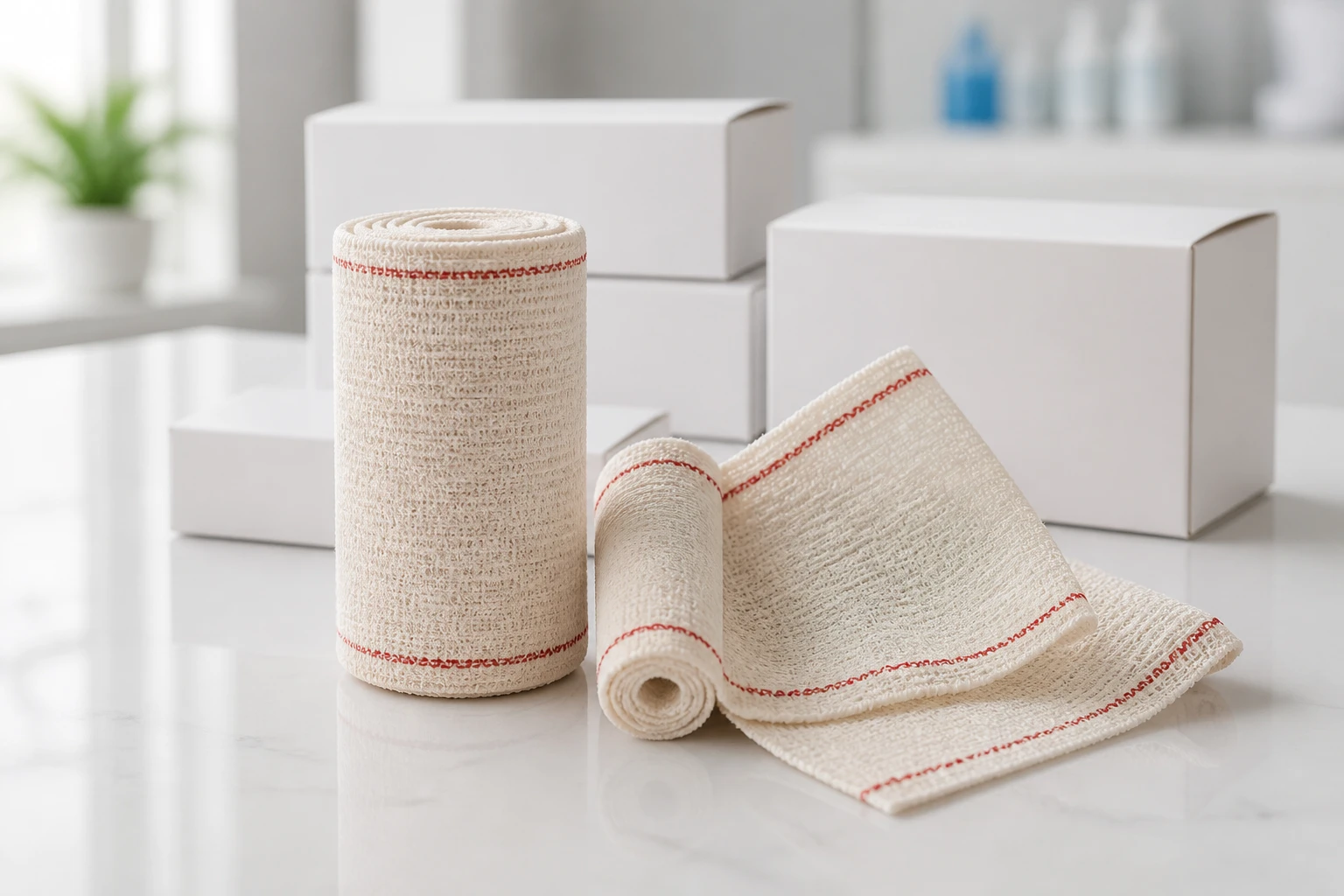
| Verpackungsdichte | Feste, kompakte Rollen | Messschiebermessung des Rollendurchmessers im Vergleich zur Länge | Lose Rollen verbergen Materialmangel und verringern Flächengewicht (GSM) der Kreppbandage |
Wie in der Tabelle gezeigt, ist jeder physische Parameter mit der Basislinie verknüpft Flächengewicht (GSM) der Kreppbandage. Wenn beispielsweise die Kettfadenanzahl zu niedrig ist, versucht die Fabrik möglicherweise, dies durch übermäßiges Weben des Schussfadens zu kompensieren, was das fertige Flächengewicht (GSM) der Kreppbandage.
Prüfen Sie zusätzlich die Verpackungsdichte. Wenn eine Bandage zu locker auf die Rolle gewickelt ist, sieht sie im Regal sperrig aus, aber die tatsächliche Flächengewicht (GSM) der Kreppbandage und gedehnte Länge wird weit unter Ihren Erwartungen liegen. Stellen Sie sicher, dass Ihr Inspektor den Durchmesser von mindestens 10 fertigen Rollen misst. Wenn diese um mehr als 5% variieren, ist die Spannung der Wickelmaschine der Fabrik ungleichmäßig. Dies bedeutet, dass einige Ihrer Kunden feste Rollen erhalten und andere lose, schlaffe.
Eine Lektion aus der Sourcing-Praxis: Die Falle des “nassen Webens”
Lassen Sie mich eine Geschichte über einen medizinischen Händler aus dem Nahen Osten erzählen, der etwas über Flächengewicht (GSM) der Kreppbandage auf die harte Tour gelernt hat. Sie hatten einen riesigen Container mit Bandagen bestellt, mit einem spezifizierten Flächengewicht (GSM) der Kreppbandage von 80g. Die Muster vor dem Versand sahen perfekt aus, aber als der Container in ihrem Lager ankam, fühlten sich die Bandagen dünn und papierartig an. Das gemessene Flächengewicht (GSM) der Kreppbandage war auf 68g gesunken!
Was ist passiert? Die Fabrik hatte einen gängigen Trick angewandt, das sogenannte “Nassweben”. Das Baumwollgewebe wurde gewebt, während es stark mit Wasser vernebelt war. Dies führte dazu, dass die Garne auf dem Webstuhl schrumpften und sich zusammenzogen, was künstlich die Flächengewicht (GSM) der Kreppbandage während der ersten Produktion aufblähte. Sobald die Bandagen während des Transports im heißen Versandcontainer vollständig getrocknet waren, entspannten sich die Fasern, die Dehnung ließ nach und die tatsächliche Flächengewicht (GSM) der Kreppbandage stürzte ab.
Als der Distributor das Problem erkannte, schob die Fabrik die Schuld auf die Luftfeuchtigkeit während des Transports. Es war ein Desaster. Dieses Unheil hätte leicht vermieden werden können, wenn der Distributor einen Trockengewichts-Ofentest für die Flächengewicht (GSM) der Kreppbandage während des ersten Fabrikaudits angeordnet hätte.
Deshalb ist die Wahl eines seriösen und höchst transparenten Partners wie Medi-Tapes so entscheidend für B2B-Käufer, die sich solche Alpträume in der Lieferkette nicht leisten können. Wir lassen uns nicht auf Nassweben ein und machen keine Abstriche bei der Garndichte.

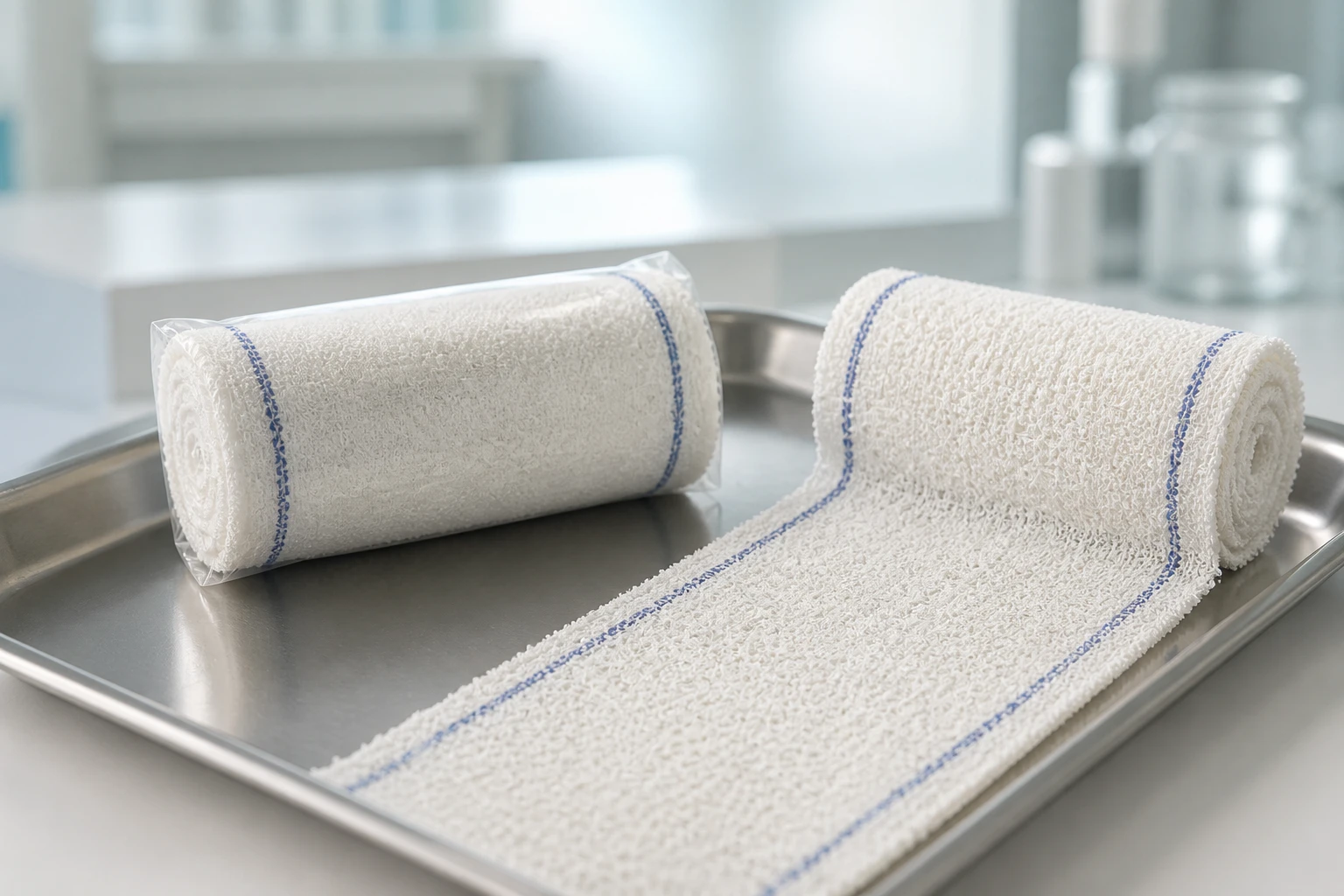
Sterile elastische Kreppbandagen-Rolle mit Klammern – OEM verfügbar
Zertifizierte sterile elastische Kreppbandage mit sicheren Metall- oder Elastikklammern. Wir bieten OEM-Anpassungen für Größe und Verpackung an. Diese hochwertige elastische Kreppbandage gewährleistet sterilen Schutz für chirurgische Wunden. Zuverlässiger Halt und weiche Textur machen sie zu einem unverzichtbaren Bestandteil von Erste-Hilfe-Sets.
Häufig gestellte Fragen
1. Was ist der Unterschied zwischen gedehnten und ungedehnten Flächengewicht (GSM) der Kreppbandage?
Das ungedehnte Flächengewicht (GSM) der Kreppbandage misst das Gewicht, wenn das Gewebe vollständig entspannt ist. Das gedehnte Flächengewicht (GSM) der Kreppbandage misst das Gewicht im Verhältnis zu seinem vollständig gedehnten Zustand. Da Kreppbandagen nach gedehnter Länge verkauft werden, müssen Sie beide Angaben in Ihrer Bestellung spezifizieren, um zu verhindern, dass die Fabrik beim Materialgewicht schummelt.
2. Wie stelle ich sicher, dass ein Fabrik für medizinische Kreppbandagen nicht schummelt bei Flächengewicht (GSM) der Kreppbandage?
Sie müssen einen Trockengewichtstest vorschreiben und vom Inspektor die Verifizierung der Flächengewicht (GSM) der Kreppbandage unter Verwendung eines kalibrierten 10x10-cm-Schneidgeräts verlangen. Verlassen Sie sich nicht auf Sichtprüfungen. Gleichen Sie das Rollengewicht immer mit der Nennlänge und -breite ab.
3. Kann ich Standard- bandage metal clips wholesale für alle Arten von Kreppbandagen verwenden?
Nein. Leichte Bandagen können Standard-Aluminiumklammern von 0,15 mm verwenden, aber strapazierfähige Bandagen mit hohem Flächengewicht (GSM) erfordern dickere 0,3 mm Aluminiumklammern oder elastische Bänder mit robusten Metallhaken, um die Kompression aufrechtzuerhalten. Die Verwendung minderwertiger Klammern bei einer schweren Bandage führt dazu, dass sich die Klammern verbiegen und versagen.
4. Warum beeinflusst die Webstruktur die Flächengewicht (GSM) der Kreppbandage?
Die Dichte der Kett- und Schussfäden bestimmt direkt, wie viel Faser pro Quadratmeter verarbeitet ist. Eine lockere Webart mit weniger Fäden hat eine geringere Flächengewicht (GSM) der Kreppbandage, was sowohl die Kompressionskraft als auch die Haltbarkeit der Bandage nach dem Waschen verringert.
Bereit, Ihre Lieferkette zu sichern?
Haben Sie es satt, dünne, minderwertige Bandagen zu erhalten, die klinische Standards nicht erfüllen? Lassen Sie nicht zu, dass unehrliche Lieferanten Ihren Ruf durch schlechte Flächengewicht (GSM) der Kreppbandage und schwache Clips ruinieren. Sie verdienen einen medizinischen Lieferanten, der Wert auf Transparenz und konsistente physische Qualität legt.
Bei Medi-Tapes, stellen wir hochwertige Verbände her, die sich strikt an internationale Standards halten, einschließlich der British Pharmacopoeia (BP). Wir bieten volle Transparenz, von unseren zertifizierten Flächengewicht (GSM) der Kreppbandage Daten bis hin zu unseren robusten Aluminium- und Elastik-Clips.
Ob Sie hochdichte Rollen für die Kompressionstherapie benötigen oder bandage metal clips wholesale, beziehen möchten, wir sind für Sie da. Unser elastische Crepe-Bandage Sortiment ist auf gleichmäßigen, abgestuften Druck ausgelegt und gewährleistet maximalen Patientenkomfort und Genesung. Wir stellen vor jeder einzelnen Lieferung vollständige Inspektionsberichte und Golden Samples zur Verfügung, damit Sie sich nie Sorgen über einen Rückgang Ihrer Flächengewicht (GSM) der Kreppbandage erneut.
Sind Sie bereit, Ihre medizinische Lieferkette abzusichern? Kontaktieren Sie unser Beschaffungsteam, heute unter info@meditapes.com um ein individuelles Angebot anzufordern, eine Kopie unseres Standards zu erhalten Spezifikationsblatt für elastische Bandagen, oder bestellen Sie kostenlose Proben. Wir zeigen Ihnen, warum globale Krankenhausnetzwerke auf unsere Qualität vertrauen!