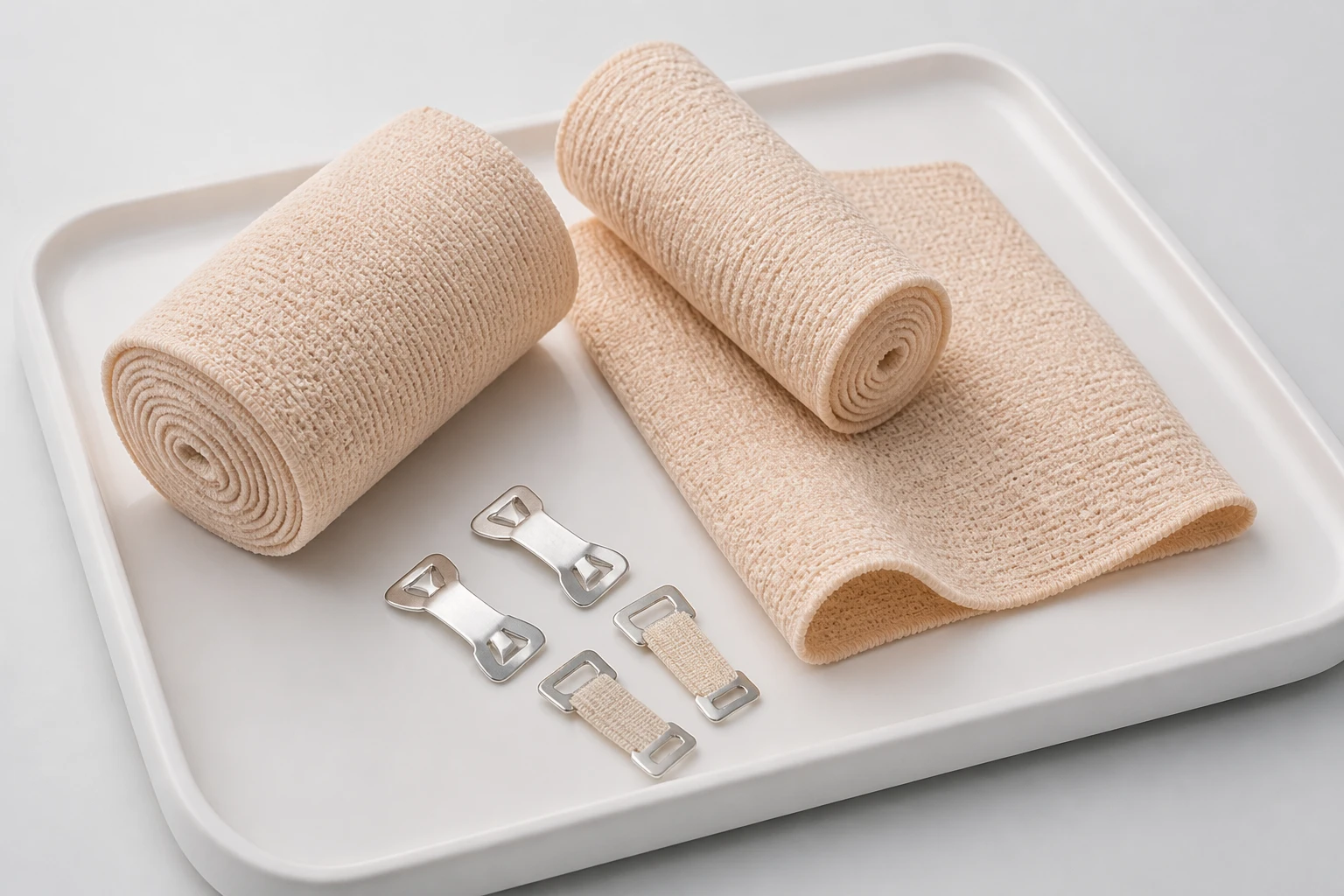
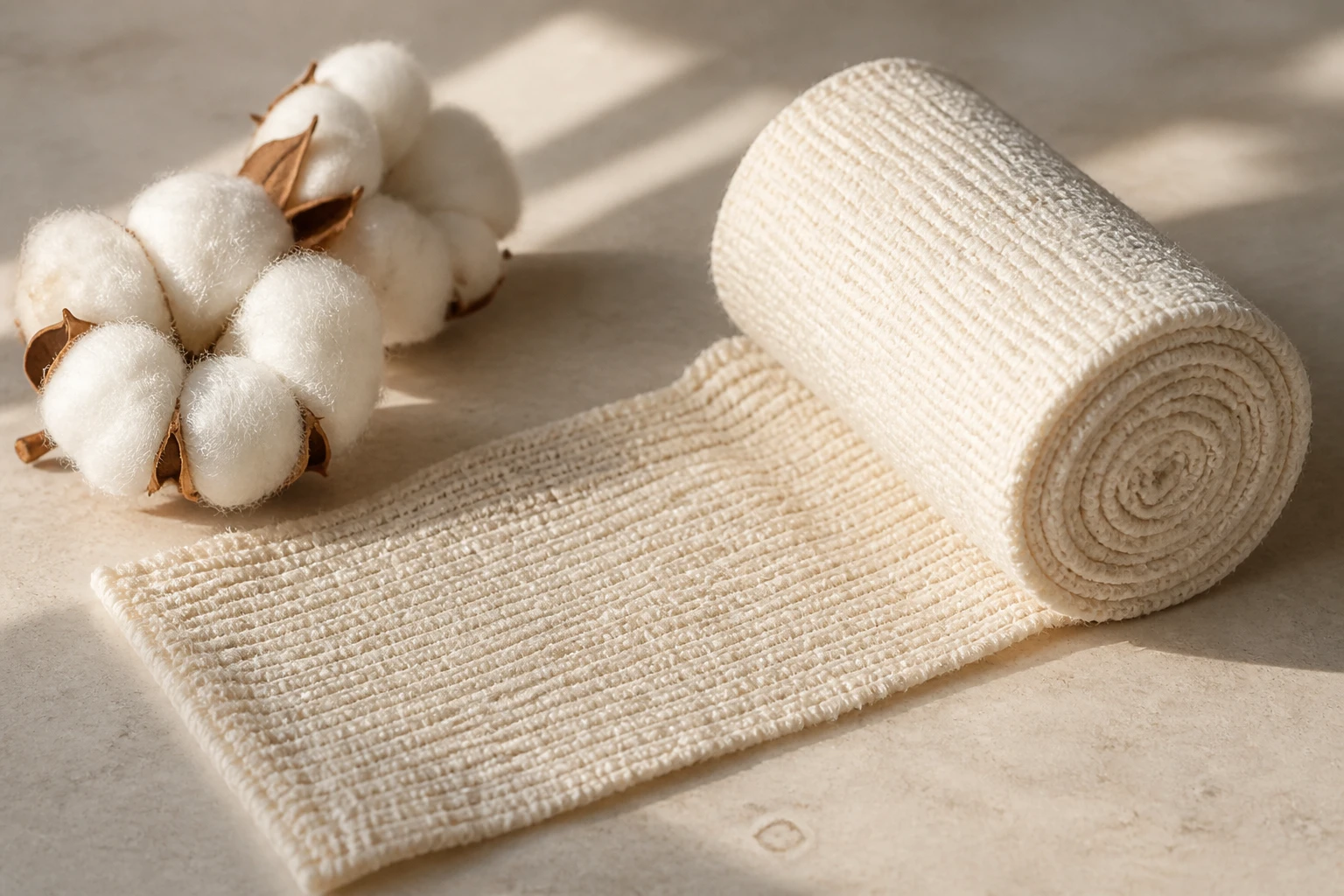
You spend three months dialing in a wearable compression monitor or sourcing a multi-layer lymphedema kit, send the specs overseas, and the sample roll comes back feeling like a stiff cardboard strap—or worse, a flimsy rubber band that cuts off peripheral capillary refill in twenty minutes.
When you dig into the spec sheets, both rolls were labeled with the exact same generic description: medical grade elastic bandage. The only real difference hiding in the textile audit was a single line item: the elastic bandage stretch ratio.
Getting this parameter wrong ruins clinical outcomes. If you choose a 150% elongation fabric when the clinical protocol demands a low resting pressure barrier, patients wake up at 2 AM tearing the wrap off because their toes are throbbing. If you choose a 100% maximum elongation fabric for joint stabilization, the wrap bottoms out before it ever secures the joint.
Let’s skip the marketing speak. Here is the unvarnished engineering breakdown of the elastic bandage stretch ratio, comparing 100% vs. 150% stretch profiles, the underlying textile mechanics, and how to source the right roll for your specific medical device or therapeutic application.
What Actually Is the Elastic Bandage Stretch Ratio?
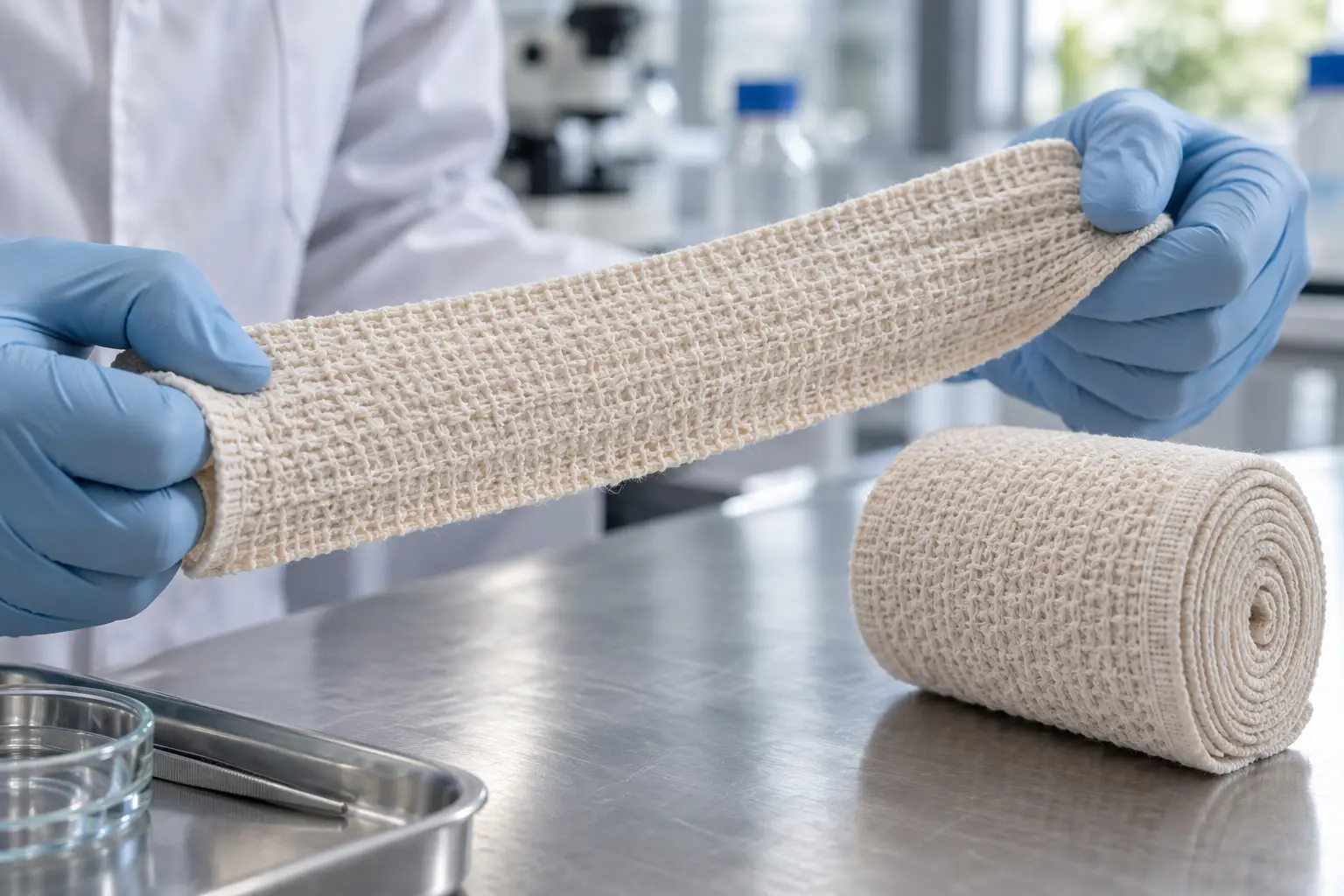
In simple shop-floor terms, the elastic bandage stretch ratio tells you how much longer a fabric can get under full manual or mechanical tension compared to its relaxed state, right off the core.
If a 1-meter cut of bandage pulls out to exactly 2 meters before hitting its structural textile stop, that is a 100% elongation. If that same 1-meter sample extends to 2.5 meters under load, you are looking at a 150% stretch.
Standard Elongation Calculation:
Stretch Ratio (%) = [(Fully Extended Length – Relaxed Length) / Relaxed Length] * 100
In standardized testing labs, this isn’t measured by a person yanking on a strip with two hands. Testing adheres to frameworks like ASTM International standard D4964 for tensile properties of elastomeric fabrics or regional pharmacopeia standards such as the British Pharmacopoeia bandage specifications. Technicians clamp a conditioned strip into a constant-rate-of-extension tensile machine, pull it to a specified load (typically around 10 N per centimeter of bandage width), and plot the hysteresis loop.
The elastic bandage stretch ratio is not just an arbitrary textile metric; it dictates the fundamental thermodynamic work the wrap performs on human flesh. The entire performance hinges on two opposing forces:
- Resting Pressure: The continuous squeeze the bandage applies to the limb while the patient is lying completely still or sleeping.
- Working Pressure: The dynamic resistance the bandage pushes back with when the underlying calf or forearm muscle contracts and expands against the wrap.
Warp Architecture vs. Dynamic Pressure Output:
- High-Twist Cotton Crepe (Zero Elastomers): Yields ~100% stretch limit, creating high dynamic working pressure with low static resting pressure.
- Spandex or Elastomer Filament Cores: Yields 150%+ stretch limit, creating low dynamic working pressure with high continuous resting pressure.
A fundamental change in your elastic bandage stretch ratio inverts this physiological dynamic entirely.
The 100% Stretch Profile: The Workhorse of Short-Stretch Therapy
A roll with a 100% elastic bandage stretch ratio sits right at the upper edge of what clinicians classify as a short stretch compression bandage system.
Structural Anatomy
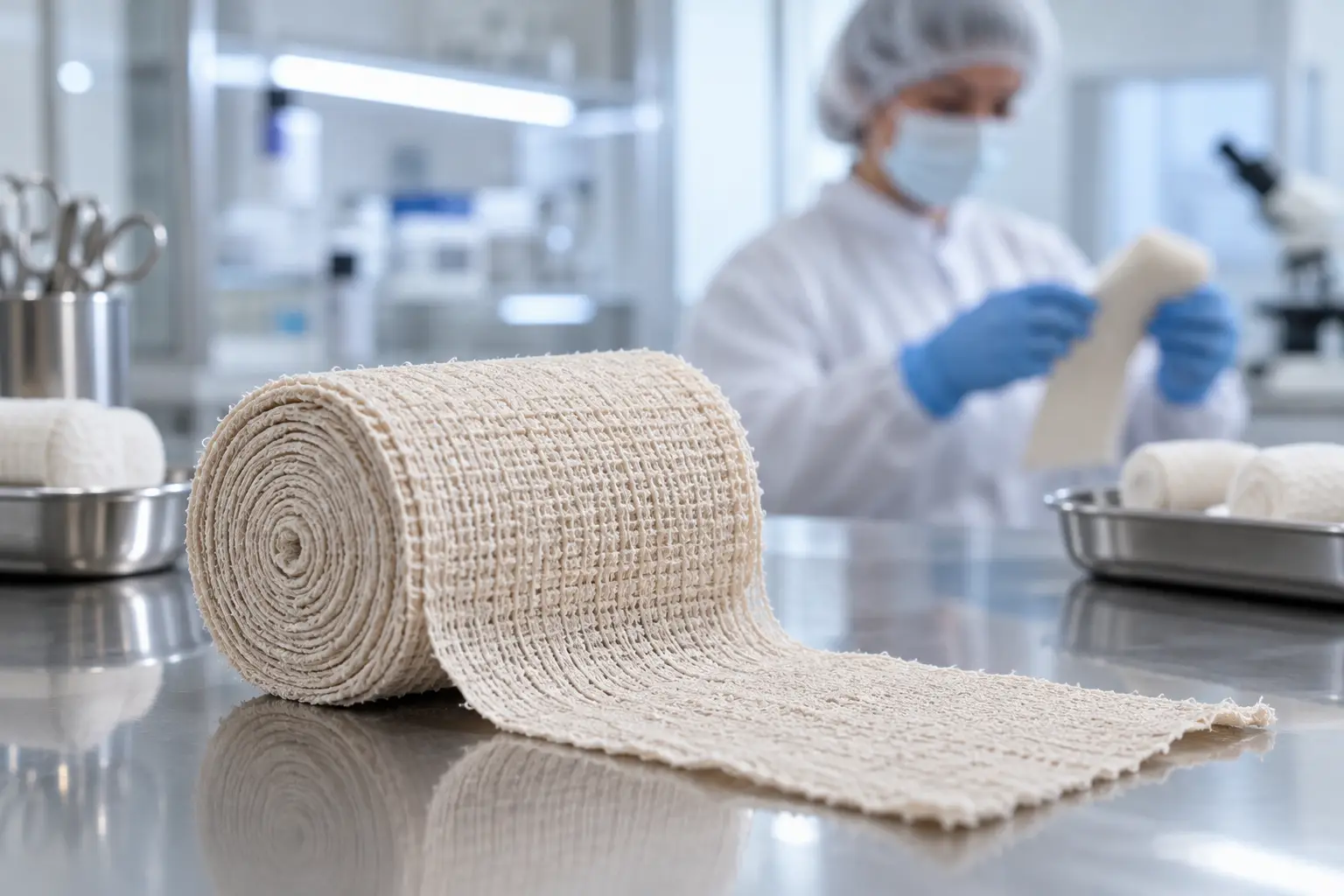
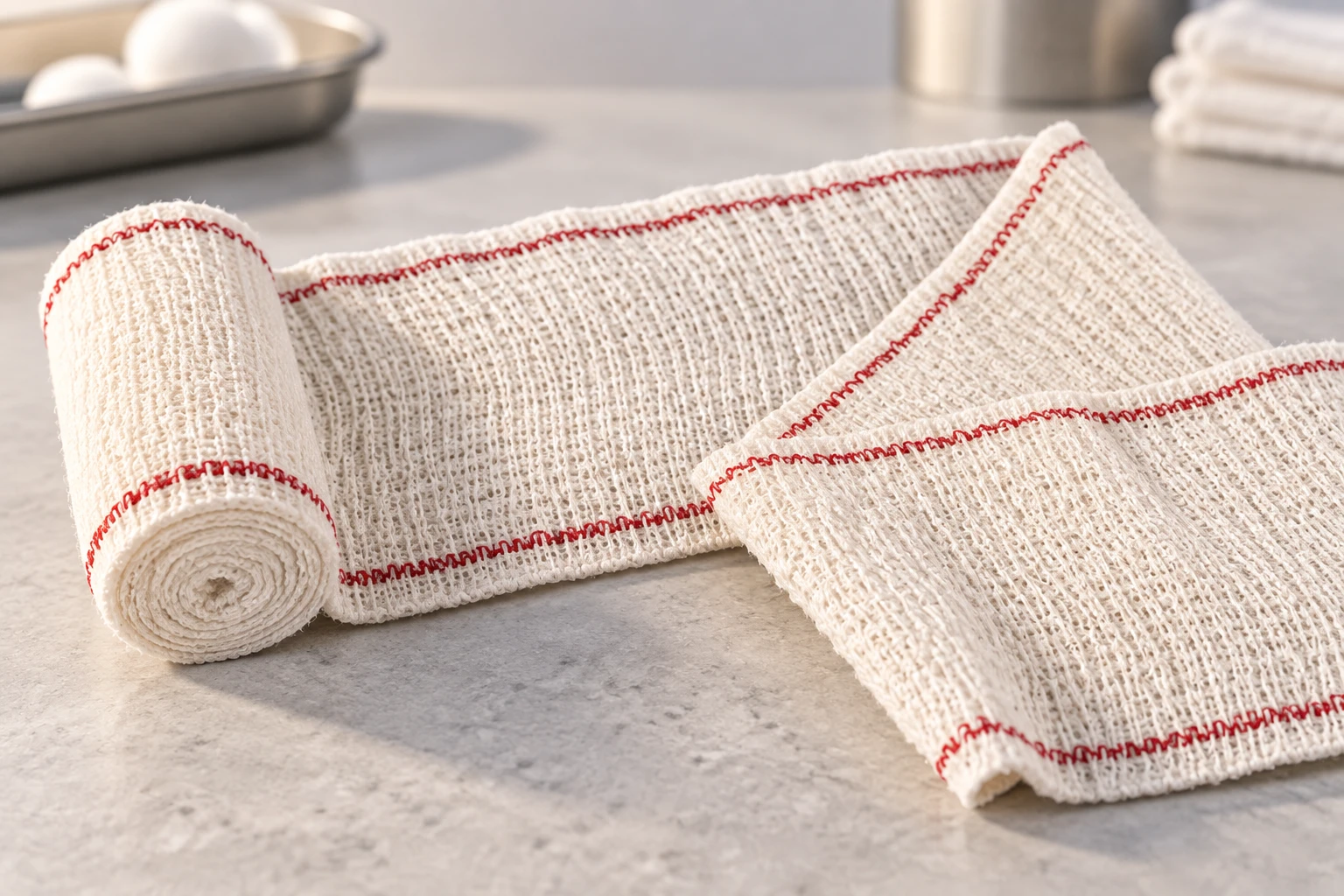
Most 100% stretch fabrics do not rely on raw rubber threads or heavy polyurethane filaments. Instead, they get their bounce from high-twist cotton warp yarns woven in a plain or crepe weave pattern. These warp yarns are twisted so tightly during spinning that when they are washed and finished under slack tension, they crinkle up into micro-springs.
When you apply pull force, those cotton loops flatten out. Once they straighten, the bandage reaches an abrupt mechanical stop. It simply won’t stretch anymore unless you apply enough force to snap the cotton fibers.
Pressure Dynamics
Because the cotton yarns bottom out quickly, a 100% elastic bandage stretch ratio generates:
- Very low resting pressure: When the limb is at rest, the bandage does not aggressively snap back or attempt to constrict inward.
- Very high working pressure: When the patient walks, the gastrocnemius muscle fires and expands. The bandage acts like a rigid plaster cast, refusing to yield. This forces the deep venous valves to close and pumps pooling fluid back toward the heart.
According to clinical consensus guidelines outlined by the World Union of Wound Healing Societies (WUWHS), bandages with this profile can safely be worn day and night, even while sleeping, because the resting pressure is too low to occlude arterial inflow in patients with normal microcirculation.
Where 100% Stretch Excels
- Chronic Venous Insufficiency (CVI) & Venous Leg Ulcers (CEAP C4-C6): Drives deep venous return during ambulation without choking capillary beds at rest.
- Lymphedema Decongestive Phase: Rigid containment halts lymph fluid accumulation while muscle movements act as an internal lymphatic pump.
- Post-Operative Orthopedic Edema: Controls joint swelling after knee or ankle arthroplasty without causing tourniquet-style pressure spikes.
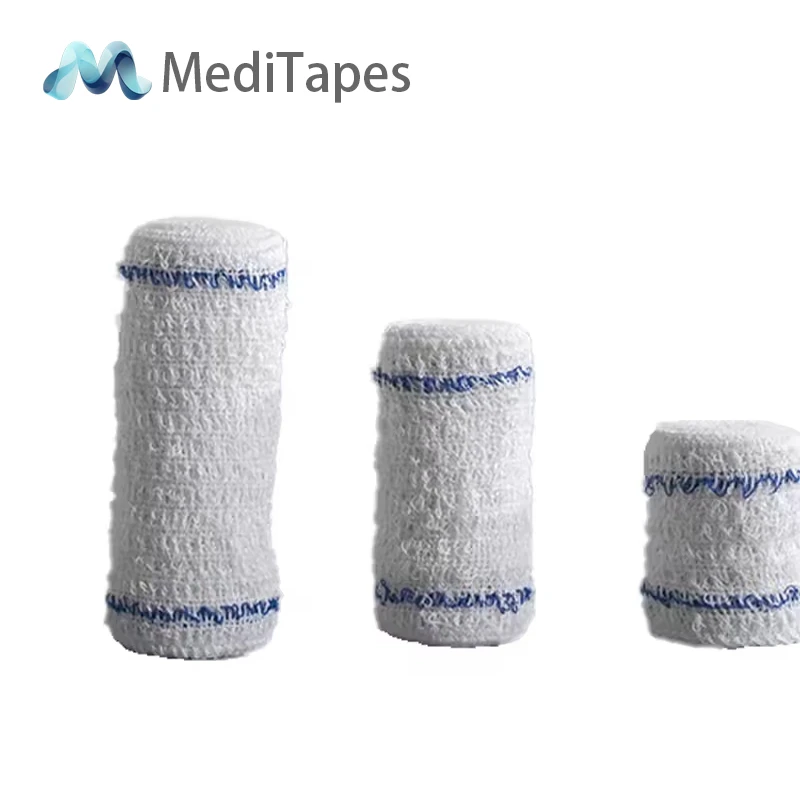
Skin-Color Elastic Crepe Bandage for Varicose Vein Treatment
Skin-Color Elastic Crepe Bandage for Varicose Veins | MediTapes Meta Description: Wholesale Skin-Color Elastic Crepe Bandages for Varicose Vein Treatment and Edema Control. Discreet, breathable compression rolls available in various widths. MediTapes offers factory-direct prices for vascular support supplies. Contact us for bulk orders.
The 150% Stretch Profile: The High Stretch Crepe Bandage
Cross over to a 150% elastic bandage stretch ratio, and you enter the category of a true high stretch crepe bandage.
Structural Anatomy
Achieving a 150% elastic bandage stretch ratio requires elastomeric cores. Textile mills wind texturized polyester or bleached cotton around bare rubber, polyether-polyurea (Spandex/Elastane), or synthetic latex filament cores.
When relaxed, these elastomeric threads coil up tightly. Under tension, they glide effortlessly past one another, allowing the roll to extend one-and-a-half times beyond its resting state before the outer textile sheath locks up.
Pressure Dynamics
A 150% elastic bandage stretch ratio flips the physiological dynamic on its head:
- High resting pressure: The elastomeric filaments constantly fight to snap back to their original zero-strain state. They squeeze the limb relentlessly, even when the patient is asleep.
- Low working pressure: When the muscle contracts, the bandage readily yields and expands outward. Instead of creating a firm rigid wall, it stretches with the muscle bulge.
Here is the controversial clinical reality that many purchasing managers overlook: A bandage with a 150% elastic bandage stretch ratio can cause localized skin necrosis if applied by untrained hands or left on an immobile patient overnight. The constant inward recoil can exceed capillary closing pressure (which sits around 30 to 32 mmHg). If arterial perfusion drops while the patient sleeps, the skin under that 150% wrap suffocates.
Where 150% Stretch Excels
- Acute Musculoskeletal Strains & Sprains (RICE Protocol): Provides continuous elastic recoil to support ligament instability and compress acute hematomas.
- Holding Surgical Dressings on Mobile Limbs: Maintains continuous, uniform contact over shifting anatomy without slackening.
- Securing Surface-Mount Clinical Sensors: Keeps diagnostic wearable modules flat against the skin without bottoming out under sudden patient movements.
Engineering Comparison: 100% vs. 150% Elastic Bandage Stretch Ratio
To help hardware developers and clinical procurement teams choose the right spec sheet, here is how the two profiles stack up side by side:
| Parameter | 100% Stretch Profile | 150% Stretch Profile |
|---|---|---|
| Primary Elastic Mechanism | High-twist cotton crepe yarns (mechanical crinkle) | Spandex/Elastane or rubber core filaments |
| Target Elastic Bandage Stretch Ratio | 90% – 110% elongation under 10 N/cm load | 140% – 165% elongation under 10 N/cm load |
| Resting Pressure (P_rest) | Low (approx. 10 – 20 mmHg at 50% application pull) | High (approx. 35 – 50+ mmHg if stretched fully) |
| Working Pressure (P_work) | High (creates a semi-rigid containment barrier) | Low (expands easily with muscle contraction) |
| Overnight Wear Tolerance | Excellent; safe for sleeping under clinical supervision | Poor to risky; requires removal or reduced tension |
| Hysteresis Loss (50 Wash Cycles) | Minimal (cotton crepe recovers with warm wash) | Moderate to severe (elastomers degrade from heat/laundry) |
| Application Error Margin | Wide; hard to overtighten to dangerous levels | Narrow; aggressive pulling risks ischemia |
| Primary Clinical Category | Short-stretch therapeutic compression wrap | High-stretch support, dressing retention & orthopedics |
Calculating Applied Sub-Bandage Pressure: The Laplace Factor
Bandage performance is not purely a property of the roll in isolation. The pressure exerted on tissue is governed by physical mechanics, commonly modeled through Laplace’s Law adapted for multi-layer circular cylinders, as detailed in research published on sub-bandage pressure dynamics in NCBI.
Sub-Bandage Pressure Equation:
Sub-Bandage Pressure (P) = [Tension (T) * Layers (N) * 4630] / [Circumference (C) * Width (W)]
- P: Sub-bandage pressure delivered to the subcutaneous tissue, measured in millimeters of mercury (mmHg)
- T: Tensile force applied during wrapping, measured in kilograms-force (kgf)
- N: Number of overlapping fabric layers (typically 2 with a standard 50% overlap technique)
- C: Anatomical circumference of the limb section, measured in centimeters (cm)
- W: Relaxed width of the bandage roll, measured in centimeters (cm)
- 4630: Constant used to reconcile unit conversions between dynes, centimeters, and clinical mmHg
Now, look at how the elastic bandage stretch ratio alters this math in practice.
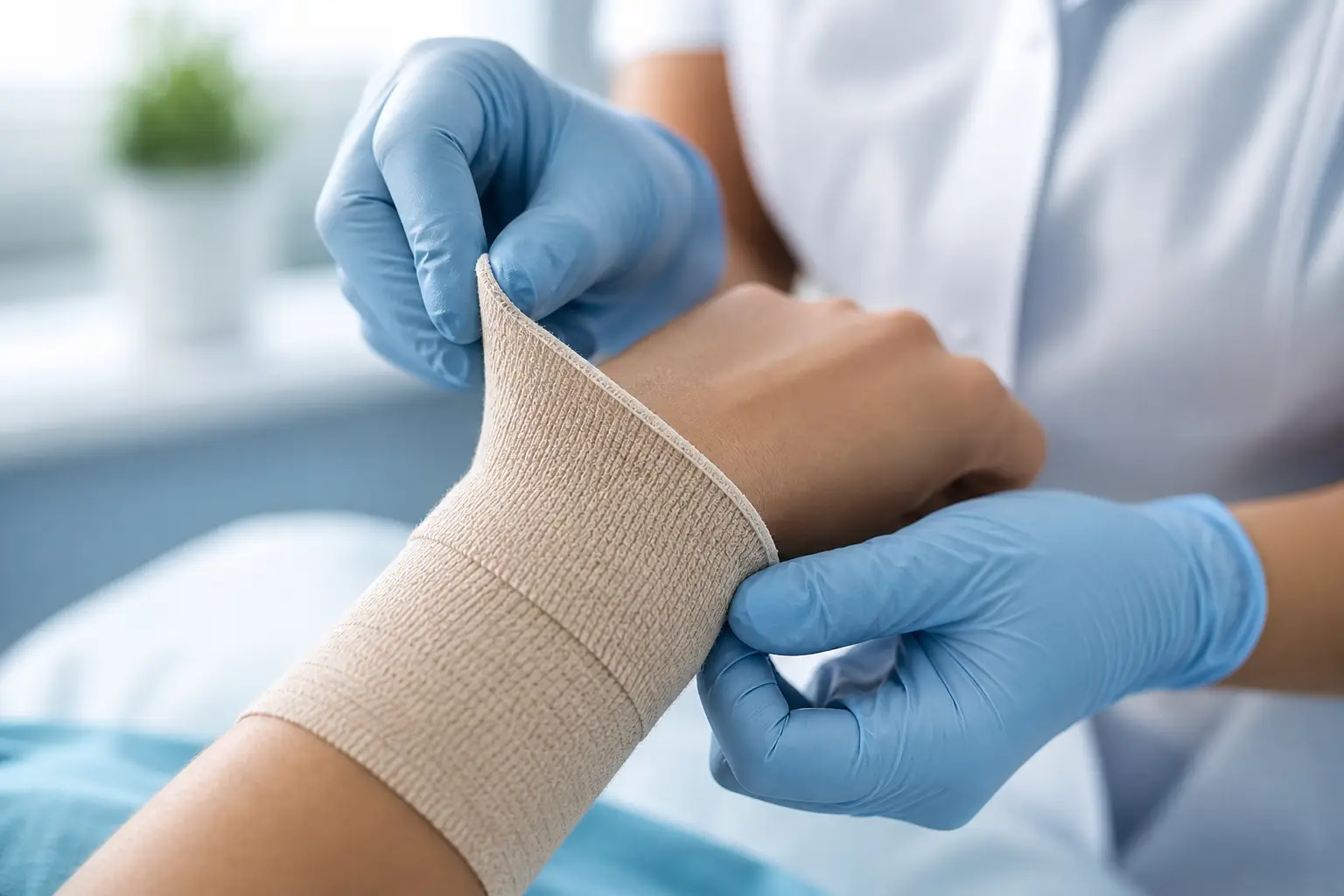
When a nurse or athletic trainer pulls a roll during application, they do not carry a force gauge. They pull until they feel tactile resistance.
With a 100% elastic bandage stretch ratio, the fabric abruptly “locks out” at roughly 80% to 90% pull. The applicator feels that hard stop and naturally halts their pull, keeping the applied tension in a predictable bracket.
With a 150% elastic bandage stretch ratio, that tactile resistance is soft and continuous. An inexperienced user can pull and pull, dumping massive tension into the wrap. Because Bandage Tension sits directly in the numerator of our Laplace equation, doubling the applied pull doubles the crushing pressure delivered to the subcutaneous tissues.
If the limb circumference drops (such as at the supramalleolar region right above the ankle bone), the denominator shrinks, causing the pressure to spike dangerously.

Sterile Elastic Crepe Bandage Roll with Clips – OEM Available
Certified Sterile Elastic Crepe Bandage featuring secure metal or elastic clips. We offer OEM customization for size and packaging. This high-grade elastic crepe bandage ensures sterile protection for surgical wounds. Reliable retention and soft texture make it essential for first aid kits.
Hidden Traps in OEM Elastic Crepe Bandage Specifications
If you are drafting an OEM spec sheet for contract manufacturing, you cannot simply write “100% stretch bandage” or “150% high stretch bandage” and call it a day. Mills will take the path of least resistance unless you nail down explicit testing boundaries.
At MediTapes, we routinely review customer CAD packages and tech packs where vague tension requirements led to unusable production runs from cut-rate suppliers. Here are three major technical traps to guard against:
1. Transverse Necking Under Tension
Whenever you stretch an elastic textile lengthwise, Poisson’s ratio kicks in: the strip narrows in width.
A 10 cm wide strip with a 150% elastic bandage stretch ratio can easily neck down to 7.2 cm when stretched near its mechanical limit. If your clinical technique requires a strict 50% overlap to achieve uniform two-layer Laplace pressure, that unexpected width loss breaks the overlap ratio. Suddenly, you have alternating stripes of single-layer and double-layer pressure, leading to window edema and blister formation along the edge.
Remedy: Specify a maximum width reduction percentage (for example: “Width necking shall not exceed 12% at 100% elongated state”) in your elastic crepe bandage specification.
2. Thermal Creep and Laundry Degradation
Cotton crepe (the foundation of reliable 100% stretch) regains its elasticity through laundering. Warm water swells the cellulose fibers, resetting the crepe yarn twist.
Spandex-based 150% stretch wraps behave in the opposite way. If your end users are institutional hospitals that boil, autoclave, or run textiles through heavy commercial wash cycles per ISO 6330 standards for domestic washing and drying procedures, the elastomeric polymers cross-link and degrade. Within ten wash cycles, a 150% stretch roll can sag out into an uncontrolled 180% strip with zero snapback force.
Remedy: State the baseline fiber core clearly: “Unvulcanized natural rubber core” or “Dry-spun Polyether-Polyurea synthetic block copolymer” depending on whether your application requires latex-free hypoallergenic certification or heat resistance.
3. Tension Decay (Stress Relaxation)
All elastomeric bandages suffer from stress relaxation. If you stretch a bandage to 100% elongation and lock the ends around an artificial limb simulator, the pressure does not stay flat. Over the first two hours, the polymer chains relax, and interface pressure drops by anywhere from 15% to 40%.
If your development team is designing an integrated sensor enclosure held down by an elastic strap, you must account for this drop. Otherwise, the sensor will lift off the skin within three hours of ambulation.
Two Real-World Procurement Pitfalls
To understand how this plays out away from the textile lab, consider two real-world design dilemmas:
Dilemma A: The Venous Ulcer Multi-Layer System
A clinical diagnostics company was packaging a four-layer compression kit designed for outpatient venous stasis management. To cut costs, their procurement team swapped out the specified 100% short-stretch cotton crepe utility layer for a cheaper 150% elastic bandage stretch ratio roll sourced from a commodity athletic tape vendor.
The result: Within two weeks of launch, clinical trial coordinators reported widespread patient non-compliance. Patients were unwrapping their legs in the middle of the night. Why? The high resting pressure of the 150% wrap caused severe resting pain over the anterior tibial crest when patients went to bed.
The company had to pull the lot, eat a $60,000 repackaging write-off, and revert to a true low-resting-pressure 100% elastic bandage stretch ratio formulation that held venous blood volume in check during the day without strangling tissue perfusion at night.
Dilemma B: The Equine Leg Support Wrap
On the flip side, an animal health device startup was engineering a quick-wrap suspensory ligament brace for sport horses. They initially prototyped with a stiff 100% elastic bandage stretch ratio woven crepe.
The result: Equine fetlock joints undergo massive angular excursions during a gallop. The 100% wrap hit its physical stop instantly, tearing across the seam stitching and abrading the skin over the horse’s sesamoid bones.
By switching to a reinforced 150% elastic bandage stretch ratio substrate with a high-filament Lycra matrix, the wrap offered the dynamic elongation needed to track the joint through its full range of motion while delivering continuous, spring-like recoil without binding.
Sourcing Checklist for Hardware and Clinical Procurement
Before you sign off on a production order for medical wraps or integrated strap components, run your supplier through this quick technical checklist:
- Target Elongation Ratio: Is the elastic bandage stretch ratio measured at a defined force (such as 10 N/cm of fabric width) or simply pulled by hand until it breaks?
- Warp and Weft Fiber Composition: What percentage is combed long-staple cotton versus texturized synthetic yarn?
- Elastic Core Chemistry: Is it natural rubber latex (NRL) or synthetic elastomer? (Crucial for FDA and MDR latex-free labeling).
- Unstretched Mass per Unit Area: What is the nominal fabric weight in grams per square meter (GSM) at zero tension? (A low GSM paired with a high elastic bandage stretch ratio means the bandage will turn transparent and shear easily).
- Edge Weave & Selvedge Integrity: Is the roll edge woven with a locked selvedge, or is it hot-knife slit from wide rolls? (Slit edges fray after minimal tension cycles, releasing loose threads into wound beds).
- Hysteresis Profile: What is the permanent set percentage after holding 100% or 150% elongation for 24 continuous hours?
If your current vendor stumbles when answering these questions, you are buying consumer-grade utility wraps, not precision medical components.
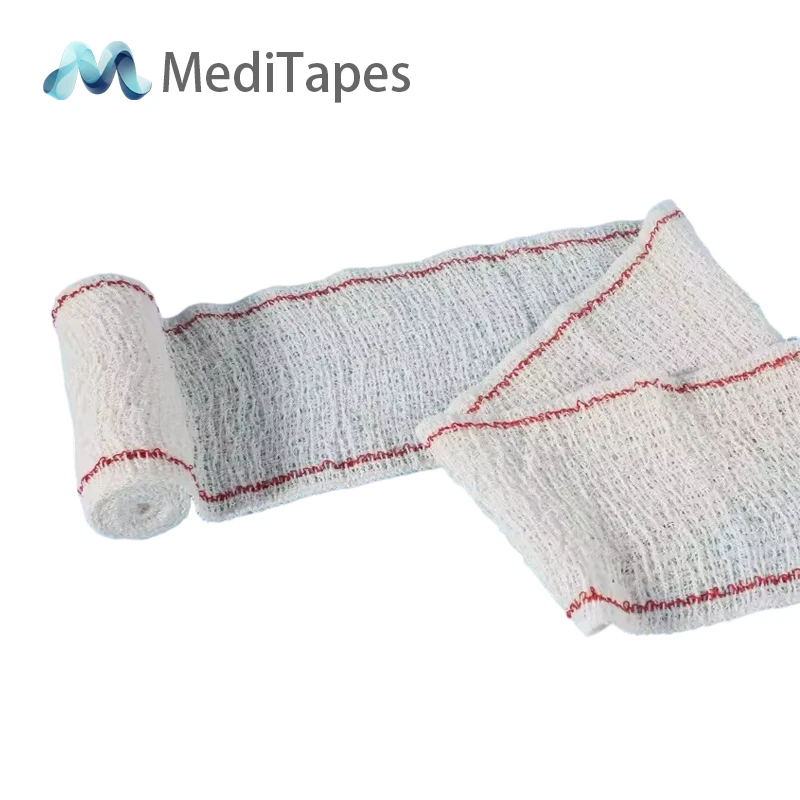
Wholesale Breathable Elastic Crepe Bandage for Sports Injuries
Bulk buy Breathable Elastic Crepe Bandage designed for sports recovery. This lightweight crepe bandage conforms easily to body contours like knees and ankles. It reduces swelling while allowing skin to breathe. A top choice for athletic trainers needing reliable sports injury support.
Frequently Asked Questions (FAQ)
Can I use a bandage with a 150% elastic bandage stretch ratio for lymphedema?
Generally, no. Lymphedema management requires high working pressure and low resting pressure. A 150% stretch roll applies continuous, deep inward resting pressure that can collapse superficial lymphatic collectors when the limb is relaxed, while failing to provide a solid wall to pump against during muscle contraction. A 100% elastic bandage stretch ratio wrap (or lower) is the clinical gold standard for decongestive lymphatic therapy.
What is the practical difference between a crepe bandage and an elastomeric bandage?
A traditional crepe bandage achieves its stretch solely from mechanically twisted cotton yarns; it contains zero rubber or Spandex threads, naturally yielding an elastic bandage stretch ratio around 80% to 100%. An elastomeric bandage blends Spandex, polyurethane, or rubber filaments into the warp, allowing it to easily hit a 150% to 200% elastic bandage stretch ratio with aggressive elastic recoil.
How do you verify the elastic bandage stretch ratio on the receiving dock?
You can perform a rapid verification test right on the inspection line. Cut a 50 cm sample from the center of the roll (avoid the first outer wrap). Lay it flat without tension on an inspection bench for 5 minutes. Clamp one end, attach a calibrated weight or spring pull-gauge corresponding to the specified load (typically 10 N per cm of strip width), measure the extended length between markers, and calculate:
[(Extended Length – 50 cm) / 50 cm] * 100.
If your 50 cm strip stretches to 100 cm under that load, your elastic bandage stretch ratio is exactly 100%.
Does a higher stretch ratio mean a bandage delivers more pressure?
Not necessarily. Pressure depends entirely on the tension applied during wrapping, not the fabric’s theoretical stretch ceiling. However, a 150% elastic bandage stretch ratio allows a user to store significantly more elastic strain energy in the fabric, making it much easier to accidentally over-tighten and deliver dangerously high resting pressure compared to a 100% short-stretch wrap.
Get Custom Prototype Bandages Built to Your Performance Specs
Getting your fabric parameters wrong burns engineering cycles and wrecks clinical outcomes. Whether you are validating a brand-new wearable medical device, formulating a CE-marked compression kit, or simply tired of erratic stretch variations across production batches, the textile team at MediTapes can dial in your exact substrate specs.
We build custom-engineered elastic crepe, cohesive wraps, and medical-grade utility textiles to precise OEM tolerances. Tell us your target elastic bandage stretch ratio, desired interface pressure bracket, width requirements, and sterilization protocols, and we will send calibrated prototype samples directly to your R&D bench.
- Explore the line: Check out our high-consistency elastic crepe bandage series to compare base fabric weights and stretch limits.
- Talk to an engineer: Drop a line through the MediTapes contact desk or email us directly at info@meditapes.com. We will review your tech pack and help you lock down the perfect clinical textile spec before you cut your tooling.