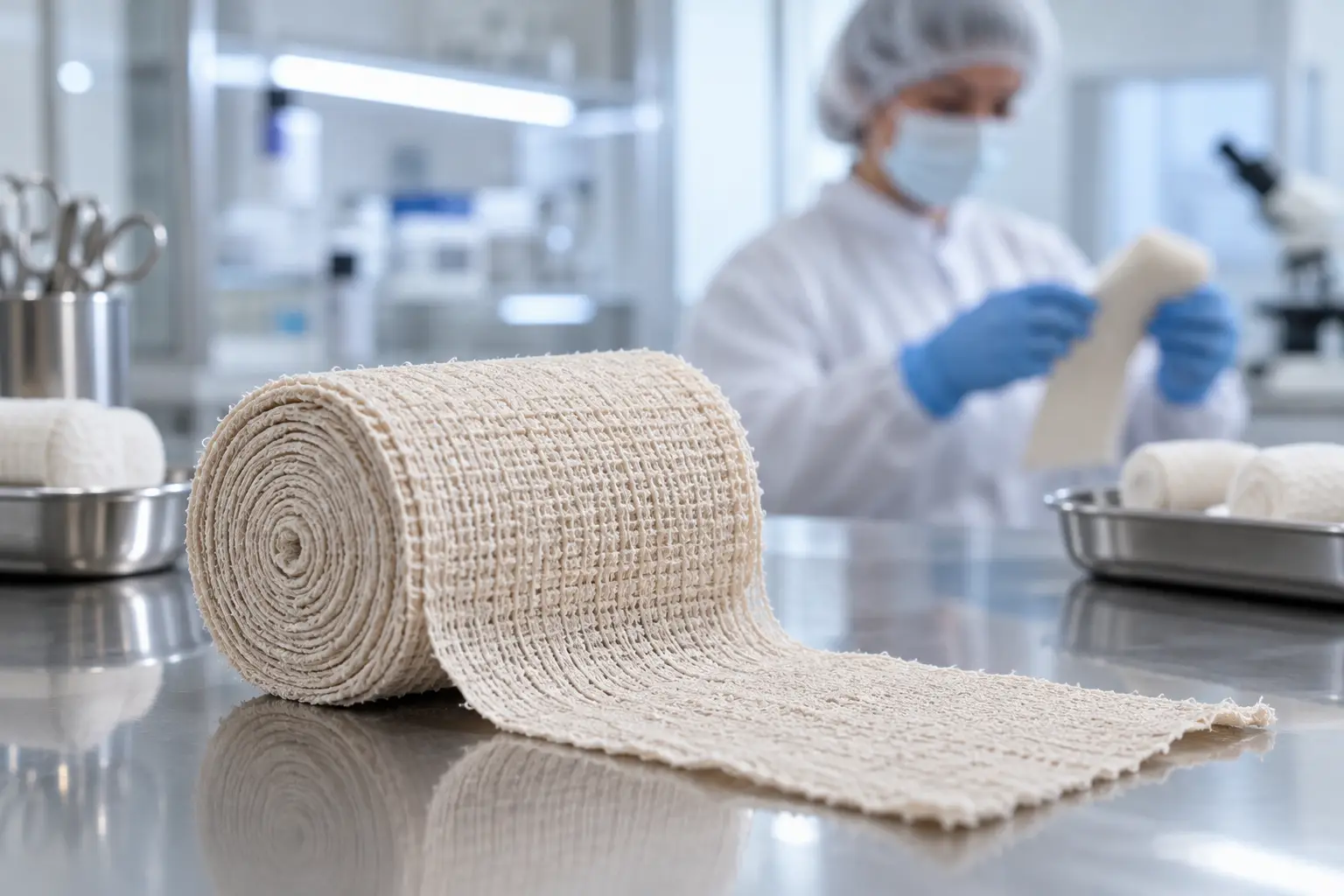
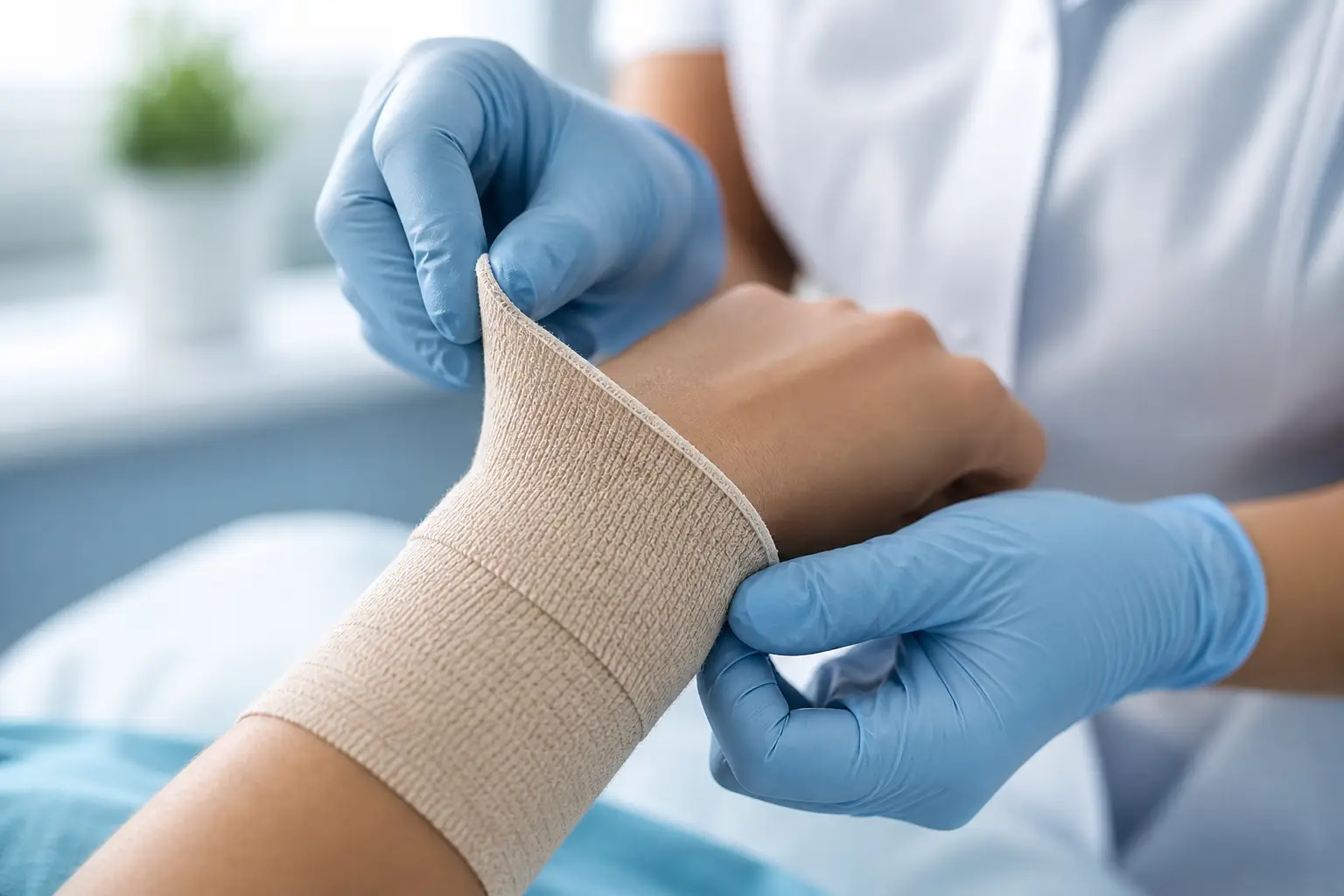
If you have ever walked the floor of a busy orthopedic trauma bay or private fracture clinic on a Monday morning, you know the quiet chaos at the supply carts. An orthopedic tech is cursing under their breath because a cheap roll of undercast wrap ripped in half right across a patient’s heel. In the next exam room, a surgeon is barking about a loose dressing because the outer wrap lost its elasticity before the patient even left the building.
These daily headaches usually trace back to one root cause: fragmented purchasing.
Orthopedic clinics frequently purchase their under-cast underlayers from one vendor catalog and their compression textiles from another. The result? Inconsistent mechanical performance, mismatched inventory, inflated freight invoices, and frustrated clinical staff.
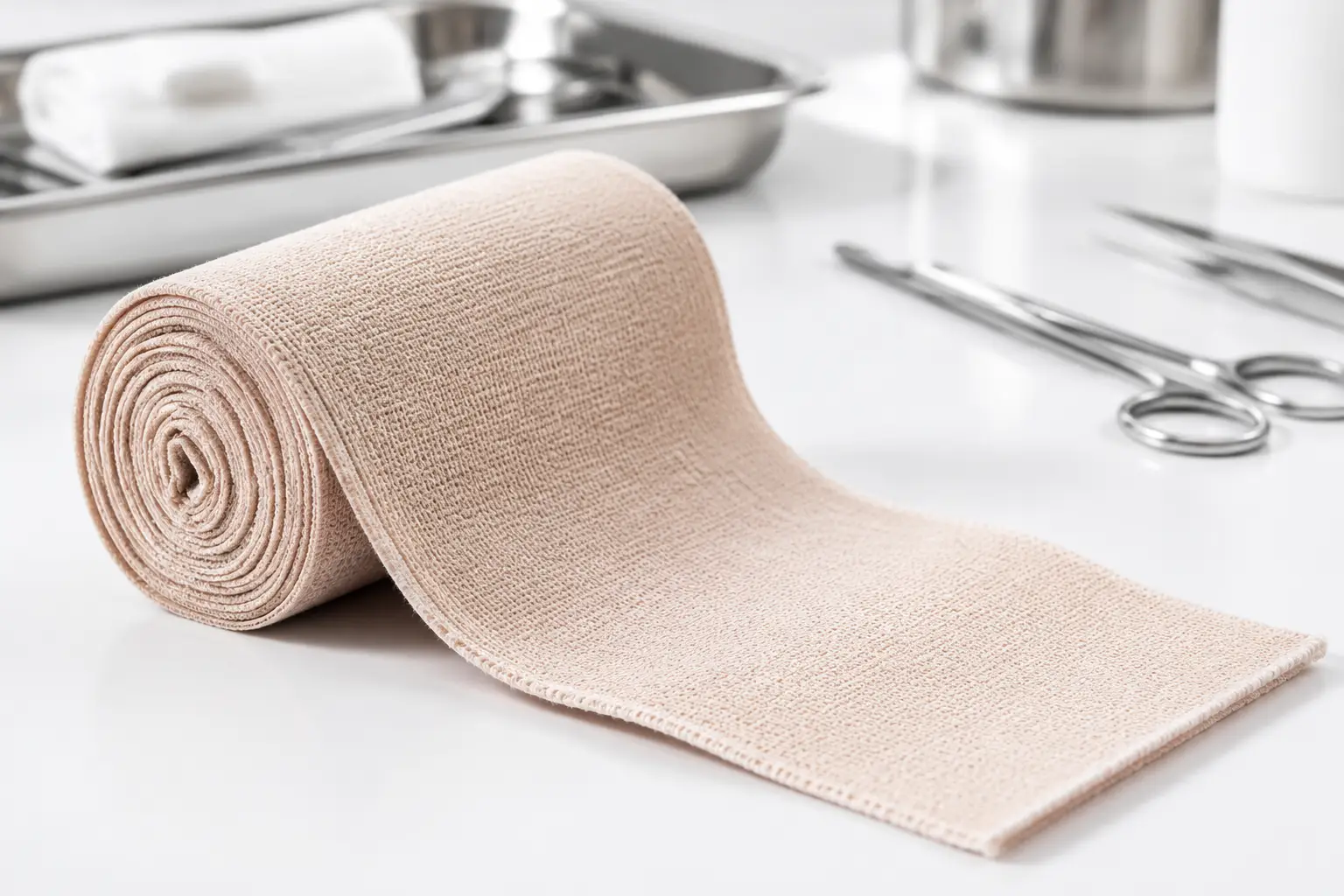
Sourcing orthopedic cast padding alongside a reliable heavy duty spandex elastic crepe bandage through a coordinated procurement workflow fixes these pain points. Let’s break down how these two staple medical textiles interact, why co-sourcing them makes financial and clinical sense, and how you can streamline your supply chain without sacrificing patient outcomes.
1. Deconstructing the Layering System: Cushion vs. Compression
To optimize procurement, we have to look past line items on a purchase order and examine what happens at the skin-to-bandage interface. Rigid casting materials—like fiberglass or plaster of Paris (POP)—require a dual-layer soft-goods system to immobilize limbs safely.
Anatomical Layering Structure from Skin to Outer Shell:
- Dermal Layer: Patient skin and vulnerable bony prominences.
- Primary Cushion Layer: Non-woven or cotton orthopedic cast padding (provides thermal protection, micro-cushioning, and moisture management).
- Intermediate Elastic Layer: Heavy duty spandex elastic crepe bandage (provides sustained sub-bandage pressure, contour retention, and splint stabilization).
- Rigid Outer Layer: Fiberglass casting tape or Plaster of Paris (POP) rigid support shell.
The Clinical Role of Orthopedic Cast Padding
The primary job of orthopedic cast padding is non-negotiable: protect vulnerable dermal tissue from pressure necrosis, shear friction, and the exothermic heat generated when plaster or synthetic tape cures.
During the exothermic reaction of fiberglass or POP, temperatures inside the cast can spike above 40°C (104°F). Without a uniform, lofty barrier of orthopedic cast padding, that thermal energy transfers directly to the epidermis.
Beyond thermal shielding, orthopedic cast padding acts as a micro-cushion over bony landmarks—the ulnar styloid, olecranon, malleoli, and patella. If the padding thins out or bunches during application, local peak pressures quickly surpass the capillary closing pressure of human skin (typically around 32 mmHg). This leads directly to skin maceration or full-thickness decubitus ulcers beneath the cast shell.
For deeper technical guidance on casting safety standards and soft-tissue shielding, the clinical guidelines published by the American Academy of Orthopaedic Surgeons (AAOS) provide baseline protocols for casting application.
The Mechanics of Crepe Bandages in Joint Stabilization
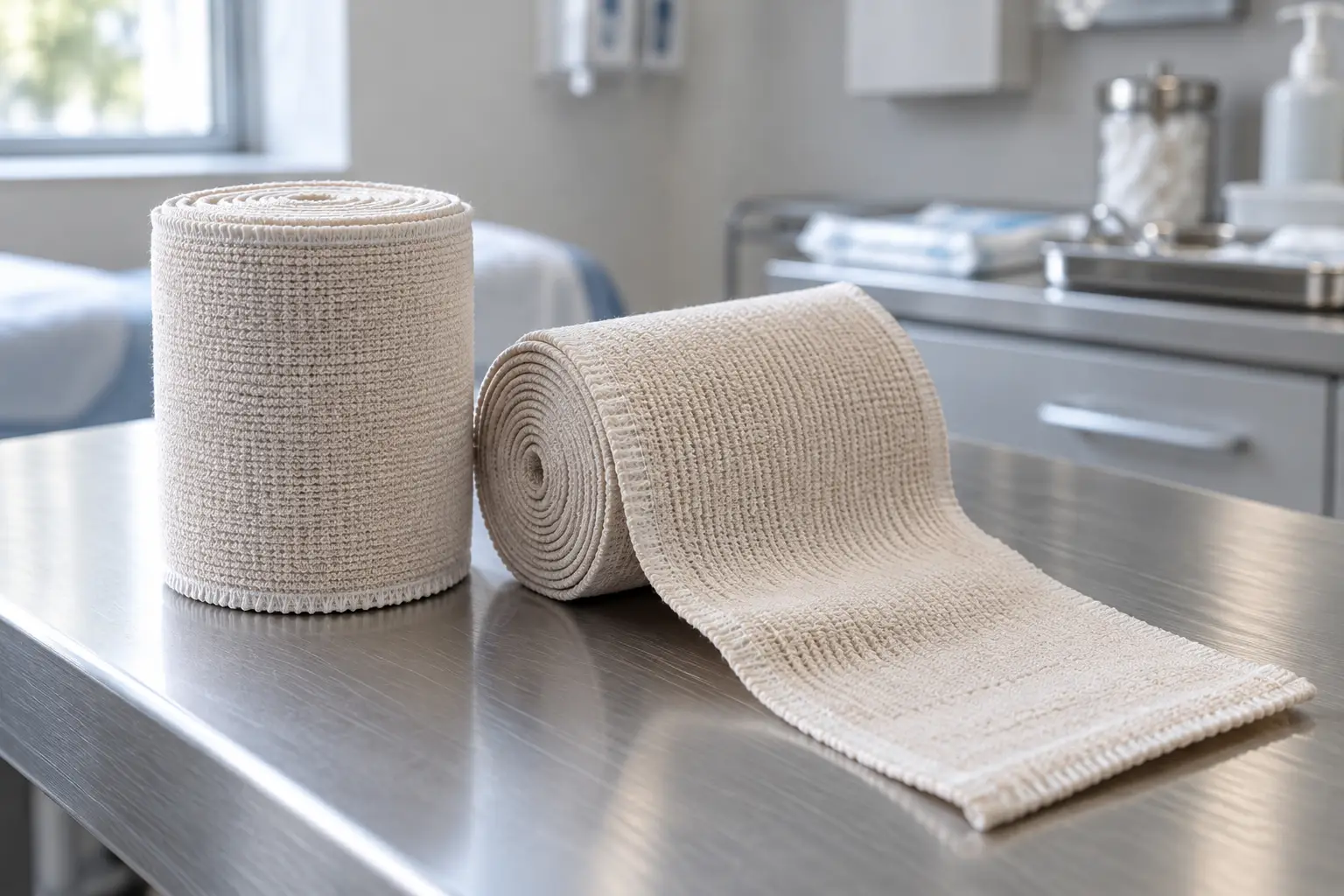
While undercast padding provides loft and shock absorption, outer retention textiles like a heavy duty spandex elastic crepe bandage deliver controlled hoop stress and mechanical stabilization.
A high-performance crepe bandage does not just hold secondary splint slabs in place; it maintains continuous dynamic tension as post-traumatic edema shifts. In acute sprains, soft-tissue contusions, and post-reduction splints, these joint stabilization bandages must exhibit high hysteresis resistance—meaning they snap back into shape rather than sagging after three hours of patient movement.
When clinic buyers treat these two products as disconnected items, they overlook how material interactions govern immobilization success.
2. Material Science: Synthetic vs. Natural Fibers
Procurement officers evaluating orthopedic supplies wholesale options often ask: Should we buy 100% bleached cotton or non-woven synthetic polyester padding? And should our crepe wraps use pure rubber threads or woven spandex elastomer cores?
Let’s review the raw material physics in detail.
| Performance Metric | 100% Natural Cotton Cast Padding | 100% Non-Woven Synthetic (Polyester) |
|---|---|---|
| Moisture Behavior | Hydrophilic (Absorbs & holds fluid) | Hydrophobic (Wicks fluid away) |
| Tear Characteristics | Short staple fiber; clean cross-tear | Cohesive fleece; feather-edge tear |
| Exothermic Insulation | Moderate thermal dampening | High thermal resistance |
| Wet Compression Recovery | Collapses when saturated | Retains >80% dry loft profile |
| Skin Microclimate | High humidity retention | Lower moisture accumulation |
Polyester vs. Bleached Cotton Padding
- Synthetic Non-Woven Padding: Engineered from needle-punched polyester filaments. Because polyester is inherently hydrophobic, synthetic orthopedic cast padding wicks perspiration away from the skin surface toward the porous cast shell. When patients inevitably splash water on their cast, synthetic padding dries significantly faster, lowering the risk of bacterial overgrowth and dermal breakdown. Furthermore, non-woven fleece tears easily with a feathered edge, preventing ridge formation beneath rigid casts.
- 100% Cotton Padding: Pure bleached cotton remains a favorite among traditional orthopedic surgeons who value its immediate absorbency and soft hand-feel. However, cotton fibers absorb up to 24 times their weight in water. In humid environments, saturated cotton cast padding collapses under pressure, losing its protective loft and leaving bony prominences exposed to the rigid shell.
If your clinic routinely handles pediatric fractures or long-term casting (6–8 weeks), synthetic orthopedic cast padding provides superior long-term loft retention. For short-term splinting or soft dressings, high-grade cotton versions remain a reliable choice.
Spandex (Elastane) vs. Traditional Rubber-Core Crepe
Old-school crepe bandages rely on heavy cotton warps intertwined with natural rubber (latex) yarns. While they offer good initial grip, they suffer from two major flaws:
- Latex Hypersensitivity: Even with under-layers, latex proteins can migrate, triggering contact dermatitis in sensitive patients.
- Fast Tension Decay: Natural rubber degrades rapidly when exposed to body oils and clinic cleaning agents.
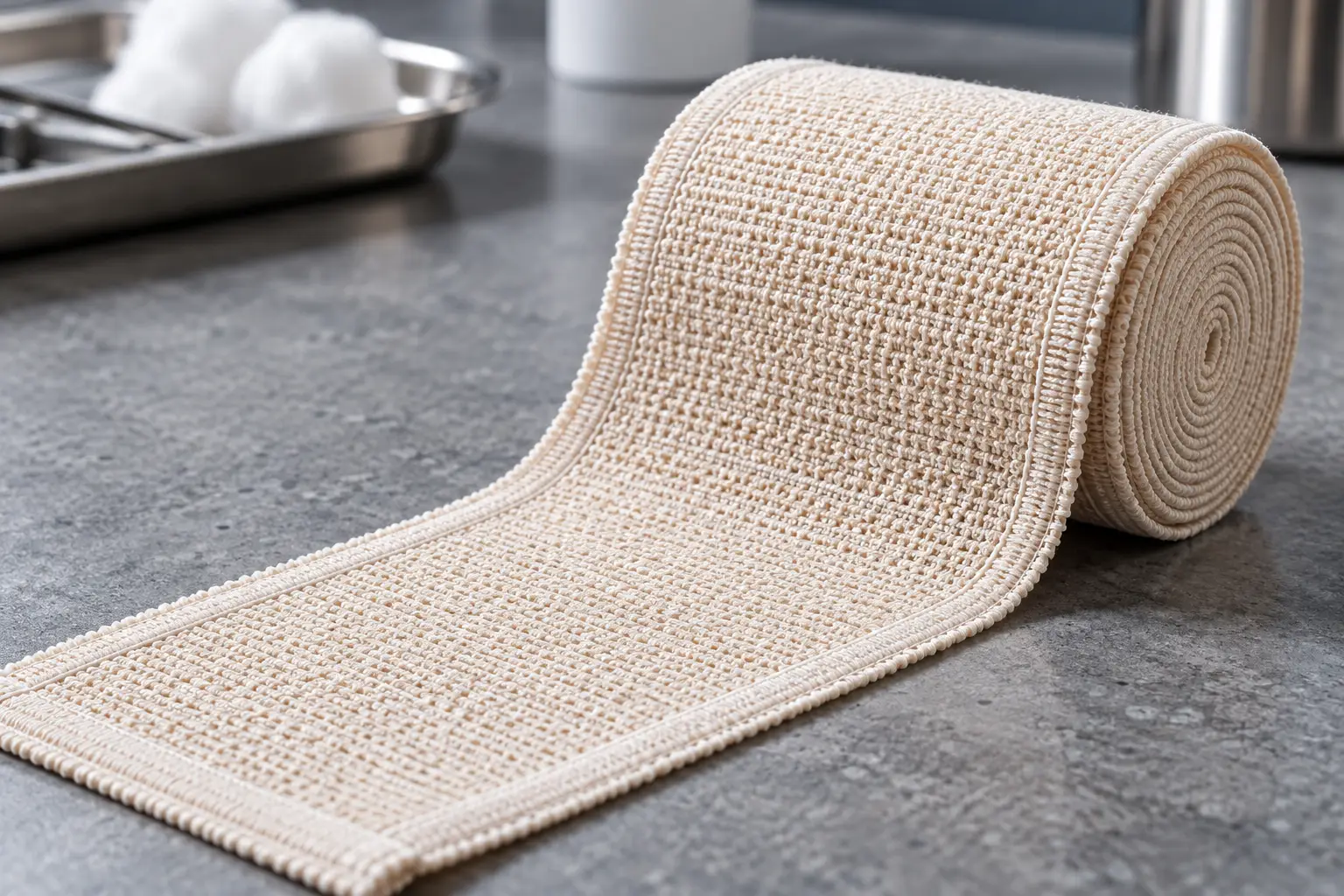
Modern clinical settings increasingly standardize on a heavy duty spandex elastic crepe bandage. By replacing rubber with core-spun polyurethane/spandex threads, these bandages deliver sustained sub-bandage pressure without loosening throughout the day.
The structural evaluation of stretch fabrics and their tensile recovery falls under strict international standards, including textile test protocols defined by the ASTM International Medical Textile Standards.
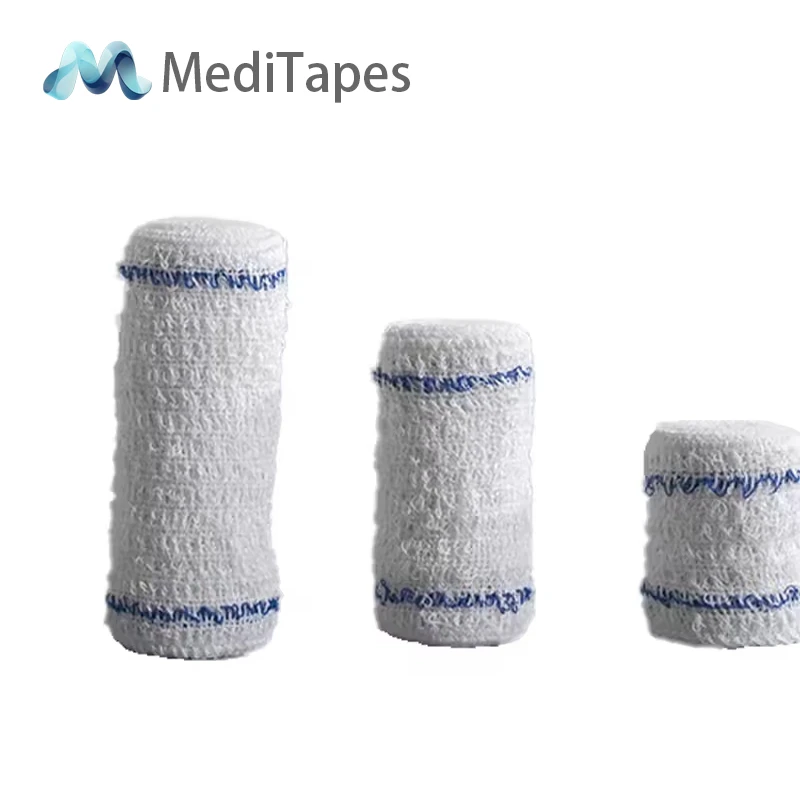
Skin-Color Elastic Crepe Bandage for Varicose Vein Treatment
Skin-Color Elastic Crepe Bandage for Varicose Veins | MediTapes Meta Description: Wholesale Skin-Color Elastic Crepe Bandages for Varicose Vein Treatment and Edema Control. Discreet, breathable compression rolls available in various widths. MediTapes offers factory-direct prices for vascular support supplies. Contact us for bulk orders.
3. Sub-Bandage Pressure Calculations: What Sourcing Teams Must Know
A common mistake in clinic procurement is assuming any elastic wrap will do, as long as it looks like a crepe bandage. But applying external wraps is a biomechanical intervention governed by physical laws.
The pressure exerted beneath a wrapped limb follows Laplace’s Law for flexible cylinders, expressed in plain text format as:
Sub-bandage Pressure Formula:
Sub-bandage Pressure (P) = [Tension (T) * Number of Layers (N) * 4630] / [Limb Circumference (C) * Bandage Width (W)]
- P = Sub-bandage interface pressure measured in millimeters of mercury (mmHg)
- T = Tension applied to the bandage during wrapping (in kilograms)
- N = Number of overlapping layers applied (e.g., 50% overlap equals 2 layers)
- C = Circumference of the anatomical limb (in centimeters)
- W = Width of the bandage roll (in centimeters)
- 4630 = Universal conversion constant for textile metric units
If a clinic purchases sub-standard crepe wraps with poor stretch calibration, nursing staff tend to over-tighten the bandage to keep it from slipping. Looking at the formula, doubling the pulling tension (T) doubles the sub-bandage pressure (P) against the limb.
If your orthopedic cast padding underneath is thin, uneven, or lacks mechanical density, that spike in localized pressure transmits straight through to the skin. This can occlude deep venous return or compress peripheral nerves (such as the common peroneal or radial nerve).
High-grade orthopedic cast padding acts as a pressure-dampening buffer, absorbing irregularities in external wrapping tension and protecting the patient from iatrogenic injury.
You can inspect the underlying fluid mechanics of tissue compression in clinical literature on PubMed / National Center for Biotechnology Information, which details how sub-bandage pressure gradients influence venous return and arterial safety.
4. The Pitfalls of Split-Vendor Sourcing for Orthopedic Clinics
Why do so many clinical practices run into stockouts, mismatched stock, and supply chain snarls? The answer usually lies in split-vendor sourcing.
When clinic administrators order orthopedic cast padding from Vendor A and elastic wraps from Vendor B, hidden systemic costs build up quickly.
Supply Chain Model Comparison:
- Split-Vendor Sourcing (High Friction): Separate purchase orders, mismatched dimensional sizing, uncoordinated freight invoices, and split accountability when product issues arise.
- Co-Sourcing with MediTapes (Streamlined): Unified procurement, synchronized roll dimensions, consolidated freight shipments, and guaranteed material compatibility.
1. Incompatible Width Ratios and Sizing Discrepancies
Orthopedic application requires proportional sizing. An ankle-foot splint on an adult patient typically calls for a 10 cm (4-inch) orthopedic cast padding underlayer paired with a 10 cm or 15 cm outer heavy duty spandex elastic crepe bandage.
When sourcing from split vendors, manufacturing tolerances often conflict. Vendor A’s 4-inch roll might measure 9.4 cm after slight tension unrolling, while Vendor B’s crepe bandage measures a true 10.5 cm. This mismatch leaves the crepe bandage edges directly touching raw skin beyond the padding margins, creating friction blisters.
2. Doubled Freight Costs and Administrative Friction
Small to mid-sized orthopedic clinics rarely hit the top tier of freight-free volume thresholds when splitting soft-goods orders. You end up paying two separate LTL freight charges, handling two customs filings (for imported supplies), and processing two distinct accounts-payable workflows.
3. Inconsistent Quality Management Standards
When an adverse event occurs—such as skin breakdown beneath a short-arm fiberglass cast—pinpointing the cause is messy when the components come from different sources. Did the orthopedic cast padding collapse under moisture? Or did the outer bandage contract excessively after application?
Procuring both items from a manufacturer operating under a unified quality system certified to ISO 13485 Medical Devices Standards ensures full lot traceability and material compatibility from the skin out.
5. Comprehensive Material Comparison
Before negotiating bulk contracts, orthopedic supply managers should evaluate how core product specifications compare across the primary soft-goods categories.
| Specification Parameter | Standard Orthopedic Cast Padding | Heavy Duty Spandex Elastic Crepe Bandage | Standard Cotton Crepe Wrap |
|---|---|---|---|
| Primary Base Material | 100% Synthetic Polyester or Bleached Cotton | High-grade Cotton blended with Spandex / Elastane | 100% Cotton with twisted crepe weave (or low rubber) |
| Elastic Elongation | 15% – 30% (Micro-stretch for contouring) | ≥ 180% – 220% Controlled Stretch | 80% – 110% Limited Stretch |
| Clinical Function | Skin protection, thermal barrier, padding | Dynamic compression, splint securing, stabilization | Light dressing retention, secondary wrap |
| Permeability / Breathability | High air-permeability non-woven structure | Porous, skin-friendly open-weave structure | Moderate breathability |
| Autoclavable / Sterilization | EO Gas / Steam compatible | EO Gas / Gamma compatible | EO Gas compatible |
| Common Failure Mode | Bunching, shredding, fiber collapse | Loss of tension recovery after multiple movements | Rapid sagging, edge fraying, poor hold |
When you source your undercast materials alongside a dedicated elastic crepe bandage line, your clinical teams get consistent, repeatable handling across every procedure.
6. Co-Sourcing in Action: An Anonymized Field Case
Consider this real-world scenario from a mid-sized regional orthopedic network operating four outpatient surgical clinics and two urgent care centers.
Field Case Overview:
- Client Profile: Regional orthopedic surgical network with 6 combined care locations.
- Baseline Inefficiency: 24 fragmented purchase orders annually across 3 soft-goods vendors.
- Identified Defects: Padding tearing during rapid cast application, outer bandages sagging within 48 hours, and 14.2% budget leakage due to split shipping.
The Transition Strategy
The network audited its soft-goods inventory and consolidated its purchases. Instead of buying ad-hoc items across multiple vendors, they established a single co-sourcing channel for:
- Non-woven synthetic orthopedic cast padding (5 cm, 7.5 cm, 10 cm, and 15 cm rolls).
- Heavy duty spandex elastic crepe bandage inventory calibrated to match the padding widths exactly.
The Results After 12 Months
- Landed Cost Savings: Consolidating padding and bandage roll volume reduced total landed purchasing costs by 18.4%, primarily through volume tiering and consolidated pallet shipping.
- Zero Edge-Maceration Incidents: Standardizing width tolerances eliminated mismatched margins, cutting soft-tissue edge abrasions across all four outpatient sites to zero.
- Procurement Overhead Reduction: Accounts payable reduced soft-goods purchase orders from 24 per year down to 4 quarterly scheduled blanket orders, saving an estimated 120 administrative hours annually.
7. Procurement Checklist: Quality Criteria for B2B Wholesale Buyers
When vetting suppliers for orthopedic supplies wholesale contracts, do not rely solely on slick product photos or basic sell sheets. Ask your vendor candidate for physical test certificates and bench-test sample rolls using this checklist:
Padding Cohesiveness and Tear Profile
- Does the orthopedic cast padding unroll smoothly without delaminating or falling apart on the spool?
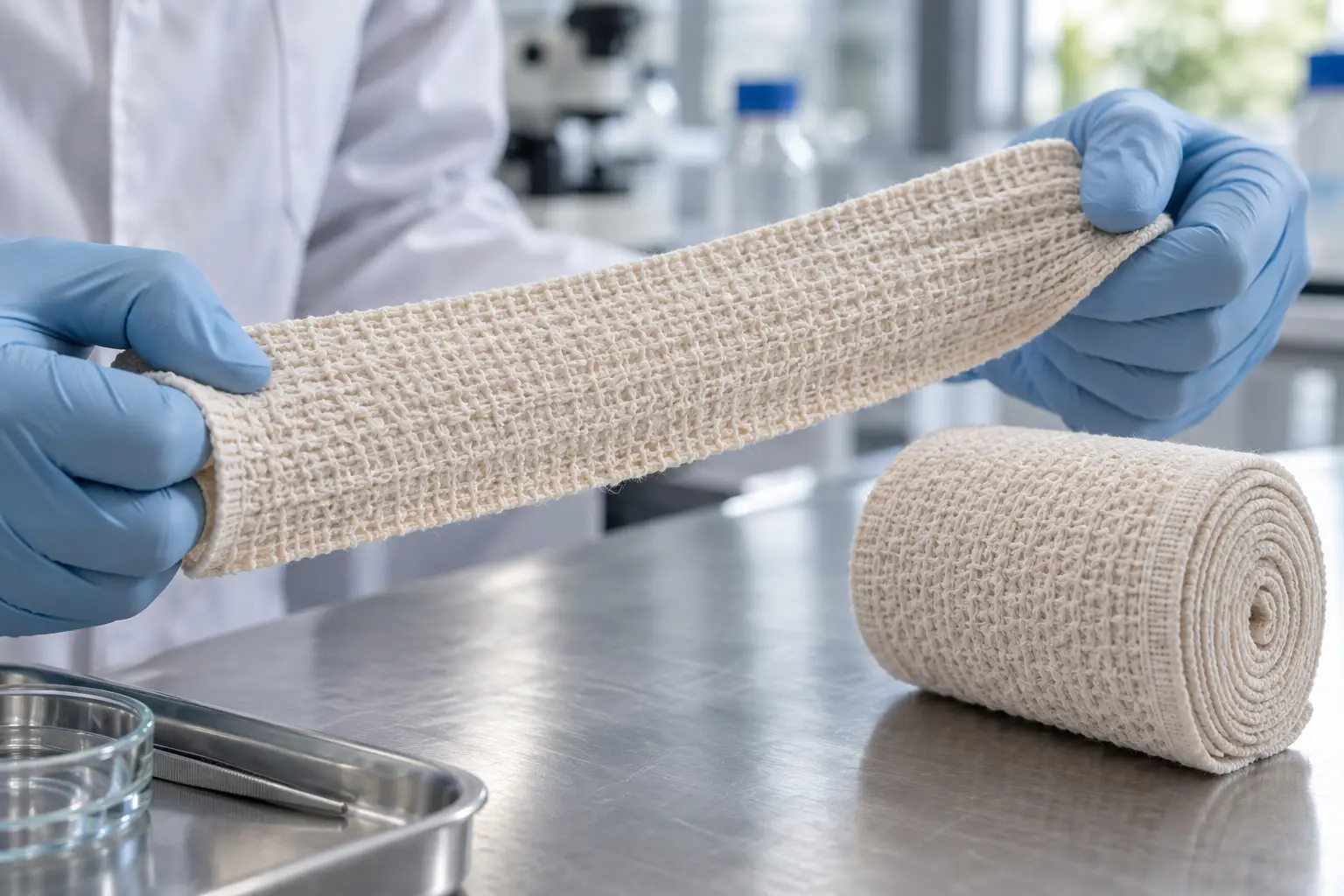
- Does it tear cleanly across its width with a gentle manual pull, while resisting longitudinal shredding during circumferential wrapping?
Textile Grammage Consistency (GSM)
- Is the padding weight certified between 75 g/m² and 120 g/m² across the entire production lot?
- Are there thin spots, resin clumps, or chemical binder odors in the unpacked roll?
Elastic Hysteresis and Recovery (Crepe Bandages)
- Stretch the crepe bandage to 150% elongation 20 consecutive times in bench testing.
- Does the textile return to within 5% of its resting length without edge-curling or loose elastane threads?
Biocompatibility and Skin Tolerance
- Does the vendor provide Cytotoxicity (ISO 10993-5) and Skin Sensitization (ISO 10993-10) lab verification reports?
- Is the bandage certified 100% latex-free to eliminate allergic dermatitis risks?
Packaging Barriers and Core Integrity
- Are individual rolls sealed in dustproof, moisture-resistant polymer flow-wraps?
- Are inner core tubes rigid enough to prevent crushing during transit, warehousing, and clinical cart storage?
For clinics handling broader orthopedic soft-goods tenders, cross-referencing British Pharmacopoeia specifications—available through official resources like the British Pharmacopoeia Secretariat—helps ensure your crepe bandage elasticity and mass-per-unit-area meet rigorous regulatory standards.

Sterile Elastic Crepe Bandage Roll with Clips – OEM Available
Certified Sterile Elastic Crepe Bandage featuring secure metal or elastic clips. We offer OEM customization for size and packaging. This high-grade elastic crepe bandage ensures sterile protection for surgical wounds. Reliable retention and soft texture make it essential for first aid kits.
8. Why MediTapes is the Strategic Co-Sourcing Partner for Orthopedic Clinics
At MediTapes, we manufacture medical textiles with an understanding of both clinical mechanics and supply-chain logistics. We know that an orthopedic cast padding roll is not just cotton or polyester fleece—it is a critical protective barrier that prevents patient harm. And we know that an outer crepe wrap is an active stabilization tool that must hold steady under real-world movement.
By standardizing your clinic’s soft-goods procurement through MediTapes, you gain direct manufacturing advantages:
- Engineered Dimensional Matching: Our orthopedic cast padding lines and joint stabilization bandages are manufactured with synchronized width tolerances, ensuring secure margins and zero border exposure.
- Direct Factory Economics: Eliminate intermediate distributor markups and reduce international shipping overhead by combining padding and elastic wrap volumes onto unified container loads or pallet shipments.
- Certified Quality Control: Every production batch undergoes strict tensile testing, grammage verification, and clean-room packaging in compliance with ISO 13485 quality standards.
- Custom B2B OEM & Private Label Support: From custom roll lengths and branded outer packaging to specialized fiber blends (cotton, viscose, polyester, or blended synthetics), we tailor bulk orders to your exact formulary specifications.
If your procurement team is ready to eliminate inventory headaches, reduce landed costs, and upgrade your clinical soft-goods performance, explore our full portfolio of elastic crepe bandage products and undercast protection lines.
Frequently Asked Questions (FAQ)
What is the primary clinical difference between orthopedic cast padding and crepe bandages?
Orthopedic cast padding is a non-elastic, lofty protective underlayer placed directly against the skin to absorb moisture, prevent pressure sores, and shield against the heat of curing casts. In contrast, a heavy duty spandex elastic crepe bandage is an elastic outer textile designed to provide compression, maintain splint positioning, reduce swelling, and deliver joint stabilization. They are complementary components of a complete orthopedic dressing system.
Can synthetic polyester cast padding be used under Plaster of Paris (POP) casts?
Yes. Synthetic orthopedic cast padding works well under both Plaster of Paris (POP) and modern fiberglass casting tapes. Synthetic polyester fibers do not absorb water during the POP dip-and-wrap process, helping the cast maintain a dry, structurally sound internal microclimate while insulating the skin from the plaster’s exothermic setting reaction.
Why should orthopedic clinics avoid using latex-based crepe bandages?
Natural rubber latex crepe bandages present significant risks of Type I (systemic) and Type IV (contact dermatitis) allergic reactions in both patients and healthcare workers. Furthermore, rubber-core elastic degrades faster when exposed to perspiration, clinic ointments, and repeated stretching. Switching to a heavy duty spandex elastic crepe bandage eliminates allergy risks while providing more consistent compression over long treatment cycles.
How does co-sourcing padding and crepe bandages reduce clinic operating costs?
Co-sourcing both product categories from a single qualified manufacturer like MediTapes reduces administrative overhead by consolidating purchase orders, lowers freight expenses through combined shipments, and eliminates product mismatch waste. It also unlocks higher volume pricing tiers across your entire soft-goods budget.
Upgrade Your Clinic Soft-Goods Supply Chain Today
Stop juggling multiple vendors, mismatched roll dimensions, and unpredictable freight surcharges.
Partner with MediTapes to secure high-performance orthopedic cast padding, premium heavy duty spandex elastic crepe bandage lines, and complete orthopedic supplies wholesale packages engineered to professional clinical standards.
- Request Free Clinical Evaluation Samples: Test our padding and crepe rolls directly in your casting rooms.
- Get a Custom Bulk Price Quote: Send your annual roll usage and specification targets to our B2B accounts team at info@meditapes.com.
- Contact Our Technical Sales Team: Reach out directly through our MediTapes Contact Page to discuss contract pricing, custom OEM packaging, and scheduled delivery programs.