At MediTapes, we’ve been making cohesive bandages for years now, and let me tell ya, nothing gets us more fired up than talking about how we make sure every roll that leaves our factory is solid. You know how it is—buyers sometimes hesitate with stuff made in China, wondering if it’ll hold up or meet real medical standards. That’s why we go all out on quality control medical devices here. We’re not just slapping together some fabric and calling it good; we follow strict processes as an ISO 13485 manufacturer to keep things consistent and safe.
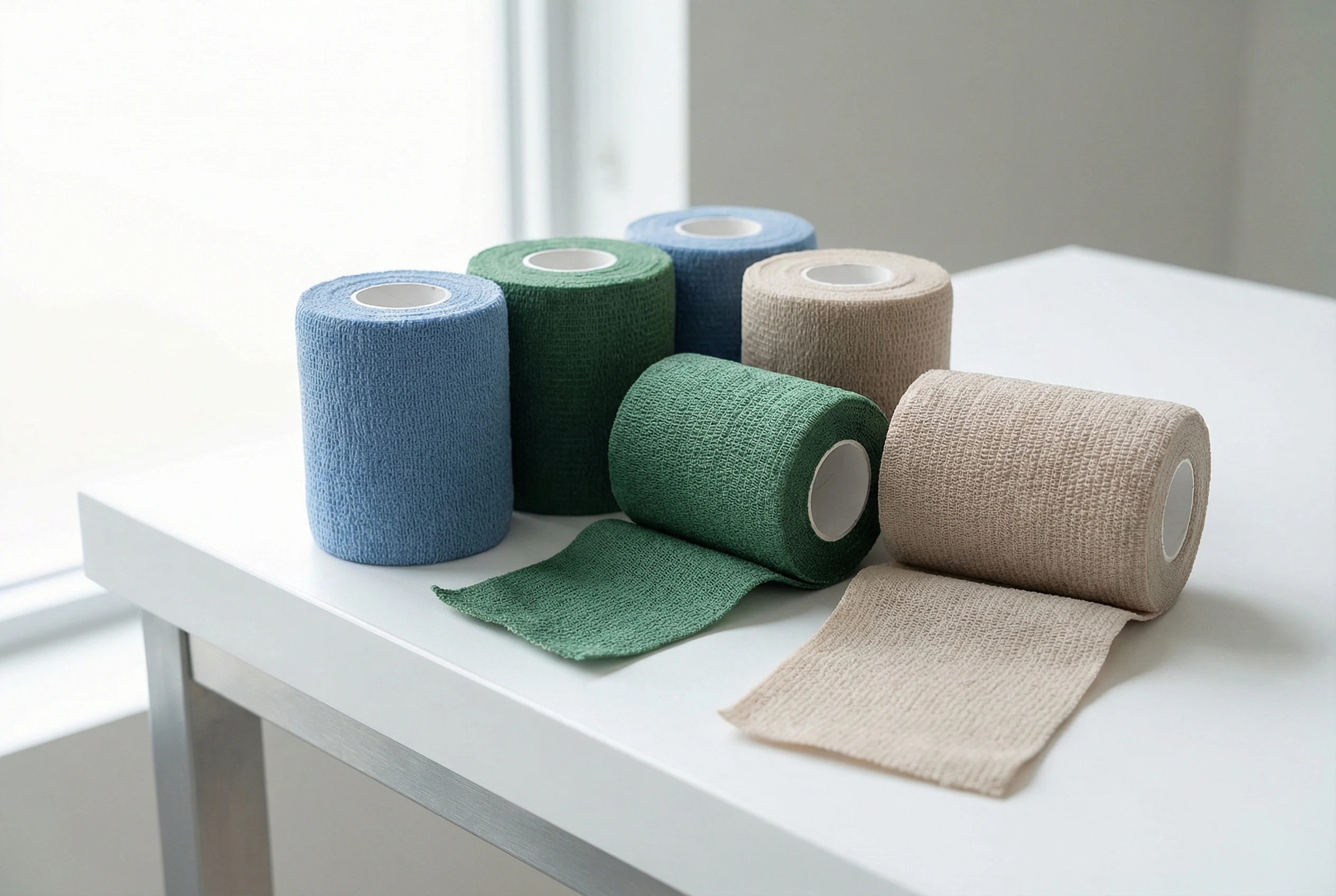
Cohesive bandages—those self-adhering ones that stick to themselves but not your skin or hair—are super handy for wrapping sprains, holding dressings in place, or giving light compression after an injury. But if the adhesion’s weak or the stretch is off, they can slip, cause skin issues, or just not do the job. So we test like crazy to catch problems before they ever reach you.
Why Quality Control Matters So Much for Cohesive Bandages
Look, in the medical world, even a simple bandage can make a big difference. Poor quality might mean a wrap unravels during sports, or worse, irritates sensitive skin in a hospital setting. As an ISO 13485 manufacturer, we build our whole system around preventing that. ISO 13485 isn’t some optional badge—it’s the international standard for quality management in medical devices. It covers everything from design to production, risk management, and keeping records so we can trace every batch.
We got certified because we wanted to show buyers we’re serious. It means regular audits, trained staff, controlled environments, and a focus on customer needs. No shortcuts. And yeah, it helps knock down those worries about “Chinese manufacturing” because the standard is the same worldwide—whether you’re sourcing from Europe, the US, or here.
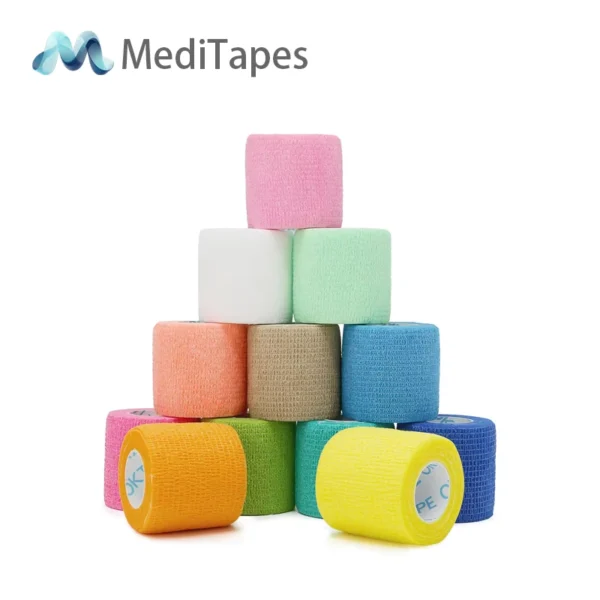
Non-woven Cohesive Bandage Wholesale – Self Adherent Wrap for Medical
Premium Non-woven Cohesive Bandage tailored for medical use. This self-adherent wrap adheres to itself, not skin. Breathable, lightweight, and easy to tear by hand. Ideal for securing dressings and supporting joints without clips. Bulk pricing available for distributors.
Our Step-by-Step Testing Process
We don’t just test at the end; it’s baked into every stage. Here’s how it usually goes down in our facility.
1. Raw Material Incoming Checks
Everything starts with the materials. We get non-woven fabrics, elastic threads, and that special latex-free cohesive coating (we keep it hypoallergenic whenever possible). Before anything hits the production line:
- Visual inspection for defects like tears or spots.
- Measure weight per square meter to make sure it’s consistent.
- Test the base fabric for tensile strength—basically, how much pull it can take before ripping.
If a supplier batch fails, it goes right back. We track suppliers too, so we know who’s reliable.
2. In-Process Monitoring During Manufacturing
As the bandage gets coated and rolled:
- We check coating thickness and evenness—too thin and adhesion suffers; too thick and it gets stiff.
- Monitor temperature and humidity in the coating area because that affects how the adhesive sets.
- Random samples get pulled for quick adhesion spot checks.
This catches issues early, saving waste and headaches.
3. Final Product Bandage Testing
This is where the real fun happens—rigorous tests on finished rolls. We follow industry standards like ASTM where they apply (even if not always mandatory for Class I devices like these).
Here’s a quick table of our key tests:
| Test Type | What We Measure | Standard/Method Reference | Typical Acceptance Criteria (Our Internal) | Why It Matters |
|---|---|---|---|---|
| Peel Adhesion | How well it sticks to itself (180° peel) | Based on ASTM D3330 principles | Min 2-4 N/cm (varies by width) | Ensures it holds without slipping during use |
| Tensile Strength | Breaking force when pulled | ASTM D3759 inspired | Min 20-40 N per inch width | Prevents tearing under stretch |
| Elongation at Break | How much it stretches before snapping | ASTM D3759 style | 100-200% minimum | Allows conforming to body contours |
| Unrolling Force | Ease of unwinding without tangling | Internal method | Consistent, no excessive force | User-friendly application |
| Breathability | Air and moisture vapor transmission | Basic cup method | High MVTR to avoid skin maceration | Comfort for long wear |
| Skin Irritation | Potential for allergic reactions | ISO 10993 series (biocompatibility) | No primary irritation | Safe for sensitive skin |
We run these on samples from every production lot. For adhesion, we apply the bandage to a standard surface (like stainless steel or itself) and peel at a controlled angle and speed. Tensile and elongation use a universal testing machine that pulls until break while recording force and stretch.
Numbers come from real testing—our cohesive bandages usually hit around 150% elongation so they hug curves nicely without restricting blood flow. Adhesion stays strong even after stretching, thanks to the cohesive formula.
4. Packaging and Sterility (If Applicable) Checks
Most of our self-adhesive bandages ship non-sterile, but we still test packaging integrity. Seal strength, label accuracy, and batch coding get double-checked. For any sterile versions, we’d follow stricter microbial limits.
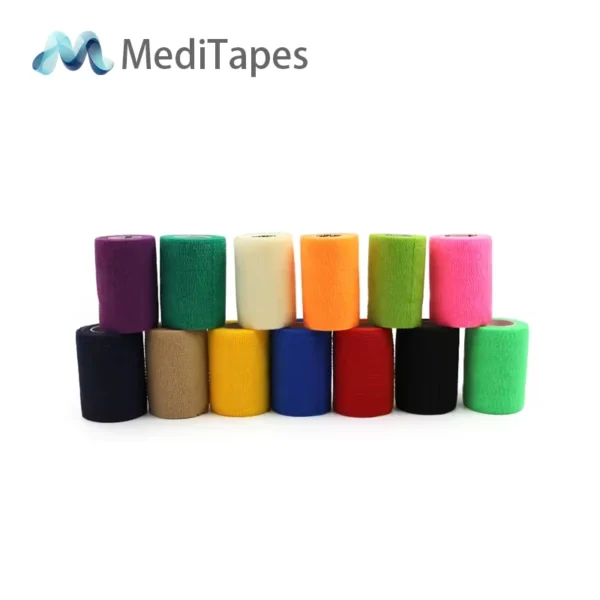
Waterproof Non-Woven Cohesive Tape – Durable Self Sticking Bandage
Keep wounds dry with our Waterproof Non-Woven Cohesive Tape. This self-sticking bandage maintains adhesion even when wet or sweaty. Highly breathable material prevents skin maceration. A versatile solution for both medical and sports first aid kits requiring a reliable cohesive wrap.
Real-World Examples from Our Experience
We’ve supplied cohesive bandages to sports clinics where athletes wrap ankles daily. One time, a big rehab center in the US tested our rolls against a competitor’s. Ours held compression longer without loosening—turns out their elongation dropped off after repeated use, but ours stayed consistent.
Another case: a European distributor worried about quality switched to us after seeing our ISO 13485 cert and test reports. They ran their own adhesion tests and found our batches more uniform. No returns in the first year. Stuff like that keeps us pushing harder.
What Sets MediTapes Apart as an ISO 13485 Manufacturer
We’re not hiding behind fancy words. Our team includes folks who’ve been in medical textiles for 10+ years—they know what fails in real use. We invest in equipment like tensile testers and environmental chambers to simulate aging or moisture exposure.
Plus, transparency: buyers can request our certificates, test reports, or even audit our facility. Head over to our self-adhesive bandages category to see the lineup.
Common Questions About Our Cohesive Bandage Quality
Q: Are your cohesive bandages latex-free?
A: Yep, most are 100% latex-free to avoid allergies. We use synthetic cohesive coatings that stick just as well.
Q: How do you ensure consistent quality across batches?
A: Through our ISO 13485 system—every step is documented, with in-process and final checks. We test multiple samples per lot and track trends to catch drifts early.
Q: Can I get custom testing data or samples to verify?
A: Absolutely. Just reach out via our contact page or email info@meditapes.com. Happy to send samples or share batch reports.
Q: Do your bandages meet international standards for medical devices?
A: As an ISO 13485 manufacturer, we align with global requirements for Class I devices like cohesive bandages. We focus on safety, performance, and traceability.
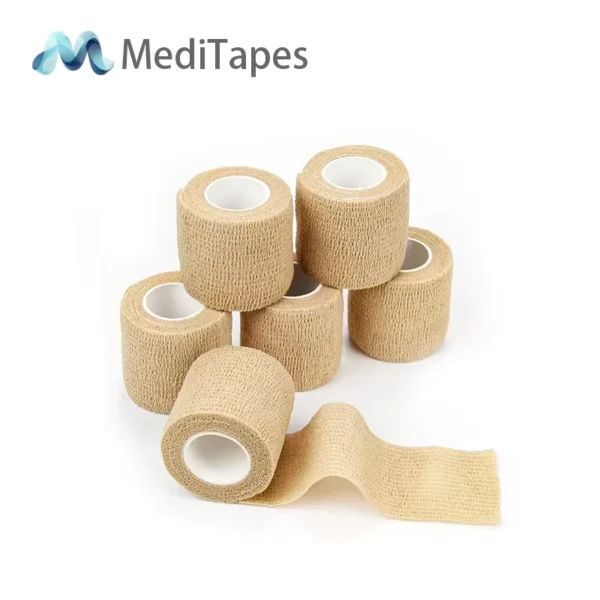
Heavy Duty Cohesive Bandage – Strong Elastic Vet Wrap for Equine
Our Heavy Duty Cohesive Bandage offers superior tensile strength for large animals. This strong elastic vet wrap is essential for equine leg support and hoof protection. Resists shredding and stays in place during movement. The ultimate non-woven cohesive bandage for stables.
Wrapping this up (pun intended), quality control medical devices isn’t just a checkbox for us at MediTapes—it’s how we earn trust. If you’re tired of inconsistent suppliers or want reliable cohesive bandages that perform every time, let’s chat. Drop us a line at info@meditapes.com or hit up the contact us page. We’d love to send samples, answer questions, or work up a quote tailored to your needs. Your patients (or athletes) deserve gear that doesn’t let them down.