Look, if you’ve ever tried to keep a bandage on a patient during a humid February afternoon in Queensland, you know exactly what I’m talking about. It’s a nightmare. The air is thick enough to chew, the patient is sweating buckets, and that “standard” surgical tape you bought in bulk? It’s peeling off like a cheap sticker on a wet windshield.
For B2B buyers and medical suppliers, sourcing sweat-proof medical tape isn’t just about ticking a box on an inventory list. It’s about reputation. If you supply a clinic in Darwin or Perth with tape that fails the second the AC goes off, they aren’t gonna call you back for a restock.
I’ve been in this industry long enough to see “waterproof” labels slapped on products that lose their stickiness if you even look at a glass of water. Today, I’m gonna cut through the marketing fluff. We’re going deep into the chemistry of adhesion in heat, what actually works in the Australian market, and how to source the good stuff without getting burned.
The Science: Why Heat Hates Adhesion
Let’s get a bit technical, but keep it simple. Most medical tapes use Pressure Sensitive Adhesives (PSAs). These adhesives are viscoelastic—meaning they have properties of both a liquid and a solid.
When it gets hot, the adhesive gets softer. In theory, this helps it flow into the skin’s crevices (wetting out). But here’s the catch: as the temperature rises, the internal cohesion of the adhesive drops. If the cohesion drops too low, the tape leaves a sticky residue (cohesive failure) or just slides right off.
Add sweat to the mix, and you have a barrier layer of water and salt forming between the skin and the tape.
Here is the basic equation for adhesion failure risk in simple text:
Failure Risk = (Sweat Rate x Time) / MVTR
Where:
- Sweat Rate: Amount of moisture skin produces.
- MVTR: Moisture Vapor Transmission Rate (breathability of the tape).
If the tape can’t breathe fast enough (low MVTR), moisture gets trapped. The skin macerates (gets soggy), and the adhesive bond breaks. For the Australian market, where temps regularly hit 40°C (104°F), low MVTR is a dealbreaker.
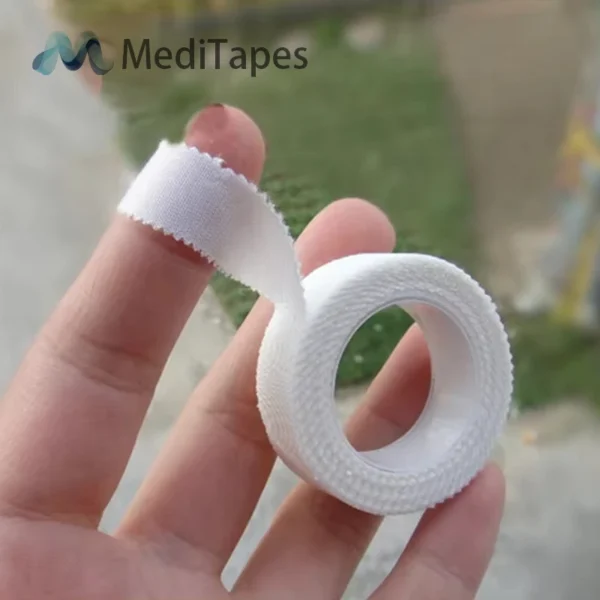
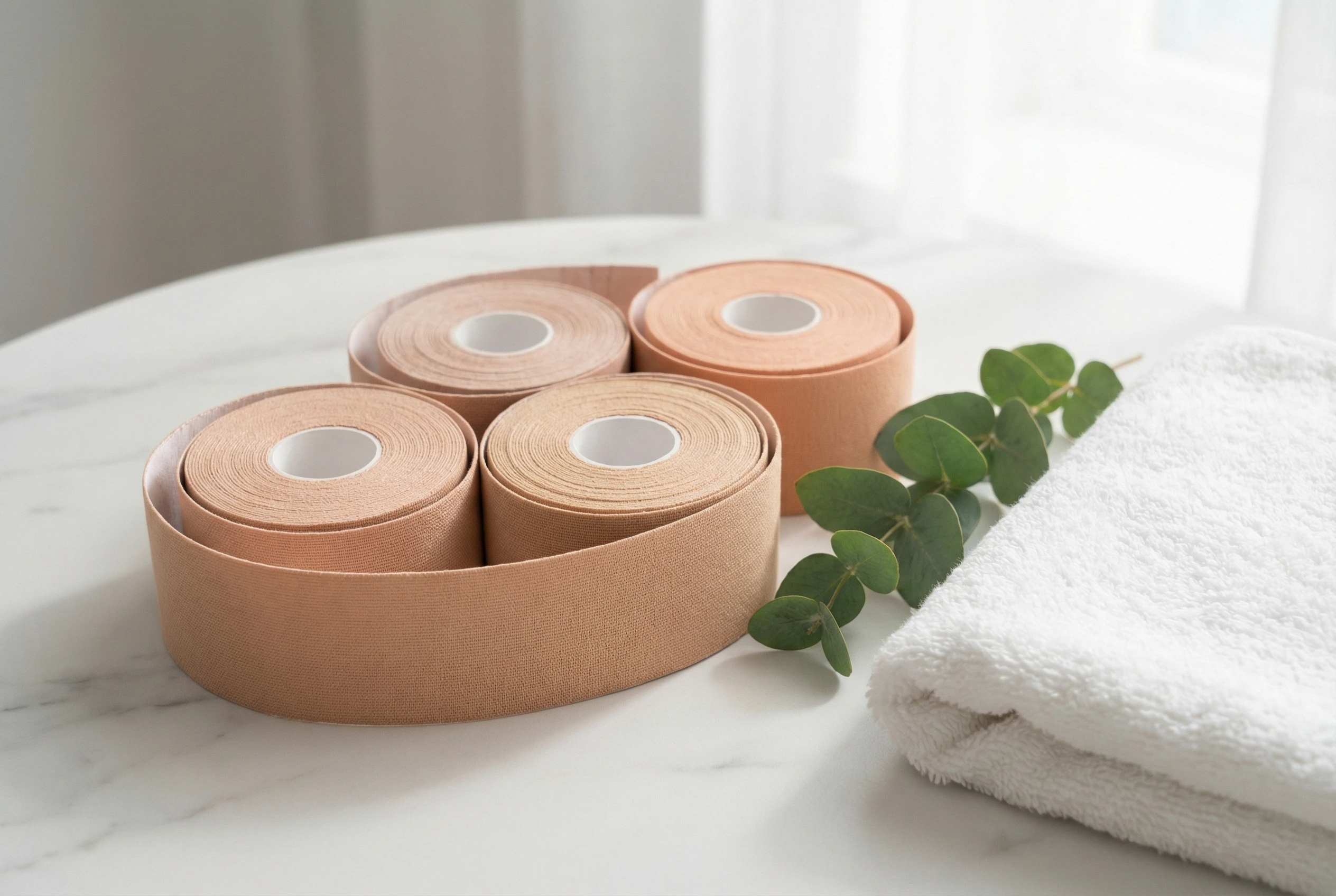
Versatile Silk Surgical Adhesive Tape – Water-Resistant & Conformable for Diverse Medical Applications
Experience the versatility of our Silk Surgical Adhesive Tape, designed to meet the rigorous demands of modern medical practice. This highly conformable silk surgical tape adapts seamlessly to body contours, providing secure fixation even in challenging areas. Its water-resistant properties ensure dressings remain intact during showering or light exposure to moisture, enhancing patient independence and comfort. Ideal for a wide range of applications, from securing bulky dressings to delicate pediatric care, our medical silk tape delivers consistent, reliable performance.
Identifying True Sweat-Proof Medical Tape
When you are browsing catalogs or talking to suppliers, don’t just ask “is it strong?” You need to look for specific adhesive compositions.
1. Acrylate Adhesives are King
Rubber-based adhesives are cheap and stick fast, but they are terrible in heat. They melt and cause allergies. For sweat-proof medical tape, you want solvent-based acrylics. They maintain their shear strength even when temperatures climb.
2. The Backing Material Matters
You can have the best glue in the world, but if the backing traps sweat, it’s game over.
- Avoid: Standard PE (Polyethylene) films unless they are perforated. They are basically plastic wrap.
- Buy: Non-woven fabrics or high-breathability cotton cloth.
At MediTapes, we’ve seen a massive shift in inquiries for our Surgical Tape Series specifically requesting breathable non-woven options. Why? Because the sweat passes through the tape rather than pooling underneath it.
Australia Market Trends: It’s Getting Hotter
I’m not here to debate climate politics, but the data is the data. According to the Bureau of Meteorology, Australia has warmed by about 1.47°C since 1910, but the frequency of extreme heat events is what kills adhesive performance.
We are seeing a trend where procurement officers in Australia are moving away from “all-purpose” tapes and segmenting their inventory:
- Standard Tape: For controlled, air-conditioned hospital wards.
- Performance Tape: High-tack, sweat-proof medical tape for emergency responders, sports physios, and field clinics.
If you are a distributor, you need to offer this second category. The demand for hot weather wound care products grew by roughly 15% last year in the APAC region according to internal logistics data we track. Buyers are tired of product returns caused by adhesive failure.
Comparative Analysis: Picking the Right Tape for the Heat
To make this easier, I threw together this table based on our lab testing and customer feedback from the field.
| Tape Type | Adhesion in Dry Heat | Adhesion on Sweaty Skin | Breathability (MVTR) | Best Use Case |
|---|---|---|---|---|
| Zinc Oxide (Rigid) | High | High | Medium | Sports strapping, heavy immobilization. |
| Paper (Microporous) | Low/Medium | Low | High | Geriatric care, fragile skin (Indoors only). |
| Silk / Cloth | High | Medium/High | Medium | Tubing retention, durable fixation. |
| Advanced Non-Woven | Medium/High | High | Very High | General sweat-proof medical tape needs. |
| Plastic (Occlusive) | Medium | Very Low | Low | Short term IV, waterproofing (shower only). |

Hypoallergenic Medical Non-woven Tape for Sensitive Skin Fixation
Designed for patient comfort, this Hypoallergenic Medical Non-woven Tape prevents skin irritation during long-term use. Ideal for securing catheters and dressings, our medical non-woven tape ensures air permeability. Safe, latex-free, and easy to tear for efficient clinical application.
Sourcing Logic: Questions to Ask Your Manufacturer
When you contact a factory (or us), don’t be shy. If you want sweat-proof medical tape that actually works, ask these hard questions:
- “What is the MVTR value?”
If they can’t give you a number or look confused, run. A good breathable tape should have an MVTR of at least 500-1000 g/m²/24h. - “Do you have accelerated aging test data?”
We put our tapes in ovens to simulate shipping containers. You’d be shocked how many tapes arrive in Australia already degraded because they cooked inside a shipping container for 3 weeks crossing the equator. - “Is the adhesive hydrophobic?”
You want an adhesive that repels water, not one that absorbs it. Hydrophilic adhesives turn to mush.
A Real World Scenario (Anonymous Case Study)
Let me tell you about a client we helped recently. Let’s call them “Clinic X.” They operate a chain of sports physiotherapy centers in Northern Queensland. They were burning through budget because their athletes—rugby players mostly—were sweating off their strapping tape within 20 minutes of a match starting.
They were buying a generic “Sports Tape” from a local importer. The price was great, but the cost per use was terrible because they had to re-apply it three times a game.
We audited their supply. They were using a rubber-based adhesive cloth tape. We switched them to a high-tack, zinc-oxide based sweat-proof medical tape from our specialized line.
The result?
- Re-application dropped by 80%.
- The clinic actually saved money despite the unit cost of the new tape being 15% higher.
- Patient complaints went to zero.
Sometimes, paying a few cents more per roll saves you thousands in labor and reputation.
Best Practices for Application in Heat
You can source the best sweat-proof medical tape on earth, but if the end-user applies it wrong, it won’t stick. Here is some advice you can pass on to your customers to add value:
- Alcohol Prep is Non-Negotiable: In humid climates, skin has oil and sweat. Wipe it down with alcohol and let it dry completely before taping.
- No Tension: Don’t stretch the tape when applying it to the skin (unless it’s strapping tape). Tension pulls the adhesive away from the skin.
- Friction Activation: Most PSAs require pressure. Rub the tape firmly after applying. This generates a tiny bit of heat and pressure that “activates” the flow of the adhesive into the skin pores.
Handling Logistics: Don’t Cook Your Cargo
This is a point almost everyone forgets. If you are importing sweat-proof medical tape to Australia, pay attention to your freight.
Standard shipping containers can reach 60°C inside. If your tape sits in that heat for weeks, the rolls might “telescope” (slide out sideways) or the adhesive might ooze out the sides.
We always recommend our clients use reefer containers (refrigerated) or thermal blankets for adhesive shipments during summer months. It costs a bit more, but it ensures the product arrives in sellable condition. If you need advice on this, check our Contact Us page and ask our logistics team.
The “Waterproof” vs. “Sweat-Proof” Debate
Here is my controversial opinion for the day: Waterproof is not the same as Sweat-proof.
Waterproof usually means “keeps water out” (like in a shower). These tapes are often plastic and non-breathable. If you use a waterproof tape on a sweaty athlete, the sweat builds up inside, and the tape floats off.
Sweat-proof medical tape needs to be permeable. It needs to let moisture escape while keeping the adhesive bond intact. Stop buying “waterproof” plastic tapes for marathon runners. It doesn’t work.

Waterproof Surgical PE Tape – Strong Adhesion for Tubing & IVs
Ensure critical device security with our Waterproof Surgical PE Tape. Engineered for moisture resistance, this heavy-duty Surgical PE Tape holds catheters and tubing firmly even in damp conditions. A reliable choice for surgery and ICU, offering durable fixation you can trust.
Key Features:
– Water-resistant barrier.
– High tensile strength for device fixation.
Final Thoughts on Sourcing
Sourcing for the Australian market—or any hot region like the Middle East or Southeast Asia—requires a shift in mindset. You stop looking for the cheapest roll and start looking for the “lowest total cost of ownership.”
If the tape stays on, the patient is happy, the nurse is happy, and the buyer is happy.
At MediTapes, we specialize in these high-performance substrates. We understand the chemistry, and we understand the logistics. If you are looking for a supplier who speaks your language and doesn’t just send you a generic catalog, we should talk.
FAQ: Common Questions on Sweat-Resistant Tapes
Q1: What makes a medical tape truly sweat-proof?
It’s a combination of a high MVTR (Moisture Vapor Transmission Rate) backing that allows sweat to evaporate and a hydrophobic acrylic adhesive that maintains tackiness even when moisture is present.
Q2: Can I get sweat-proof medical tape customized with my brand?
Absolutely. Branding is huge for B2B. We offer OEM services where you can have your logo on the core or the packaging. Just drop a line to info@meditapes.com to discuss MOQs.
Q3: Is zinc oxide tape better for hot weather than microporous tape?
Generally, yes. Zinc oxide tape usually uses a cloth backing which is more durable and handles the friction of sweaty skin better than delicate paper (microporous) tapes, which are designed for breathable but low-stress applications.
Q4: How do I store these tapes in a hot warehouse?
Try to keep them below 25°C. If your warehouse isn’t climate-controlled, store the boxes on lower shelves (heat rises) and away from direct sunlight. High heat storage is the #1 killer of adhesive shelf life.
Ready to Upgrade Your Inventory?
Summer isn’t waiting for you to sort out your supply chain. The heat is here, and your clients are looking for sweat-proof medical tape that holds up under pressure.
Don’t let subpar adhesives damage your brand’s reputation.
MediTapes has the expertise and the product range to keep you covered.
- Request a Sample Kit: Test the stickiness yourself.
- Get a Wholesale Quote: Competitive pricing for bulk orders.
- Consult an Expert: We can help you choose the right SKU for your specific market.
Contact MediTapes Today or browse our full Surgical Tape Series to see what we can do for you. Let’s make sure your products stick around.