Look, if you’re reading this, you’re probably staring at a spreadsheet right now, wondering why your landed costs just jumped 15% overnight. Or maybe you’re just bracing for impact. With the political landscape shifting and Trump’s 2026 tariff policies taking center stage, the days of “set it and forget it” procurement are dead. Gone.
I’ve been in the sourcing game for over a decade, and I’ve seen trade wars come and go. But this 2026 wave? It feels different. It’s not just about paying more; it’s about whether you can even get the product on your dock without a customs headache that lasts three weeks.
If you are a procurement manager sourcing medical tapes—whether it’s zinc oxide, silk, or non-woven paper—you need a strategy that isn’t just “ask the supplier for a discount.” That doesn’t work anymore. You need to engineer your costs from the bottom up.
Here is exactly how I’m handling sourcing medical tapes in this chaotic market, using real math, real strategies, and a bit of street smarts.
The Reality Check: How Trump’s Tariffs Hit Medical Goods
There’s a misconception floating around that “medical goods are exempt.”
Don’t bet your bonus on that.
While certain critical pharmaceuticals get a pass, consumables like surgical tapes often get caught in the wide net of “plastic and textile products” or “adhesives.” Under the 2026 adjustments to Section 301 tariffs, we are seeing stricter enforcement and higher duties on goods originating from specific regions, particularly Asia.
If you are sourcing medical tapes solely based on the FOB (Free on Board) price, you are walking into a trap. A roll of tape might cost $0.50 at the factory door, but by the time it clears a US port under the new tariff structures, that same roll could cost you $0.85. That’s a margin killer.
The goal here isn’t to complain about politics; it’s to figure out how to maneuver around them legally and efficiently.
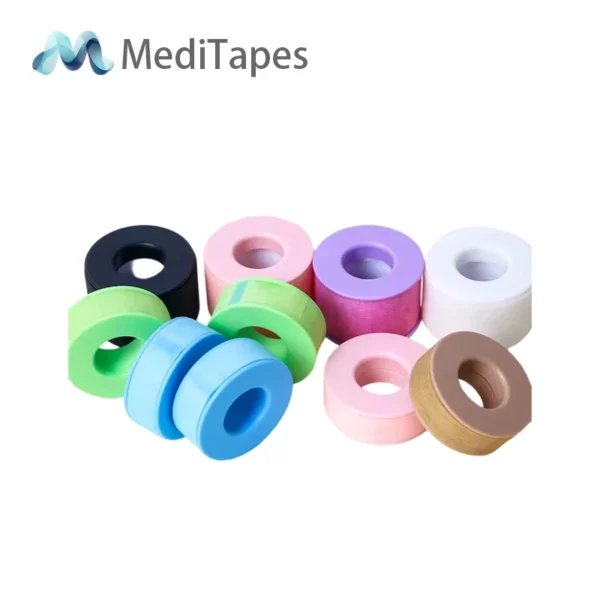
Soft Silicone Gel Tape Non-woven Fabric – Gentle Adhesion for Dressings
Experience superior comfort with our Soft Silicone Gel Tape. Featuring a flexible non-woven fabric, this tape conforms easily to body contours. The advanced silicone gel adhesive ensures strong holding power while being gentle enough for neonatal skin. Ideal for long-term wear and fragile skin applications.
Decoding the HS Code Maze for Medical Tapes
This is where 90% of buyers lose money. They let their freight forwarder pick the HS Code.
Never let your forwarder pick your HS Code. They will choose the “safest” one, which usually carries the highest duty rate because it’s the most general. You need to be specific.
When sourcing medical tapes, the Harmonized System (HS) code determines your duty rate. A slight difference in material description can mean the difference between a 2.5% duty and a 25% duty.
Here is a breakdown of what I’m seeing in the current landscape:
| Product Type | Common HS Code | Typical Description | 2026 Risk Level |
|---|---|---|---|
| Surgical Tape (General) | 3005.10 | Adhesive dressings and other articles having an adhesive layer. | High (Often flagged for general tariffs) |
| Wadding/Gauze Tape | 3005.90 | Wadding, gauze, bandages… impregnated or coated. | Medium |
| Retail Packed Tape | 3005.10.50 | Coated or impregnated, put up in forms or packings for retail sale. | High |
| Bulk/Jumbo Rolls | 5906.10 | Rubberized textile fabrics, adhesive tape (width < 20cm). | Low (If processed domestically) |
(Note: Always verify with a licensed customs broker. I’m an expert, but I’m not the government.)
The Strategy:
If you import finished retail packs, you get hit with consumer goods tariffs. If you import “semi-finished” or “jumbo rolls” and do the final slitting or packaging in a zone with a different trade agreement (or domestically), you might completely change the tariff classification. This is a massive cost reduction strategy that big players use.
The Math That Matters: Calculating Landed Cost
Let’s get into the weeds. Most people calculate cost like this:
Price + Shipping = Cost.
That’s wrong. That’s how you lose your job in Q4.
When sourcing medical tapes in a high-tariff environment, you need a granular Landed Cost model. I use a specific formula to determine if a supplier is actually viable.
Here is the text-based formula you can copy into your notes:
Total Landed Cost = (FOB Price + Freight + Insurance) * Exchange Rate + (CIF Value * Duty Rate) + (CIF Value * MPF) + HMF + Port Handling + Inland Transport
Where:
- FOB Price: What you pay MediTapes or another factory.
- MPF: Merchandise Processing Fee (usually a small % but it caps out).
- HMF: Harbor Maintenance Fee (0.125% of cargo value if arriving via ocean).
- Duty Rate: This is the killer variable in 2026.
Let’s run a scenario (The “Ouch” Factor)
You buy 50,000 rolls of silk tape.
- Scenario A (Old World): Duty was 0%. Freight was cheap. Landed unit cost: $0.55.
- Scenario B (2026 Tariff World): Duty is 25%. Freight is up.
- FOB: $0.50
- Freight/Unit: $0.05
- Duty: ($0.50 + $0.05) * 25% = $0.1375
- Fees: $0.02
- New Landed Cost: $0.7075
That is a 28% increase in cost. If your sales team hasn’t raised prices, you are underwater. This is why understanding Trump tariffs medical goods impacts is crucial. You have to find that $0.15 savings elsewhere.

Permeable PU Adhesive Film Dressing Roll – Surgical Fixation Tape
Secure dressings effectively with our Permeable PU Adhesive Film Dressing Roll. This high-quality Surgical Fixation Tape provides strong adhesion yet is gentle on sensitive skin. Its semi-permeable structure prevents maceration by allowing moisture vapor transmission, making it ideal for long-term wear in clinical settings.
Strategic Sourcing: Moving Beyond “Just Buy Cheaper”
So, you can’t change the President, and you can’t change the tax law. What can you do? You get creative with your supply chain.
1. The “Unbundling” Method
As mentioned in the HS code section, consider importing components. At MediTapes, we often discuss with clients the option of shipping semi-finished logs vs. individually boxed retail units.
Packaging takes up volume. Volume costs money in shipping (CBM).
- Retail Pack: You fit 10,000 units in a container.
- Bulk Pack: You fit 35,000 units in a container.
By moving the packaging to the destination country, you slash your per-unit freight cost significantly, which lowers the basis for your duty calculation (since duty is often calculated on CIF value in many jurisdictions, though in the US it’s usually on FOB, freight savings still help cash flow).
2. Invoice Engineering (Legally)
Be very careful here, but be smart. ensure that “Assists” (molds, dies, tooling) are billed separately from the unit cost if possible and compliant. If you amortize the cost of a mold into the unit price of the medical tape, you are paying a 25% tariff on that mold cost every single time you buy a roll of tape. Pay for the tooling upfront, separately. It’s a one-time pain for a long-term gain.
3. Vendor Managed Inventory (VMI)
Ask your supplier if they can hold stock. We do this for select partners. It shifts the cash flow burden. You only pay when you pull the goods. It doesn’t solve the tariff directly, but it frees up the working capital you need to pay those higher duties.
Product Spotlight: Surgical Tape Series
When sourcing medical tapes, quality cannot drop just because costs went up. If a tape causes skin irritation because you switched to a cheaper adhesive to save pennies, the lawsuit will cost more than the tariff.
You need to look at our Surgical Tape Series. We focus on maintaining the ISO standards while helping you optimize the pack-out to save on logistics.
Case Study: How “Project Blue Wrap” Saved 18%
I want to share a story about a mid-sized distributor in the Midwest—let’s call them “Project Blue Wrap.”
They were sourcing Zinc Oxide tape. Their landed cost was getting hammered by the new trade policies. They came to us at MediTapes asking for a 10% price cut. Honestly, our margins were already thin, so we couldn’t just drop the price.
Instead, we looked at their medical tape sourcing workflow.
The Problem:
They were buying 40ft containers of fully retail-boxed tape, FOB Shanghai. They were paying for shipping air inside the boxes, and the HS code used was flagged for the maximum tariff.
The Solution:
- Consolidation: We switched them to buying “logs” (uncut rolls) for 50% of their volume, which they cut locally using a contract converter.
- Incoterms: We moved from FOB to DDP (Delivered Duty Paid) for a portion of the order where we used our own logistics channels to secure better freight rates than they could get on their own.
- Material Tweak: We adjusted the GSM (grams per square meter) of the non-woven backing slightly—still within medical specs, but lighter. This reduced the weight, saving 4% on freight.
The Result:
They didn’t get a price cut on the product. But their landed cost dropped 18%. That is how you survive 2026.

OEM Sterile Non-woven Fabric Dressing Roll – Bulk Medical Supply
Sourcing reliable non-woven fabric dressing rolls? We offer OEM/ODM bulk manufacturing. This sterile medical dressing roll features grid-backing for precise cutting. High-quality acrylic adhesive ensures durability. Perfect for distributors seeking customized branding and cost-effective wound care solutions for hospitals.
Negotiating Incoterms Like a Pro
If you are still buying Ex Works (EXW), stop it. Just stop.
In a volatile tariff environment, EXW puts 100% of the risk on you. If the ship gets stuck, or customs decides to inspect the container for two weeks (charging you storage fees), that’s your bill.
For sourcing medical tapes right now, I recommend looking at DDP (Delivered Duty Paid) if your supplier can handle it. Why? Because it locks in your cost. The supplier takes the risk of freight spikes and, in some cases, tariff fluctuations if the contract is written right.
If DDP isn’t an option, stick to FOB, but ensure you have a freight forwarder who specializes in medical goods. Generalist forwarders don’t know that medical tape needs temperature control and specific FDA clearance paperwork. One mistake there, and your goods sit in a hot container in Long Beach, melting the adhesive. Now you have $50,000 of trash.
Why Quality Control is Your Best Cost Defense
It sounds counterintuitive. “I need to save money, so I should spend more on QC?”
Yes.
If a batch of medical tape fails inspection in the US because the adhesive dried out or the backing is yellowing, you still have to pay the duty on it. The US government does not refund your tariff just because the product sucks.
Sourcing medical tapes requires rigorous pre-shipment inspection. At MediTapes, we push for PSI (Pre-Shipment Inspection) reports before the container doors are sealed. It’s the cheapest insurance policy you’ll ever buy.
A Controversial Opinion: “China Plus One” is Overrated
Everyone talks about “China Plus One” (sourcing from Vietnam or India to avoid tariffs).
Here is my hot take: For medical tapes, it’s often a mess. The raw material supply chains for high-quality medical adhesives are still deeply rooted in China. Moving final assembly to Vietnam often just adds lead time and quality variability without massive savings, once you factor in the logistics of moving raw materials to the new factory.
Sometimes, eating the tariff and optimizing the logistics (like in the case study above) is cheaper than setting up a whole new supply chain in a country with less developed infrastructure. Don’t follow the herd blindly. Do the math.

High Strength Cotton Medical Tape – Latex Free & Hypoallergenic
Ensure patient safety with our latex-free cotton medical tape. Designed for sensitive skin, this hypoallergenic tape offers high tensile strength for stable immobilization. The cotton medical tape allows skin to breathe while providing durable adhesion. Perfect for surgical fixation and sports injury support.
FAQ: Your Tariff Survival Guide
Q1: Will the 2026 tariffs definitely apply to all medical tapes?
Not necessarily all. It depends on the specific base material (paper vs. cloth vs. plastic). This is why reviewing your HS codes with a specialist is vital. Some specific medical consumables often get exclusions filed by major hospital groups. Keep an eye on the USTR exclusion lists.
Q2: How can I reduce the duty rate when sourcing medical tapes?
Aside from re-classification (which must be legal), look into First Sale for Export rules. If you buy through a middleman, you might be able to pay duty on the price the middleman paid the factory, not the price you paid the middleman. It’s complex but worth it for high volumes.
Q3: What is the biggest hidden cost in sourcing medical tapes right now?
Detention and Demurrage (D&D). With increased inspections due to stricter trade enforcement, containers are sitting at ports longer. Ensure your forwarder gives you at least 14 days of free time at the port.
Q4: Can MediTapes help with the customs paperwork?
Absolutely. We don’t just sell tape; we sell a smooth supply chain. We can provide the FDA device listings, detailed packing lists, and correct HS code suggestions to hand to your broker.
Ready to Secure Your Supply Chain?
Look, 2026 is going to be a bumpy ride for importers. You can either panic, or you can prepare.
If you are tired of guessing your landed costs or worrying if your current supplier is going to ghost you when the tariffs hit, let’s talk. At MediTapes, we help procurement managers navigate these exact problems every day.
We aren’t just selling sticky stuff; we’re helping you keep your margins intact.
Don’t wait until the new rates are posted to make a plan.
- Check out our products: Surgical Tape Series
- Shoot us an email: info@meditapes.com
- Or let’s chat about your specific volume needs: Contact Us
Let’s get your strategy sorted before the rest of the market wakes up.