El verano se acerca. Dependiendo de dónde se encuentre su clínica o red de distribución, esto podría significar aumentos considerables en las lesiones al aire libre. Lo vemos cada año. Las personas sufren cortes, raspaduras o se someten a cirugías menores, pero se niegan a mantenerse fuera del agua. Quieren nadar, surfear o simplemente sumergirse en la piscina.
Aquí es donde comienza la pesadilla para los proveedores médicos y los doctores.
Usted les vende un apósito impermeable para heridas, y dos horas después, llaman para decir que se cayó en la piscina. O peor aún, la herida se infectó porque el agua sucia del lago se filtró debajo del adhesivo.
He estado en la industria de cintas médicas durante mucho tiempo y puedo asegurarles que no todas las afirmaciones sobre impermeabilidad son iguales. Dejemos de lado el discurso comercial y hablemos de lo que realmente funciona, analizando específicamente las normas ISO y la física de la adhesión durante los deportes acuáticos.
El mito de lo “impermeable”: Resistente al agua frente a verdaderamente impermeable
Seamos realistas por un momento. Muchos fabricantes ponen la palabra “impermeable” en una caja solo porque la cinta repele unas gotas de lluvia. Pero para los compradores B2B —ya sea que esté abasteciendo la sala de emergencias de un hospital o una cadena de farmacias minoristas— es necesario conocer la diferencia entre recubrimiento hidrofóbico y barreras impermeables.
Cuando hablamos de un apósito impermeable para heridas adecuado para nadar, generalmente nos referimos a una película de poliuretano (PU) semipermeable.
Aquí viene la parte difícil. El apósito debe realizar dos funciones contradictorias:
- Mantener el agua FUERA (para que la herida no se moje).
- Permitir que el vapor de humedad FUERA (para que la piel no se macere y se vuelva blanca y blanda).
Si pega un trozo de cinta industrial en una herida, es impermeable, por supuesto. Pero ¿si la deja puesta durante 2 horas al sol? Se va a desprender una capa de piel con ella porque el sudor no tiene a dónde ir.
La física: Adhesión en agua clorada y salada
Las piscinas y los océanos son entornos hostiles para los adhesivos.
Cloro: Es un agresor químico. Puede degradar los agentes adherentes en los adhesivos acrílicos más económicos.
Agua salada: Modifica la presión osmótica y puede resecar los adhesivos, volviéndolos quebradizos.
Medimos la adhesión mediante una prueba de pelado. En el laboratorio, observamos la Resistencia a la adhesión por pelado.
Utilizando una representación de texto simplificada de la fórmula que usamos en el laboratorio (no se preocupe, no hay códigos matemáticos complejos aquí):
Carga promedio (N) / Ancho de la muestra (mm) = Resistencia al pelado (N/mm)
Para un estándar apósito impermeable para heridas, generalmente se busca una fuerza de adhesión superior a 1,5 N/cm en piel seca. Sin embargo, para deportes acuáticos, necesitamos que ese valor se mantenga estable incluso después de la inmersión.
El año pasado realicé una prueba con un lote de muestras. Sumergimos un apósito “impermeable” genérico y un Cintas médicas apósito de PU de alta calidad en una solución salina (simulando el océano) durante 60 minutos.
¿El producto genérico? Perdió el 40% de su fuerza de adhesión. Básicamente se desprendió. Nuestra formulación conservó el 95% de su adherencia. Esa es la diferencia entre un paciente satisfecho y una demanda judicial.
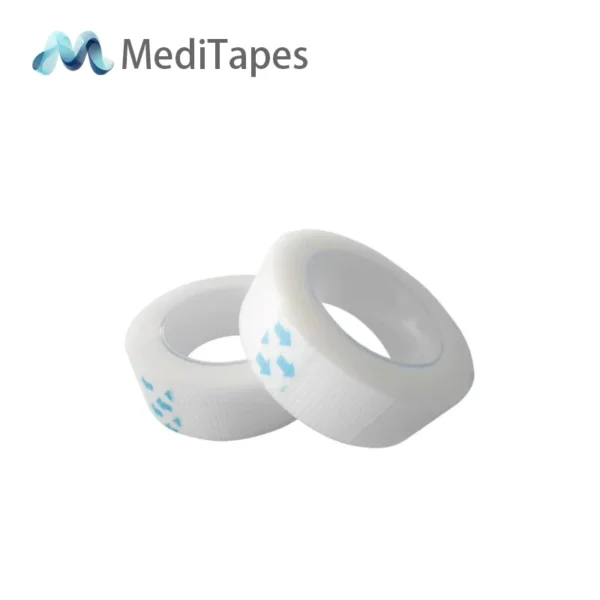
Cinta quirúrgica de PE de fácil rasgado: cinta médica de plástico perforada al por mayor
Maximice la eficiencia con nuestra Cinta Quirúrgica de PE de Fácil Rasgado, que cuenta con un diseño perforado para un rasgado rápido y bidireccional. Esta cinta quirúrgica de PE transparente no requiere tijeras, lo que la hace ideal para respuestas de emergencia. Suministramos cinta quirúrgica de PE al por mayor para un almacenamiento rentable.
Características principales:
– Rasgado fácil bidireccional.
– Opción de borde dentado disponible.
ISO 13485 e ISO 10993: Por qué debería importarle
Lo sé, hablar de las normas ISO es tan emocionante como ver cómo se seca la pintura. Pero si está importando consumibles médicos, esta es su red de seguridad.
Si está comprando a una fábrica que no está certificada en ISO 13485, está asumiendo un riesgo. La norma ISO 13485 no es solo una insignia; demuestra que el fabricante cuenta con un Sistema de Gestión de Calidad (SGC) específico para dispositivos médicos. Significa que tenemos trazabilidad. Si un lote de apósito impermeable para heridas falla, sabemos exactamente de qué rollo de materia prima provino, a qué temperatura se recubrió y quién lo empaquetó.
Luego está ISO 10993. Esto es para evaluación biológica.
- Citotoxicidad: ¿El adhesivo destruye las células cutáneas?
- Sensibilización: ¿Provoca alguna reacción alérgica?
- Irritación: ¿Causa enrojecimiento e irritación en la piel?
Cuando un nadador utiliza un apósito durante cuatro horas, la fricción se combina con el agua. Si dicho adhesivo no ha superado la norma ISO 10993-10 (pruebas de irritación y sensibilización cutánea), el paciente regresará con una erupción con la forma exacta del vendaje.
Desglose de datos: Apósitos de alta gama frente a apósitos económicos
He preparado esta tabla para mostrarle las especificaciones que debe solicitar a sus proveedores. No se limite a preguntar “¿es impermeable?”; solicite estas cifras.
| Característica | Apósito impermeable económico | Grado profesional (Estándar MediTapes) | Por qué es importante |
|---|---|---|---|
| Base del material | PVC o PE de baja calidad | Película de poliuretano (PU) ultrafina | El PU se mueve con la piel; el PVC es rígido y presenta fugas. |
| MVTR (Transpirabilidad) | < 500 g/m²/24h | > 1500 g/m²/24h | Un MVTR alto previene el blanqueamiento de la piel (maceración). |
| Tipo de adhesivo | Caucho a base de disolventes | Acrílico hipoalergénico de grado médico | El acrílico tolera mejor el agua y reduce las alergias. |
| Presión de entrada de agua | < 10 cm H2O | > 50 cm H2O | ¿Puede soportar la presión de sumergirse en una piscina? |
| Certificaciones | CE (a veces falso) | Certificado CE, ISO 13485, listado por la FDA | Cumplimiento legal y garantía de seguridad. |
Un escenario del mundo real (anonimizado)
Permítame hablarle de un cliente nuestro; llamémosle “Dave”. Dave dirige una empresa de distribución médica en Queensland, Australia. Una cultura de surf muy arraigada.
Dave compraba un producto económico apósito impermeable para heridas de un proveedor cualquiera en una plataforma B2B. El precio era excelente. Pero hacia diciembre (verano en el hemisferio sur), su teléfono empezó a echar humo. Las clínicas locales estaban furiosas. Los surfistas se quejaban de que los apósitos se desprendían a los 10 minutos de entrar en el agua.
El problema no era la película; la película era impermeable. El problema era el sellado de los bordes. El adhesivo era demasiado débil para mantener los bordes adheridos contra la fricción del agua. Una vez que el borde se levanta, el juego ha terminado.
Dave cambió a nuestro Serie de cintas quirúrgicas, buscando específicamente nuestras opciones de película de PU reforzada. Trabajamos con él para personalizar el gramaje del recubrimiento adhesivo, aumentándolo ligeramente para compensar el duro entorno de agua salada.
¿El resultado? Su tasa de quejas cayó a casi cero. De hecho, aumentó sus precios porque pudo comercializar el producto como “resistente al surf”.”
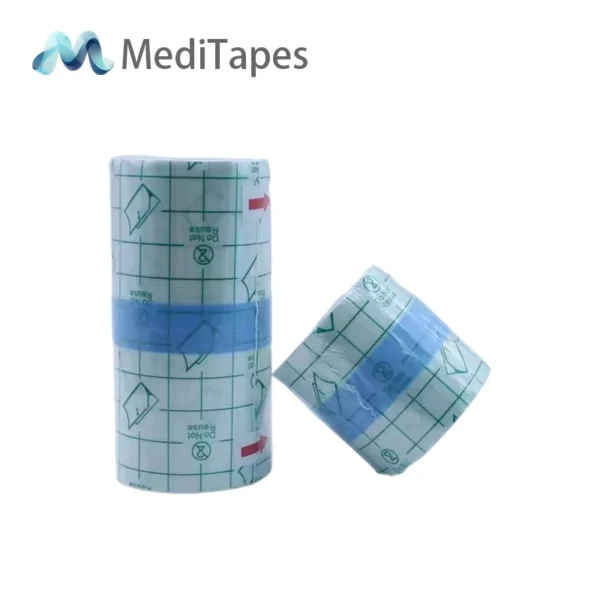
Rollo de película de poliuretano flexible para retención – Fijación impermeable de vía intravenosa y cánula
Garantice la estabilidad con nuestro Rollo de Retención de Película de PU Flexible, diseñado específicamente para la fijación impermeable de vías intravenosas y cánulas. La película de poliuretano ultrafina actúa como una barrera bacteriana, reduciendo los riesgos de infección. Su elasticidad permite a los pacientes un rango completo de movimiento, lo que lo convierte en un elemento básico para el cuidado postoperatorio y la seguridad del catéter.
Cómo realizamos las pruebas en MediTapes
En Cintas médicas, no nos limitamos a adivinar. Sometemos nuestros productos a pruebas extremas.
Contamos con una configuración de laboratorio que simula lo que yo llamo la prueba del “nadador activo”. Aplicamos el apósito impermeable para heridas a un sustrato flexible que se estira y se contrae (como una rodilla humana). Luego, lo sumergimos en un tanque que imita la composición química de una piscina clorada.
Realizamos ciclos del movimiento de estiramiento durante horas bajo el agua.
Si el borde se levanta más de 1 mm, el lote se rechaza. Es riguroso, pero prefiero desechar un rollo de cinta en la fábrica antes que permitir que usted pierda un cliente.
Opinión controvertida: los apósitos de película transparente no siempre son la mejor opción
Aquí hay algo que la mayoría de los fabricantes no le dirán. A veces, un apósito de película transparente (el estándar apósito impermeable para heridas) no es la elección adecuada para los deportes acuáticos.
¿Por qué? Porque son extremadamente delgados. Si el usuario realiza una actividad de alto impacto, como esquí acuático o wakeboard, el impacto físico del agua puede romper la película.
En esos casos, a veces recomendamos una tela no tejida spunlace impermeable con un recubrimiento grueso. Es poco estética, sin duda. No es invisible. Pero es sumamente resistente. Como distribuidor, debería ofrecer ambas opciones. No asuma que una sola referencia (SKU) sirve para todos los nadadores.
Consejos de aplicación para compartir con sus clientes
Si vende a farmacias o clínicas, bríndeles estos consejos para que se los transmitan al usuario final. Esto mejora la percepción de su producto.
- Limpiar y SECAR: Las toallitas con alcohol son lo mejor. Cualquier resto de aceite o protector solar en la piel anulará el adhesivo de inmediato.
- Sin tensión: No estire el apósito al aplicarlo. Esto provoca un efecto de cizallamiento, lo que hará que se contraiga y se desprenda más tarde.
- Caliéntelo: Indique a los usuarios que presionen el apósito con la mano durante 30 segundos tras la aplicación. Los adhesivos sensibles a la presión necesitan calor y presión para activarse y adherirse a los poros de la piel.
- Esperar: Aplíquelo al menos 20 minutos antes de antes de entrar al agua. Si se lo coloca y salta de inmediato a la piscina, se caerá. Garantizado.
Lista de verificación de suministro para compradores B2B
Si busca reponer su inventario con un apósito impermeable para heridas que sea de calidad, esto es lo que necesita verificar:
- Solicite la MSDS (Hoja de Datos de Seguridad de Materiales): Compruebe la composición del adhesivo.
- Solicite el informe MVTR: Si no pueden proporcionarle una cifra en g/m²/24h, no conocen su producto.
- Compruebe el certificado ISO: Verifique el número de registro en línea. Las falsificaciones están por todas partes.
- Prueba de muestras: Obtenga muestras. Péguelas en su brazo. Dúchese. Vaya a nadar. Sea su propio conejillo de indias.
Llevamos años ayudando a los compradores a navegar por este proceso. Conocemos la dificultad que supone una calidad inconsistente. Si está cansado de adivinar, siempre puede consultar nuestra gama o simplemente escribirnos unas líneas para conversar sobre las especificaciones.
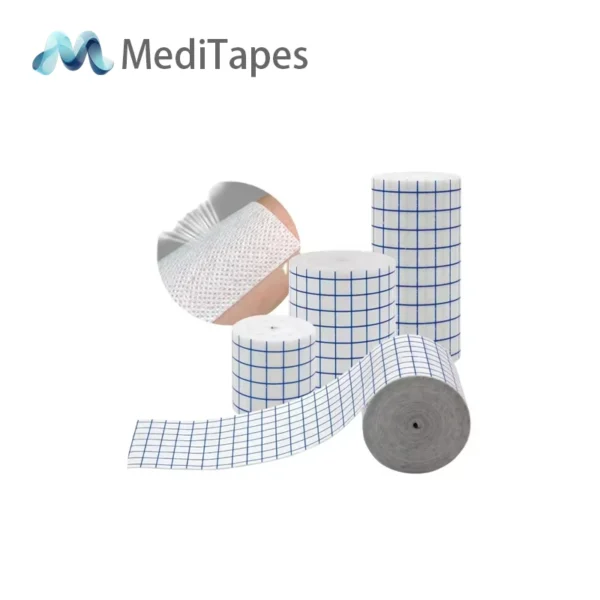
Rollo de fijación de tela no tejida suave para catéteres y tubos – Sin látex
Garantice la seguridad del paciente con nuestro rollo de fijación de tejido no tejido sin látex. Diseñado específicamente para asegurar catéteres, tubos e instrumentos, este rollo de apósito de tejido no tejido evita el desplazamiento accidental. El material suave y poroso reduce el traumatismo cutáneo al retirarlo, lo que lo hace ideal para entornos de cuidados pediátricos y geriátricos.
El futuro de los apósitos impermeables
Actualmente observamos que las tendencias se desplazan hacia los adhesivos a base de silicona. Son más suaves que los acrílicos pero, tradicionalmente, tienen una menor fuerza de sujeción (no son ideales para nadar). Sin embargo, están llegando al mercado nuevas mezclas de silicona de “alta adherencia”. Estamos experimentando con ellas en MediTapes en este momento.
Además, los “apósitos de isla” con una almohadilla superabsorbente rodeada por un borde impermeable están ganando terreno. Gestionan el exudado (fluido de la herida) mejor que una simple película.
Reflexiones finales
Abastecerse de los suministros médicos adecuados es estresante. Tiene presupuestos que cumplir y responsables de cumplimiento vigilándole de cerca. Pero cuando se trata de apósito impermeable para heridas productos para deportes de verano, no se pueden escatimar recursos. El fallo es demasiado visible.
Una cinta que falla es un producto que falla.
Céntrese en la ciencia: MVTR, fuerza de adhesión y certificación ISO. Si un proveedor intenta deslumbrarle con un embalaje elegante pero no puede explicar su proceso de control de calidad, huya.
Si necesita un socio que entienda el aspecto técnico de este negocio y hable su idioma, Cintas médicas está aquí. Podemos gestionar pedidos personalizados, requisitos específicos de adhesivos y envíos a granel a nivel mundial.
Preguntas frecuentes: Consultas habituales de los compradores
P1: ¿Se puede utilizar su apósito impermeable para heridas en incisiones quirúrgicas profundas mientras se nada?
R: Generalmente sí, siempre que la incisión esté cerrada. Sin embargo, para heridas quirúrgicas profundas, recomendamos nuestros apósitos impermeables estériles con borde, que proporcionan una barrera bacteriana. Consulte siempre las instrucciones postoperatorias del cirujano. Nuestros apósitos cuentan con la certificación ISO 13485 para este nivel de atención.
P2: ¿Cuál es la vida útil de sus apósitos impermeables?
R: Nuestra vida útil estándar es de 3 a 5 años, dependiendo del material específico y del método de esterilización (generalmente óxido de etileno). Nos aseguramos de que, al realizar pedidos al por mayor, reciba existencias frescas con la máxima vida útil restante para su gestión de inventarios.
P3: ¿Ofrecen etiquetado privado (OEM) para apósitos impermeables para heridas?
R: Absolutamente. Una gran parte de nuestro negocio es la fabricación para otras marcas. Podemos imprimir su logotipo en el revestimiento protector, personalizar la caja de embalaje y garantizar que el producto cumpla con los estándares regulatorios de su mercado local. Contáctenos en info@meditapes.com para obtener un presupuesto.
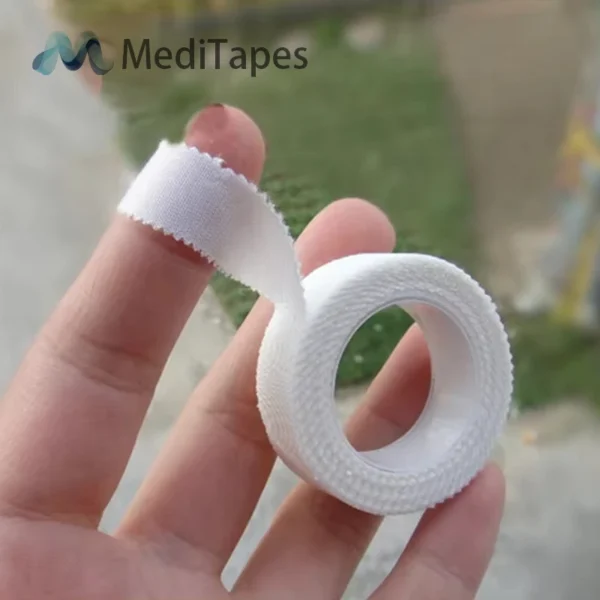
Cinta adhesiva quirúrgica de seda versátil: resistente al agua y adaptable para diversas aplicaciones médicas
Experimente la versatilidad de nuestra cinta adhesiva quirúrgica de seda, diseñada para satisfacer las rigurosas exigencias de la práctica médica moderna. Esta cinta quirúrgica de seda altamente adaptable se ajusta perfectamente a los contornos corporales, proporcionando una fijación segura incluso en áreas difíciles. Sus propiedades resistentes al agua garantizan que los apósitos permanezcan intactos durante la ducha o una ligera exposición a la humedad, mejorando la independencia y comodidad del paciente. Ideal para una amplia gama de aplicaciones, desde la fijación de apósitos voluminosos hasta el delicado cuidado pediátrico, nuestra cinta de seda médica ofrece un rendimiento constante y confiable.
¿Está listo para actualizar su inventario de suministros médicos?
No permita que productos de calidad inferior dañen su reputación este verano. Asegúrese de que sus clientes cuenten con la protección que necesitan con calidad certificada por la norma ISO.
- Obtenga un kit de muestra gratuito: Pruebe la adherencia usted mismo.
- Solicite un presupuesto al por mayor: Precios directos de fábrica.
- Consulte a un experto: Podemos asesorarle sobre los mejores materiales para su mercado específico.