Finding a good factory shouldn’t feel like gambling. But let’s be totally honest here—when you are searching for a nasal strips manufacturer to supply your brand, the market is full of middlemen, brokers, and sub-par factories who overpromise and underdeliver.
If you get a bad batch of snoring strips, it’s a disaster. Your customers put these on their noses before bed. If the glue is bad, the strip pops off at 2 AM and they wake up snoring. If the glue is too strong or uses cheap chemicals, they wake up with red, torn skin. Either way, your Amazon reviews tank, your pharmacy buyers get angry, and your business takes a massive hit.
I’ve been in the medical tape and adhesive industry for years, and I’ve seen buyers make the exact same mistakes over and over. They look at a shiny Alibaba page, see a dirt-cheap price, and wire the money. Then they wonder why half the shipment is defective.
Today, we are going to break down exactly how to evaluate a nasal strips manufacturer, how to check their technical capabilities, and what red flags to watch out for. No fluff, just the real details you need to source safely.
Why Finding the Right Nasal Strips Manufacturer is Make or Break
The demand for these products is massive. According to data from the American Academy of Sleep Medicine, roughly 40% of adult men and 24% of adult women are habitual snorers. People are desperate for a good night’s sleep. The global anti-snoring device market is projected to cross $3 billion soon.
But here is the controversial truth: Most of the “factories” you find online are not actual factories.
A huge chunk of the suppliers advertising wholesale nasal dilators are just trading companies. They sit in a nice office, take your order, and then outsource it to the cheapest B2B nasal tape factory they can find that month. You have zero control over the quality, and if something goes wrong, the trader just blames the factory.
You need a direct nasal strips manufacturer. Someone who actually buys the raw non-woven fabric, applies the medical hot-melt adhesive, cuts the PET bands, and runs the rotary die-cutting machines.
The Anatomy of a High-Quality Snoring Strip
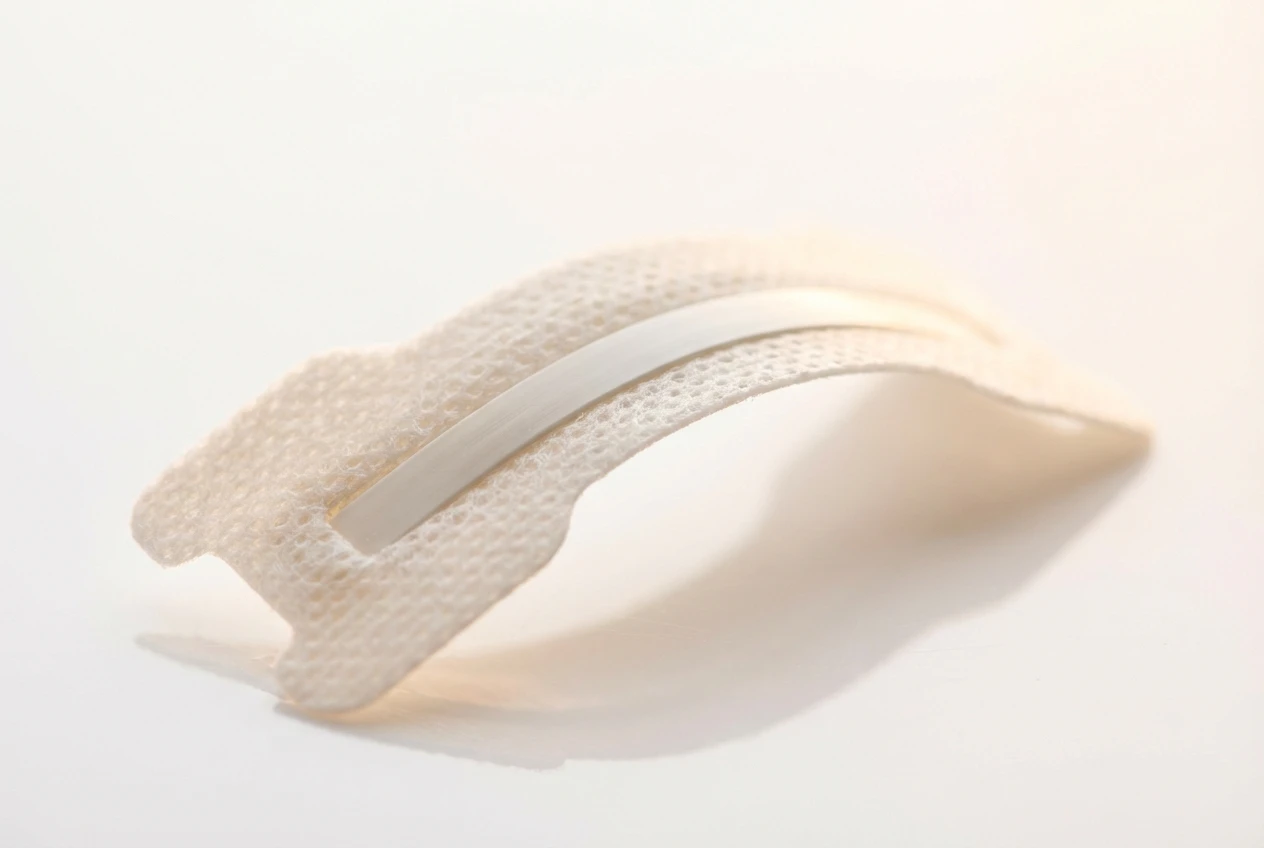
To audit a nasal strips manufacturer, you first need to understand the product. It looks like a simple piece of tape, but structurally, it’s actually quite complex. If a factory doesn’t understand these three layers, run away.
1. The Surface Layer (Backing Material)
This is what you see and touch. A reliable snoring strips supplier will usually offer two main options:
- PE (Polyethylene) Film: This is the skin-colored, porous plastic tape. It’s cheap, waterproof, and very common. But if the pores aren’t punched correctly, the skin can’t breathe.
- Non-Woven Fabric: This is softer, more breathable, and generally more comfortable for sensitive skin. It costs slightly more but usually gets better consumer reviews.
2. The Spring Band (The Engine)
Inside the strip, there are one or two stiff bands that act like a spring. This is almost always made of PET (Polyethylene terephthalate). The whole point of the product is that this PET band wants to straighten out, pulling the nostrils open.
If your nasal strips manufacturer uses a PET band that is too thick, the tension force will overpower the adhesive, and the strip will pop off the nose. If it’s too thin, it won’t open the airway.
3. The Adhesive Layer (The Dealbreaker)
This is where 90% of failures happen. The adhesive must be a medical-grade pressure-sensitive adhesive. Usually, a good nasal strips manufacturer uses a hypoallergenic medical hot-melt glue or a specialized acrylic adhesive.
If they use industrial glue to save pennies, your customers will get contact dermatitis. Definately not what you want.
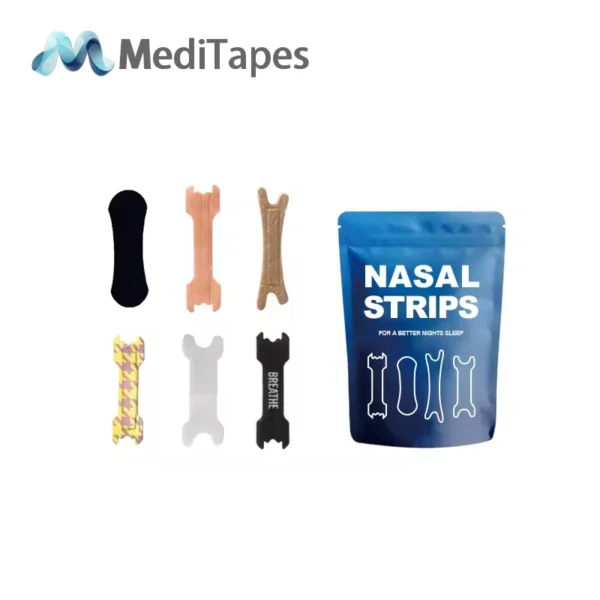
Anti-Schnarch-Nasenpflaster im Großhandel für bessere Atemerleichterung
Atmen Sie sofort besser mit unseren Premium-Anti-Schnarch-Nasenpflastern. Diese für maximalen Luftstrom konzipierten Pflaster bieten eine medikamentenfreie Linderung bei Verstopfung. Ideal für Apotheken und Schlafkliniken, die eine zuverlässige Großpackung an Nasenpflastern suchen. Anpassbare Größen verfügbar.
The Math Behind Quality Control
You don’t need an engineering degree, but you do need to know how a proper nasal strips manufacturer tests their products. When you ask a factory about their QA process, listen to see if they mention these tests.
The Peel Adhesion Test
This measures how hard it is to pull the tape off. A legit factory will use a tensile testing machine to do a 180-degree peel test.
The basic text formula they use is:
Peel Strength (N/cm) = Total Force to remove tape (N) / Width of the tape (cm)
For a face-contact product like a nasal strip, the peel strength needs to be in a very specific “Goldilocks” zone. Usually around 1.5 to 2.5 N/cm. If your nasal strips manufacturer says their peel strength is 5.0 N/cm, they are making duct tape, not a skin product.
The Spring Tension Formula
The stiffness of that plastic PET band follows basic physics (similar to Hooke’s Law for springs).
Tension Force = Material Stiffness Factor * Bending Angle
A competent nasal strips manufacturer constantly balances the Tension Force against the Peel Strength.
Faustregel: Peel Strength > Tension Force. If the tension force is higher, the strip falls off. Simple as that.
Calculating Your True Defect Cost
Don’t just look at the unit price. A cheap nasal strips manufacturer might cost you way more in the long run. Use this formula to see your real costs:
True Landed Cost = (Total Order Price + Shipping) / (Total Units – Defective Units)
If you buy 100,000 pieces at $0.05 each, but 10% are defective or fall apart in the packaging, your actual cost per usable unit just went up, not to mention the cost of customer returns.
Red Flags to Watch For With Any Nasal Strips Manufacturer
When I talk to new B2B buyers, they usually ask me how to spot a bad supplier. Here are the things that tell me a nasal strips manufacturer is either inexperienced or a broker in disguise.
- They say “Yes” to everything instantly.
Can you make the glue twice as strong? Ja. Can you do it in 3 days? Ja. Can you cut the price in half? Ja.
A real B2B nasal tape factory will push back. They will tell you that doubling the glue strength will cause skin tearing, and they won’t do it. Real manufacturers respect chemistry. - No Cleanroom facilities.
We are talking about a product that goes on the human face, near mucous membranes. A reliable snoring strips supplier must have at least a Class 100,000 dust-free purification workshop. If their background photos show a dirty warehouse with open windows, move on. - Vague on Raw Materials.
Ask your nasal strips manufacturer where they buy their adhesive. If they say “from the market” instead of giving you a specific chemical supplier or showing a Certificate of Analysis (CoA), they are buying whatever is cheapest that week.
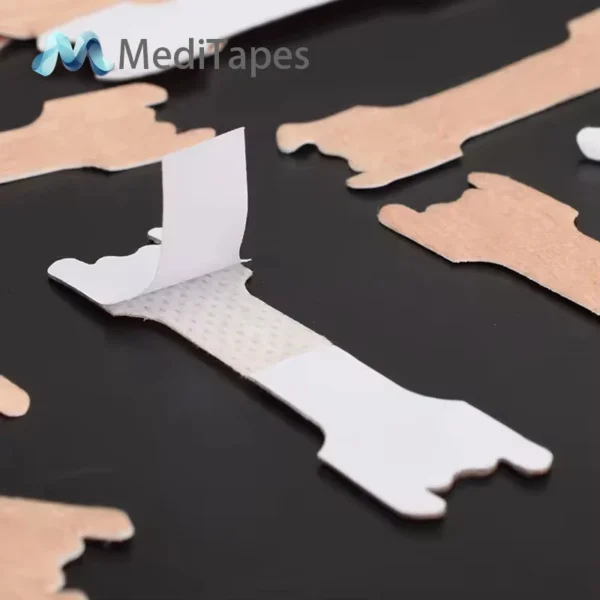
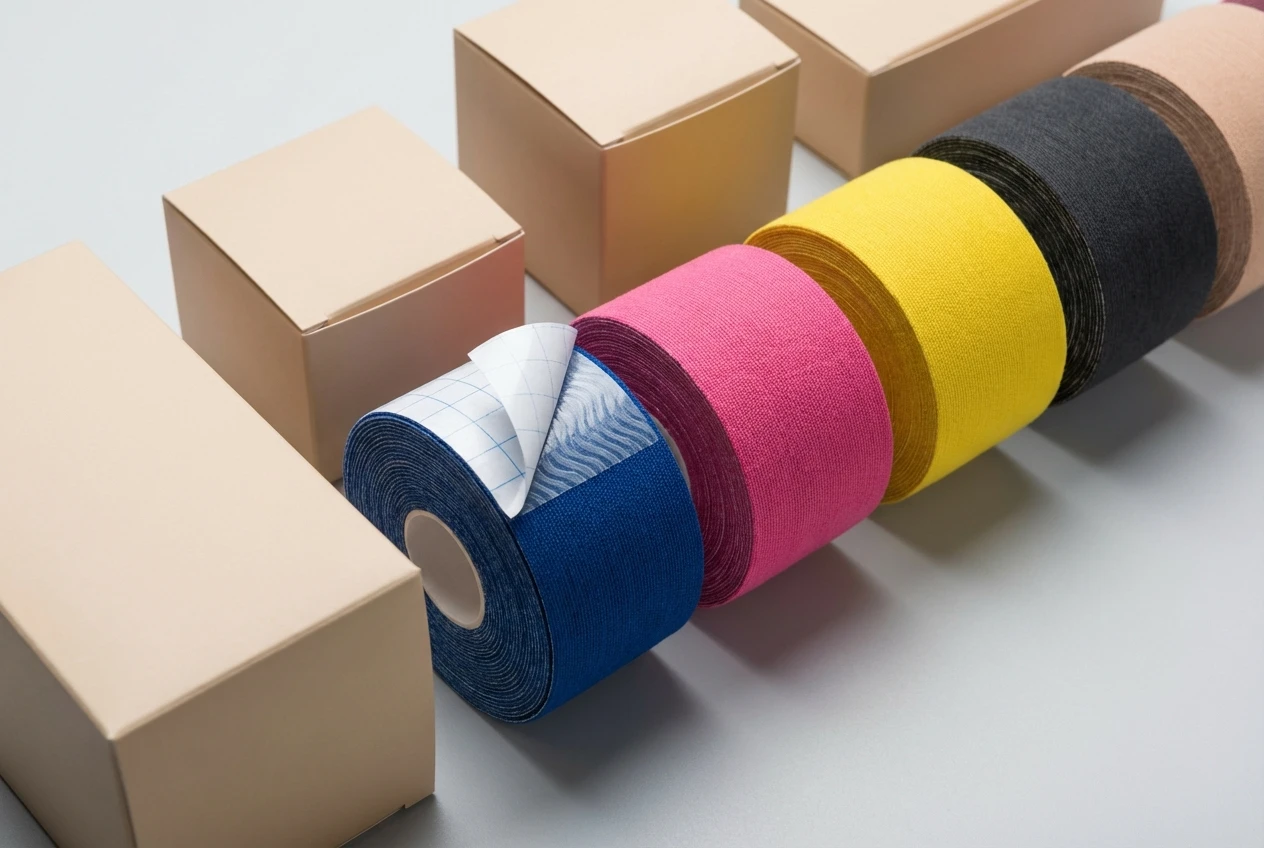
Individuelle Private-Label-Nasenpflaster: Hautfarben, Blau, Schwarz
Starten Sie Ihre eigene Marke mit unseren Private-Label-Nasenpflastern. Diese in den Farben Haut, Blau und Schwarz erhältlichen Streifen bieten eine effektive Linderung von Verstopfungen. Wir sind auf OEM-Fertigung spezialisiert und garantieren hochwertigen Klebstoff sowie maßgeschneiderte Verpackungen, um Ihre spezifischen Marktanforderungen zu erfüllen.
A Real Sourcing Case Study (Anonymized)
Let me share a quick story. A mid-sized pharmacy chain in Europe wanted to launch their own private label snoring strips. They found a nasal strips manufacturer on a popular B2B platform that quoted them a price 20% lower than anyone else. They ordered 500,000 boxes.
First red flag: the delivery took 60 days instead of the promised 25.
Second red flag: when the goods arrived, they noticed the backing paper on the strips was bubbling.
What happened? The so-called nasal strips manufacturer was actually a packaging middleman. They outsourced the job to a factory that normally makes shoe insoles. The factory used cheap, non-medical acrylic glue and didn’t cure it properly. The chemicals reacted with the release paper during the hot ocean freight transit. The entire batch had to be scrapped. Hundreds of thousands of dollars wasted.
Eventually, they came to us at MediTapes. We walked them through our cleanroom process, showed them our medical hot-melt adhesive specs, and produced a trial run. The defect rate dropped to near zero. It’s proof that paying an extra fraction of a cent per unit to a real, reliable snoring strips supplier saves you a fortune in disaster management.
Certifications That Actually Matter (And What’s BS)
The medical tape industry loves paper. Every nasal strips manufacturer will throw a dozen certificates at you. But let’s separate the real from the noise.
- ISO 13485: This is the big one. It’s the quality management system standard for medical devices. If a nasal strips manufacturer has a legit, verifiable ISO 13485 cert, it means they have actual traceability. If a batch goes wrong, they can trace it back to the exact barrel of glue used.
- CE Mark / MDR: Necessary if you are selling in Europe. But make sure the declaration of conformity covers the specific nasal strip product, not just generic tape.
- FDA Registration: Here is my controversial take. A basic FDA facility registration means very little regarding product quality. It literally just means the nasal strips manufacturer paid the annual fee to be in the database. What you actually want to see are ISO 10993 Biocompatibility Test Reports. This proves the tape won’t cause skin irritation, sensitization, or toxicity. Don’t let a factory dazzle you with just an FDA registration number.
- Material MSDS: Material Safety Data Sheets for the adhesive. Every reliable snoring strips supplier should have this readily available.
Understanding Production Capacity & Lead Times
When dealing with wholesale nasal dilators, volume is the name of the game. A good B2B nasal tape factory uses rotary die-cutting machines, not flatbed punchers.
Rotary machines work like a printing press, continuously cutting the strips at high speeds. This allows a proper nasal strips manufacturer to produce millions of strips a week.
If a factory tells you their lead time for 100,000 pieces is 45 days, they are either extremely backlogged, or they are using old, slow flatbed equipment. A standard lead time for a reliable nasal strips manufacturer should look like this:
- Sampling: 5 to 7 days.
- Custom Packaging Printing: 10 to 15 days.
- Mass Production (100k – 500k pcs): 15 to 25 days.
Always ask to see a video of their machines running. It’s a great way to verify you are dealing with a real nasal strips manufacturer.
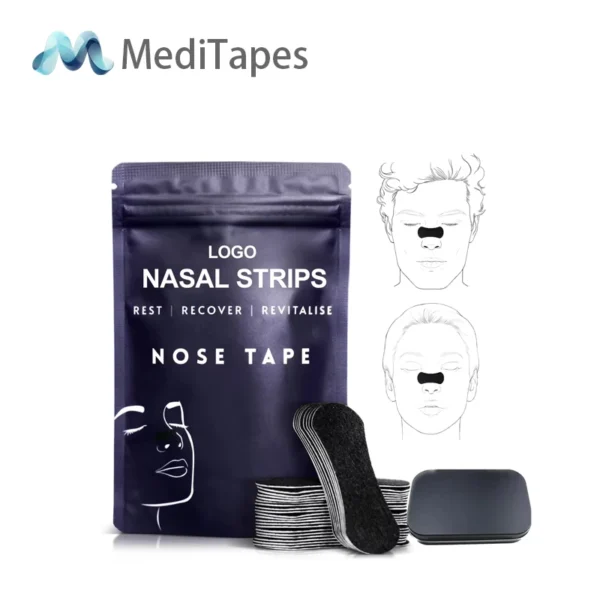
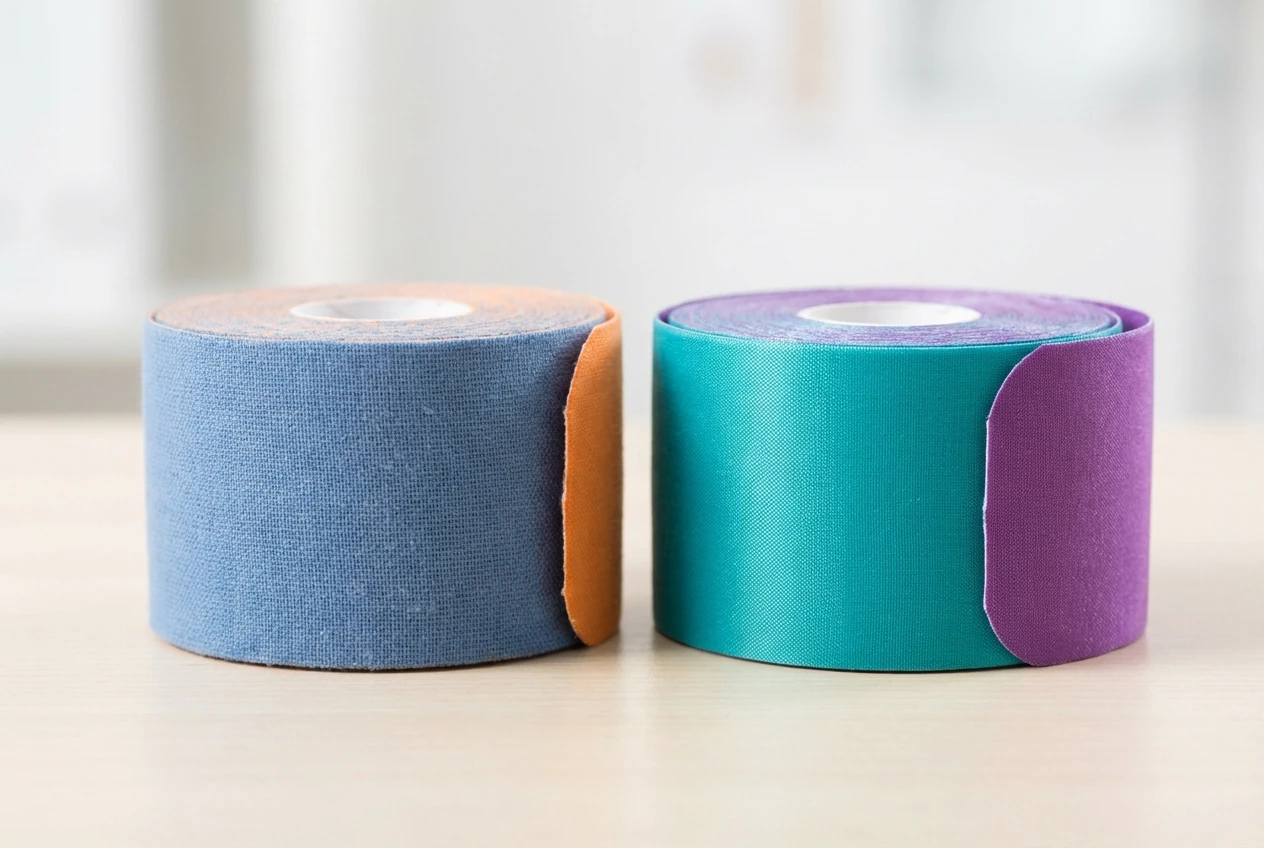
Sport-Nasenpflaster für Athleten – verbesserte Luftzufuhr & Leistung
Steigern Sie die sportliche Leistungsfähigkeit mit unseren speziellen Sport-Nasenpflastern. Entwickelt, um die Nasengänge zu weiten, erhöhen sie die Sauerstoffaufnahme während des Trainings. Ideal für Sportmarken, die langlebige, schweißresistente Pflaster suchen. Erhältlich in verschiedenen Größen (55 mm/66 mm) für eine optimale Passform.
Step-by-Step Supplier Audit Checklist
To make your life easier, I’ve put together a quick checklist you can use when talking to a new nasal strips manufacturer. Copy this and keep it handy.
| Audit Area | What to Ask the Nasal Strips Manufacturer | Good Answer | Bad Answer / Red Flag |
|---|---|---|---|
| Facility | Do you have a certified cleanroom? | Yes, Class 100k (with video proof) | No, or “we keep it very clean” |
| Machinery | What type of die-cutting do you use? | Rotary die-cutting | Flatbed (too slow for high volume) |
| Klebstoff | Can I see the biocompatibility report? | Provides ISO 10993 test results | “Our glue is standard market glue” |
| Samples | Can you send samples before bulk order? | Absolutely, just cover the freight | We need a huge deposit first |
| Business | Are you a factory or trading company? | Direct factory, here is our business license | Evasive, or license shows “Trading” |
Packaging and Customization Options
Another sign of a solid nasal strips manufacturer is their ability to accomodate your branding. You aren’t just buying the strip; you are buying the retail presentation.
Wholesale nasal dilators are typically packaged in individual sterile-looking pouches. These pouches are either made of paper-poly blends or aluminum foil. Foil offers a much better moisture barrier, ensuring the adhesive doesn’t dry out over a 3-year shelf life.
A seasoned nasal strips manufacturer will also offer custom printing directly on the release paper (the paper you peel off the back of the strip) and custom shapes. While the standard “butterfly” shape works for 90% of people, some brands want wider bands or different color options (like clear strips for daytime use, or tan strips for sleeping). If the supplier gets confused when you ask for a transparent PE backing instead of non-woven, they aren’t a true B2B nasal tape factory.
Don’t Forget the Adhesive Weight
Here is a super technical tip that will make you look like a pro when negotiating with a nasal strips manufacturer: Ask them about their coating weight.
Adhesive coating weight is usually measured in grams per square meter (gsm).
For skin tapes, a standard coating weight might be around 30 to 45 gsm. If a factory is trying to cut costs, they will drop the coating weight to 20 gsm. The tape will feel sticky at first, but it won’t hold the tension of the PET band all night.
Tell your nasal strips manufacturer: “I need a consistent coating weight that guarantees a 12-hour hold without leaving residue.” They will immediately know you aren’t an amateur buyer.
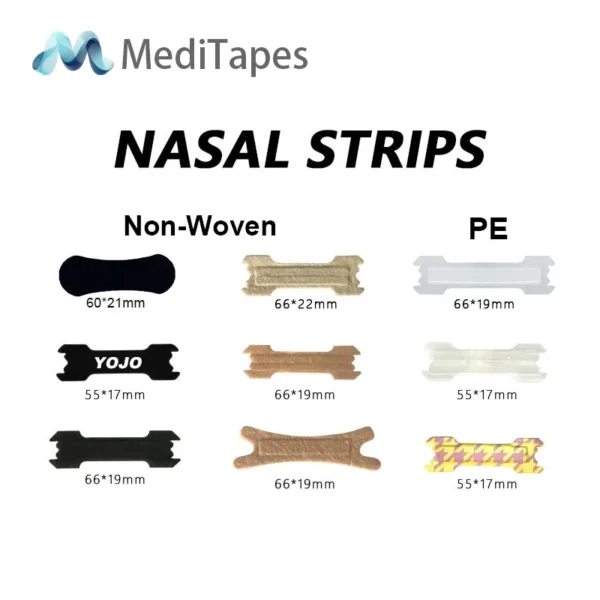
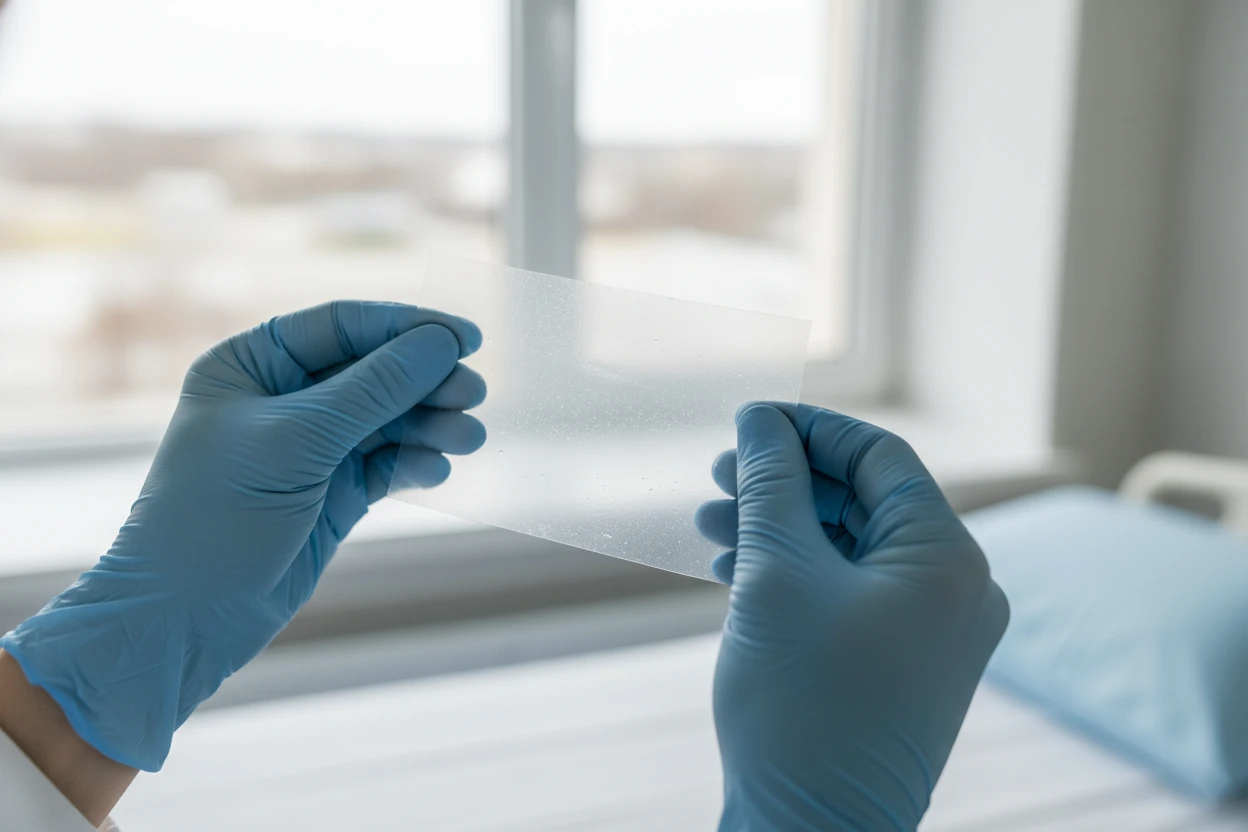
Medizinische Nasenpflaster in großen Mengen – medikamentenfreie Linderung bei Verstopfung
Sichern Sie sich eine sichere, medikamentenfreie Linderung von Verstopfungen mit unseren Nasenpflastern in medizinischer Qualität. Diese hypoallergenen Streifen heben die Nasenwege sanft an, um Schnarchen und Erkältungssymptome zu lindern. Eine vertrauenswürdige Wahl für medizinische Anbieter, die gleichbleibende Qualität und flexible Großverpackungsoptionen benötigen.
FAQs on Working with a Nasal Strips Manufacturer
Frage 1: Was ist die übliche Mindestbestellmenge (MOQ) für einen Hersteller von kundenspezifischen Nasenpflastern?
Dies hängt vom Grad der Individualisierung ab. Wenn Sie lediglich Standard-Nasendilatatoren für den Großhandel in Großpackungen wünschen, akzeptiert ein zuverlässiger Lieferant von Schnarchpflastern möglicherweise eine Mindestbestellmenge (MOQ) von lediglich 10.000 Stück. Wenn Sie jedoch Ihr Logo auf die einzelnen Beutel und maßgeschneiderten Verkaufsverpackungen drucken lassen möchten, steigt die Mindestbestellmenge in der Regel auf 50.000 oder 100.000 Stück an, um die Druckvorkosten zu decken.
Q2: Kann ein Hersteller von Nasenpflastern die Form und die Klebekraft individuell anpassen?
Ja, absolut. Eine spezialisierte B2B-Fabrik für Nasenpflaster verfügt über eigene Stanzwerkzeuge und kann individuelle Formen für verschiedene Nasengrößen (Kinder, Erwachsene, extra-breit) fertigen. Hinsichtlich des Klebstoffs kann die Rezeptur oder das Auftragsgewicht angepasst werden, um die Haftkraft zu erhöhen; man wird Ihnen jedoch davon abraten, die Klebekraft so stark zu wählen, dass Hautschäden entstehen könnten.
F3: Wie lange dauert es in der Regel, bis eine B2B-Fabrik für Nasenpflaster eine Großbestellung produziert?
Bei einer Erstbestellung nach Kundenwunsch ist mit etwa 25 bis 30 Tagen zu rechnen, da Zeit für den Druck individueller Verpackungen und die Erstellung neuer Stanzformen benötigt wird. Bei Folgebestellungen kann ein zuverlässiger Hersteller von Nasenpflastern in der Regel 100.000 bis 500.000 Stück in etwa 15 bis 20 Tagen fertigstellen.
Bereit, Ihre Lieferkette zu optimieren?
Look, B2B purchasing is stressful enough without having to micro-manage a bad factory. You need a nasal strips manufacturer that acts like a partner, not just a vendor who disappears after the wire transfer clears.
You need a team that understands peel adhesion formulas, runs certified cleanrooms, and actually cares if your end-users get a good night’s sleep. If you are tired of dealing with high defect rates, late shipments, or brokers who lie about their capabilities, it’s time to make a change.
Bei MediTapes, we don’t play games with quality. We are a direct, reliable snoring strips supplier with the manufacturing firepower to scale your brand. Want to see our nasal strip products for yourself?
Stop gambling with your brand’s reputation. Let’s talk about your specs, run some samples, and get your supply chain locked in. Head over to our Kontaktieren Sie uns page today, request a quote, and let’s build something great together.