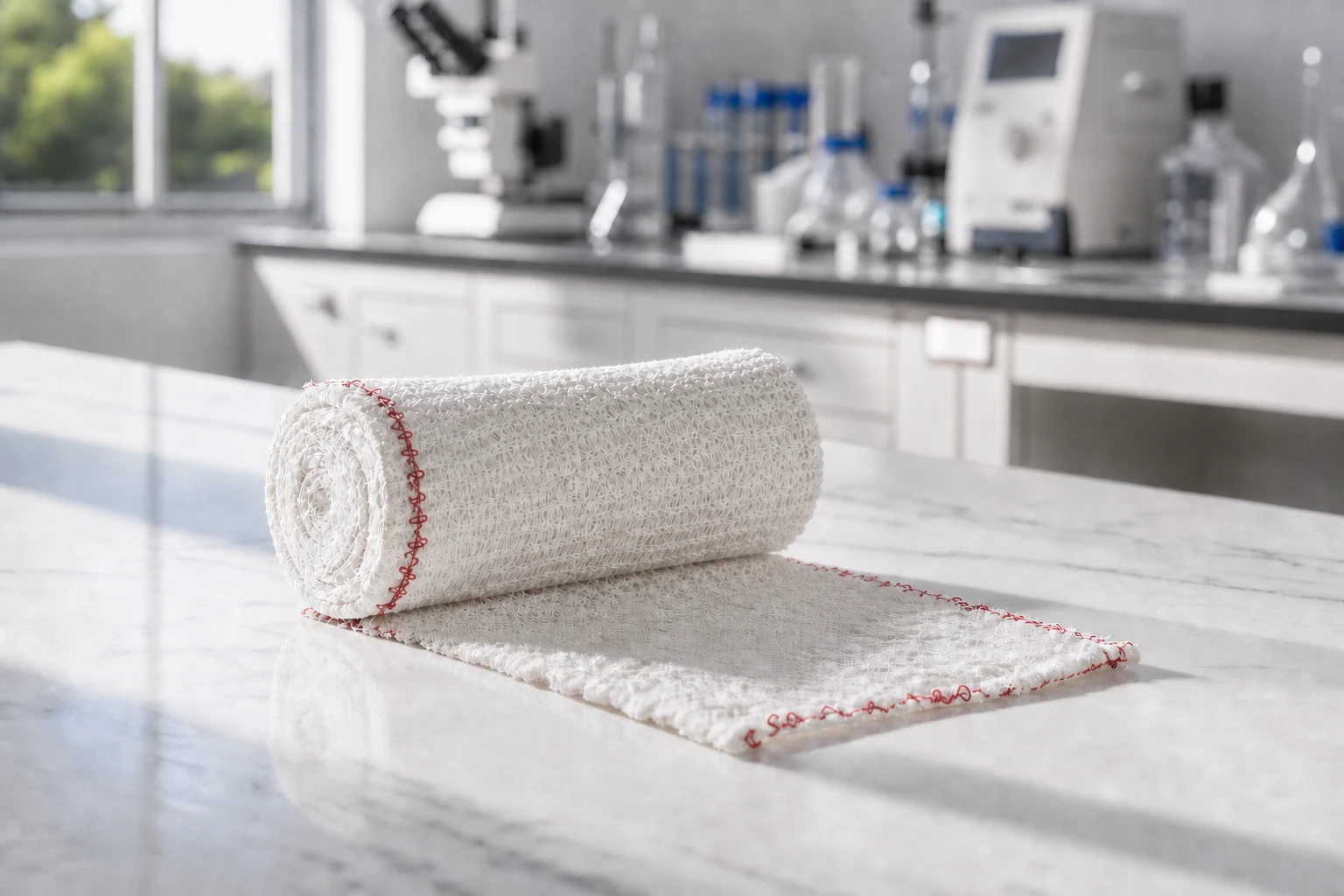
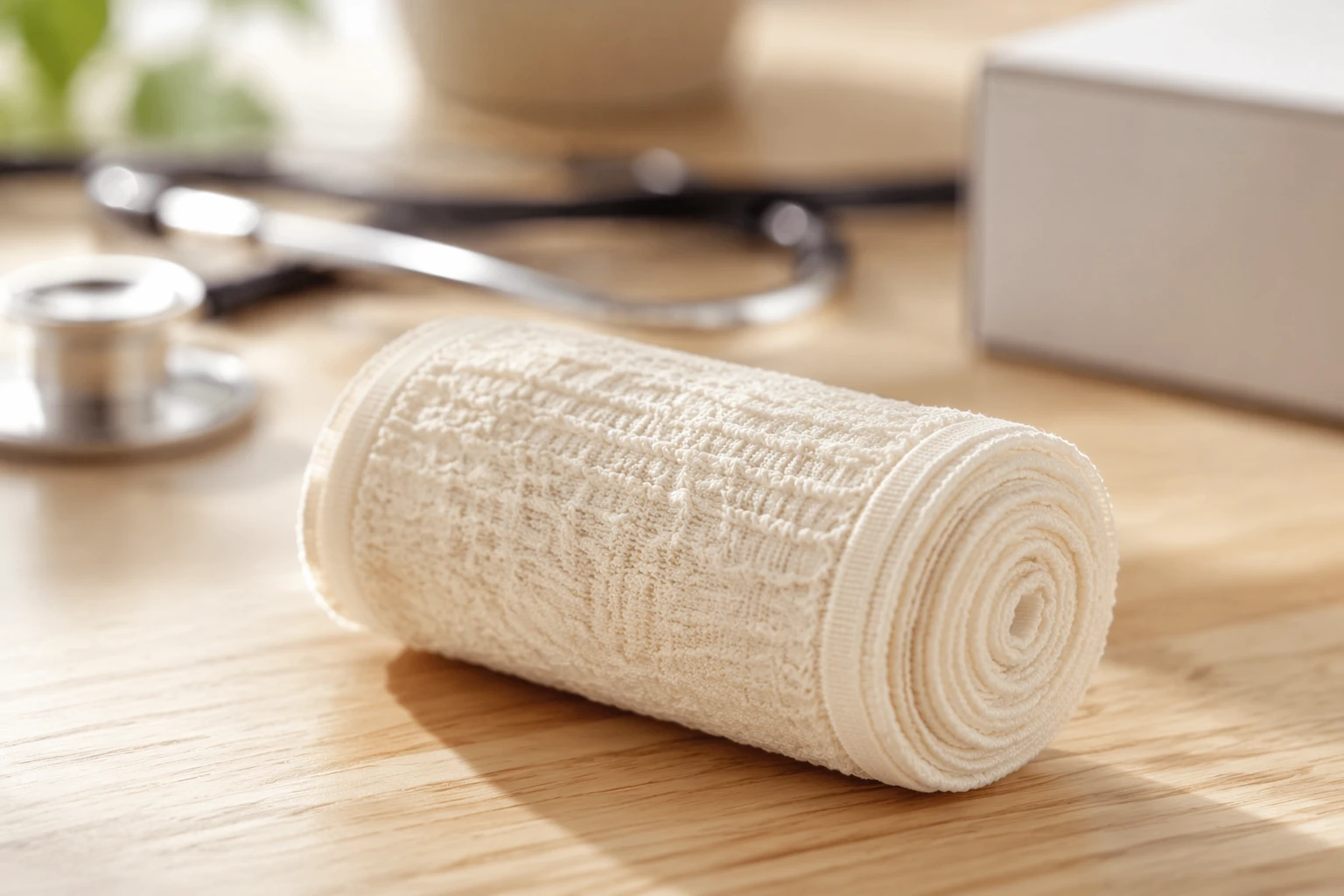
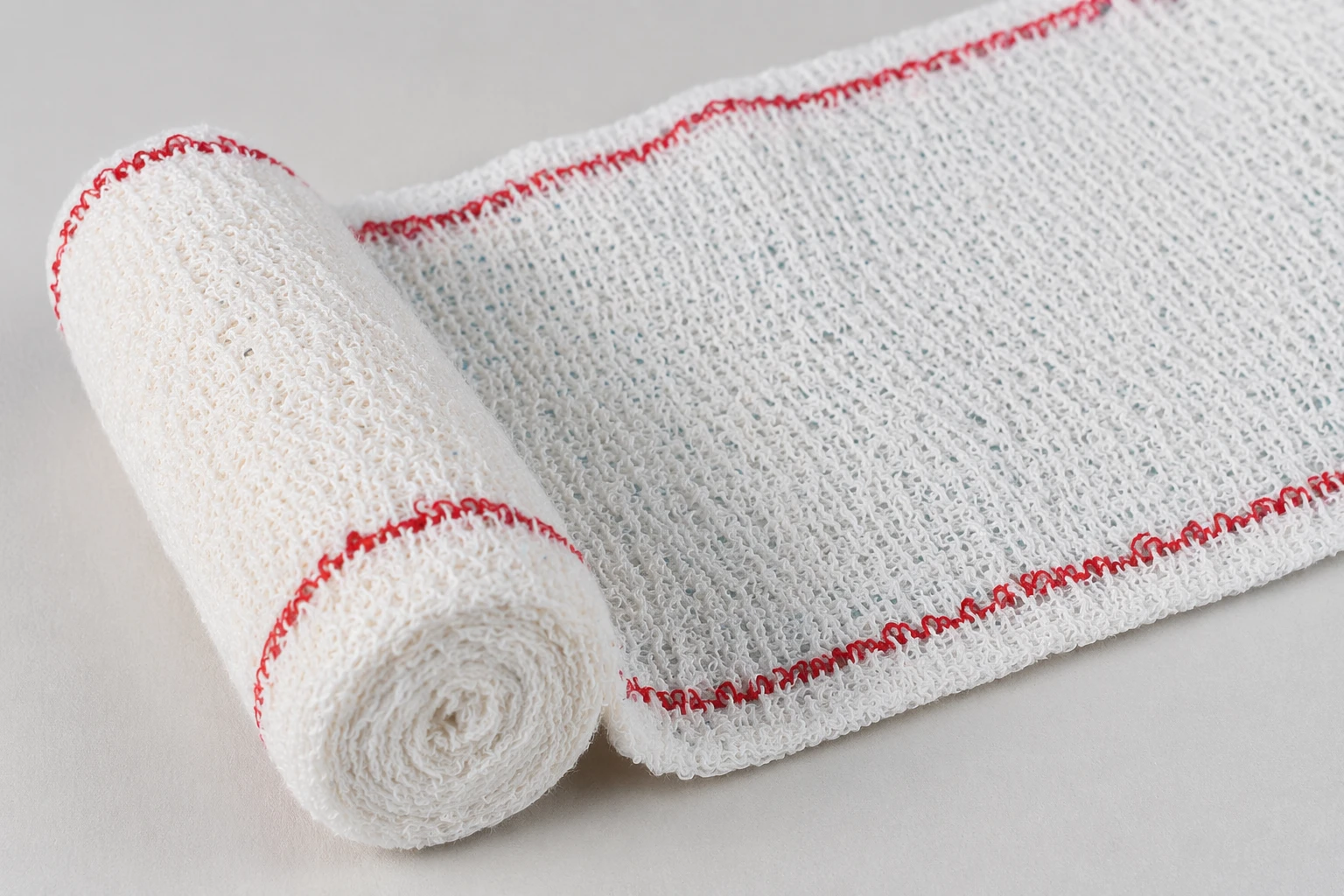
Evaluating the quality of medical textiles isn’t just about looking at a product datasheet and checking off a box. If you work in procurement or quality assurance for a medical distributor, you already know the stakes. A single batch of poor-performing bandages can lead to severe clinical failures, hospital complaints, and costly product returns.
When it comes to high-compression applications, the heavy duty spandex elastic crepe bandage is the gold standard. But how do you actually prove that the batch your supplier just shipped has the mechanical integrity to hold up under real-world clinical pressure? You cannot just pull it with your hands and say, “Yeah, looks tight enough.” You need systematic testing.
This guide walks you through the exact technical protocols to evaluate the tensile strength, stretch ratio, and elastic recovery of a premium heavy duty spandex elastic crepe bandage. We will look at real industry standards, dive into practical lab formulas, and show you how to spot a bad shipment before it ever reaches a doctor’s hands.
Why the Heavy Duty Spandex Elastic Crepe Bandage Matters in Clinical Settings
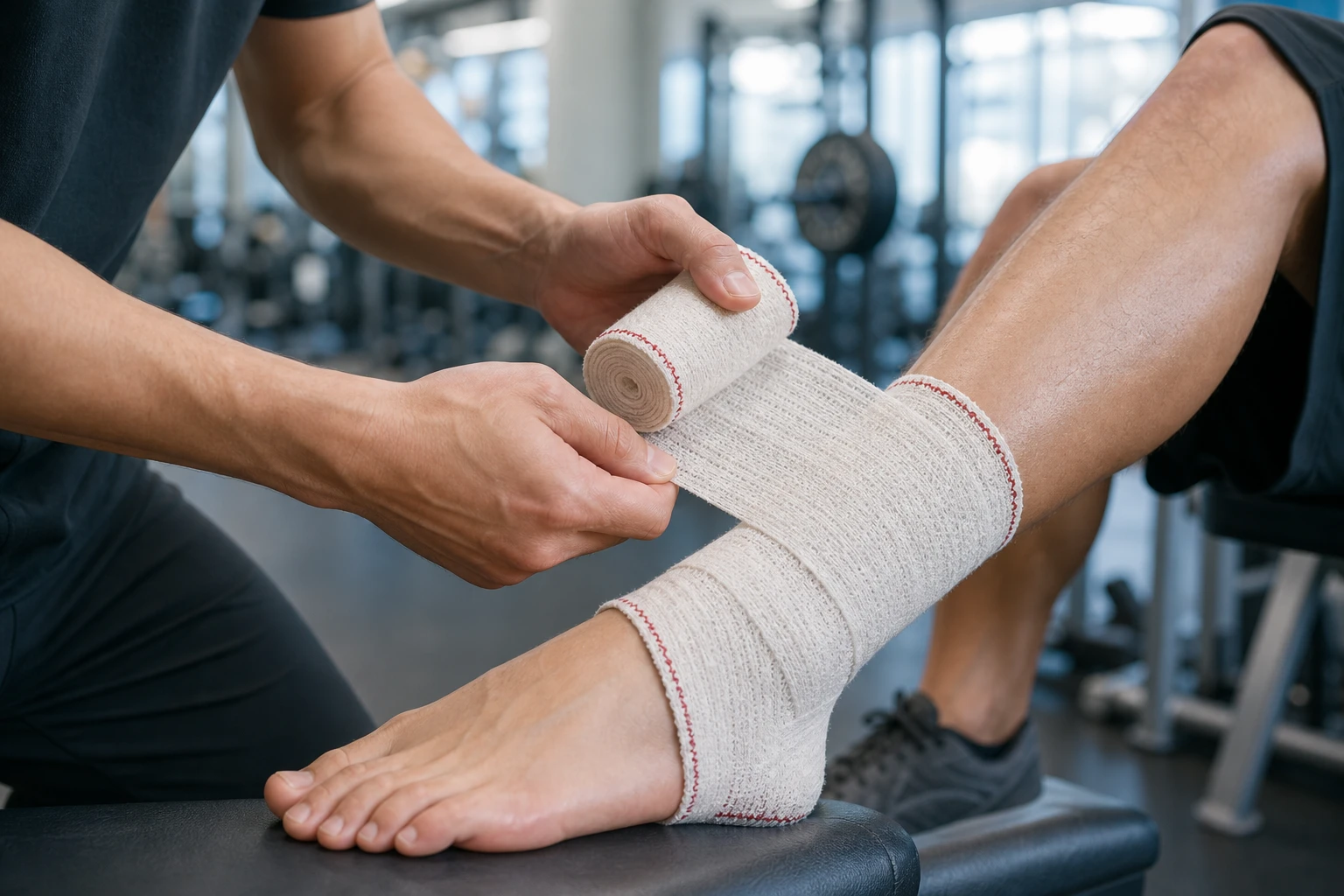
In hospitals and rehabilitation clinics, a heavy duty spandex elastic crepe bandage is not just a simple dressing. It is used for active compression therapy, managing deep vein thrombosis, supporting severe sprains, and controlling post-surgical swelling.
Standard cotton crepe bandages lack the long-term elastic recovery needed for sustained compression. Over a few hours, a basic cotton bandage stretches out and sags, requiring constant re-wrapping. To solve this, manufacturers weave polyurethane-based elastane fibers—commonly known as spandex or Lycra—into the cotton warp yarns.
If your supplier delivers a subpar heavy duty spandex elastic crepe bandage, the clinical consequences are immediate:
- Pressure Decay: The bandage loses its holding force within thirty minutes, rendering compression therapy useless.
- Slippage: Without proper elastic recovery, the weave relaxes, and the bandage slips down the patient’s limb.
- Friction Shearing: Loose bandages rub against vulnerable skin, potentially causing blisters or tearing fragile tissue.
Therefore, verifying medical elastic bandage quality through a standardized bandage tensile strength test is the only way to safeguard your brand’s clinical reputation.
Material Structure of a Premium Heavy Duty Spandex Elastic Crepe Bandage
To understand why a bandage fails during a tensile test, you have to understand how it is put together. A high-performance heavy duty spandex elastic crepe bandage consists of a twisted cotton weft and a warp that alternates between pure cotton yarns and high-denier spandex threads.
The weight of the fabric, measured in grams per square meter (GSM), is a major indicator of quality. Premium grade bandages usually range between 130 GSM and 150 GSM. Cheaper alternatives try to cut costs by dropping the weight down to 90 GSM, which dramatically reduces the thickness and the ultimate breaking force.
When a quality control specialist evaluates a heavy duty spandex elastic crepe bandage, they look closely at the yarn twist. The characteristic “crepe” texture is created by over-twisting the cotton yarns during the weaving process. This rough texture provides friction, allowing the bandage layers to grip one another when wrapped. If the core spandex yarn is poor, no amount of crepe texture will help that heavy duty spandex elastic crepe bandage keep its grip.
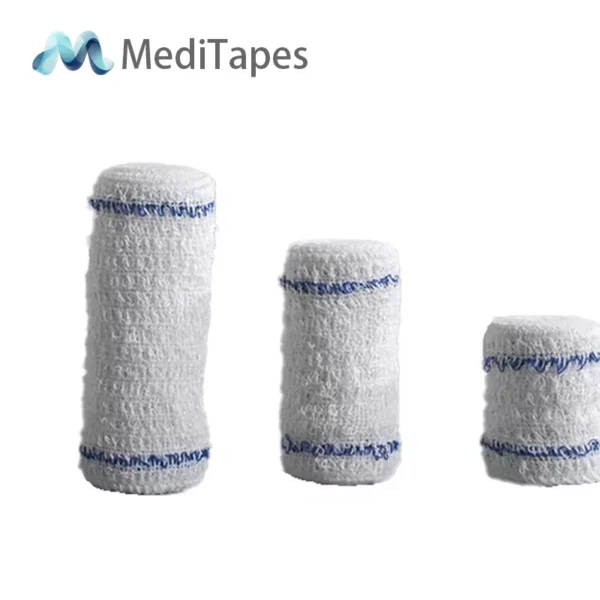
Hautfarbene elastische Kreppbandage zur Behandlung von Krampfadern
Hautfarbene elastische Kreppbandage für Krampfadern | MediTapes Meta-Beschreibung: Hautfarbene elastische Kreppbandagen im Großhandel für die Krampfaderbehandlung und Ödemkontrolle. Diskrete, atmungsaktive Kompressionsrollen in verschiedenen Breiten erhältlich. MediTapes bietet Preise direkt ab Werk für Gefäßstützmittel. Kontaktieren Sie uns für Großbestellungen.
Understanding the Core Physics: The Tensile Formulas
You cannot run a reliable bandage tensile strength test without solid mathematical metrics. In our QA labs, we focus on three primary mechanical indicators: Tensile Strength, Stretch Ratio, and Elastic Recovery Rate.
Let’s lay out the math behind these metrics. Remember to use standard metric units to keep your data consistent with international standards like ISO 13934-1.
1. Tensile Strength (Breaking Force per Unit Width)
Tensile strength measures the absolute maximum force a bandage can withstand before the fibers rupture. For a heavy duty spandex elastic crepe bandage, we measure this relative to the width of the strip.
Tensile Strength Formula:
Tensile Strength (N/cm) = Maximum Breaking Force (Newtons) / Bandage Width (centimeters)
If a 10 cm wide bandage snaps at a maximum load of 600 Newtons, its tensile strength is 60 N/cm.
2. Stretch Ratio (Elongation at a Specific Load)
The stretch ratio tells you how much the bandage elongates when pulled under standard tension. A true heavy stretch crepe bandage should reach its target elongation without requiring excessive force, yet it must not stretch out so easily that it offers zero resistance.
Stretch Ratio Formula:
Stretch Ratio (%) = ((Extended Length – Original Length) / Original Length) * 100
For example, if a 10 cm sample of a heavy duty spandex elastic crepe bandage stretches out to 28 cm before reaching its limit, its stretch ratio is:
((28 – 10) / 10) * 100 = 180%
3. Elastic Recovery Rate
This is the most critical metric for clinical performance. It measures how much of the original length the heavy duty spandex elastic crepe bandage recovers after being held at a high stretch for a set period.
Elastic Recovery Rate Formula:
Elastic Recovery Rate (%) = ((Extended Length – Recovered Length) / (Extended Length – Original Length)) * 100
If you stretch a 10 cm sample to 20 cm (Extended Length), hold it, release it, and it shrinks back to 11 cm (Recovered Length), the calculation is:
((20 – 11) / (20 – 10)) * 100 = (9 / 10) * 100 = 90% recovery.
If the recovery rate drops below 85% after just a few stretch cycles, you are dealing with low-grade spandex that will fail in clinical settings.
Conducting a Bandage Tensile Strength Test on Your Consignment
To verify medical elastic bandage quality, we must look closely at how a heavy duty spandex elastic crepe bandage responds to load. You need to move away from subjective “hand-pulling” tests. You need a standardized, repeatable process using a Universal Testing Machine (UTM) equipped with pneumatic fabric grips.
Our testing laboratory recommends following the principles of ASTM D4964 (Standard Test Method for Tension and Elongation of Elastic Fabrics) or ISO 13934-1 (Strip Method for Tensile Properties).
Here is how the physical testing setup works:
- Upper Grip of the UTM: Moves upward at a constant rate, typically 100 mm per minute.
- Top Clamp: Holds the upper boundary of the bandage sample securely.
- Bandage Sample: Standard test size of 50 mm wide with a 100 mm gauge length.
- Bottom Clamp: Holds the lower boundary of the bandage sample.
- Lower Grip of the UTM: Remains fixed to the stationary machine base.
Step-by-Step Lab Protocol for Heavy Duty Spandex Elastic Crepe Bandage Testing
Step 1: Environmental Conditioning
Spandex and cotton are highly sensitive to humidity and temperature. Before you test any heavy duty spandex elastic crepe bandage, you must condition the samples. Place them in a climate-controlled room at 20 degrees Celsius (plus or minus 2 degrees) and 65% relative humidity (plus or minus 4%) for at least 24 hours. Testing dry or cold elastic fabric will give you highly skewed, unreliable results.
Step 2: Sample Preparation
Cut a strip of the heavy duty spandex elastic crepe bandage exactly 50 mm wide. The length should be long enough to allow a gauge length (the distance between the machine clamps) of exactly 100 mm, with enough extra material on both ends for the grips to secure safely.
Step 3: Setting Up the Universal Testing Machine
Clamp the heavy duty spandex elastic crepe bandage sample flat into the grips. Make sure the alignment is perfectly vertical. If the specimen is clamped crookedly, the tension will distribute unevenly, causing a premature tear at the edge of the grip. Set the crosshead speed of your testing machine to a constant rate of 100 mm per minute.
Step 4: Executing the Test and Data Collection
Start the machine. The UTM will pull the heavy duty spandex elastic crepe bandage until it reaches either a specified load or its breaking point. The software will map a stress-strain curve. For a high-quality heavy stretch crepe bandage, you want to record the force required to reach 100% stretch, 150% stretch, and the ultimate force at the point of fabric rupture.
Why Cheap Crepe Bandages Fail: The Physics Behind Elastic Decay
Why do cheap bandages lose their elasticity so quickly? When a clinician wraps a heavy duty spandex elastic crepe bandage around an injured knee, the bandage remains under constant tension for hours. In physics, this continuous stress leads to a phenomenon known as “stress relaxation” or “elastic decay.”
Let’s describe this process as a tension-over-time behavior. For a premium bandage, after a very minor initial settlement, the tension curve flattens out and remains perfectly stable over many hours, ensuring constant, therapeutic pressure.
In low-quality bandages, the heavy duty spandex elastic crepe bandage relies on recycled or low-denier elastane. When stretched, the molecular chains within the polymer slip past each other permanently rather than holding their elastic bonds. This results in rapid elastic decay. Within just an hour of application, the tension curve drops off a cliff.
This means your heavy duty spandex elastic crepe bandage turns into a loose, useless piece of rag. The bandage loosens, the pressure drops below the therapeutic range, and the patient loses support. If you run a bandage tensile strength test on these low-grade shipments, you will see a massive drop in the elastic recovery rate after just three stretch cycles.
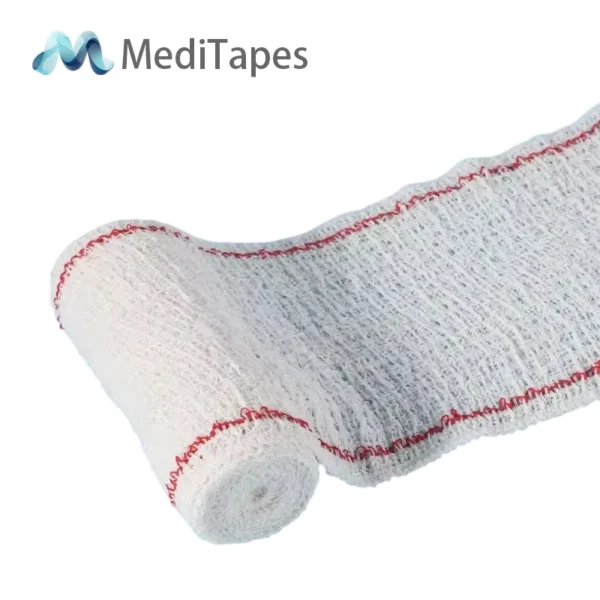
Sterile elastische Kreppbandagen-Rolle mit Klammern – OEM verfügbar
Zertifizierte sterile elastische Kreppbandage mit sicheren Metall- oder Elastikklammern. Wir bieten OEM-Anpassungen für Größe und Verpackung an. Diese hochwertige elastische Kreppbandage gewährleistet sterilen Schutz für chirurgische Wunden. Zuverlässiger Halt und weiche Textur machen sie zu einem unverzichtbaren Bestandteil von Erste-Hilfe-Sets.
Real-World Quality Specs for B2B Procurement
To make your procurement decisions easier, we have compiled a standard quality specification profile. If you are auditing a new manufacturer or evaluating a batch, use these parameters as a baseline to see what we expect from a top-grade heavy duty spandex elastic crepe bandage:
| Quality Parameter | Standard / Protocol | Target Spec (Premium Grade) | Failure Red Flag (Low Quality) |
|---|---|---|---|
| Materialzusammensetzung | Chemical Analysis | 92% Cotton, 8% Spandex | Cotton-only or <4% Spandex |
| Fabric Weight (GSM) | ISO 3801 | 135 to 145 grams/sqm | Less than 110 grams/sqm |
| Warp Tensile Strength | ISO 13934-1 | Greater than 65 N/cm | Less than 40 N/cm |
| Maximum Stretch Ratio | ASTM D4964 | 180% to 220% | Less than 140% or loose feel |
| Elastic Recovery Rate | ISO 13934-1 | Greater than 92% (after 3 cycles) | Less than 85% (loses shape quickly) |
| Thread Count (Warp/Weft) | Visual Count | 120 warp threads per 10 cm | Loose, see-through weave structure |
If your lab’s bandage tensile strength test reveals a recovery rate below 85% for a heavy duty spandex elastic crepe bandage, reject it. Your downstream hospital clients will complain about slipping, and you will end up dealing with high return rates.
Case Study: How a German Distributor Saved $120,000 by Testing Their Heavy Duty Spandex Elastic Crepe Bandage Stock
Let’s talk about a real scenario that shows why strict quality control is non-negotiable. A major medical distributor based in Hamburg was sourcing what they believed to be a high-spec heavy duty spandex elastic crepe bandage from a broker at a very attractive price.
Within two months of distributing the bandages to private orthopaedic clinics, they received a wave of complaints. Doctors noted that the bandages were “relaxing” within forty-five minutes of being applied to patient limbs. The compression was lost, and bandages were literally sliding off patients as they walked. The distributor faced potential contract cancellations and a massive blow to their brand’s reputation for medical elastic bandage quality.
They sent samples of their active heavy duty spandex elastic crepe bandage stock to an independent textile lab. The laboratory performed a standardized bandage tensile strength test using ASTM D4964 protocols.
The results were eye-opening:
- The actual spandex content of the bad heavy duty spandex elastic crepe bandage was only 3.2%, far below the advertised 8% industry standard.
- The weight of the fabric was 98 GSM instead of the promised 130 GSM.
- The cheap bandages had an elastic recovery rate of just 78% after three stretch cycles.
Armed with this objective lab data, the distributor successfully rejected a pending $120,000 shipment, returned the defective inventory, and terminated their relationship with the broker. They then partnered with a vetted manufacturer who provided certified, batch-tested heavy duty spandex elastic crepe bandage units. By implementing a systematic incoming quality check for each heavy duty spandex elastic crepe bandage batch, they saved their distribution contracts and restored their reputation in the German medical sector.
How to Avoid Common Pitfalls in Spandex Elastic Crepe Bandage Procurement
When negotiating bulk orders for a heavy duty spandex elastic crepe bandage, many procurement managers fall into typical traps. Here is how to keep your supply chain clean and high-performing:
1. Don’t Just Trust PDF Certificates
We have all seen beautifully designed, colorful test certificates from unvetted labs. Always demand raw testing data, specifically stress-strain curves generated by a Universal Testing Machine. If a manufacturer cannot produce the raw testing graphs for their heavy duty spandex elastic crepe bandage runs, they probably aren’t actually running the tests.
2. Check the Edge Weaving (Selvedge)
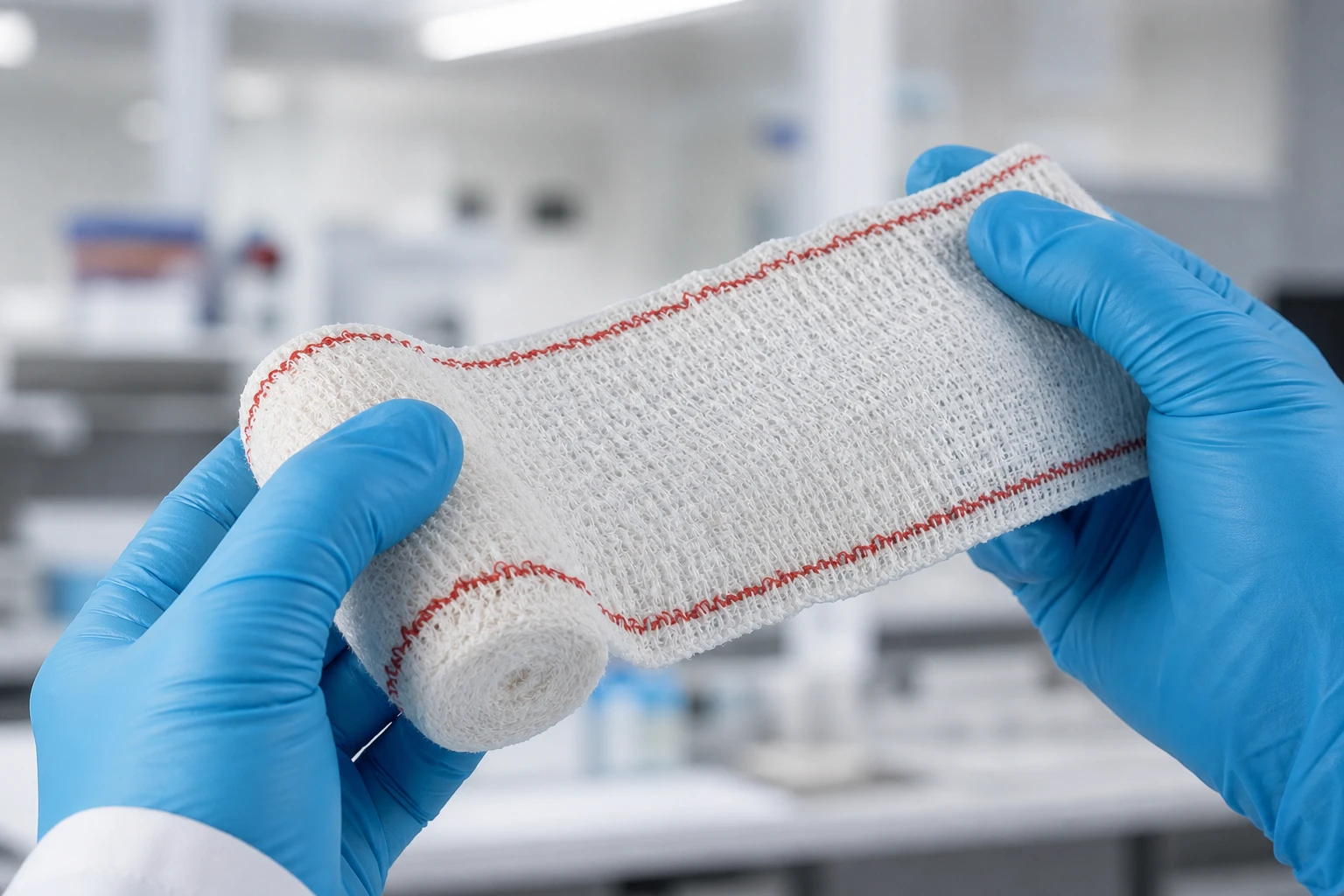
A common failure point of a heavy duty spandex elastic crepe bandage is frayed edges. If the edge of the bandage is not cleanly bound or woven with reinforced selvedge threads, the spandex threads will snap and pull back into the weave when stretched. This leads to immediate unravelling of the bandage edges under load.
- Poor Edge (No Selvedge): The loose warp threads run right to the edge with no locking stitch. Under stretch, these threads fray, causing the spandex fibers to snap back and unravel.
- Premium Edge (Reinforced Selvedge): The edge features a double-stitched or woven border that locks the threads in place, preventing any fraying or unraveling even at maximum elongation.
3. Watch Out for Chemical Odors
If you open a fresh carton of a heavy duty spandex elastic crepe bandage and get hit with a strong, pungent chemical smell, that is a major red flag. It usually means the manufacturer used low-grade vulcanizing agents or skipped the final washing and heat-setting stages to speed up production. Doctors and patients will not tolerate bandages that trigger skin allergies or smell like industrial solvent.
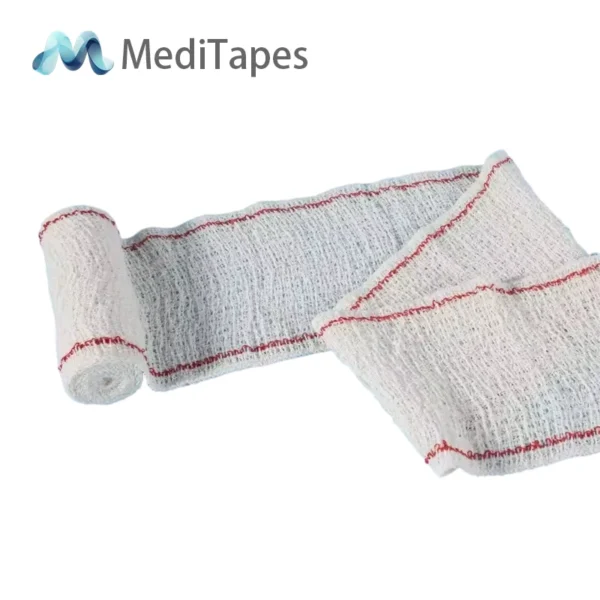
Großhandel für atmungsaktive elastische Kreppbandagen für Sportverletzungen
Kaufen Sie atmungsaktive elastische Kreppbandagen in großen Mengen für die Regeneration im Sport. Diese leichte Kreppbandage passt sich mühelos Körperkonturen wie Knien und Knöcheln an. Sie reduziert Schwellungen und lässt die Haut gleichzeitig atmen. Eine erstklassige Wahl für Sporttrainer, die eine zuverlässige Unterstützung bei Sportverletzungen benötigen.
FAQ: Heavy Duty Spandex Elastic Crepe Bandage Quality Control
Q1: What is the typical shelf life of a heavy duty spandex elastic crepe bandage?
A1: A well-stored heavy duty spandex elastic crepe bandage can last up to three to five years without significant degradation. However, you must store them in a cool, dry place away from direct sunlight. Ultraviolet light and heat speed up the aging process of polyurethane polymers, which will dry out the spandex and make it brittle, ruining its performance.
Q2: Can we wash and reuse a heavy duty spandex elastic crepe bandage?
A2: Yes, a high-quality heavy duty spandex elastic crepe bandage should withstand multiple wash cycles. However, clinicians and patients must avoid high-temperature washing or chlorine bleach. Wash with warm water and mild soap, then let it air dry flat. Machine drying on high heat will melt the spandex microfibers, causing immediate loss of elastic recovery.
Q3: What standards govern the heavy duty spandex elastic crepe bandage tensile strength?
A3: Most international buyers test the heavy duty spandex elastic crepe bandage using ASTM D4964 for tension and elongation, alongside ISO 13934-1 for broad-strip breaking force. In Europe, compliance with the Medical Device Regulation (MDR) also requires validation of physical safety, biocompatibility, and consistent elastic retention over time.
Partner with MediTapes for Verified Heavy Duty Spandex Elastic Crepe Bandage Supplies
If you are tired of dealing with supplier excuses, inconsistent batch quality, and rising hospital complaints, it is time to upgrade your sourcing strategy.
Bei Medi-Tapes, we don’t guess when it comes to quality—we prove it. Every batch of our heavy duty spandex elastic crepe bandage undergoes rigorous stress-strain profiling and strict elastic recovery testing in our state-of-the-art quality control labs before it leaves our facility. We ensure that our medical textiles provide steady, therapeutic compression that clinical professionals can trust day in and day out.
Do not wait for a major clinical complaint to fix your quality control issues. If you want to secure your supply chain with a reliable heavy duty spandex elastic crepe bandage, we’ve got you covered.
Besuchen Sie unsere Kontaktseite today to request free pre-shipment, vetted heavy duty spandex elastic crepe bandage samples today, schedule a technical consultation with our engineering team, or get a competitive wholesale quote tailored to your distribution volumes. You can also reach out to our global B2B support desk directly via email at info@meditapes.com. Let’s build a safer, more reliable supply chain together.