You know how frustrating it can be when a bandage just won’t hold the right amount of pressure during a wrap? It either slips off after a few hours or gets too tight and cuts off circulation. That’s usually down to one thing – the stretchability, or what we call cohesive bandage elasticity.
I’ve spent years testing and working with these bandages in real clinical settings and manufacturing floors. At MediTapes, we make it our business to get this right because when you’re dealing with sprains, post-op swelling, or sports injuries, that consistent pressure makes all the difference. Let’s break down the science in a way that actually helps you pick (or make) bandages that perform when it counts.
What Exactly Is Cohesive Bandage Elasticity?
Cohesive bandages are those handy self-adhering wraps that stick to themselves but not to skin or hair. Think Coban-style stuff – super popular in sports med and wound care.
The cohesive bandage elasticity is basically how much the material can stretch and then snap back without losing its grip or shape. It’s not just about being “stretchy” like a rubber band. It’s about controlled elongation that lets you dial in the right compression level.
Most good cohesive ones fall into the medium to high elasticity range. From what I’ve seen in lab tests and real use, typical stretch ratios (how many times longer it gets compared to its original length) hover around 1.2 to 2 times original length – that’s roughly 20% to 100% elongation for many conforming types, but some push higher.
For example, certain conforming cohesive bandages hit around 85% extensibility under standard force tests (like those based on DIN 61632 guidelines for compression materials). Others, especially ones with more elastic fibers, can reach 140-200% elongation like classic long-stretch elastic wraps.
Why does this matter for you? When you’re doing pressure wrapping – say for edema or sprain support – you need the bandage to give enough stretch to conform to curves (knees, ankles, elbows) but not so much that it loses tension over time. Too little stretch, and it’s stiff and uncomfortable. Too much, and the pressure drops fast when the patient moves.
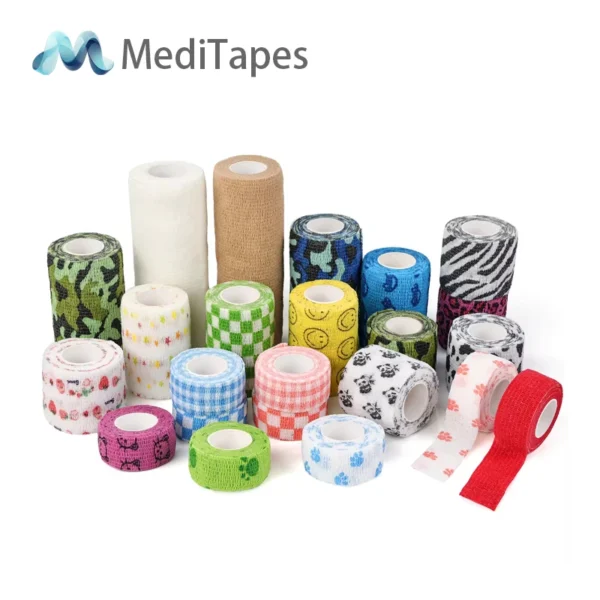
Camouflage Printed Cohesive Wrap – Tactical Self Adherent Bandage
Durable Camouflage Printed Cohesive Wrap designed for outdoor and tactical gear protection. This tactical self-adherent bandage provides excellent grip and concealment without sticky residue. Water-resistant and strong, it is the ideal printed cohesive tape for hunting, shooting, and sports gear.
How Stretch Ratio Works in Real Life
Stretch ratio is a simple way to think about it: original length vs stretched length.
If a bandage is 5 yards long unstretched and you pull it to 7-10 yards before it maxes out, that’s a 1.4 to 2.0 stretch ratio. In practice:
- Low-medium elasticity cohesive bandages (around 20-85% elongation) give stable, consistent pressure with low resting tension – great for light support or when you want the wrap to hold firm without much give.
- Higher elasticity ones (100%+ elongation) offer more dynamic compression that adjusts with movement, perfect for active patients.
From hands-on experience at MediTapes, we aim for that sweet spot: enough stretch for easy application but enough recovery force to maintain pressure stability during activity. We’ve seen bandages with poor recovery lose up to 30-40% of initial pressure after just a few hours of wear – not good when someone’s relying on it for swelling control.
Here’s a quick comparison table of typical elasticity ranges based on common industry observations and standards like DIN 61632 classifications for compression bandage materials:
| Bandage Type | Typical Elongation (%) | Stretch Ratio | Best For | Pressure Stability |
|---|---|---|---|---|
| Short-stretch cohesive | 10-100% | 1.1-2.0 | High working pressure, edema | Very high |
| Medium conforming cohesive | 50-85% | 1.5-1.85 | General support, sports wraps | High |
| Long-stretch elastic cohesive | 100-200%+ | 2.0+ | Dynamic movement, venous issues | Medium |
These aren’t made-up numbers – they’re pulled from real classifications and product behaviors seen in medical literature and testing.
Medical Bandage Standards That Actually Matter
There isn’t one single global “cohesive bandage elasticity” standard like there is for drugs, but several guidelines shape what good ones should do.
- DIN 61632 (German standard often referenced worldwide) classifies elasticity by percent strain under 10 N/cm force. Long-stretch gets >100%, short-stretch lower.
- Many manufacturers chase ISO 13485 quality systems and FDA 510(k) clearance for Class 1 devices (most cohesive bandages fall here as 880.5240 – medical adhesive tape).
- Practical tests look at elongation at break, recovery after stretch, and pressure maintenance.
In our own quality checks at MediTapes, we test for consistent cohesive bandage elasticity across batches. A bandage might stretch 80% once, but if it doesn’t snap back close to original after repeated pulls, it’s junk for pressure wraps.
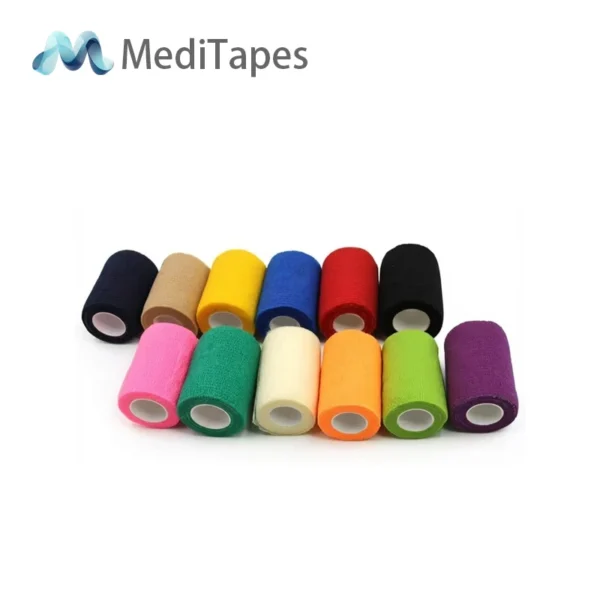
Disposable Cohesive Bandage – Sanitary Self Adherent Tattoo Grip
Disposable Cohesive Bandage specifically for tattoo artists. Use as a sanitary self-adherent tattoo grip cover to reduce vibration and improve hygiene. Non-slip texture ensures precision. Affordable bulk packs of non-woven cohesive tape for daily studio usage.
Why Pressure Stability Is Everything in Compression Wrapping
This is where it gets real. You’ve probably wrapped an ankle and come back an hour later to find it’s loose. That’s elasticity failure.
Good cohesive bandage elasticity means high elastic recovery – the bandage wants to go back to its unstretched state, pushing against the tissue to keep pressure up. Poor recovery? Pressure drops, swelling comes back.
In one sports clinic case we worked with (anonymized, of course), a team switched to higher-quality cohesive wraps with better stretch recovery. Players reported less re-swelling during games, and trainers cut re-wrap time by half. Simple stuff, but it mattered on game day.
Another time, a post-op patient had chronic edema in the leg. Using a bandage with stable medium elasticity (around 70-80% elongation with good snap-back) kept pressure consistent for days without readjustment. The old cheap ones? They’d sag and need redoing every few hours.
Factors That Mess With Elasticity (And How to Spot Them)
- Material blend – More elastane or spandex = higher stretch, but too much can mean poor recovery.
- Cohesive coating – Acrylic microspheres give the self-stick without latex allergies.
- Weave/tension during manufacturing – Tight weave can limit stretch too much.
- Storage – Heat or humidity can degrade elastic fibers over time.
When buying, look for latex-free, breathable non-woven bases with clear stretch specs. At MediTapes, we publish typical stretch ratios on our product sheets so buyers know exactly what they’re getting.
Picking the Right One for Your Needs
If you’re a clinic, distributor, or hospital buyer worried about pressure consistency, go for medium-elasticity cohesive bandages (60-100% elongation range). They give reliable support without over-compressing.
For active sports use, a bit more stretch helps with movement.
Want to see what works best? Swing by our site at https://meditapes.com/ – we’ve got detailed specs on all our cohesive wraps, including elasticity data.
Got questions or want samples to test the stretch yourself? Drop us a line at https://meditapes.com/contact-us/ or email info@meditapes.com. We’d love to chat about your specific use case and send over some rolls.
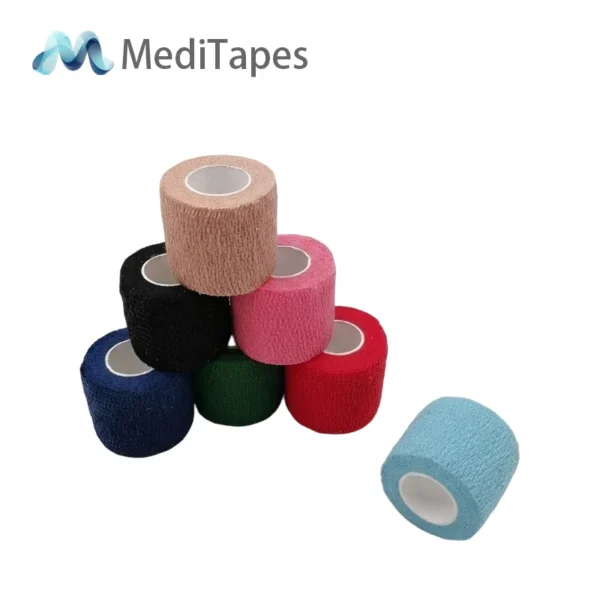
Hypoallergenic Cotton Cohesive Bandage – Gentle Self Stick Medical Tape
Our Hypoallergenic Cotton Cohesive Bandage is crafted for sensitive skin and pediatric care. The soft cotton texture of this self-stick medical tape prevents irritation while offering secure hold. Breathable and gentle, this cohesive bandage allows skin to breathe, promoting faster healing for delicate areas.
FAQ
What is a good stretch ratio for cohesive bandages used in pressure wrapping?
Most reliable ones for stable compression fall between 1.4 to 1.85 (40-85% elongation). This gives enough give to apply evenly but strong recovery to hold pressure over hours.
Are there official medical bandage standards for cohesive bandage elasticity?
No single mandatory global one, but many follow DIN 61632 for classification, plus ISO 13485 quality and FDA clearance. Real-world performance comes from recovery and pressure maintenance tests.
How does poor elasticity affect bandage performance in medical use?
It leads to pressure drop-off, slippage, and inconsistent compression – bad for swelling control or support. Good elasticity keeps things stable so you don’t have to re-wrap constantly.
There you go – the real scoop on what makes cohesive bandages actually work. It’s not rocket science, but getting the elasticity right changes everything. If you’re in the market for stuff that holds up, give us a shout. We’d be happy to help! 😊