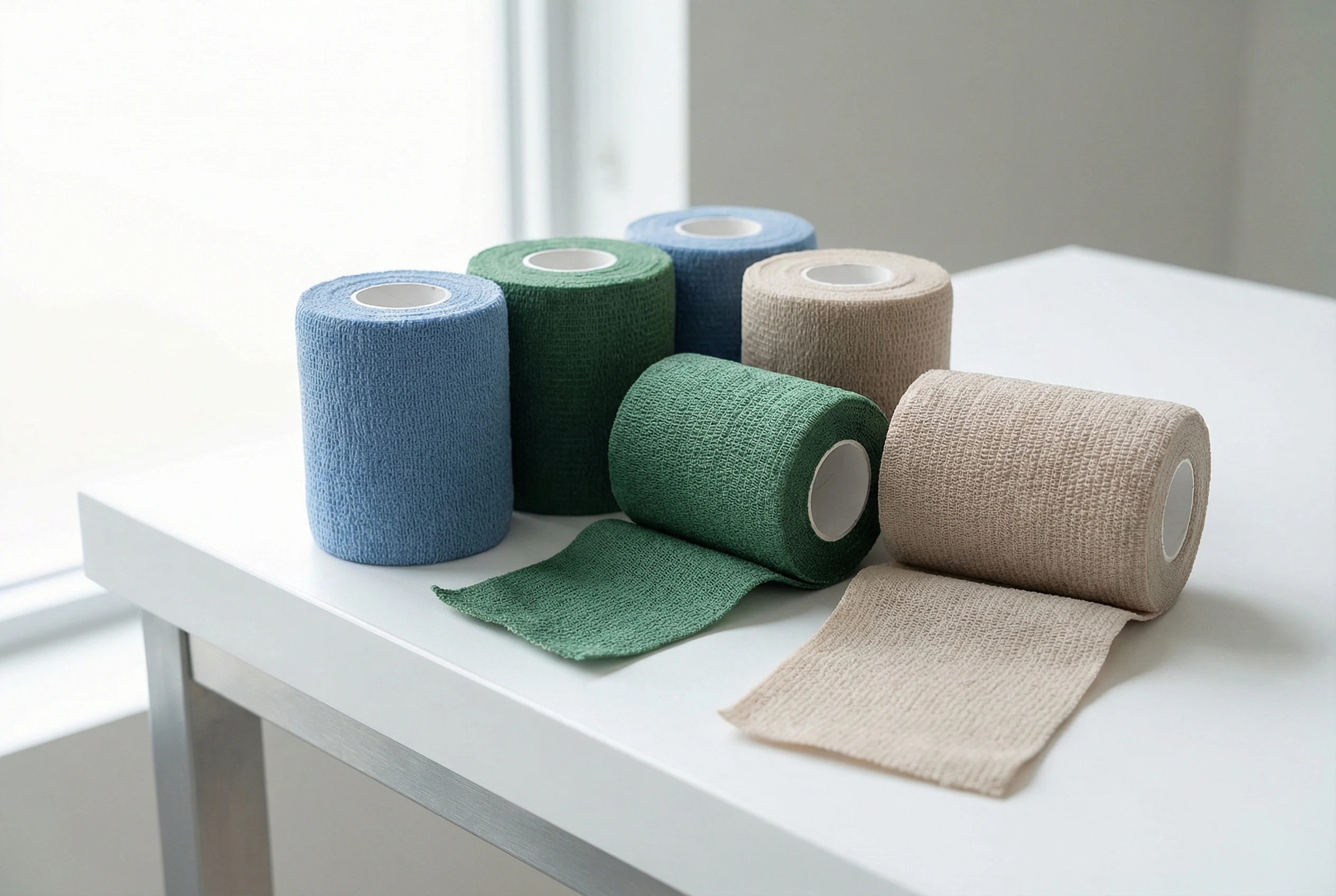
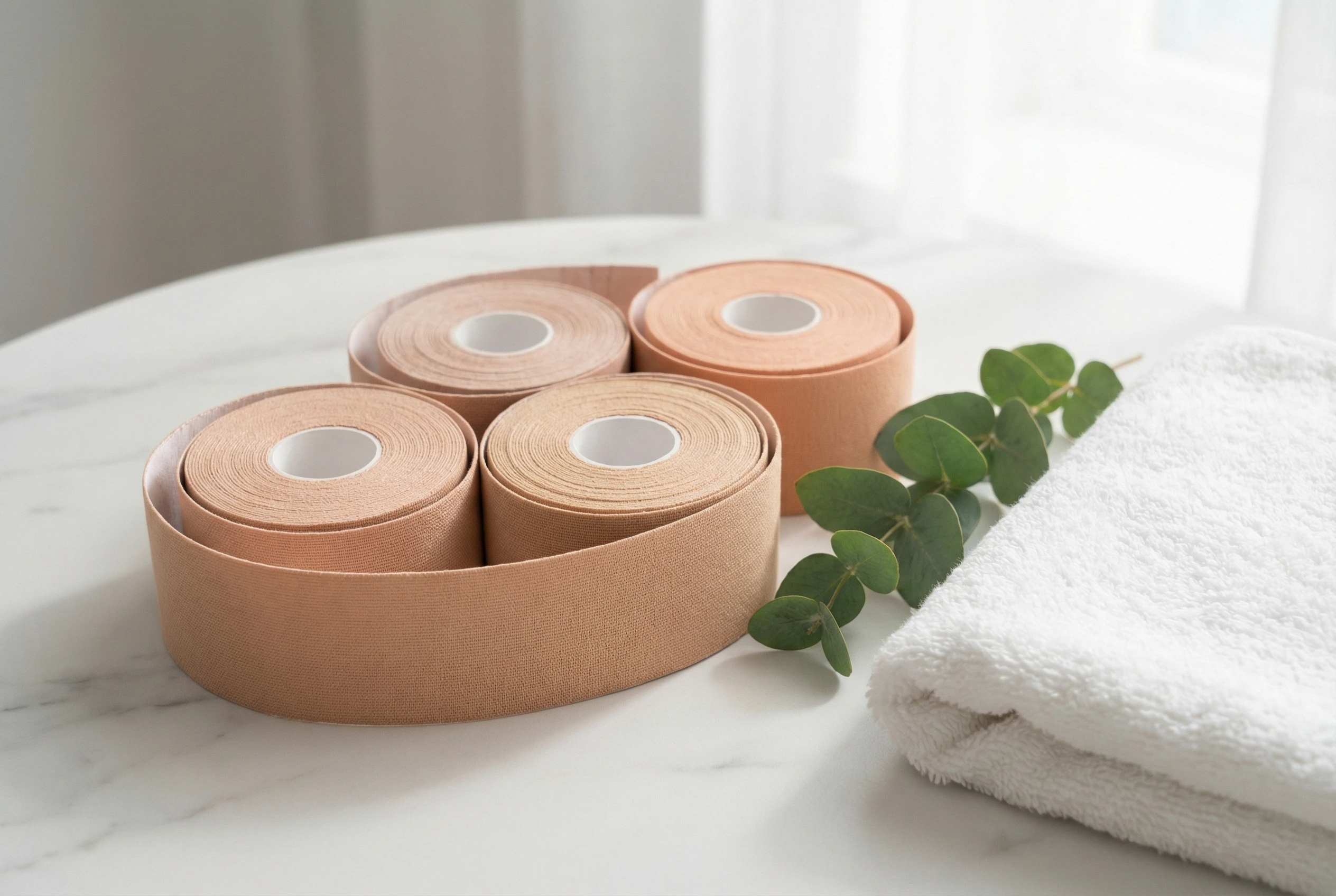
Ever wondered why some medical tapes feel super smooth and strong, while others seem a bit different even if they’re both called “silk”? I’ve been in the medical supplies game for years now, dealing with all sorts of tapes day in and day out at MediTapes. Buyers often ask me about acetate silk tape versus the usual surgical silk tape – are they the exact same thing, or is there a catch? Turns out, it’s not always a straight yes or no. Let’s break it down in a way that makes sense, especially if you’re a pro buyer hunting for the right spec.
Most folks in healthcare throw around “silk tape” for that classic cloth-like surgical tape that’s been around forever. You know, the one that’s tough, tears easy by hand, and holds dressings or tubes in place without much fuss. But dig a little deeper, and you’ll see that “silk” here doesn’t mean actual silk from silkworms – it’s more of a nickname for the feel and look. Standard surgical silk tape usually has a backing made from viscose rayon (that’s regenerated cellulose, kinda plant-based) or sometimes a mix with polyester. Brands like 3M’s Durapore call it “silk-like” because it’s woven strong and has that shiny, smooth vibe.
Now, acetate silk tape? That’s a specific type where the backing is cellulose acetate fabric. Acetate is also semi-synthetic, coming from wood pulp treated with acetic acid – it’s shiny, drapey, and often used in stuff that needs to mimic real silk. In medical tapes, acetate versions are popular for being conformable, breathable, and strong without fraying much when torn. Some manufacturers, like certain Japanese or European brands, straight-up use acetate cloth for their “silk” tapes because it gives excellent fixation, especially for tubes or catheters during surgery.
So, are they the same? Kinda, but not always. Many “standard” surgical silk tapes on the market today are actually rayon-based or rayon-acetate blends. For example, some products list “rayon acetate woven fabric” as the material. Others stick purely to viscose rayon for that water-repellent edge. Acetate silk tape is often just a variant – stronger in some ways, more flexible in others. If you’re sourcing bulk, check the spec sheet; what one supplier calls acetate silk tape might be identical to another’s standard surgical silk tape.
I’ve seen this mix-up cause headaches for buyers. One time, a hospital procurement team ordered what they thought was “standard” silk tape, but got an acetate version – turned out it performed even better for their post-op dressings because it conformed nicer to curved areas without lifting. No complaints there!
Understanding Tape Material Types
To clear things up, let’s look at the main tape material types in medical use. This helps when you’re distinguishing subtle differences for specific needs.
Surgical tapes come in all sorts – paper (micropore for breathability), plastic (transparent and waterproof), silicone (gentle on fragile skin), foam (cushioned), and cloth-based like our silk ones.
Focusing on cloth “silk” tapes, here’s a quick comparison table I put together based on common products and real-world use:
| Tape Type | Backing Material | Key Features | Best For | Tearability | Adhesion Level |
|---|---|---|---|---|---|
| Standard Surgical Silk Tape | Viscose Rayon or Polyester/Rayon | Water-repellent, strong hold, hypoallergenic | Securing bulky dressings, tubes, IVs | Bi-directional, easy by hand | High on dry skin |
| Acetate Silk Tape | Cellulose Acetate Cloth | Highly conformable, breathable, no fraying | Fixing catheters, endotracheal tubes, sensitive areas | Straight tear, clean edges | Strong, gentle removal |
| Rayon Silk Tape | Viscose Rayon | Soft feel, durable, minimal residue | General wound care, long wear | Serrated edges often | Medium to high |
| Paper Micropore | Porous Paper | Super breathable, low irritation | Sensitive skin, light dressings | Straight tear | Gentle |
| Plastic/Transparent | Polyethylene or Vinyl | Waterproof, clear view | Wet areas, monitoring wounds | Needs scissors usually | Variable |
This table shows how acetate silk tape overlaps a lot with standard ones but shines in conformity and clean tears. Rayon silk tape is pretty much the go-to for many “standard” labels.
In the bigger picture, the medical tape market is growing fast – reports show it hitting around $5-10 billion globally, with cloth and silk types holding strong because of rising surgeries. For instance, with millions of procedures yearly, pros need reliable options that don’t cause skin issues.
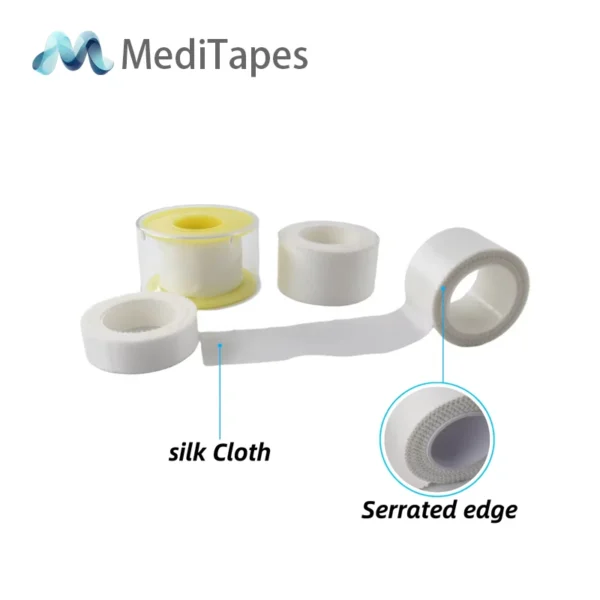
Durable Silk Surgical Tape – Latex-Free, Breathable & Skin-Friendly for Secure Dressing Fixation
Our Durable Silk Surgical Tape is meticulously designed for optimal patient comfort and secure dressing fixation. This premium silk surgical tape is latex-free and highly breathable, minimizing skin irritation and allowing for extended wear. It features strong, reliable adhesion suitable for securing a wide range of medical dressings, catheters, and tubes. Ideal for post-operative care and general wound management, this medical silk tape ensures a firm hold without compromising skin integrity. Enhance patient care with our skin-friendly and effective solution.
Why the Material Matters for Professional Buyers
If you’re buying in volume, like for a clinic or distributor, getting the exact material right is key. Acetate silk tape often feels premium – it’s less likely to fray, sticks well even on tricky spots, and lets skin breathe to cut down on irritation. Standard rayon-based ones might repel water better, which is great for longer wear without peeling.
From my experience supplying to hospitals, buyers love when tapes minimize MARSI (that’s medical adhesive-related skin injury – stripping or tearing skin on removal). Both acetate and rayon versions are hypoallergenic, but acetate can be gentler in some cases because of its smoother fabric.
One scenario I recall: a surgery center switched to our acetate-based silk tape for orthopedic cases. Patients with casts or splints reported less itching, and nurses said it held up better during movement. Small change, big win.
Also, think about specs – width, length, adhesive type (acrylic is common for hypoallergenic). Our Surgical Silk Tape at MediTapes uses a high-quality rayon-acetate blend that’s durable yet soft, perfect for those demanding applications.
Diving Deeper into Acetate vs. Rayon in Silk Tapes
Acetate comes from cellulose acetate, semi-synthetic and known for shine and strength. Rayon is viscose, also cellulose-based but processed differently – more absorbent sometimes.
In tapes:
- Acetate silk tape: Often porous for breathability, excellent for compression or fixation.
- Rayon silk tape: Tougher against moisture, common in U.S. brands.
They’re interchangeable in many cases, but if your protocol needs specific conformity or strength, acetate might edge it out.
Pros have told me acetate versions perform great in anesthesia setups, holding tubes firmly without slipping.
Common Applications and Real-World Scenarios
Silk tapes, whether acetate or standard, get used everywhere – securing gauze after surgery, holding IV lines, even in sports medicine for strapping.
In one anonymous case, a large clinic dealt with frequent tape failures on moist skin. Switching to a stronger acetate silk tape cut re-applications by half, saving time and reducing infection risks.
Another: For pediatric care, the softer feel of rayon silk tape won out – kids fidget less with gentle removal.
At MediTapes, we’ve supplied durable options that blend the best of both worlds. Check out more on our site at https://meditapes.com/.
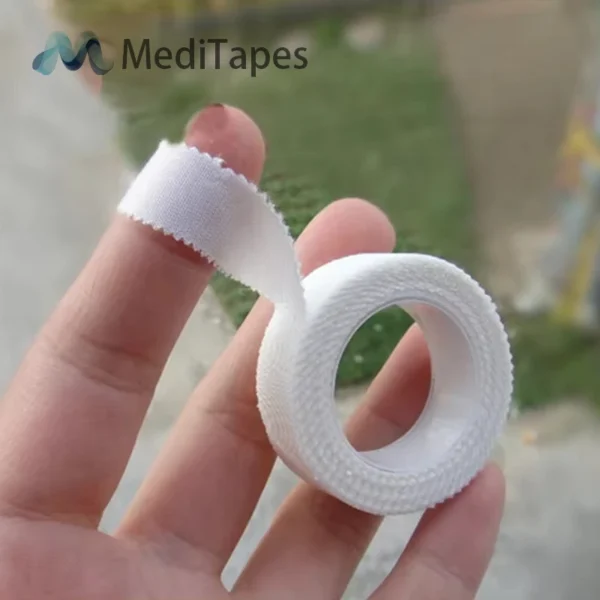
Versatile Silk Surgical Adhesive Tape – Water-Resistant & Conformable for Diverse Medical Applications
Experience the versatility of our Silk Surgical Adhesive Tape, designed to meet the rigorous demands of modern medical practice. This highly conformable silk surgical tape adapts seamlessly to body contours, providing secure fixation even in challenging areas. Its water-resistant properties ensure dressings remain intact during showering or light exposure to moisture, enhancing patient independence and comfort. Ideal for a wide range of applications, from securing bulky dressings to delicate pediatric care, our medical silk tape delivers consistent, reliable performance.
How to Choose the Right One for Your Needs
Start with the job: Heavy dressings? Go strong adhesion like standard surgical silk. Sensitive patients? Lean toward acetate for comfort.
Always test samples – skin types vary.
Factor in cost – acetate can be pricier but lasts longer in tough spots.
And yeah, regulations matter; look for latex-free, hypoallergenic certs.
FAQ
Is acetate silk tape hypoallergenic like standard surgical silk tape?
Yeah, most are – both use acrylic adhesives that are gentle. But always check the label, some older ones might differ.
Can I use acetate silk tape for waterproof needs?
Not the best – rayon versions repel water better. For wet areas, plastic tapes win.
What’s the difference in cost between acetate silk tape and rayon silk tape?
Acetate often runs a bit higher due to processing, but for bulk buys, it’s close. Get a quote to compare.
Do both types tear easily by hand?
Absolutely, that’s a big plus for silk tapes – bi-directional tear, no scissors needed in a pinch.
If you’ve got specific specs or need samples, drop us a line at MediTapes. We’re here to help sort the right tape for your setup – whether it’s acetate silk tape, rayon silk tape, or our reliable surgical silk options.
Curious about pricing or custom orders? Head over to our contact page or email info@meditapes.com. We’d love to chat and get you the perfect match.