Right off the bat, if your a skincare brand owner, you are probably staring at your product roadmap wondering where to allocate your budget for the next quarter. The patch market is absolutely exploding right now, and I talk to founders every single week who are completely torn on what material to launch next.
They always ask the exact same thing: which one is actually gonna make us more money? Which material has the market acceptance that drives real, sustainable profit and not just a quick flash in the pan?
The debate almost always comes down to choosing between a hydrocolloid face patch for acne breakouts versus a silicone patch for anti-aging and wrinkles. But looking at it purely as an “acne vs aging” issue is a massive rookie mistake. We need to talk about the gritty details like repurchase rates, customer lifetime value, and the true silicone wrinkle patch ROI.
Let’s look at the reality of the market. A hydrocolloid face patch is basically the undisputed king of fast-moving consumer goods in the beauty space right now. People buy them, burn through a pack in a week, and come right back for more. On the flip side, silicone patches command a much higher premium price tag. But because they are reusable, the buying cycle looks entirely different.
If you want to dominate the beauty market, you need to deeply understand the underlying economics of both materials. As a supplier that sees the backend data of hundreds of successful brands, MediTapes has a front-row seat to what actually sells. We manufacture both types, so I don’t really have a horse in this race. I just care about what works for your bottom line. Let’s dive deep into the real numbers and figure out what makes the most sense for your brand.
The Phenomenon of the Hydrocolloid Face Patch
Why does a hydrocolloid face patch sell so incredibly fast? It all comes down to instant gratification.
When a consumer sticks a hydrocolloid face patch on a massive, angry breakout right before bed, they wake up to physical proof that the product actually worked. That little opaque white spot on the patch? That is dead white blood cells, sebum, and bacteria that the material pulled out of the skin. It’s kinda gross, but it’s incredibly satisfying.
This visual proof is the exact reason why a hydrocolloid face patch is a marketer’s dream come true. You don’t have to convince the customer it works with complicated charts; the patch proves it to them in about eight hours.
Because of this, the market acceptance is through the roof. According to recent market intelligence reports, the global acne patch market is growing at a CAGR of over 10%, heavily dominated by hydrocolloid materials. Teens, young adults, and even folks in their 30s dealing with hormonal acne don’t even hesitate anymore. Throwing a hydrocolloid face patch into their digital shopping cart is as routine as buying deodorant.
But what about the B2B side? For you, the brand owner, a hydrocolloid face patch offers an unbelievable repurchase rate. Think about the standard usage behavior. A normal sheet might have 24 to 36 dots. A user with active acne might use 3 or 4 of them a night. That means a single pack might only last them a week and a half. They are coming back to your Shopify store, or their local Target, to buy another pack maybe 3 to 4 times a month.
This high frequency makes the lifetime value (LTV) of a customer absolutely astronomical compared to the initial acquisition cost. If you spend $10 on Facebook ads to acquire a customer for a $15 product, you are technically losing money on that very first sale. But because the hydrocolloid face patch is so addictive and necessary for their daily routine, they might buy it 10 more times that year. Suddenly, that specific SKU becomes the most profitable item in your entire lineup.
But listen, formulation really matters here. You can’t just slap a cheap, generic hydrocolloid face patch into a pretty pink box and expect magic to happen. The market is saturated. Your product needs an edge. Maybe you infuse it with salicylic acid, or tea tree oil, or make it completely matte and invisible for daytime wear. A high-quality hydrocolloid face patch that actually stays adhered to the skin all night is what seperates the winners from the losers in this category.
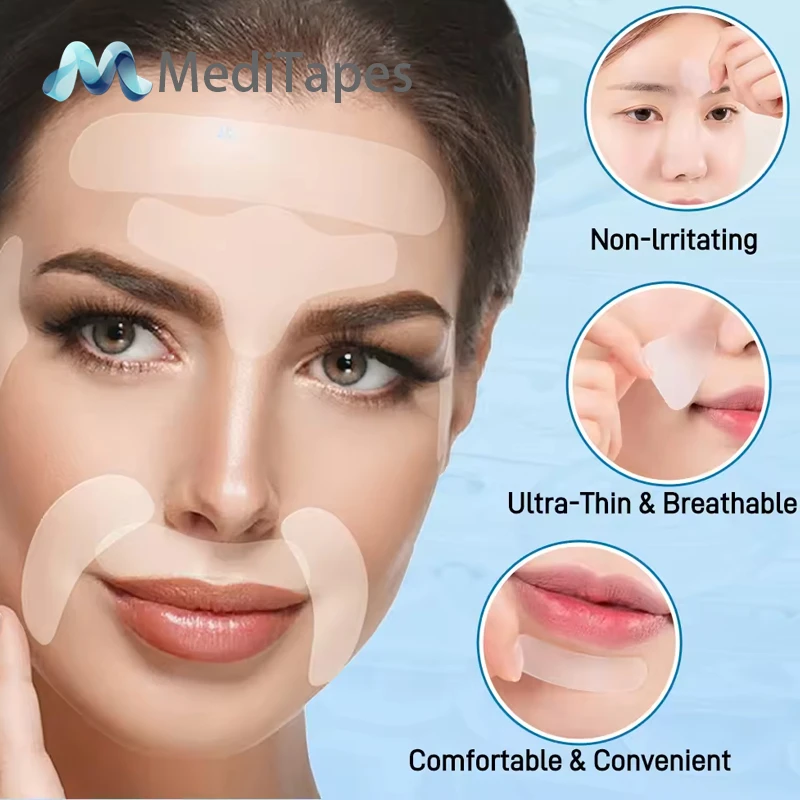
Hypoallergenic Facial Wrinkle Patches: Safe Anti-Aging Strips Bulk
Safe and gentle: Hypoallergenic Facial Wrinkle Patches. Perfect for sensitive skin, these anti-aging strips reduce the appearance of wrinkles without irritation. Our facial wrinkle patches are breathable and comfortable for overnight wear. Order now for safe, effective skincare solutions.
Breaking Down Silicone Wrinkle Patch ROI
Now let’s completely switch gears and talk about the older, wealthier demographic. Anti-aging. Here is where the silicone wrinkle patch ROI conversation gets really interesting.
Silicone doesn’t absorb pus or fluids like hydrocolloid does. Instead, it works via a process called occlusion. When you apply a medical-grade silicone patch to the skin, it creates a closed microclimate. This draws deep moisture from the lower layers of the skin up to the epidermis, plumping up fine lines and physically preventing the facial movements that cause deep wrinkles while you sleep.
And there is real science to back this up. A 2021 study published in the Journal of Cosmetic Dermatology showed that participants using medical-grade silicone patches nightly for four weeks saw a 27% reduction in wrinkle depth. That is hard, clinical data you can use in your ad copy to build insane trust.
But how does the silicone wrinkle patch ROI actually stack up?
First, look at the retail price. While a blemish patch might retail for $12 to $20, a premium silicone wrinkle patch set (covering the chest, forehead, and under-eyes) can easily retail for $40, $60, or even upwards of $80. The perceived value is massive because your comparing it to Botox or expensive laser treatments, not a cheap acne cream.
However, the repurchase cycle is much slower. Many of these silicone patches are designed to be washed and reused 15 to 30 times. So, a customer might only buy from you every two or three months. This is the main concern brands have when they ask me about silicone wrinkle patch ROI. They always say, “If they wash and reuse it, aren’t I just cannibalizing my own future sales?”
Honestly, that’s a really narrow way to look at business. The initial gross margin on a silicone set is so much fatter. If your cost of goods sold (COGS) for a premium silicone set is $8, and you sell it for $50, your making a solid $42 gross profit on day one. Your silicone wrinkle patch ROI on ad spend is often positive on the very first purchase. You don’t have to wait around for them to buy three more times just to break even on your marketing dollars.
Plus, silicone wrinkle patch ROI gets a massive boost from intense brand loyalty. When a 45-year-old woman finds a non-invasive product that actually softens her forehead lines overnight without needles, she becomes an absolute evangelist for your brand. She buys it as a holiday gift for her friends. She buys your complimentary peptide serums to use on the days she isn’t wearing the patch. This halo effect on your other products dramatically increases your overall profitability.
The Real Math: Cost vs. Lifetime Value
Let’s do a direct comparison of the numbers. I know some of you are absolute spreadsheet nerds, so let’s break down the math. I’ll just write the formulas out plain and simple so you can copy them right into your own notes.
The basic ROI Formula for Skincare Brands looks like this:ROI = [(Customer Lifetime Value - Total Costs) / Total Costs] * 100
Scenario A: The Hydrocolloid Face Patch
Let’s say you launch a standard blemish dot.
- Retail price: $15
- COGS for your hydrocolloid face patch: $2
- Customer Acquisition Cost (CAC): $10
- First purchase profit: $15 – $2 – $10 = $3
It looks dangerously thin, right? But the magic is the repurchase rate. Let’s say the average customer buys your hydrocolloid face patch 6 times a year.
- Year 1 Revenue from one user: $90
- Year 1 COGS: $12
- Total marketing cost (mostly upfront with some light retargeting): $15
- Year 1 Profit per customer: $90 – $12 – $15 = $63.
That is a fantastic return. The sheer velocity is what makes it a cash cow. The barrier to entry for the consumer is so incredibly low. If they see your hydrocolloid face patch going viral on TikTok, $15 is a mindless impulse buy.
Scenario B: The Silicone Wrinkle Patch
Now let’s calculate the silicone wrinkle patch ROI for a premium brand.
- Retail price: $50
- COGS: $8
- CAC: $20 (Older demographic, slightly more expensive to acquire on Meta)
- First purchase profit: $50 – $8 – $20 = $22
See that? Your day-one profit is way higher, giving you a faster positive silicone wrinkle patch ROI. Now, because it’s reusable, they only buy it 3 times a year.
- Year 1 Revenue: $150
- Year 1 COGS: $24
- Total marketing cost: $25
- Year 1 Profit: $150 – $24 – $25 = $101.
So which is better? The silicone wrinkle patch ROI delivers more raw profit per user in the first year. But, the hydrocolloid face patch might get you 10,000 customers in the exact same time it takes to get 2,000 silicone patch customers, purely because the price point is lower and highly viral.
Retail vs. Direct-to-Consumer (D2C) Strategies
You also need to think about where you are actually selling these things.
If your goal is to get into big box retailers like Sephora, Ulta, or even CVS, a hydrocolloid face patch is almost a mandatory requirement for your catalog. Retail buyers love them because the packaging footprint is tiny, the price point is accessible, and the inventory turns over incredibly fast. A hydrocolloid face patch takes up barely any shelf space but generates consistent, predictable weekly revenue for the store.
On the other hand, maximizing your silicone wrinkle patch ROI often works best in a Direct-to-Consumer (D2C) model or in higher-end med-spas. Because the product requires a bit more education—explaining occlusion, showing before-and-after photos of fine lines, teaching them how to wash the silicone—your website is the perfect place to control that narrative. You can use long-form landing pages and video testimonials to justify the $50+ price tag, which is harder to do when the product is just sitting silently on a retail shelf.
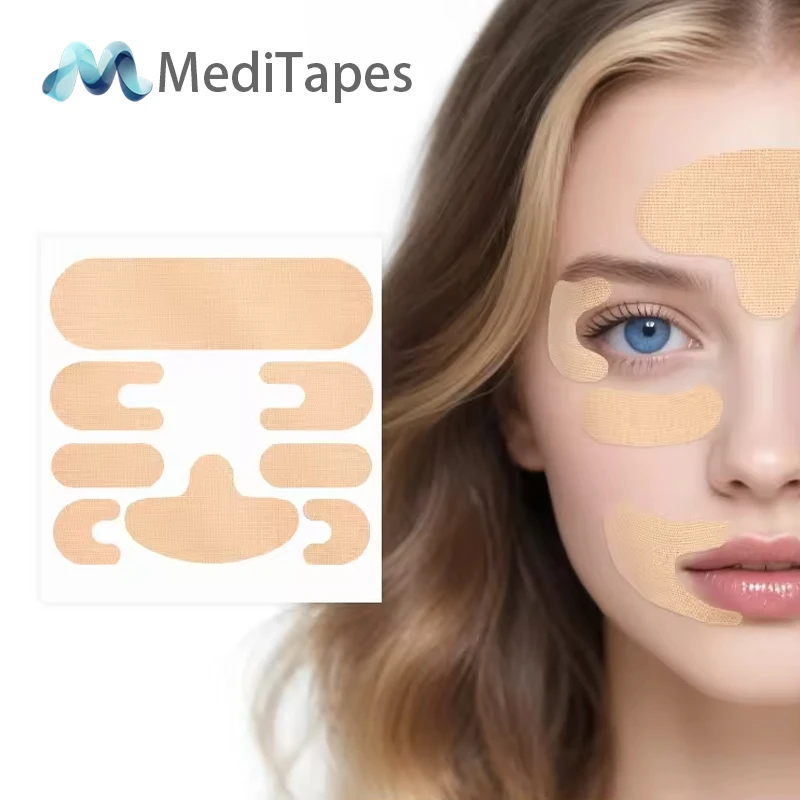
Forehead & Eye Wrinkle Smoothing Patches – Professional Salon Supply
Professional grade Forehead & Eye Wrinkle Smoothing Patches. Designed for beauty salons and clinics, these facial wrinkle patches provide an instant lifting effect and deep hydration. Enhance your spa treatments with our non-invasive anti-aging strips. Bulk pricing available.
The Controversial Take: Pick Both, Not One
I’m gonna be real with you. Alot of brand owners think they have to rigidly choose between being a “Gen-Z acne brand” or a “mature anti-aging brand.”
That is outdated, narrow-minded thinking.
Human skin doesn’t care about your neat little marketing categories. People in their 30s and 40s deal with fine lines and stress-induced hormonal breakouts at the exact same time. Why on earth would you force them to buy a hydrocolloid face patch from your competitor and a silicone patch from you?
If you want to absolutely maximize your brand’s revenue, you should offer both. Launch a hydrocolloid face patch to acquire younger customers cheaply and build massive brand awareness. Then, as those customers age, or as you cross-sell to their parents through gift-guides, introduce the silicone line to capture that high-margin silicone wrinkle patch ROI.
You can even combine the concepts. We are seeing innovative brands create a hybrid hydrocolloid face patch infused with retinol or peptides. This blurs the line completely. By taking the fast-acting form factor of a hydrocolloid face patch and the active ingredients of an anti-aging serum, you create a brand new, highly profitable category.
When you work with a versatile manufacturer, you aren’t forced into a corner. Check out our Facial Wrinkle Patch category. We have the technology to produce an ultra-thin hydrocolloid face patch that is virtually invisible, and we also manufacture heavy-duty, medical-grade silicone patches. You don’t have to compromise on quality for either line.
Real Success Stories from the Trenches
Let me share a couple of stories from brands we’ve worked with. I’ll keep the brand names anonymous to protect my clients, but the revenue numbers and strategies are 100% real.
Brand X: The Viral Hydrocolloid Strategy
Brand X came to us wanting to source the cheapest possible hydrocolloid face patch from overseas. I told them absolutely no. If you sell a garbage product that falls off the face in the middle of the night, your repurchase rate drops to literally zero. We helped them formulate a premium hydrocolloid face patch with uniquely tapered edges so it blends into the skin seamlessly.
They launched it specifically as a daytime patch. Because it was invisible, college kids were wearing it to class. Their repurchase rate skyrocketed to 65% within 90 days. They are now moving millions of units of this single hydrocolloid face patch, and the market acceptance was basically instantaneous.
Brand Y: The High-Ticket Silicone Play
Brand Y was a boutique dermatology clinic that wanted to create a retail product. They definately didn’t want to compete in the crowded acne space. They wanted a premium product for their wealthy, aging clientele. We developed a custom-shaped silicone chest and neck patch for them.
Their focus was purely on maximizing silicone wrinkle patch ROI. Because they sold it directly in their clinic and online to existing patients via email newsletters, their customer acquisition cost was practically zero. Their silicone wrinkle patch ROI was off the charts—over 800% profit margin in the first quarter alone. The clients loved the reusable aspect, and it felt like a sustainable, eco-friendly option compared to throwing away plastic every single night.
Summary Breakdown
Still on the fence? Here is a quick cheat sheet to help you visualize the business models.
| Business Metric | Hydrocolloid Face Patch | Silicone Wrinkle Patch |
|---|---|---|
| Primary Goal | Acne, spot treatment, absorbing fluid | Anti-aging, hydration, preventing skin folding |
| Market Acceptance | Extremely high, viral potential, younger skew | High among 35+ demographic, clinical appeal |
| Retail Price Point | Lower ($10 – $20) | Higher ($30 – $80+) |
| Repurchase Rate | Very Fast (Weekly/Monthly) | Slower (Every 2-3 months due to reuse) |
| Initial Profit Margin | Lower per unit, requires volume scaling | High per unit, instant day-one profitability |
| Long-term ROI | Driven by sheer volume and brand loyalty | Driven by high AOV and cross-selling |
As you can see, these materials serve two entirely different business models. The blemish patch is your high-velocity, high-turnover product. It keeps the lights on, pays your warehouse rent, and brings massive, cheap traffic to your website.
The silicone patch is your margin-builder. It elevates your brand’s perceived value and delivers a massive silicone wrinkle patch ROI that allows you to fund future R&D and scale your team.

Reusable Silicone Face Patches for Wrinkles – Custom OEM Factory
Direct from factory: Reusable Silicone Face Patches. Our premium facial wrinkle patches are washable and durable, offering long-term anti-wrinkle benefits. We support full OEM customization for size and packaging. Partner with us for reliable manufacturing of silicone wrinkle pads.
Frequently Asked Questions (FAQ)
1. Can a hydrocolloid face patch be used effectively for wrinkles?
Not really. A hydrocolloid face patch is specifically engineered to absorb moisture and fluids from the skin (like from an active pimple). It doesn’t provide the heavy structural occlusion needed to flatten deep wrinkles. If you want to target aging and see real results, you need silicone to maximize your silicone wrinkle patch ROI.
2. Why is the repurchase rate for acne patches so much higher than silicone?
It’s simply the nature of the product lifecycle. A hydrocolloid face patch is a single-use item. Once it absorbs the impurities and turns white, you throw it in the trash. Since breakouts happen frequently, consumers burn through packs very quickly. Silicone patches are washable and reusable, which naturally extends the time between purchases.
3. Is it more expensive to manufacture silicone or hydrocolloid?
Medical-grade silicone is generally more expensive to source, mold, and package than the materials used for a standard hydrocolloid face patch. However, because you sell silicone at a much higher retail price, the margins are actually very healthy. Blemish dots are cheaper to produce, but you need to move them in massive volumes to see a substantial cash return.
Ready to Scale Your Skincare Line?
Look, reading about profit margins and calculating your theoretical silicone wrinkle patch ROI on a notepad is great, but at some point, you actually have to pull the trigger. The market isn’t waiting around for you to make up your mind. Every single day you delay, another brand is capturing your ideal customer’s loyalty.
You need a manufacturing partner who actually gets the business side of skincare, not just the factory production side. At MediTapes, we engineer products designed to sell and keep customers coming back. Whether you are ready to dominate the acne market with a customized, invisible hydrocolloid face patch, or you want to tap into the lucrative anti-aging sector and maximize your silicone wrinkle patch ROI, we’ve got your back.
Stop guessing about formulations, adhesives, and margins. Let’s look at your brand, analyze your audience, and figure out the exact product that will drive the best results for your bottom line.
Reach out to us today. You can browse our full range of solutions on the MediTapes Homepage or drop us a line directly at info@meditapes.com. If you want to get a custom quote or just chat about what material makes the most sense for your next big launch, head over to our Contact Us page. Let’s build a product your customers literally can’t stop buying.