Look, if you sell medical supplies to hospitals or sleep clinics, you already know how annoying it is when a product fails in the field. Procurement managers don’t give second chances. If you supply them with nasal strips that peel off after two hours or, even worse, tear the skin off an elderly patient, your contract is dead.
I see this happen alot. Distributors often get blinded by cheap prices from generic factories and end up buying standard consumer-level stuff, thinking it will pass in a clinical setting. Let me be blunt: 90% of the nasal strips on the market are completely unfit for medical use. They are basically glorified scotch tape with a weak piece of plastic inside.
If you are supplying respiratory wards, sleep centers, or post-op recovery units, you need actual medical grade nasal strips. Not the stuff you buy at a gas station for a snoring spouse.
We need to talk about what actually separates genuine medical grade nasal strips from the standard OTC snoring strips, the physics behind how they work, and why things like being medical CE certified actually matter for your bottom line.
Why Hospitals Hate Standard OTC Snoring Strips
You might be thinking, “A nasal strip is just a sticker with a spring, right?” Wrong.
I’ve had debates with buyers who honestly believe there is zero difference between OTC snoring strips and professional medical grade nasal strips. This is a dangerous mindset. Standard OTC strips are built for a completely different environment. They are designed for a healthy 30-something adult sleeping in an air-conditioned bedroom for 7 hours.
Hospitals are different. Patients sweat. They have oily skin. They might be under anesthesia, wearing CPAP masks, or dealing with skin sensitivities from medications. When you stick standard OTC snoring strips on these patients, two things usually happen:
- The adhesive fails because of moisture (diaphoresis).
- The adhesive is way too aggressive and causes MARSI (Medical Adhesive-Related Skin Injury) when the nurse rips it off.
Neither of these outcomes is acceptable. Medical grade nasal strips are engineered to solve these exact biomechanical problems. They use specialized hypoallergenic acrylic or silicone adhesives that balance peel strength with skin safety.
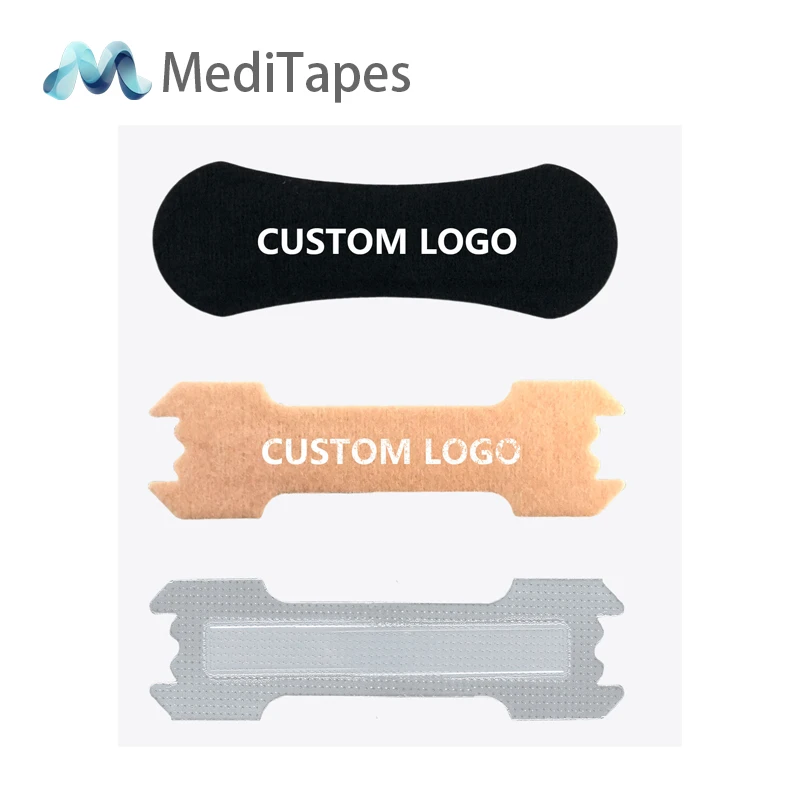
Large & Medium Nasal Strips Manufacturer – Custom Size 55mm 66mm
Direct from the manufacturer: Nasal strips in 55mm, 66mm, and custom sizes. We offer precision-cut strips that fit all nose shapes securely. Our factory ensures competitive pricing for bulk orders. Improve sleep quality for your customers with our proven nasal strip technology.
The Engineering Behind Medical Grade Nasal Strips
To really understand what you are buying, you need to look at the math and materials. A nasal strip works by applying an upward force on the nasal valve to decrease airway resistance.
In medical grade nasal strips, the spring band is usually made from biaxially-oriented polyethylene terephthalate (BoPET). The restoring force (the pull) has to be precisely calibrated. If it’s too weak, the airway doesn’t open. If it’s too strong, the adhesive fails and the strip pops off the nose.
Here is the basic physics equation factories use to calculate the restoring force of the plastic band:
F = (E * w * t^3) / (4 * L^3) * y
Where:
- F = The spring force pulling up on the skin
- E = Young’s Modulus of the PET material
- w = Width of the plastic band
- t = Thickness of the band
- L = Length of the flexible section
- y = Vertical displacement (how much it bends over the nose)
Makers of cheap OTC snoring strips just guess these dimensions. They use whatever scrap plastic they have. Manufacturers of true medical grade nasal strips test this force dynamically. For an adult medical grade product, the restoring force is typically engineered to sit right around 22 to 26 grams of pull. Any higher, and you risk skin shearing.
The Adhesive Problem (And How We Fix It)
The glue is where most B2B buyers get screwed over. You need to look at the MVTR (Moisture Vapor Transmission Rate). This is how breathable the tape is. If the tape isn’t breathable, sweat pools underneath it, and the medical grade nasal strips will slide right off the patient’s face.
The formula for MVTR is pretty straightforward:
MVTR = m / (A * T)
(m = mass of moisture lost, A = area of the tape, T = time).
For clinical applications, you want medical grade nasal strips with an MVTR of at least 800 g/m2/24h. Your standard OTC snoring strips usually clock in at a miserable 200 g/m2/24h. They suffocate the skin.
Also, the peel adhesion strength on medical grade nasal strips is tested strictly according to ISO standards. We test 180-degree peel strength using the equation:
P = F / W (Force divided by Width).
A proper clinical strip gives you a consistent peel strength of around 1.2 N/cm. It holds strong but releases cleanly when a nurse removes it.
Quick Breakdown: Medical Grade vs OTC
If you’re pitching to a hospital procurement board, show them this data. It makes the purchasing decision obvious.
| Feature / Spec | Standard OTC Snoring Strips | Medical Grade Nasal Strips |
|---|---|---|
| Adhesive Type | Generic industrial acrylic | Biocompatible hypoallergenic (ISO 10993) |
| Spring Material | Standard PVC or cheap PET | Calibrated BoPET dual-bands |
| Breathability (MVTR) | Low (< 300 g/m2/24h) | High (> 800 g/m2/24h) |
| Skin Injury Risk | High (skin tearing common) | Extremely Low (anti-shear design) |
| Wear Time Guarantee | 6-8 hours (ideal conditions) | 10-12+ hours (clinical conditions) |
| Regulatory Status | Often unregulated | Medical CE certified / FDA Class 1 |
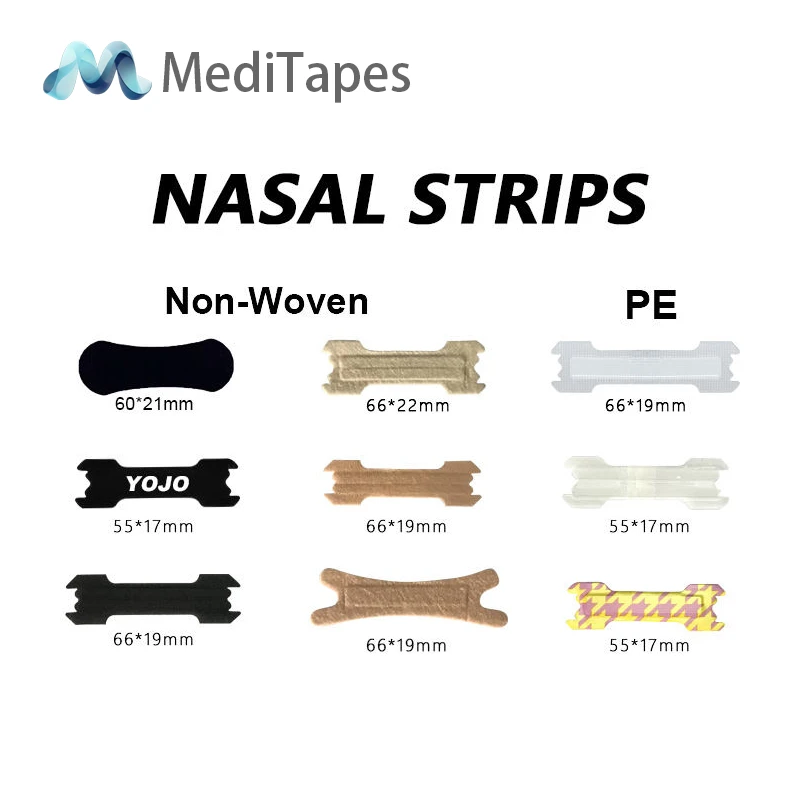
Bulk Medical Grade Nasal Strips – Drug-Free Congestion Relief
Source safe, drug-free congestion relief with our medical-grade nasal strips. These hypoallergenic strips gently lift nasal passages to alleviate snoring and cold symptoms. A trusted choice for medical suppliers requiring consistent quality and flexible bulk packaging options.
Why “Medical CE Certified” Actually Matters
I hear distributors complain about compliance all the time. Yes, paperwork is annoying. But if you are selling into the European Union, the UK, or even top-tier markets in Asia and the Middle East, offering medical CE certified products is a baseline requirement.
Under the new EU MDR (Medical Device Regulation), the rules got way stricter. You can’t just slap a CE logo on a box of tape anymore. Medical grade nasal dilators are usually classified as Class I medical devices. This means the manufacturer needs a proper Quality Management System (like ISO 13485).
When you source medical grade nasal strips that are medical CE certified, you are protecting your own business from liability. If a patient gets a severe allergic reaction to an uncertified strip you sold to a clinic, the legal blowback hits you.
When you partner with a manufacturer that actually produces medical CE certified goods, the biocompatibility testing (Cytotoxicity, Sensitization, and Irritation tests under ISO 10993) is already done. You just hand the technical file over to the hospital buyer and boom—you win the tender.
Real Examples from the Trenches
Let’s step away from the theory for a minute. I want to share a couple of real scenarios from our B2B clients to show you how selling the right medical grade nasal strips changes the game. I won’t use their real names for obvious confidentiality reasons, but the numbers are 100% accurate.
Scenario 1: The German Sleep Clinic Network
A mid-sized distributor in Munich was supplying a network of 14 sleep apnea clinics. They were buying cheap OTC snoring strips from a random trading company. The clinics used these strips alongside CPAP machines to keep nasal airways open.
The problem? The clinics reported a 15% failure rate. The strips were popping off due to the humidity from the CPAP masks.
The distributor switched their sourcing to proper medical grade nasal strips. Because these medical grade nasal strips used a high-MVTR spunlace non-woven fabric and medical CE certified adhesives, the failure rate dropped to 0.4%. The clinics signed a 3-year exclusive supply contract with the distributor.
Scenario 2: Post-Op Care in the UK
A supplier was bidding for an NHS trust contract for post-rhinoplasty airway management. Standard OTC snoring strips were immediately disqualified by the procurement board because they lacked the required biocompatibility data.
The supplier reached out to us for medical CE certified solutions. We provided them with our medical grade nasal strips which had full ISO 13485 traceability and clinical safety data. They won the bid over three larger competitors simply because their documentation proved the product was safe for compromised skin.
How to Source Reliable Medical Grade Nasal Dilators
Alright, so how do you actually find a good supplier for medical grade nasal strips? Don’t just go on Alibaba and sort by the cheapest price. That’s a rookie mistake.
When you are vetting a manufacturer for medical grade nasal strips, ask them these specific questions:
- Can I see your ISO 13485 certificate? If they only have ISO 9001, run away. ISO 9001 is for general manufacturing. ISO 13485 is for medical devices.
- What is the peel strength of your adhesive? If they don’t know the exact N/cm measurement, they aren’t making medical grade nasal strips. They are just buying generic tape and cutting it into shapes.
- Are your products actually medical CE certified? Ask for the Declaration of Conformity.
At MediTapes, we don’t mess around with consumer-grade junk. We focus strictly on the professional market. Our medical grade nasal strips are engineered specifically for B2B buyers who need to supply hospitals, sleep clinics, and pharmacies with products that actually perform under pressure.
We control the adhesive formulation, the PET band calibration, and the sterile packaging processes. This means when you buy medical grade nasal strips from us, you get a product that passes hospital audits every single time.
Don’t Ruin Your Reputation Over Bad Tape
To wrap this up, your reputation as a medical distributor relies on the quality of the consumables you provide. Medical grade nasal dilators might seem like a small line item on a hospital’s procurement list, but they interact directly with the patient’s skin and airway.
Trying to pass off OTC snoring strips as clinical tools is a massive risk. Upgrading your catalog to include genuine medical grade nasal strips that are fully medical CE certified will not only protect your business but also give you a massive edge over competitors who are still peddling cheap drug-store knockoffs.
If your current supplier is hiding their technical specs or ignoring your questions about medical CE certified compliance, it’s time to upgrade.
Go check out our contact us page or shoot an email directly to info@meditapes.com. Tell us what volume of medical grade nasal strips you need, and we will send you the technical data sheets and some real samples so you can test the adhesive yourself.
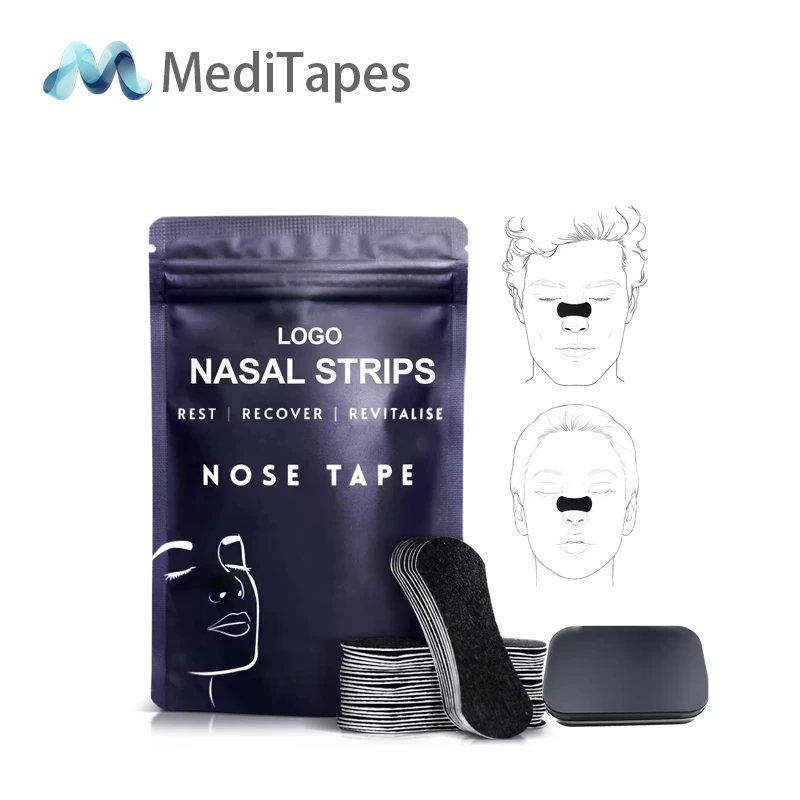
Sports Nasal Strips for Athletes – Enhanced Airflow & Performance
Boost athletic performance with our specialized sports nasal strips. Engineered to open nasal passages, they increase oxygen intake during workouts. Perfect for sports brands seeking durable, sweat-resistant strips. Available in various sizes (55mm/66mm) for optimal fit.
FAQ for B2B Buyers
Q: Can we use our own branding on your medical grade nasal strips?
Absolutely. A massive part of our B2B business is private labeling. Since our factory produces the medical grade nasal strips from scratch, we can print your logo on the backing paper, the individual wrappers, and the retail or hospital bulk boxes. Just keep in mind that if you need the product to remain medical CE certified under your brand, we will need to help you navigate the OEM/OBL paperwork.
Q: How long can medical grade nasal strips sit in a hospital warehouse before the glue goes bad?
Good question. Adhesives degrade over time, especially if the warehouse isn’t climate-controlled. Standard OTC snoring strips usually die after 12 months. Our medical grade nasal strips have a validated shelf life of 36 months when stored properly (between 10°C and 30°C, away from direct UV light). The medical-grade acrylic we use is highly stable.
Q: What makes your medical grade nasal dilators better than the famous name brands in pharmacies?
The famous pharmacy brands are built for retail profit margins and standard consumers. They work okay for a mild snorer. Our medical grade nasal strips are built for clinical environments. We use a higher-grade spunlace backing for better moisture vapor transmission, and our adhesive is strictly ISO 10993 compliant for medical use. Plus, since we sell B2B wholesale, your margins as a distributor will be significantly better than if you just resold retail brands.
Q: Do you offer different sizes of medical grade nasal strips for pediatric or adult wards?
Yes. Nose anatomy varies wildly. We manufacture medical grade nasal strips in standard, large, and pediatric sizes. The spring restoring force (that F = (E * w * t^3) / (4 * L^3) * y formula I mentioned earlier) is customized for each size. A pediatric strip has a much lower restoring force to protect the delicate cartilage of younger patients.
Q: Are your medical grade nasal strips latex-free?
100% yes. Latex allergies in clinical settings are a nightmare. Every single component in our medical grade nasal strips, from the release liner to the primary adhesive, is completely latex-free and hypoallergenic. This is a mandatory requirement for any product claiming to be medical CE certified today.
Ready to stop dealing with peeling tape and angry hospital buyers? Let’s fix your supply chain. Visit MediTapes or email info@meditapes.com right now to get wholesale pricing on genuine medical grade nasal strips.