You know the drill. You walk into a procurement meeting, and the finance team is waving a spreadsheet around, asking why we can’t just stick with the standard acrylic tapes. They’re cheap, they stick like crazy, and we’ve used them for decades.
But here’s the thing—if you are sourcing for geriatrics or the NICU, that “cheap” tape is likely causing Medical Adhesive-Related Skin Injuries (MARSI). And treating a single skin tear on an 80-year-old patient costs a lot more than the price difference per roll.
Recently, the buzz in the medical supply chain has been all about patient safety protocols tightening up regarding skin integrity. We’ve seen a massive shift in demand. As a Silicone gel tape manufacturer, we see the lab results firsthand. Acrylics are aggressive; silicone is smart.
Let’s cut through the marketing fluff and get into the actual engineering differences between these two adhesives, and why choosing the right Silicone Gel Tape is the only viable move for sensitive skin applications.
The Chemistry of “Ouch”: How Acrylics Work
To understand why Silicone Gel Tape is superior for fragile skin, you have to look at how acrylic adhesives function. Acrylics are pressure-sensitive adhesives (PSAs) based on long-chain polymers. They work by flowing into the microscopic irregularities of the skin.
Over time (we’re talking hours), the acrylic adhesive increases its bond strength. It flows deeper and deeper into the skin’s crevices. This is called “dwell time.”
When a nurse rips that tape off 24 hours later, the bond between the adhesive and the skin is often stronger than the bond between the skin cells themselves.
The Result: Epidermal stripping. You aren’t just removing the tape; you are removing the top layers of the stratum corneum.
The Physics of Silicone Gel Tape Adhesion
Silicone works differently. It’s softer. In technical terms, it has a lower surface energy and higher viscoelasticity compared to acrylics.
We use a specific calculation in our labs to determine “wettability” or how well the tape settles. While I can’t write the complex code here, the logic follows this text-based formula for Work of Adhesion:
Work of Adhesion = Surface Tension of Liquid + Surface Tension of Solid – Interfacial Tension
Because Silicone Gel Tape has low surface tension, it “wets” the surface of the skin instantly without needing time to flow into crevices aggressively. It creates a seal, not a weld.
When you remove Silicone Gel Tape, the release force remains constant. It doesn’t spike. It lifts off the skin without taking cells with it. This is the fundamental difference that procurement officers often miss when just looking at unit price.
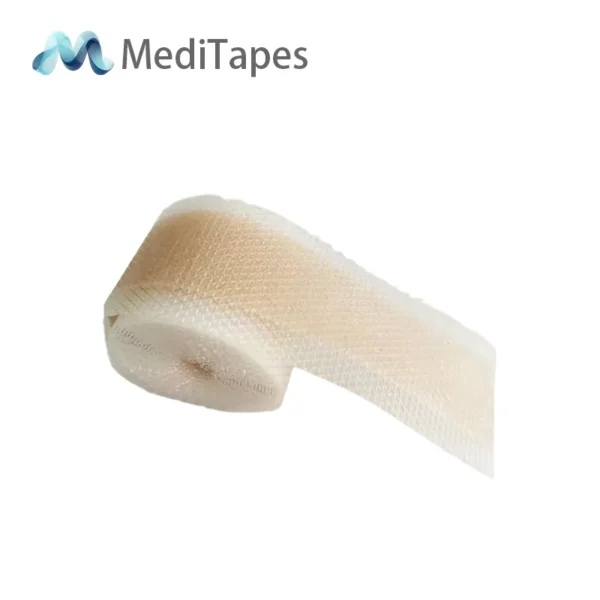
Waterproof Silicone Gel Tape for Lash Extensions & Eyelid Lifting
Designed for beauty professionals, this Silicone Gel Tape is gentle enough for the delicate eye area. Ideal for eyelash extensions and eyelid lifting, this silicone tape holds securely yet peels off painlessly. Breathable and hypoallergenic, ensuring client comfort during long procedures.
Comparing the Contenders: Silicone vs. Acrylic
Let’s break this down into data. I hate vague comparisons, so here is what we typically see when testing a standard sensitive skin medical tape against a standard acrylic surgical tape.
| Feature | Acrylic Adhesive | Silicone Gel Tape |
|---|---|---|
| Initial Tack | High | Low to Medium |
| Adhesion over Time | Increases significantly (gets harder to remove) | Stays constant (easy removal anytime) |
| Breathability (MVTR) | Variable (often occlusive) | High (often perforated) |
| Repositioning | Impossible (loses stick once removed) | Excellent (can be moved multiple times) |
| Skin Stripping Risk | High | Negligible |
| Residue | Often leaves sticky gunk | Clean removal |
| Best Use Case | Securing heavy tubing, critical fixation | Neonatal, Elderly, Frequent dressing changes |
Why “Sticky” Isn’t Always Better
There is a misconception in our industry that higher peel force equals better tape. If you are securing an endotracheal tube in a trauma situation, yes, you want acrylic (or even rubber-based) adhesives. You don’t want that thing moving.
But for chronic wound care? For holding a gauze pad on a dialysis patient? High peel force is the enemy.
We had a client—a large distributor in Europe—who initially complained that our Silicone Gel Tape didn’t feel “sticky enough” to the touch compared to the acrylic tape they were importing from a generic supplier.
I told them to try it on a peach. Yes, a piece of fruit.
Stick acrylic tape to a peach and rip it off. The skin rips. Stick our Silicone Gel Tape to the peach and remove it. The fuzz stays on the peach.
For a patient with paper-thin skin (common in geriatrics), their skin is the peach.
The Economic Case for Silicone Gel Tape
Let’s talk money. I know you have margins to hit.
Silicone Gel Tape is more expensive to manufacture than acrylic. The raw materials (platinum-cured silicones) cost more, and the coating process requires more precise machinery to ensure the gel thickness is uniform.
However, let’s look at the Total Cost of Ownership (TCO) for your end-users (hospitals and nursing homes).
If a hospital uses cheap acrylic tape and causes a skin tear:
- Nursing time increases: They have to treat the wound.
- Material costs increase: They need dressings and antibiotics.
- Reimbursement risks: In some regions, hospital-acquired injuries (like MARSI) are not reimbursable.
A study I read recently suggested that switching to Silicone Gel Tape for at-risk patients reduced skin injuries by over 80%. That is a massive cost saving that you, as a distributor, can use as a selling point. You aren’t selling tape; you’re selling “risk reduction.”
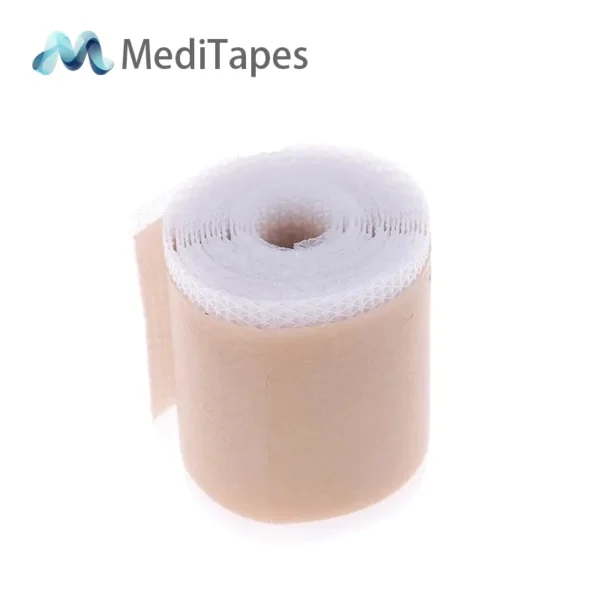
Soft Silicone Gel Tape Roll for Scar Management – Wholesale Bulk
Source high-quality Soft Silicone Gel Tape rolls for effective scar treatment. This medical-grade silicone gel tape mimics the skin’s natural barrier to hydrate and heal scars. Cut-to-size design offers versatility for various scar sizes. Contact us for competitive wholesale pricing and private labeling.
Real World Application: The NICU and Geriatric Wards
We supply a lot of Silicone Gel Tape to distributors focusing on the extremes of age.
The NICU (Neonatal Intensive Care Unit):
Premature babies have skin that isn’t fully keratinized. It’s gelatinous. Ripping acrylic tape off a preemie is devastating. Silicone Gel Tape is the gold standard here because it is hydrophobic (repels water) but permeable to gas. It handles the humidity of an incubator without losing adhesion or macerating the skin.
Geriatric Care:
As we age, the junction between the dermis and epidermis flattens out. This means the layers slide apart easily. A strong adhesive shear force can literally separate the skin layers. We have seen Silicone Gel Tape become the default spec for any long-term care facility that actually tracks skin health metrics.
Technical Insight: Adhesive Technology and Manufacturing
As a Silicone gel tape manufacturer, the magic happens in the “Cross-linking.”
Silicone gels are lightly cross-linked polymers. This gives them that soft, tacky feel. If we cross-link them too much, they become hard rubber (won’t stick). If we cross-link too little, they leave a gooey residue on the skin.
Getting this balance right is what separates premium MediTapes products from the inconsistent batches you might find on the spot market.
We control the coat weight precisely.
- Too thin: Not enough tack to hold the dressing.
- Too thick: The tape rolls up at the edges (edge lift) and catches on clothing.
We aim for a specific coating weight (measured in grams per square meter, or gsm) that optimizes breathability while maintaining a gentle hold.
A Quick Note on “Repositionability”
This is a huge feature for nurses. Acrylic tape is “one and done.” If the nurse applies it crooked, they have to throw it away and get a new piece. That’s waste.
Silicone Gel Tape can be lifted and re-applied. You can check the wound without changing the dressing entirely. This reduces material consumption, which paradoxically can make the “expensive” tape cheaper per patient day.
When NOT to use Silicone
I want to be honest here. I’m not going to tell you silicone is perfect for everything.
If the application requires high shear strength—like securing a splint or heavy tubing that is under tension—silicone might be too soft. It can “creep” (slide) under constant load. In those specific scenarios, a high-quality acrylic or zinc oxide tape is still the better engineering choice.
But for holding dressings, IV lines on sensitive skin, or covering fragile areas? Silicone wins every time.
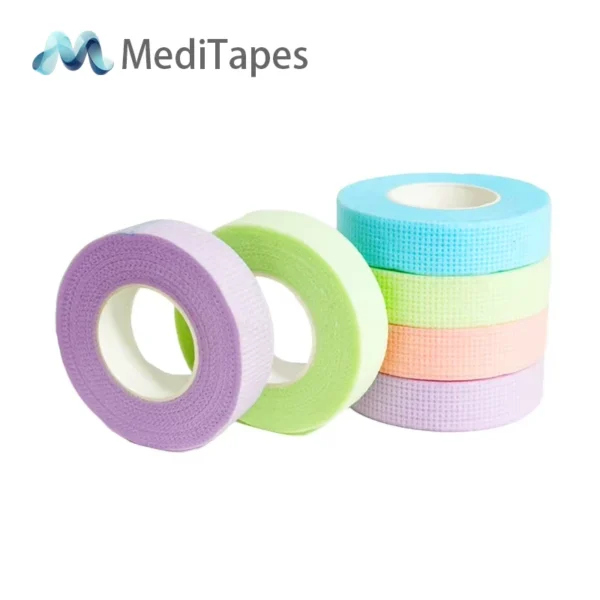
Hypoallergenic Non-woven Silicone Tape – Breathable & Pain-Free Removal
Our Non-woven Silicone Tape is designed for patients with sensitive skin, providing secure fixation for dressings and tubes. This hypoallergenic silicone gel tape is water-resistant yet breathable, preventing skin maceration. It peels off gently, making it an essential choice for elderly and pediatric care.
Navigating the Supply Chain
When you are looking for a Silicone Gel Tape supplier, ask them about their “release liners.”
Silicone sticks to almost nothing… except silicone. This makes manufacturing tricky. The release liner (the plastic backing you peel off) needs a special fluorosilicone coating so the tape releases easily.
We’ve seen competitors use cheap liners where the tape rips or sticks to the backing, making it useless in a clinical setting. It’s these small details in adhesive technology that define quality.
Also, ask for biocompatibility reports. ISO 10993 cytotoxicity testing is non-negotiable. If your supplier can’t produce a recent report for their Silicone Gel Tape, run away.
FAQ: Common Questions from Buyers
Q: Is Silicone Gel Tape waterproof?
A: Generally, yes. The silicone adhesive itself is hydrophobic, meaning it repels water. However, the backing material (usually PU or non-woven fabric) determines if the whole tape is waterproof. Most of our Silicone Gel Tape products are designed to be shower-proof.
Q: Can Silicone Gel Tape be sterilized?
A: Yes, but it depends on the method. Ethylene Oxide (EtO) is the standard. Gamma radiation can sometimes alter the cross-linking of the silicone, making it too hard or too soft. As a manufacturer, we handle the sterilization validation to ensure the Silicone Gel Tape remains stable.
Q: Why is the price of Silicone Gel Tape higher than paper tape?
A: It comes down to raw materials and processing speed. Silicone requires a platinum catalyst for curing (yes, actual platinum), which is expensive. Also, the coating lines run slower to ensure the gel cures perfectly. But remember, the cost savings in preventing skin tears outweighs the unit price.
Q: Does Silicone Gel Tape cause allergies?
A: Silicone is biologically inert. True allergies to medical-grade silicone are extremely rare, much rarer than allergies to the rosins or acrylates found in standard tapes. It is the safest bet for “hypoallergenic” claims.
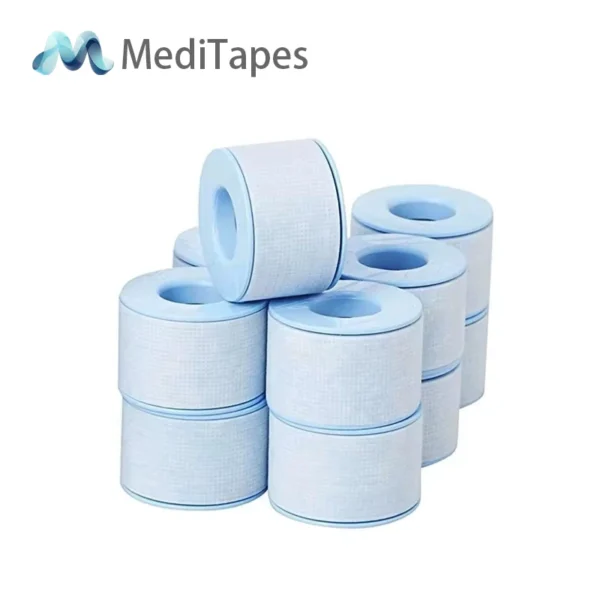
Waterproof Non-woven Silicone Gel Tape for Scar Management & Protection
Beyond fixation, this Non-woven Silicone Gel Tape aids in scar management by maintaining an optimal moisture balance. The waterproof barrier protects wounds from external contaminants. Trust this silicone tape for post-surgical care, offering a gentle, repositionable solution that promotes faster healing.
Conclusion: Make the Switch for Safety
Look, the market is moving. Buyers are becoming more educated about skin health. They aren’t just buying “tape” anymore; they are buying patient outcomes.
Continuing to push aggressive acrylics for elderly or pediatric patients is a liability. Silicone Gel Tape offers the balance of security and gentleness that modern healthcare demands.
Don’t let your inventory fall behind the clinical standards.
If you are ready to upgrade your product line with high-quality, reliable Silicone Gel Tape, or if you just want to geek out about adhesive physics and get a sample to try the “peach test” yourself, we are here to help.
Ready to protect your patients and your reputation?
- Contact Us today for a consultation.
- Request a quote regarding our Silicone Gel Tape manufacturing capabilities.
- Email us directly at info@meditapes.com for technical specs.
Let’s stick together (pun intended) and provide the best care possible.