So, it’s happening again. Or at least, the talking heads on cable news are screaming that it’s about to happen. Congress is deadlocked, the budget is in limbo, and you are sitting there staring at a tracking number for a 40-foot container of surgical tape that’s currently floating somewhere in the Pacific.
If you deal with medical supply imports, the phrase “Government Shutdown” doesn’t just mean political theater. It means nightmares. It means your goods getting flagged, FDA inspectors calling out sick, and your demurrage fees stacking up faster than you can count.
Look, I’ve been in this game a long time. I’ve helped clients move cargo when Washington DC was basically closed for business. It’s messy, it’s stressful, but it isn’t impossible. You just need to stop relying on “Plan A” because, during a shutdown, Plan A is usually the first thing to die.
In this guide, I’m going to walk you through exactly what happens at US Customs and Border Protection (CBP) when the government shuts down, and how you can bulletproof your medical supply imports against the chaos.
The Real Deal: What Actually Breaks?
There is a massive misconception that when the government shuts down, the borders just… close. That’s not true.
CBP officers are considered “essential personnel.” They have to show up to work. The ports of Long Beach, Savannah, and NY/NJ will remain open. However, just because they are working doesn’t mean they are happy about it. They aren’t getting paid until the shutdown ends. Morale tanks. And when morale tanks, productivity slows down. A lot.
But here is the kicker that most importers miss: It’s not just about CBP.
When you are handling medical supply imports, you aren’t just dealing with Customs. You are dealing with Partner Government Agencies (PGAs). Specifically, the FDA.
While CBP officers are essential, the administrative support staff at the FDA might not be. This is where the bottleneck happens. If your medical supply imports require a physical exam or a document review by an FDA compliance officer, and that officer is furloughed, your container sits. Period.
The “Essential” vs. “Non-Essential” Trap
You need to understand who is actually stamping your papers.
- CBP Officers: Essential. Will work (slowly).
- FDA Inspectors: Mostly essential for high-risk goods, but lower priority for routine medical supply imports.
- EPA/FCC Support: Often furloughed.
- Licensing Clerks: Gone home.
If your paperwork isn’t perfect—and I mean 100% perfect—before the clock strikes midnight on the budget deadline, you are stuck in a pile that nobody is looking at.

OEM Sterile Non-woven Fabric Dressing Roll – Bulk Medical Supply
Sourcing reliable non-woven fabric dressing rolls? We offer OEM/ODM bulk manufacturing. This sterile medical dressing roll features grid-backing for precise cutting. High-quality acrylic adhesive ensures durability. Perfect for distributors seeking customized branding and cost-effective wound care solutions for hospitals.
Strategy 1: The “Perfect Paperwork” Protocol
I cannot stress this enough. During normal times, you might get away with a minor typo on a commercial invoice. During a shutdown? That typo is a death sentence for your timeline.
To ensure your medical supply imports clear fast, your broker needs to have the entry filed before the vessel arrives. This is called Pre-Arrival Processing (PAP).
You need to double-check your HTS (Harmonized Tariff Schedule) codes. For our clients buying from the Surgical Tape Series, we usually look at codes under heading 3005. But if you misclassify a specialized tape as a general textile, you trigger a flag.
Actionable Checklist:
- Bill of Lading (BOL): Must match the Commercial Invoice exactly.
- FDA Product Codes: verify they are active.
- Manufacturer ID (MID): Ensure the address matches the FDA registration.
If you are sloppy here, you can’t blame the government.
The Cost of Delay: A Math Reality Check
Let’s talk money. The biggest risk to medical supply imports during a shutdown isn’t the goods spoiling (unless you’re importing live tissue), it’s the fees.
Terminal operators do not care about Congress. If your box sits on the dock past the free days (usually 4-5 days), they charge you. Then the steamship line charges you detention.
Here is a simple way to calculate your risk exposure. You can copy this into your own spreadsheet (plain text formula):
Total Shutdown Risk Cost = (Demurrage Rate x Days Delayed) + (Detention Rate x Days Delayed) + Chassis Split Fees
If you are bringing in medical supply imports via Los Angeles, demurrage can hit $300+ per day. If a shutdown lasts 2 weeks, that’s $4,200 gone. Per container.
Diversifying Entry Ports: Don’t Follow the Herd
Everyone dumps cargo in LA/Long Beach or Newark. When government shutdown logistics kick in, these major hubs become parking lots. The staffing shortages are felt most acutely here because the volume is so high.
We advise MediTapes clients to look at secondary ports.
Port Comparison for Medical Supply Imports:
| Feature | Major Ports (LA/NY) | Secondary Ports (Savannah/Tacoma/Norfolk) |
|---|---|---|
| Volume | Extremely High | Moderate |
| Shutdown Impact | Severe Congestion | Manageable Delays |
| CBP Morale | Low (Overworked) | Stable |
| FDA Availability | High backlog | Faster processing |
| Chassis Availability | Scarce | Good |
Moving your medical supply imports through Tacoma instead of Long Beach might add 2 days to ocean transit, but it could save you 10 days in customs clearance during a shutdown.

Wholesale Medical Cotton Cloth Tape – CE/ISO Certified Supply
Bulk supply of medical cotton cloth tape for global distributors. Our CE/ISO certified tape ensures medical-grade quality for surgical environments. This medical cotton cloth tape features jagged edges for easy tearing and strong adhesion. Contact us for competitive B2B pricing on bulk orders.
Case Study: The Zinc Oxide Incident (Anonymized)
I want to share a quick story. Last year, we had a client (let’s call them “Client X”) who was desperate. They had a massive order of zinc oxide tape needed for a hospital chain in the Midwest. This falls under our Surgical Tape Series category.
The government was threatening a shutdown. Client X usually ships DDP (Delivered Duty Paid) to Chicago via rail from the West Coast.
We looked at the tea leaves. We knew that if the rail workers slowed down combined with a CBP slowdown, that cargo would be stuck in the “Black Hole” of Chicago rail ramps.
What we did:
- We shifted the medical supply imports to enter via the Port of Norfolk.
- We pre-cleared the goods 5 days before arrival.
- We trucked the goods from Norfolk to Ohio, bypassing the rail entirely.
The Result: The government did shutdown for a brief period. Competitors’ medical supply imports were stuck in Long Beach for 12 days. Client X got their tape 3 days early.
It wasn’t magic. It was just understanding government shutdown logistics and avoiding the choke points.
Why Data Validity Matters More Now
During a shutdown, customs delay is the norm. But if you get flagged for a data audit, you are finished.
You cannot fake values. You cannot estimate weights. If CBP decides to inspect your container, they have to move it to an exam station. During a shutdown, the exam stations are running on skeleton crews.
A “Tail Gate” exam that usually takes 48 hours could take 2 weeks.
An “Intensive” exam? Forget about it. You might not see that cargo for a month.
Rule of Thumb: Be honest. If you are importing medical supply imports, declare the correct value. Do not try to save $50 on duties only to lose $5,000 in delays.
Financial Liquidity: The Hidden Killer
Here is something nobody talks about. CBP usually requires duty payment within 10 days of entry summary. But if the shutdown messes with the ACH (Automated Clearing House) systems or your bank’s interaction with the fed, things get weird.
Ensure your Customs Bond is sufficient. If you have a rush of medical supply imports landing at once to beat a deadline, you might cap out your bond. If your bond is insufficient, CBP will reject the entry. Getting a bond rider approved during a shutdown? Good luck. It’s nearly impossible because the underwriters can’t get verification from the government.
Check your bond sufficiency now. Not next week.
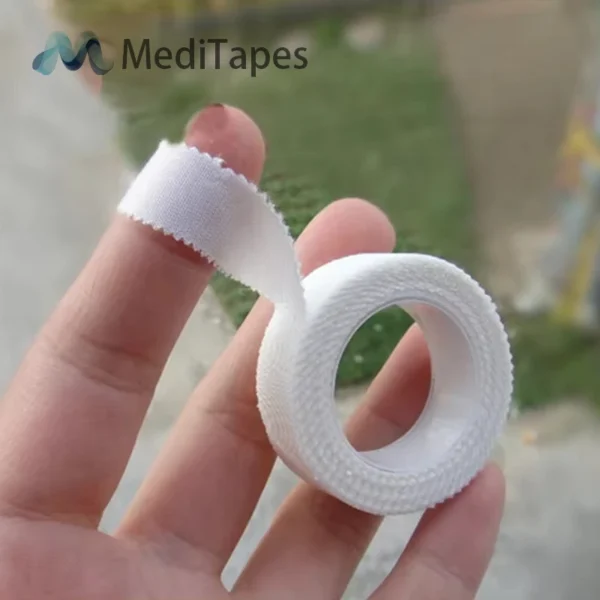
Versatile Silk Surgical Adhesive Tape – Water-Resistant & Conformable for Diverse Medical Applications
Experience the versatility of our Silk Surgical Adhesive Tape, designed to meet the rigorous demands of modern medical practice. This highly conformable silk surgical tape adapts seamlessly to body contours, providing secure fixation even in challenging areas. Its water-resistant properties ensure dressings remain intact during showering or light exposure to moisture, enhancing patient independence and comfort. Ideal for a wide range of applications, from securing bulky dressings to delicate pediatric care, our medical silk tape delivers consistent, reliable performance.
The Human Element: Be Nice to Your Broker
Your freight forwarder and customs broker are your lifelines. During a shutdown, they are stressed out of their minds. They are getting screamed at by every client who wants their medical supply imports yesterday.
If you want your emails answered first, be the client who is organized. Send your docs in one PDF. Don’t drip-feed information.
At MediTapes, we work closely with logistics partners to ensure our medical supply imports are prioritized. We know that when we ship to you, you are relying on that inventory.
Risk Management for the Future
If you are reading this and the government is already shut down, you are in damage control mode. But for the future, you need a strategy.
- Safety Stock: Increase inventory levels of critical items like those in our Surgical Tape Series by 15% around budget voting seasons (usually September/October).
- Incoterms: Switch from Ex-Works (EXW) to DDP if you don’t have a strong logistics team. Let the seller take the risk. Or, if you trust your broker, control the freight with FOB so you can reroute if needed.
- Carrier Selection: Don’t use the cheapest carrier. Use the one with their own terminals.
Why MediTapes is Different?
We aren’t just manufacturers; we are logistics nerds. We understand that high-quality medical tape is useless if it’s sitting in a container in Newark.
When you order medical supply imports from us, you are leveraging our experience in navigating these exact scenarios. We monitor the political climate in DC as closely as we monitor our production lines.
We prepare the PGA data for medical supply imports meticulously. We verify the FDA product codes before the ship leaves the dock.
If you are tired of wondering where your cargo is, maybe it’s time to work with a partner who gets it.
Controversial Opinion: The “Just-in-Time” Model is Broken
I’m going to say it. “Just-in-Time” (JIT) inventory management is dangerous for medical supply imports when relying on US ports.
MBA professors love JIT. But they aren’t the ones explaining to a hospital why they have no bandages. In the current geopolitical climate, with shutdowns becoming an annual tradition, you need “Just-in-Case” inventory.
Holding an extra month of stock costs money. But it costs less than losing a client because you stocked out during a customs delay.
Managing Expectations with Your Customers
If you are a distributor, you have people screaming at you. Transparency is your only shield.
Don’t promise a delivery date you can’t control. Use the term “Estimated Time of Arrival” (ETA) heavily. Blame the government—everyone understands that.
Send them updates on their medical supply imports. “The vessel has docked,” “Customs has the paperwork,” “Waiting on FDA release.”
Silence kills relationships. Updates, even bad ones, build trust.

OEM Surgical PE Tape Manufacturer – Hospital Grade Medical Supply
As a premier factory, we offer customizable OEM Surgical PE Tape solutions for global brands. Our hospital-grade Surgical PE Tape meets international standards (CE/ISO). Partner with us for wholesale Surgical PE Tape with customized widths, lengths, and packaging to fit your market.
Key Features:
– OEM/ODM Customization.
– CE/ISO Certified Factory.
Technical Summary for the Logistics Team
If you are forwarding this article to your logistics manager, here is the cheat sheet for handling medical supply imports during a shutdown:
- PGA Interaction: FDA holds are the primary risk, not CBP.
- ACE Portal: Keep monitoring status updates in ACE.
- Manifest Data: Ensure ISF is filed 24 hours prior to loading, no exceptions.
- Post-Entry: Expect liquidation extensions.
Frequently Asked Questions (FAQ)
Q1: Will my medical supply imports be rejected if the government shuts down?
No, they won’t be rejected solely due to a shutdown. However, medical supply imports are subject to delays. CBP and FDA will prioritize “life-saving” medications, but general medical supplies (like tapes or gauze) might sit longer in the queue. The risk is delay, not rejection, provided your paperwork is flawless.
Q2: Can I avoid demurrage fees during a government shutdown?
Technically, no. The terminals are private entities (mostly) and they want their money. However, you can mitigate this by pre-clearing your medical supply imports via PAP so the cargo can be picked up the moment it hits the ground. Some carriers might offer “shutdown clauses” in contracts, but that’s rare. Negotiate extra free time before you book.
Q3: How do I know if my medical supply imports are stuck due to FDA or CBP?
Your broker can see the status codes in the ACE (Automated Commercial Environment) system. If you see a “PGA Hold,” the FDA is the bottleneck. If it’s a “Manifest Hold,” it’s CBP. Knowing the difference helps you know who to annoy to get your medical supply imports moving.
Q4: Should I switch to Air Freight for medical supply imports during a shutdown?
Air freight clears faster because airports have different logistics flows than seaports, but the customs process is the same. If the FDA officer at the airport is furloughed, you are still stuck. Only use air freight for medical supply imports if the margin justifies the 10x cost increase and you really need the speed.
Let’s Get Your Supply Chain Moving
Look, the government might be confused, but your business shouldn’t be. You need a reliable partner for your medical supply imports who understands the landscape.
Don’t let a budget dispute in Washington destroy your quarter.
If you are looking for high-quality surgical tapes and a partner who actually understands the logistics of getting them to your door, we need to talk.
- Check out our products: Surgical Tape Series
- Have a specific logistics question? Email us directly at
info@meditapes.com.
Ready to secure your supply chain?
Stop guessing. Contact Us Today to get a quote and a delivery plan that works.