Look, I’ve been in this industry long enough to see some truly horrific things pass as “medical grade” products. If you are a distributor or a sourcing manager for a hospital group, you know the drill. You go on Alibaba or hit up a trade show, you find a factory offering prices that seem too good to be true, and you ask for samples.
The samples arrive. They look white, they look clean, and they are sticky. Great, right?
Wrong.
Most buyers make the mistake of just sticking the tape on their hand for five seconds and saying, “Yeah, it works.” That is exactly how you end up with a container load of product that peels off patients’ skin in two hours or, worse, rips their skin off upon removal.
I am writing this guide because I want you to understand what medical tape quality actually looks like when you peel back the layers (pun intended). At MediTapes, we have seen competitors cut corners that you wouldn’t believe. So, grab your sample box, and let’s rip these apart.
1. The “Ghost” Adhesion (Initial Tack vs. Long-Term Hold)
This is the number one trick in the book. Cheap manufacturers know you are likely going to do a “finger tack test.” You touch the adhesive, it feels super sticky, and you think the medical tape quality is solid.
Here is the science bit—but I’ll keep it simple. There is a massive difference between Initial Tack and Permanent Adhesion.
Cheap glues (often low-grade hot melt pressure-sensitive adhesives) are formulated to feel aggressive immediately. But they lack the cross-linking structure to hold that bond over time, especially when moisture (sweat) gets involved.
How to catch this in a sample:
Don’t just stick it on your desk. Stick the tape on your forearm. Leave it there. Go make a coffee. Wait 30 minutes.
If the edges start curling up (we call this “flagging”) within half an hour on dry skin, that medical tape quality is garbage. It means the shear resistance is too low.
In our lab, we use a formula to calculate Peel Adhesion, usually based on ASTM D3330 standards. While you can’t do this at your desk without a machine, the concept is:
Peel Adhesion = Force (N) / Width (mm)
If a supplier claims their tape meets ISO standards but the sample curls on your arm while you’re typing an email, they are lying about their data. We see this all the time with quality issues sports tape specifically, where sweat resistance is non-negotiable.

OEM Surgical PE Tape Manufacturer – Hospital Grade Medical Supply
As a premier factory, we offer customizable OEM Surgical PE Tape solutions for global brands. Our hospital-grade Surgical PE Tape meets international standards (CE/ISO). Partner with us for wholesale Surgical PE Tape with customized widths, lengths, and packaging to fit your market.
Key Features:
– OEM/ODM Customization.
– CE/ISO Certified Factory.
2. The Dreaded Adhesive Transfer (The “Goo” Factor)
You pull the tape off, and it leaves a sticky, grey residue on your skin. Congratulations, you just failed the Cohesive Strength test.
This happens because the internal strength of the glue (cohesion) is weaker than the bond between the glue and your skin (adhesion). Basically, the glue prefers your skin over the tape backing.
In the medical tape quality hierarchy, this is a cardinal sin. In a clinical setting, nurses don’t have time to scrub adhesive off a patient’s sensitive skin with alcohol wipes. It causes irritation and costs time.
The “Thumb Rub” Test:
Take the sample tape. Stick it to a glass surface or your phone screen. Rub your thumb over the backing hard to generate heat (friction). Now peel it off quickly.
- Pass: The glass is clean.
- Fail: There is a gummy residue left behind.
If you see residue, toss that sample in the bin. If the medical tape quality fails at room temperature on glass, imagine what happens on a patient with a fever.
3. Edge Bleed and the “Telescoping” Roll
Have you ever picked up a roll of tape and the sides felt sticky? That is called “Edge Bleed” or “Oozing.”
This usually isn’t just a chemical issue; it’s a manufacturing tension issue. If the factory winds the tape too tight during the converting process, the pressure squeezes the semi-solid adhesive out of the sides of the roll.
Why this destroys medical tape quality:
- Contamination: That sticky edge collects dust, lint, and bacteria in the hospital storage room. It becomes a hygiene risk.
- Unwinding: It makes the tape impossible to unroll smoothly. It jerks and snaps.
Check your sample roll. Look at it from the side. Does it look like a flat saucer, or does it look like a telescope pushing out? If the layers aren’t perfectly aligned, the tension control at the factory is amateur hour.
At MediTapes, we monitor winding tension automatically. You can check out our Surgical Tape Series to see what a properly wound roll should look like. Clean edges, zero ooze.
4. Inconsistent Backing Material (The “Cheap Fabric” Trap)
Let’s talk about the substrate. Whether it’s non-woven, silk, or PE, the consistency of the backing material dictates the medical tape quality regarding breathability and tearability.
I once evaluated a competitor’s “Silk Tape” sample. To the naked eye, it looked fine. But when I tried to tear it bi-directionally (lengthwise and widthwise), it wouldn’t tear straight. It shredded.
This happens when manufacturers use low-thread-count fabrics or uneven coating processes.
The Light Test:
Hold the tape strip up to a bright light or a window.
- Good Medical Tape Quality: The weave or texture is uniform. The adhesive coating looks like a consistent shadow.
- Bad Quality: You see blotches, streaks, or pinholes of light.
Pinholes mean there is no glue in that spot. Blotches mean the glue is too thick (which reduces breathability/MVTR – Moisture Vapor Transmission Rate). Poor MVTR leads to skin maceration (that white, wrinkly skin look).
Here is a quick comparison table to help you benchmark your samples:
| Feature | High Standard (MediTapes) | Low Quality (Budget Suppliers) |
|---|---|---|
| Adhesion | Stable over 24-48 hours | High initial stick, fails in <2 hours |
| Residue | < 1% transfer | sticky mess on removal |
| Unwind Force | Smooth, consistent pull | Jerky, loud, or tears the tape |
| Edge Aesthetics | Dry, clean edges | Sticky, collects dust/dirt |
| Odor | Neutral / Medical smell | Chemical / Solvent smell |

OEM Medical Non-woven Tape Rolls | Microporous Adhesive Plaster
We provide customizable OEM Medical Non-woven Tape rolls to meet your brand specifications. This microporous adhesive plaster features soft conformity and pain-free removal. Partner with us for high-quality medical non-woven tape manufacturing and competitive factory pricing.
5. The “Mystery Smell” (Solvent Retention)
Open the sample bag and take a deep sniff. Seriously, do it.
If it smells like a nail salon or strong chemicals, run away.
Many cheap factories in our region still use aggressive solvents (like Toluene) in their adhesive coating process to save money and speed up drying. High medical tape quality production requires these solvents to be completely evaporated or recovered during manufacturing.
If you can smell the solvent, it means it is still in the glue. That is a massive sensitization risk for patients. It causes allergic contact dermatitis. We have strict residual solvent testing at MediTapes, but many small workshops don’t even have a gas chromatograph to check this.
Case Study: The Cost of Ignoring Medical Tape Quality
I want to share a story (anonymized, obviously) about a distributor in Brazil. Let’s call him “Carlos.”
Carlos was buying non-woven microporous tape. He found a supplier offering a price 15% lower than ours. The samples seemed okay—sticky, white, boxed nicely. He switched suppliers to save that 15%.
Three months later, his biggest client—a private hospital chain—threatened to sue. Why? The medical tape quality was inconsistent. One batch was fine, but the next batch had practically zero adhesion. The tape was falling off IV lines. The hospital had to re-tape patients constantly, doubling their consumption and increasing nursing labor time.
The hospital cancelled Carlos’s contract. He lost a $200k/year account to save $5k on a container.
The Lesson: Medical tape quality isn’t just about the product; it’s about consistency. A sample is a “gold standard,” but can the factory replicate that medical tape quality for 50,000 rolls?
How to Conduct a “Pro” Sample Check at Your Office
You don’t need a lab to do a 90% accurate assessment. Here is my personal checklist for verifying medical tape quality when I’m assessing raw materials:
- Visual Check: Look for telescoping rolls and dirty edges.
- Smell Test: Reject anything with a chemical stench.
- The 180-Degree Peel: Stick it to stainless steel (or a clean mug). Peel it back at a 180-degree angle. It should require consistent force, not “slip-stick” jerking.
- The Water Dunk: Apply the tape to a surface, dunk it in water. Does it turn slimy? (Common in cheap acrylate glues).
- Skin Sensitivity: Wear it yourself. If you itch after 20 mins, your patients will suffer.
We encourage our clients to perform these tests on our samples. We are confident in our medical tape quality. If you want to put us to the test, you can request a sample kit here: Contact MediTapes.
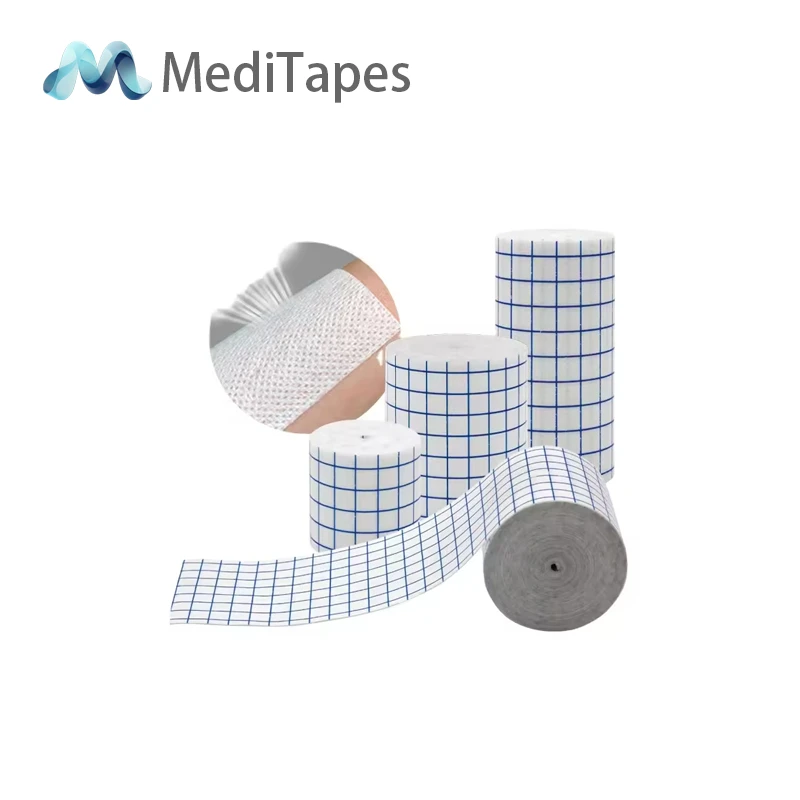
Soft Non-woven Fixation Roll for Catheters & Tubing – Latex Free
Ensure patient safety with our latex-free non-woven fixation roll. Specifically engineered for securing catheters, tubing, and instruments, this non-woven fabric dressing roll prevents accidental displacement. The soft, porous material reduces skin trauma upon removal, making it ideal for pediatric and geriatric care settings.
Why “Good Enough” Isn’t Enough
In the B2B world, I know the pressure you are under to cut costs. But medical consumables are liable products. If a piece of furniture breaks, it’s annoying. If surgical tape fails during an operation or causes a severe skin reaction, it is a lawsuit.
When you source from MediTapes, you aren’t just buying rolls of sticky fabric. You are buying the assurance that the medical tape quality is the same in Roll #1 as it is in Roll #1,000,000. We don’t play games with adhesive formulations just to save a few cents when raw material prices fluctuate.
We see a lot of quality issues sports tape in the market where manufacturers reduce zinc oxide content to save money, resulting in zero support for the athlete. We don’t do that.
FAQ: Common Questions on Medical Tape Sourcing
Q1: Why does the price of medical tape vary so much between suppliers?
A: It usually comes down to the weight of the glue (GSM) and the quality of the backing. Cheap medical tape quality often uses less glue (lower GSM) or lower-grade adhesives that don’t breathe. Also, proper curing/drying takes energy and time; cheap factories rush this, leading to solvent retention.
Q2: Can I get custom-printed cores with my brand?
A: Absolutely. Most B2B buyers require OEM services. At MediTapes, we can print your logo on the inner paper core and the box. However, high medical tape quality printing requires good vector files from your side.
Q3: How do I know if the tape is hypoallergenic?
A: “Hypoallergenic” is a marketing term, but it technically means the product has passed sensitization and irritation tests (ISO 10993). Ask the supplier for their Biocompatibility Report. If they can’t provide a recent one, their medical tape quality claims are unsubstantiated.
Q4: What is the minimum order for a custom sample run?
A: Standard samples are usually free (you just pay shipping). For custom specs (specific width or glue weight), we might need a small MOQ to set up the machine. Drop us an email at info@meditapes.com to discuss specifics.
Ready to Upgrade Your Supply Chain?
Stop gambling with your reputation. If you are tired of inconsistent medical tape quality, delays, and excuses, it is time to talk to a partner who understands the science of adhesion.
We have the certifications, the experience, and frankly, the obsession with quality that you need.
Contact MediTapes Today or browse our full Surgical Tape Series to see what professional grade looks like. Let’s get you a product that actually sticks.