If you are assembling first aid kits, specifically for the winter season, you aren’t just thinking about medical safety. You’re thinking about margins. You’re thinking about box dimensions. You’re thinking, “How do I cram effective gear into this survival tin without blowing the budget?”
I’ve been in the medical manufacturing game long enough to see trends come and go, but the debate of PBT bandage vs crepe bandage is the one that never dies. It’s the Coke vs. Pepsi of the disposable medical supply world. But here’s the thing—winter changes the rules.
When the temperature drops and gloves go on, the standard “cheapest option” might actually fail your end-user. And if you are buying components, you need to know exactly what you are paying for.
So, let’s strip away the textbook definitions and talk shop. Here is the actual lowdown on choosing between these two for your winter SKUs.
The Contenders: A Quick Reality Check
Before we look at the financials, we have to look at the mechanics. You might think a bandage is a bandage, but if you’ve ever tried to wrap a sprained ankle with frozen fingers, you know that’s not true.
PBT Bandage (The Conforming Specialist)
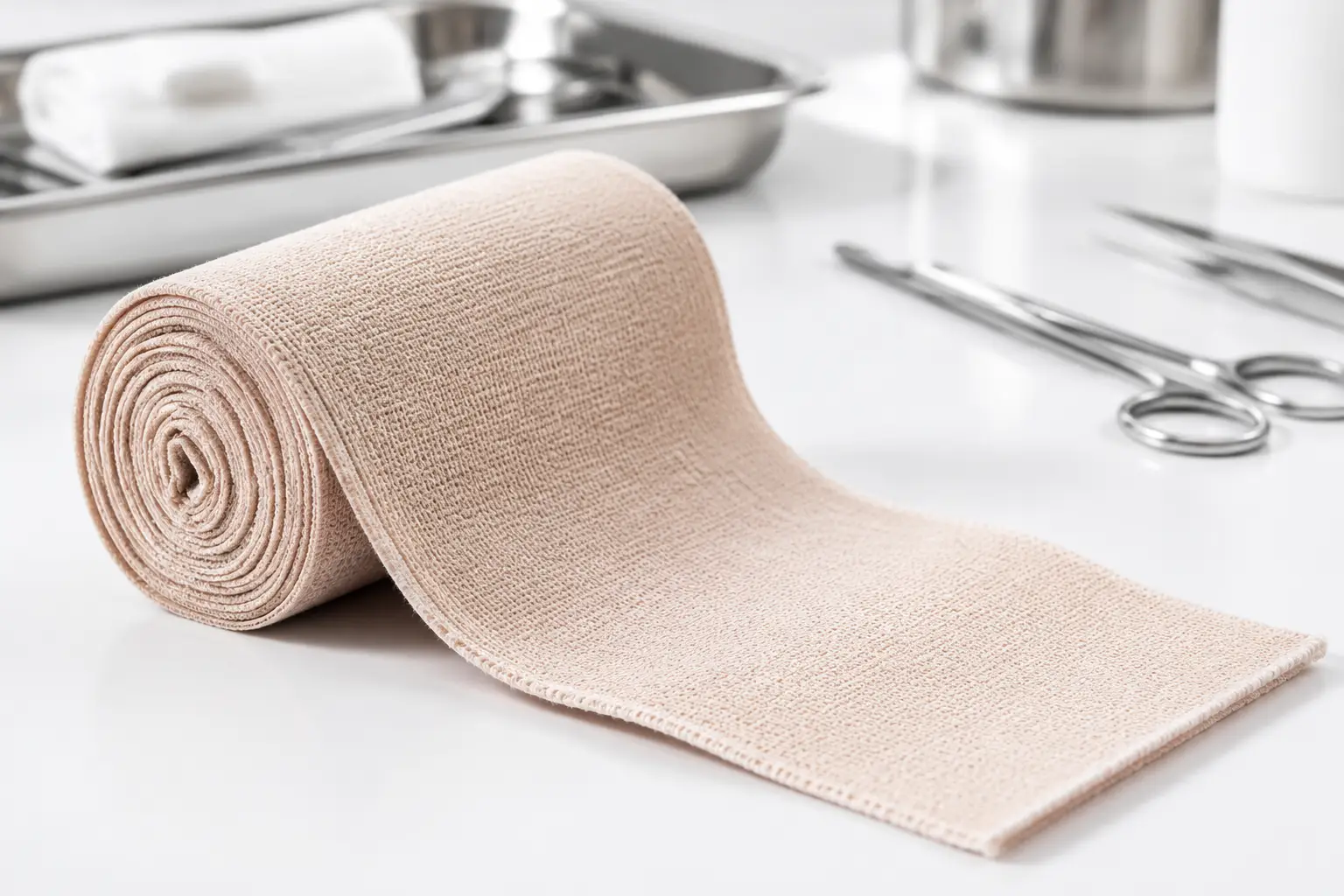
Polyester. That’s the magic word here. PBT (Polybutylene Terephthalate) bandages are synthetic. They are made from chemical fibers that have inherent elasticity without needing rubber threads woven in.
Why assemblers love them:
- They are cheap. Like, really cost-effective.
- They are thin. You can fit a longer roll into a smaller pouch.
- They don’t fray easily because the edges are usually knitted, not cut.
If you are looking for a reliable PBT Bandage to fill a general-purpose slot, this is usually the go-to.
Elastic Crepe Bandage (The Heavy Lifter)
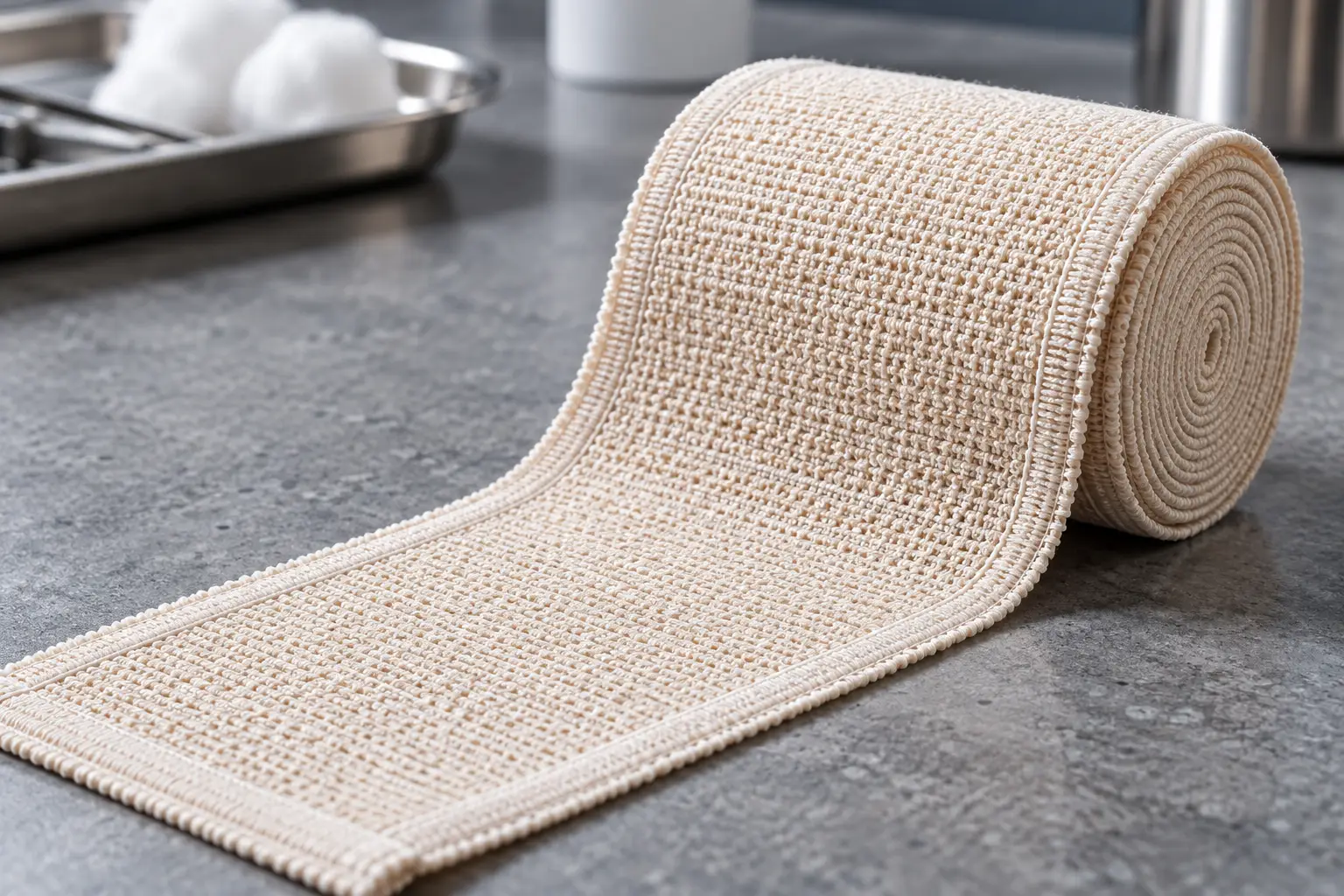
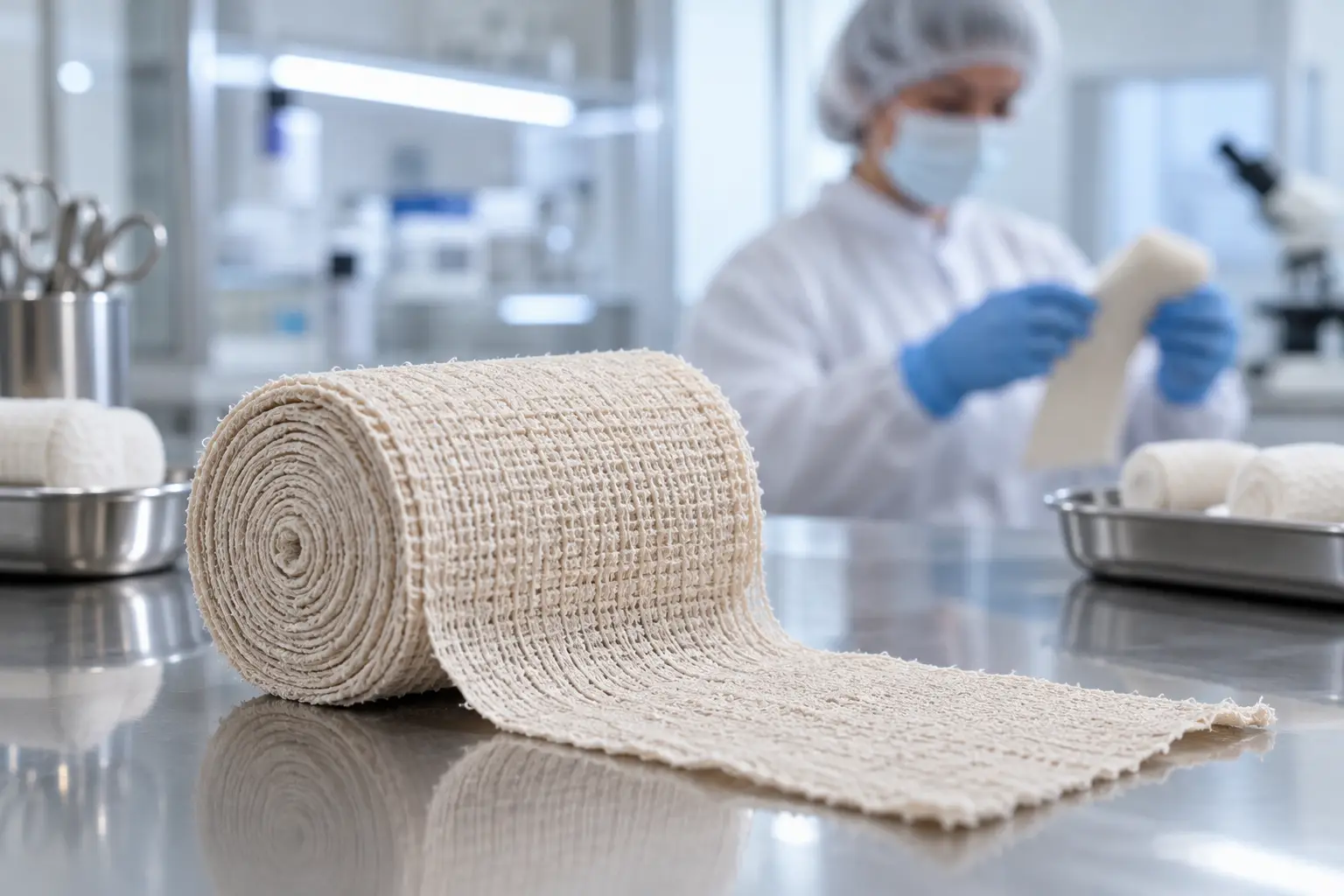
This is the classic. Usually a mix of cotton and spandex (or cotton and rubber, though that’s old school). It has that distinct “crinkly” texture.
Why medics love them:
- Actual compression. If someone twists a knee on a ski slope, PBT holds the gauze in place, but Crepe actually supports the joint.
- Absorption. Cotton breathes.
- Grip. The texture grabs onto itself better than slippery synthetics.
But for you, the buyer, Elastic Crepe Bandage implies a higher unit cost and more bulk in the package.
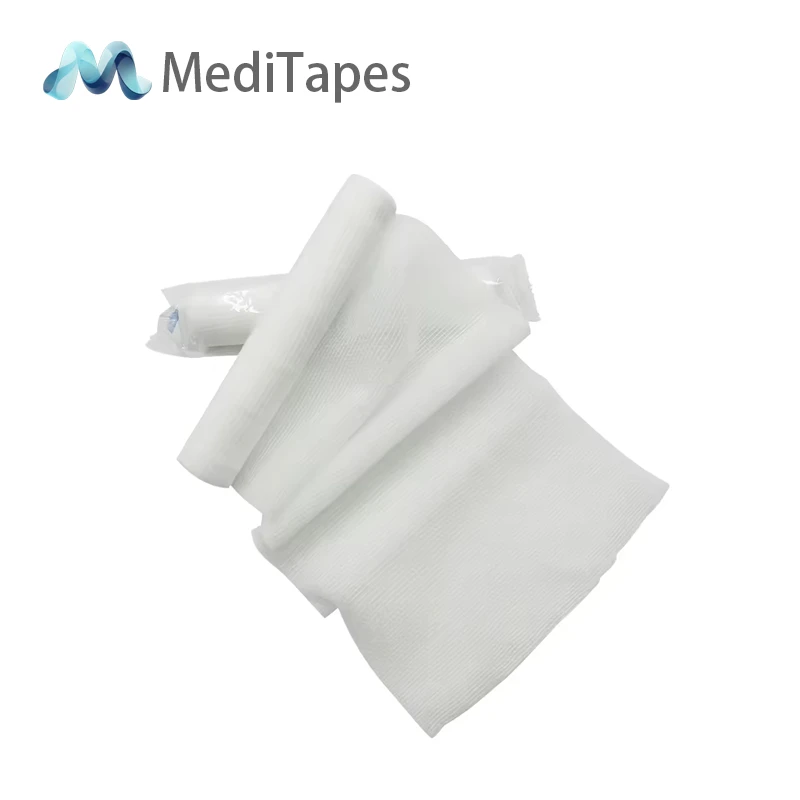
Wholesale Medical PBT Elastic Bandage for First Aid Kits – Bulk Supply
Top-tier PBT Elastic Bandage manufacturer. Our medical-grade PBT bandages are soft, breathable, and highly elastic, perfect for first aid kits. We offer bulk supply with competitive factory prices. ISO/CE certified for global export. Contact us for wholesale quotes.
The Winter Factor: Cold Weather Performance
This is where the PBT bandage vs crepe bandage comparison gets interesting. Most generic comparisons don’t account for environmental factors.
I remember a client from Canada (let’s call him Dave). Dave was assembling vehicle emergency kits for trucking fleets. He initially put high-end cotton crepe bandages in every kit. He called me up one January, frustrated. “The bandages are soaking up moisture from the condensation in the truck cabs, freezing, and becoming hard bricks.”
See, cotton is hydrophilic. It loves water. Polyester (PBT) is hydrophobic.
1. Moisture Management
In a winter survival scenario, keeping dry is life or death.
- Crepe: Absorbs moisture (snow, sweat, rain). If it gets wet and temperatures drop, it loses flexibility and can freeze stiff.
- PBT: Sheds moisture. It stays flexible even in sub-zero temps.
2. Application with Gloves
Have you ever tried to find the start of a roll of tape while wearing ski gloves? It’s a nightmare.
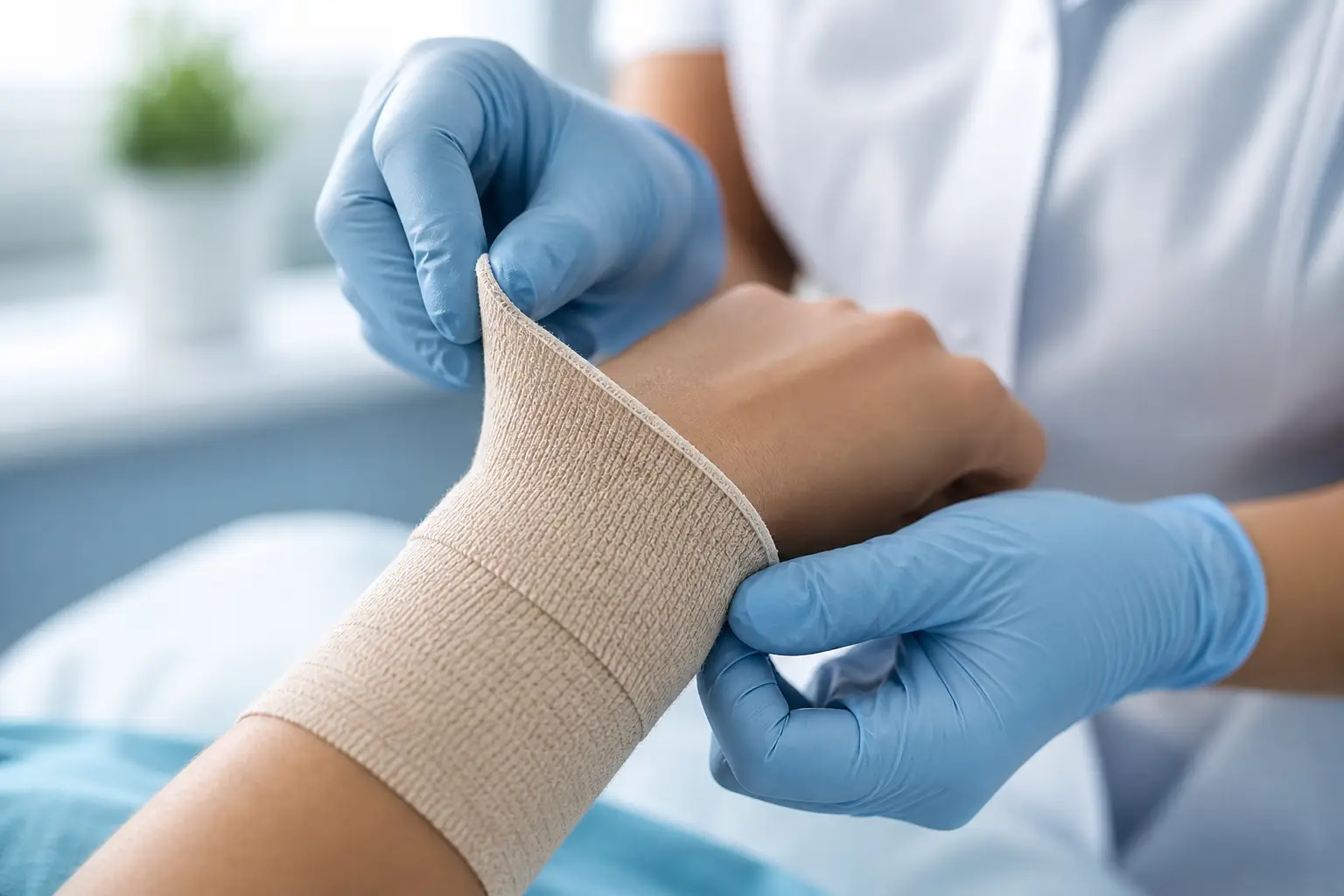
- PBT: Because it’s self-edging and clingy (in a good way), it conforms over bulky winter clothing easier than crepe.
- Crepe: Requires more tension to apply correctly. Doing this with numb fingers or thick gloves is tough.
For winter-specific kits, PBT actually scores higher on functionality despite being the budget option. That’s a rare win-win.
The Financial Breakdown (Real Math)
Okay, let’s talk numbers. You are likely sourcing crepe bandage bulk orders or looking for a PBT bandage manufacturer to cut you a deal.
The price difference isn’t arbitrary. It comes down to raw materials and GSM (Grams per Square Meter).
Here is a rough formula I use to explain costs to my B2B clients. You can use this to check if your supplier is ripping you off.
The Cost Estimation Formula:
Cost = (Length x Width x GSM / 1000) x Material Price + Manufacturing Overhead
- PBT Raw Material: Roughly $1.50 – $2.00 per kg (fluctuates with oil prices).
- Cotton/Spandex (Crepe): Roughly $3.50 – $5.00 per kg.
Let’s say you need a standard 7.5cm x 4.5m roll.
- PBT Roll (approx 28-30 GSM): Uses about 10g of material.
- Light Weight Crepe (approx 55-60 GSM): Uses about 20g of material.
- Heavy Weight Crepe (approx 75+ GSM): Uses about 25g+ of material.
The Math:
A PBT roll uses half the material weight, and that material costs half as much per kilo. Mathematically, a PBT bandage should cost about 25% to 30% of the price of a high-quality crepe bandage.
If a supplier quotes you a PBT price that is almost the same as Crepe, run. Or, if they offer you crepe bandage bulk pricing that seems lower than PBT, they are likely selling you “fake crepe” (which is just textured polyester—we see this a lot in the market).
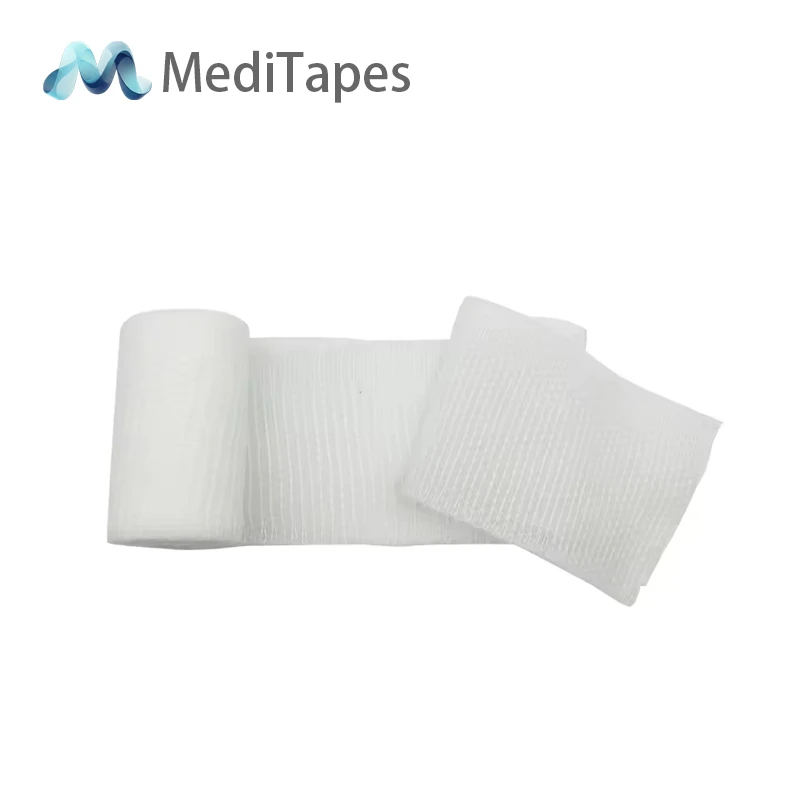
Sterile PBT Conforming Bandage Rolls High Elasticity – CE/ISO Certified
Looking for sterile PBT Conforming Bandages? Our high-elasticity PBT bandages conform easily to body contours, ensuring secure dressing retention. Ideal for hospitals and clinics. Available in various sizes with sterile packaging. Certified quality for reliable medical care.
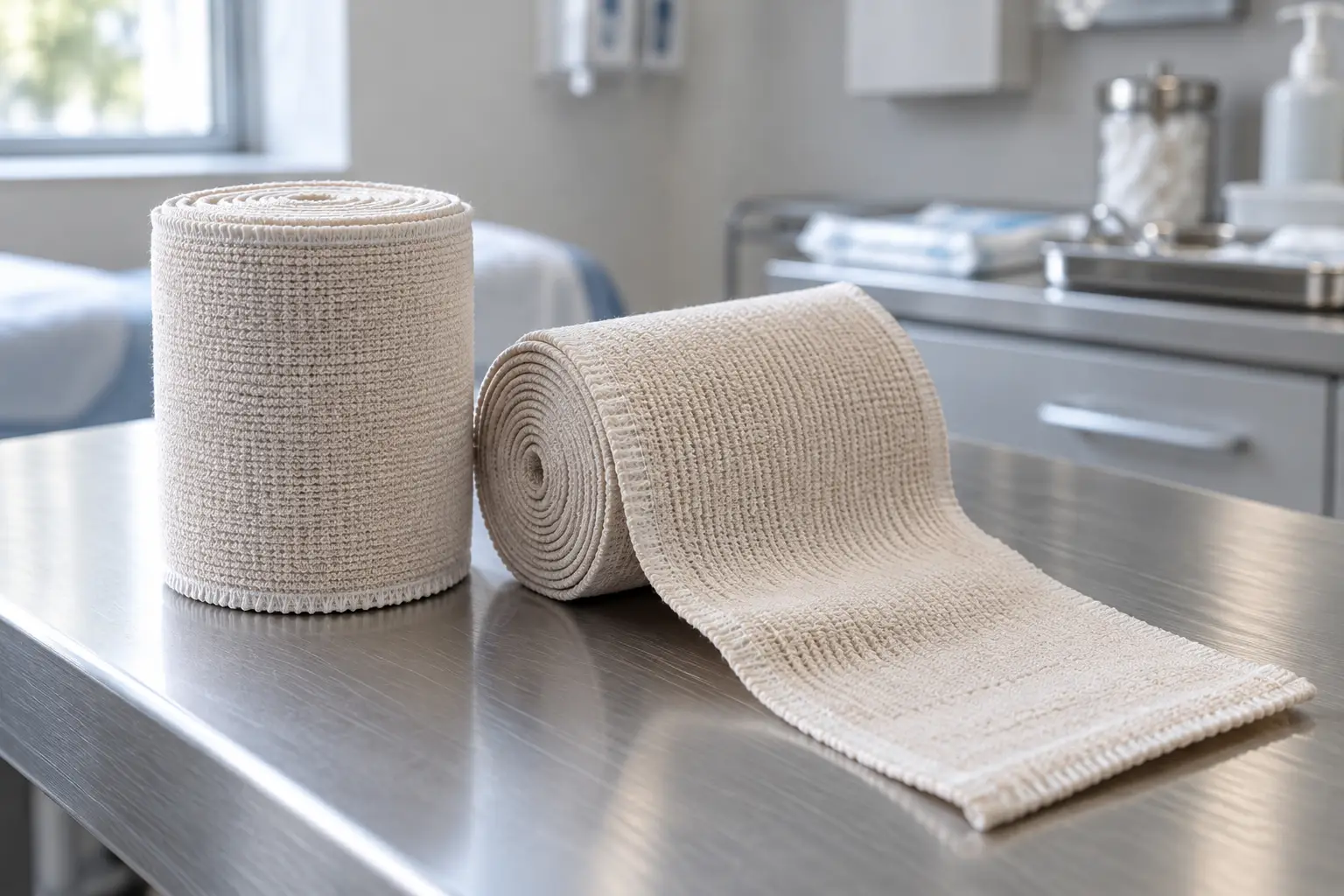
Comparison Table: PBT Bandage vs Crepe Bandage
To make this easier for your procurement team, here is a breakdown.
| Feature | PBT Bandage | Elastic Crepe Bandage |
|---|---|---|
| Material | Polyester/Viscose blend (Synthetic) | Cotton & Spandex (Natural/Synthetic mix) |
| Elasticity | High stretch (approx 150%) | Medium to High stretch (varies by GSM) |
| Primary Use | Holding dressings in place, light retention | Compression, joint support, sprains |
| Winter Performance | Excellent (Hydrophobic, stays flexible) | Moderate (Absorbs water, can freeze) |
| Bulk/Size | Low (Compact rolls) | High (Bulky rolls) |
| Cost Index | $ (Low) | $$$ (High) |
| Sterilization | Easy (usually gamma or EO) | Easy (usually EO) |
The Assembler’s Dilemma: A Case Study
I mentioned Dave earlier. But let’s look at another scenario. We worked with a mid-sized assembler in the UK, “SafetyFirst Ltd” (name changed, obviously).
They were bidding on a government tender for “Winter Resilience Kits” for local councils. The spec sheet was vague. It just said “Elastic Bandage x 2.”
The Problem:
If they used Crepe bandages, their kit cost was $12.50. Their target was $12.00.
If they used PBT, their kit cost dropped to $11.80.
The Strategy:
They didn’t just swap it quietly. They knew the procurement officer might reject “cheap” looking bandages. So, we helped them reframe the narrative in their bid.
They listed the item as: “All-Weather Conforming PBT Bandage – Frost Resistant.”
They highlighted that PBT bandage vs crepe bandage in cold weather favors PBT due to low moisture absorption. They won the bid. Not because they were cheaper (though they were), but because they justified the technical choice with environmental logic.
This is where working with the right PBT bandage manufacturer matters. At MediTapes, we can adjust the weaving density. If you want a PBT bandage that feels a bit more substantial (like a crepe hybrid) so it doesn’t look “cheap” to the end user, we can increase the GSM slightly. You still save money over cotton, but you get a better hand-feel.
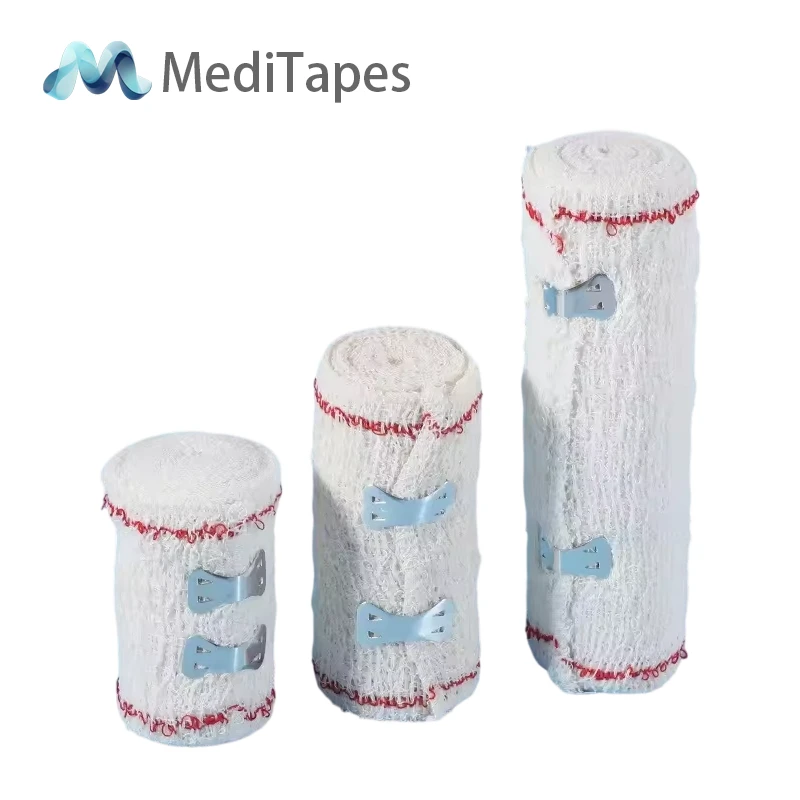
Heavy Duty Spandex Elastic Crepe Bandage – Latex Free Factory
Source premium Heavy Duty Spandex Elastic Crepe Bandage directly from the factory. Designed for strong compression in orthopedics, this latex-free crepe bandage minimizes allergic reactions. Durable elasticity ensures long-term support for severe sprains and post-surgical recovery.
Sourcing Tips: Don’t Get Burned
When you are looking to buy crepe bandage bulk or PBT, watch out for these traps.
1. The “Stretched” Length Scam
This is the oldest trick in the book. A bandage is sold as “4.5 meters.”
Is that the stretched length or the unstretched (flat) length?
Almost always, it’s stretched. But the ratio matters.
- PBT usually has a high ratio (1:2.5 or more). A 4.5m roll might only be 1.5m long when sitting in the box.
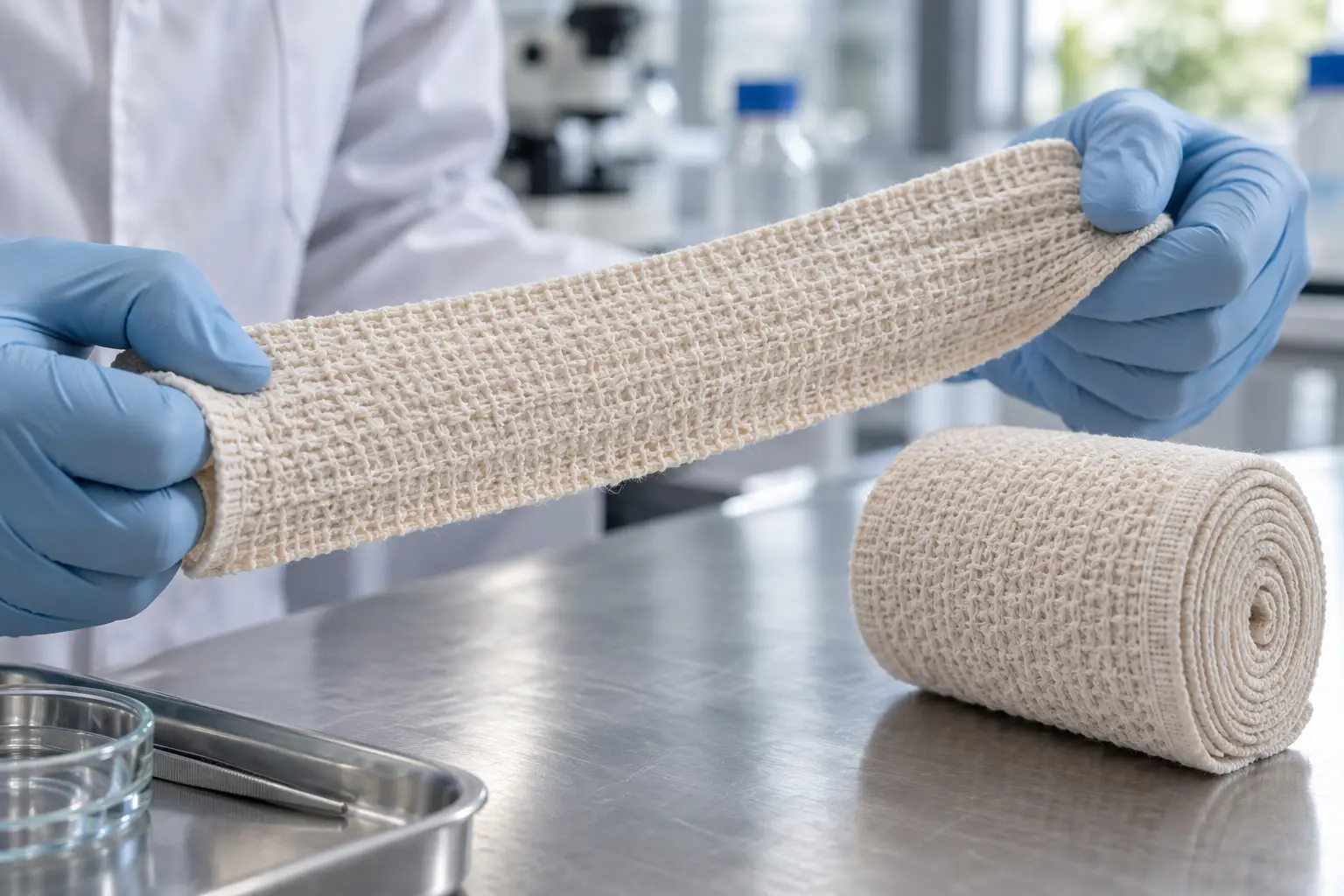
- If the weave is too loose, you pull it and it looks like a spiderweb. It’s useless.
- Tip: Always ask for samples and weigh them. Weight doesn’t lie. Length does.
2. The “Cotton” Crepe that isn’t Cotton
I’ve seen “Crepe Bandages” coming out of certain budget factories that are 100% polyester chemically treated to feel rough like cotton. They lack the absorption and grip of real cotton. If you are selling a premium kit, this will ruin your reputation.
3. Packaging Efficiency
PBT rolls can be vacuum compressed significantly. Crepe cannot be compressed as much without ruining the elastic fibers. If your kit box is small, the PBT bandage vs crepe bandage decision might be made for you purely by physics.
FAQ: Common Questions from Kit Assemblers
Q: Can I use PBT bandages for compression sprains?
A: Honestly? Not really. PBT is a conforming bandage. It is designed to hold a gauze pad on a wound or secure a splint. It doesn’t have the “snap-back” force required to reduce swelling in a sprained ankle. If your kit is strictly for “Major Trauma,” stick to Crepe or an Israeli bandage. If it’s a general “Booboo and Cuts” kit, PBT is fine.
Q: What is the shelf life difference in PBT bandage vs crepe bandage?
A: PBT wins here. Being synthetic, it doesn’t degrade as fast. The elastic threads in Crepe bandages (especially if they contain natural rubber latex) can become brittle over 3-5 years, especially if stored in hot warehouses. PBT is pretty much inert. It lasts forever.
Q: How can I tell if a supplier is a legitimate PBT bandage manufacturer?
A: Ask them about their yarn sourcing. Ask for a technical data sheet (TDS) specifying the “Elasticity Ratio” and “GSM.” If they can’t answer what the GSM is, they aren’t a manufacturer; they are a trading company flipping boxes. Also, check if they can do custom labelling—real manufacturers like us at MediTapes handle OEM branding daily.
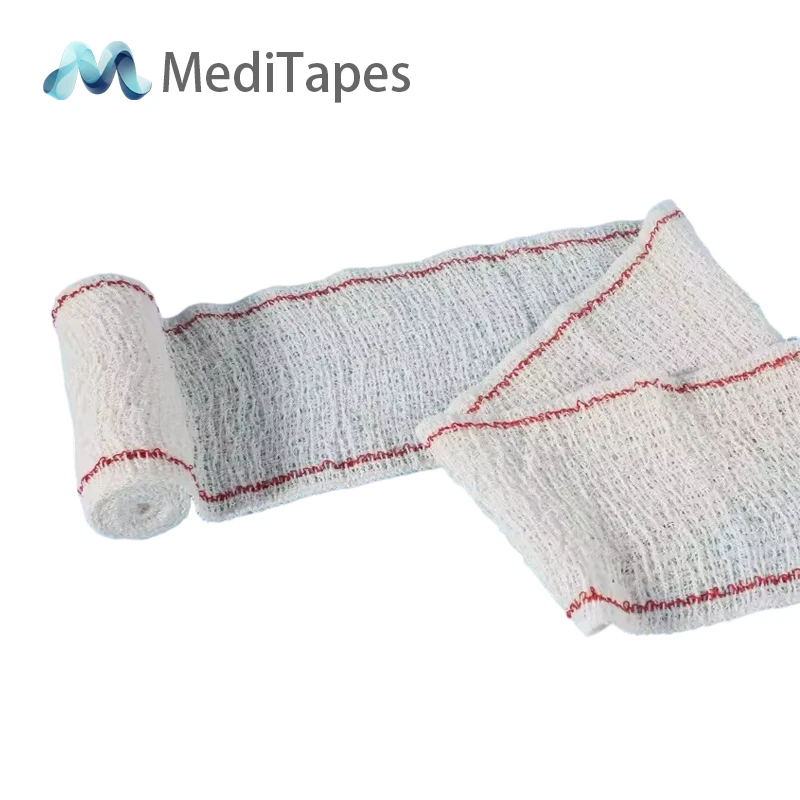
Wholesale Breathable Elastic Crepe Bandage for Sports Injuries
Bulk buy Breathable Elastic Crepe Bandage designed for sports recovery. This lightweight crepe bandage conforms easily to body contours like knees and ankles. It reduces swelling while allowing skin to breathe. A top choice for athletic trainers needing reliable sports injury support.
Making the Call
Look, there is no single right answer in the PBT bandage vs crepe bandage debate. It depends entirely on the mission profile of your kit.
- Go PBT if: You need volume, low cost, cold-weather reliability, and compact packing.
- Go Crepe if: You are building a sports injury kit, a high-end hiking kit, or need serious compression capability.
But don’t just guess. The quality of the weave makes or breaks both options. You can have excellent PBT and terrible Crepe, or vice versa.
If you are currently sourcing components and feel like you’re paying too much for crepe bandage bulk orders, or if you want to explore how a high-GSM PBT could replace your crepe usage, let’s talk.
We’ve helped dozens of assemblers optimize their load-outs without sacrificing quality.
Need a quote or a sample pack to compare the texture yourself?
Drop us a line at info@meditapes.com.
Or, check out our full range directly:
Contact Us – MediTapes