If you’ve been in the sports medicine game for more than five minutes, you’ve noticed something shifting. The days of everyone buying a 5-meter continuous roll and carrying around a pair of scissors are… well, they aren’t over, but the “convenience economy” is taking a massive bite out of that market.
I was chatting with a distributor in California last month—let’s call him Mark. Mark was frustrated. He saw the demand for precut strips skyrocketing (thanks, CrossFit and weekend warriors), but his margins were trash. He was sourcing from a generic trader, paying top dollar for fancy retail boxes that cost more to ship than the tape itself.
“I’m moving volume,” he told me, “but I’m not keeping the cash.”
Sound familiar?
If you are a brand owner looking to add precuts to your lineup, or you’re already selling them but bleeding margin, we need to have a serious talk about the economics of this. It’s not just about finding a cheap precut kinesiology tape factory. It’s about understanding the “Total Landed Cost” and the psychology of the end-user.
In this guide, I’m going to share some stuff that usually stays behind closed doors in sourcing meetings. We’ll look at the math, the packaging traps, and how to actually make money with Precut Cotton Fabric Kinesiology Tape.
The Shift: Why Precuts Are Printing Money (If Done Right)
Why are people paying a premium for pre-cut strips? It’s simple: Confidence.
Most end-users (your customers) are terrified of applying the tape wrong. They see a YouTube video, try to cut a “Y-strip” with their kitchen scissors, ruin it, and give up. Precut strips remove the error barrier.
According to recent market observations in the sports rehab sector, the segment for convenience-based recovery tools is growing faster than the traditional professional segment. We aren’t just selling tape; we are selling the assurance that they can stick it on their knee and go run that 5K without it peeling off in two miles.
But here is the controversial part: Most brands fail at precuts because they treat them like rolls.
They use the same supply chain logic. They don’t account for the massive difference in SKU management and the “Volumetric Weight” nightmare that comes with shipping pre-packaged strips.
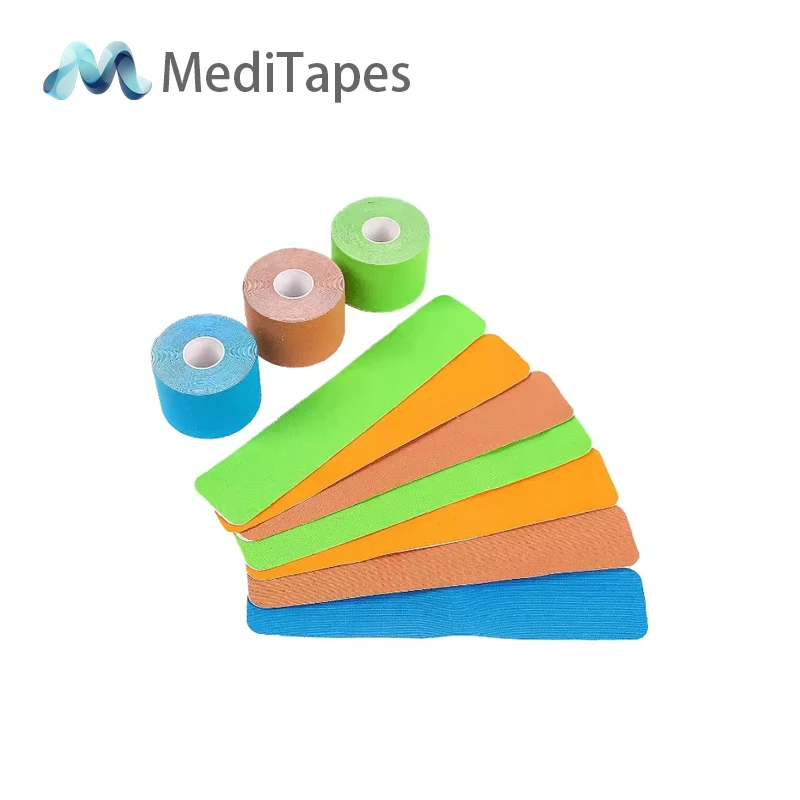
Medical Grade Precut Kinesiology Tape Factory – Custom Logo & Size
Direct from the factory: Medical Grade Precut Kinesiology Tape. Engineered for clinical use, our latex-free cotton tape promotes circulation and healing. We offer custom sizes (10cm-25cm) and logos on our precut kinesiology tape rolls and patches. Ideal for physiotherapy clinics.
The “Iceberg” of Costs: Analyzing Your Margins
Okay, let’s get into the nitty-gritty. I promise to keep the math painless, but we need to use some formulas. Since we can’t use fancy code here, I’ll write them out so you can copy-paste them into your own spreadsheets.
When you buy a standard roll, it’s compact. Dense. easy to ship.
When you buy precuts (I, Y, X strips, or edema fans), you are dealing with more surface area and often, more air in the packaging.
Here is the formula you need to be obsessed with:
True Landed Cost per SKU = (Unit Manufacturing Cost + Packaging Cost + Freight + Duty + Warehousing) / Units
Seems basic, right? But here is where everyone messes up: The Packaging Cost & Freight ratio.
The Freight Factor
I’ve seen muscle tape bulk price quotes that looked amazing—until the shipping invoice arrived.
Precut tape, especially if you opt for those fancy blister packs or oversized retail boxes, has a terrible “Dim Weight” (Dimensional Weight).
- Scenario A: You import 5,000 standard rolls. They fit on 5 pallets.
- Scenario B: You import the equivalent amount of tape in precut boxes (20 strips per box). If the packaging is inefficient, this could take up 8 or 9 pallets.
You are paying to ship air across the ocean.
Pro Tip: When negotiating with MediTapes, ask about “flat-pack” options or bulk bagging for local assembly if you have a warehouse. If you need retail-ready boxes, ensure the box dimensions are engineered to fit perfectly on a standard pallet with zero overhang or wasted space.
Strategic Sourcing: Factory Direct vs. Trading Co.
You might see a slightly lower price on Alibaba from a generic seller, but are they the actual factory?
Here is a checklist I use when vetting a precut kinesiology tape factory:
- The Die-Cut Cleanliness: Ask for samples and look at the edges. Are they frayed? If the blade is dull, the cotton threads will fray before the customer even opens the box. This causes the tape to peel prematurely.
- Backing Paper Logic: Does the backing paper rip easily? For precuts, the “crack-and-peel” backing needs to be precise. If the customer struggles to get the paper off, they ruin the glue, the tape doesn’t stick, and they leave you a 1-star review.
- Glue Stability: Precuts have more exposed edges than rolls. If the acrylic adhesive isn’t stable, it creates “ooze” on the sides during shipping, causing the strips to stick to the inside of the box.
At MediTapes, we use specific die-cut machinery that ensures the edge is sealed during the cut. It’s a small detail, but it’s the difference between a premium product and “dollar store” garbage.
The Math: Calculating ROI on Precuts
Let’s look at a hypothetical (but realistic) comparison. I’ve anonymized the data, but this is based on a real client case from 2023.
The Product: Synthetic Kinesiology Tape.
The Market: US Amazon & Specialty Gyms.
| Cost Component | Standard Roll (5m) | Precut Box (20 Strips) | Notes |
|---|---|---|---|
| FOB Cost | $2.10 | $2.85 | Precuts require more labor/machine time. |
| Packaging | $0.20 | $0.55 | Precut boxes are more complex. |
| Freight (Avg) | $0.35 | $0.80 | Higher volume per unit. |
| Landed Cost | $2.65 | $4.20 | |
| Retail Price | $12.99 | $19.99 | Customers pay for convenience. |
| Gross Margin $ | $10.34 | $15.79 | |
| Gross Margin % | 79% | 78% |
The Insight:
Even though the margin percentage is slightly lower on precuts (due to higher COGS), the Gross Margin Dollar Amount is significantly higher per transaction ($15.79 vs $10.34).
You make about 50% more cash per sale with precuts.
This is why ROI isn’t just about the cheapest cost; it’s about the Cash on Cash Return.
ROI Formula:
ROI (%) = ((Revenue – Cost of Goods Sold) / Cost of Goods Sold) * 100
Using the table above:
- Rolls ROI: ((12.99 – 2.65) / 2.65) * 100 = 390%
- Precut ROI: ((19.99 – 4.20) / 4.20) * 100 = 375%
Wait, the ROI is lower? Yes, slightly. BUT, you need to sell 1.5 rolls to make the same profit as 1 box of precuts. In a competitive ad market (PPC), acquiring one customer who spends $19.99 is better than acquiring one who spends $12.99.
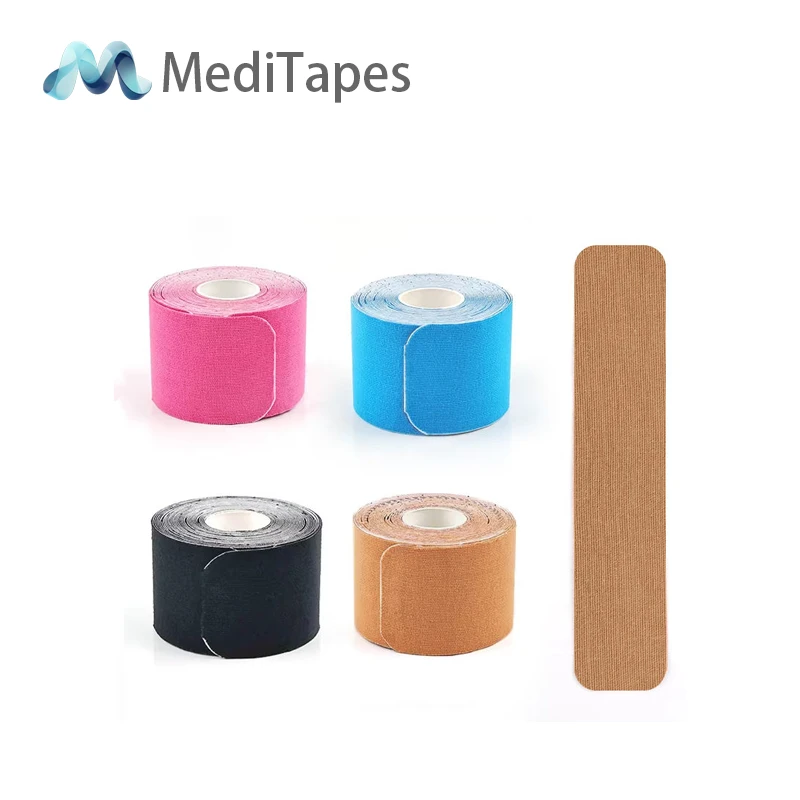
Waterproof Precut Athletic Tape for Running & Gym – Manufacturer
Boost performance with Waterproof Precut Athletic Tape. This durable, sweat-resistant cotton tape stays on during intense running and gym sessions. Our precut athletic tape saves time and ensures correct application every time. Contact us for competitive manufacturer pricing.
Designing for Profit: Packaging that Sells (and Ships)
I can’t stress this enough: Your packaging is your silent salesman, but it can also be your logistics enemy.
We had a client who wanted a hexagonal box. Looked cool on the shelf. Total nightmare to ship. They couldn’t tessellate (stack without gaps) in the master carton. They paid 30% more in shipping just to look cool.
Recommendation:
Go for a slim, flat envelope style or a high-density rectangular box for your Precut Cotton Fabric Kinesiology Tape.
- Envelope Style: Great for e-commerce. Can often ship as a “large letter” rather than a parcel, saving huge money on last-mile delivery.
- Dispenser Box: Good for clinics, but ensure it collapses for import freight.
Developing Your Product Line: Don’t Go Crazy
A common mistake is launching with 15 colors and 5 shapes.
“I need the spider cut, the fan cut, the shoulder cut…”
Stop.
Start with the basics.
- I-Strips: The bread and butter. 80% of applications use this.
- Y-Strips: For knees and shoulders.
- Colors: Black, Beige, Pink, Blue. That covers 90% of the market.
Managing inventory for a muscle tape bulk price order with 50 SKUs will tie up your cash flow. If you buy 1000 rolls of “Neon Green Spider Cuts” and nobody buys them, that’s dead cash sitting in your warehouse collecting dust.
Case Study: The “Gym-Ready” Pivot
Let me share a quick story about a brand we helped (let’s call them “FlexTape”).
They were selling standard rolls to cross-fit gyms. Sales were okay, but coaches complained that taping up a class took too long.
We worked with them to develop a “Class Pack”—a bulk dispenser box of 100 precut I-strips, specifically branded for gym use (no individual retail packaging, just a master dispenser).
The Result:
- Packaging cost dropped by 60%.
- Shipping density improved by 40%.
- The gyms loved it because they could grab a strip and go.
- FlexTape increased their B2B recurring revenue by 200% in six months.
They stopped trying to sell “tape” and started selling “time savings.”
A Note on Quality Control (QC)
When you import precuts, you have to be more vigilant than with rolls. With a roll, if the first inch is bad, the user cuts it off. With a precut, if the strip is bad, the whole unit is waste.
At MediTapes, our QC process for precuts includes:
- Tension check: Ensuring the tape isn’t stretched during the cutting process (which causes it to recoil and lift off the paper later).
- Edge bonding: Making sure the cotton fibers are sealed.
- Adhesive Anchorage: ensuring the glue sticks to the fabric better than it sticks to the skin (so it doesn’t leave residue).
Ready to Talk Numbers?
Look, importing private label tape isn’t rocket science, but it is a game of pennies. A penny saved on packaging or a millimeter saved on box dimensions adds up to thousands of dollars when you are moving containers.
If you are tired of guessing your margins or dealing with factories that don’t understand the difference between an I-strip and a Y-strip, we should chat.
We aren’t just a factory; we are a partner that understands the business side of things.
You can check out our full range of products at MediTapes.com.
Or, if you want to get straight to business, hit up our Contact Page or shoot an email to info@meditapes.com. Let’s run the numbers on your next shipment.

Precut Elastic Therapeutic Tape: Neck, Back & Wrist Relief – Supply
Effective pain management with Precut Elastic Therapeutic Tape. Targeting neck, back, and wrist strain, our pre-shaped cotton strips provide consistent elasticity. Buy precut elastic therapeutic tape in bulk to offer your clients professional-grade muscle support and fast recovery.
FAQ: Common Questions About Importing Precut Tape
Q: What is the minimum order quantity (MOQ) for custom precut shapes?
A: Typically, factories require a higher MOQ for custom die-cut shapes because we have to create a specific mold. However, for standard I-strips and Y-strips, the MOQ is usually quite manageable, often starting around 3,000 to 5,000 units depending on packaging requirements. It’s best to contact us for a specific quote.
Q: Can I mix colors within a single order to meet the muscle tape bulk price tiers?
A: Generally, yes! We understand that you can’t sell 5,000 rolls of neon green. We usually allow color splitting (e.g., 500 Black, 500 Beige, 500 Blue) as long as the packaging and material specifications remain the same. This helps you manage inventory risk while still getting the best price.
Q: How do I design the packaging to minimize shipping costs?
A: Great question. Avoid rigid “blister packs” if you are shipping internationally—they take up too much space. We recommend high-quality cardstock flat boxes or “envelope” style packaging. We can provide templates that are optimized for pallet density, ensuring you aren’t paying to ship empty space.
Q: Is there a difference in glue quality between rolls and precut strips?
A: The glue formula is usually the same (medical grade acrylic), but the application process is stricter for precuts. Because the corners are rounded and exposed, the adhesion at the very edge is critical. We use high-precision coating to ensuring the edges don’t lift, which is a common failure point in cheaper alternatives.