It is 2026, and if you are managing a clinic budget, you probably noticed something annoying last month. The price of raw cotton shifted again, and shipping logistics from Southeast Asia are still—well, unpredictable.
You are sitting there with a purchase order open. On one side, you have the classic, trusty Zinc Oxide (ZO) tape. It’s been the bread and butter of physiotherapy since forever. On the other side, you have the newer Synthetic (Rayon/Viscose) tapes. They look sleeker, they promise better “micro-climate control” for the skin, and the reps swear they are worth the extra pennies.
But are they?
I’ve been chatting with supply chain managers and lead physios across the US and Europe over the last quarter. The vibe has changed. It isn’t just about “what sticks better” anymore. It’s about cost-per-application and patient retention.
Let’s cut through the marketing fluff. We aren’t going to talk about “revolutionary adhesion technology.” We are going to talk about what actually happens when a linebacker sweats through a tape job in the fourth quarter, and what that does to your clinic’s bottom line.
The 2026 Sports Medicine Supply Trends: A Reality Check
Before we dive into the material science, look at the market.
In early 2026, we saw a weird shift. For years, the trend was “cheaper is better.” Clinics were buying generic white tape by the pallet. But the sports medicine supply trends are pivoting. Why? Because cheap tape that snaps mid-game gets a physio fired—or at least yelled at.
Athletes are getting bigger, faster, and stronger. The force exerted on an ankle joint during a Premier League match or an NFL game today is higher than it was ten years ago. The old-school, low-thread-count cotton tape just isn’t cutting it for high-performance immobilization.
We are seeing a 15% increase in inquiries for “high-tensile” solutions compared to 2024. Clinics are willing to pay a bit more upfront to avoid re-taping the same ankle three times a game.
Also, sustainability is finally hitting the B2B sector. If you are sourcing from a zinc oxide tape factory, you are likely asking about biodegradable cores or eco-friendly adhesives. It’s not just for PR; waste disposal costs for clinics are rising too.

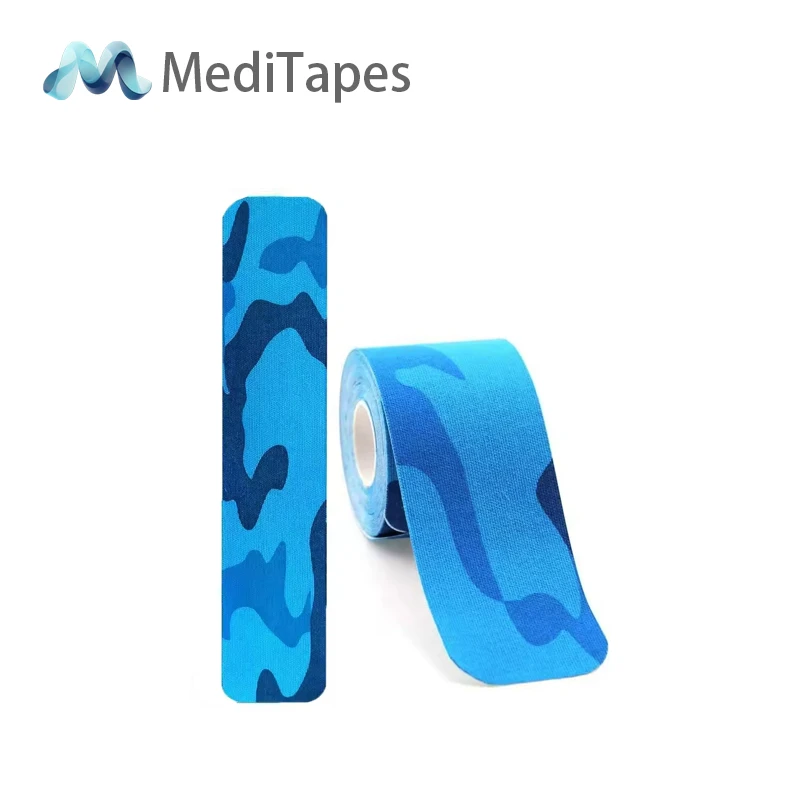
Premium Synthetic KT Tape for Knee & Shoulder Pain Relief Bulk
Sourcing Synthetic KT Tape for pain relief? Our synthetic fabric tape provides targeted support for knees and shoulders. The advanced adhesive ensures it stays on for 3-5 days. Durable and lightweight, this synthetic kinesiology tape is essential for medical supply inventories worldwide.
Round 1: Rigid Zinc Oxide Tape (The Old Faithful)
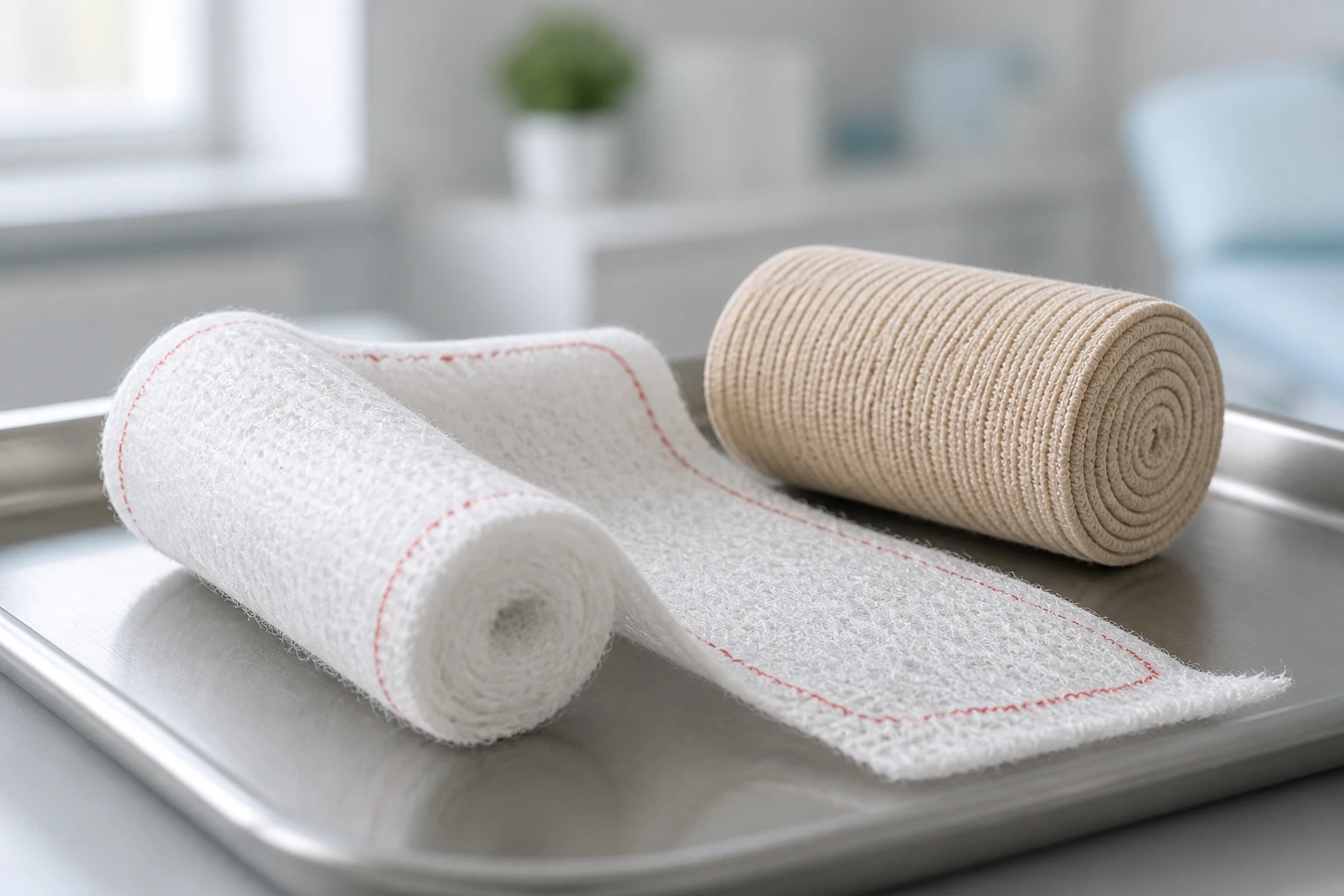
Let’s be real. Zinc Oxide tape is the workhorse. If you walk into any high school training room or a local rugby club, you smell the wintergreen and see the white rolls everywhere.
The Mechanics of Cotton
ZO tape is usually cotton-based. It’s rigid. It doesn’t stretch. That is the whole point. When you strap an ankle, you want to mechanically block the range of motion.
Why clinics still love it:
- Cost: It is generally cheaper per meter than synthetic.
- Hand Tearability: You don’t need scissors. A physio can rip it with their fingers mid-pitch. This speed matters.
- Familiarity: Every grad student knows how to use it.
The “Hidden” Downside:
Cotton absorbs water. When an athlete sweats, or it rains, cotton gets heavy. It can stretch out mechanically (not elastically) just because the fabric weave loosens when wet. That means after 20 minutes of intense activity, that support might drop by roughly 10-15%.
Also, let’s talk about the glue. Zinc Oxide adhesive is soothing for the skin (mostly), but if you get a cheap batch, it leaves a residue that looks like gum and takes ten minutes to scrub off.
Sourcing Insights
If you are talking to a zinc oxide tape factory, ask about the “thread count.”
- Standard: roughly 45 threads per square inch. Good for fingers, holding pads in place.
- Premium: 65+ threads per square inch. This is what you need for shoulders and ankles.
Don’t just buy “Zinc Oxide Tape.” Buy a specific tensile strength.
Round 2: Synthetic Rayon Tape (The Challenger)
This is the stuff that usually comes in tan or brown (sometimes black). It’s made from Rayon or Viscose. It feels silkier.
The Mechanics of Rayon
Synthetic tape has a higher tensile strength than cotton. It is incredibly hard to snap.
Why clinics are switching:
- Water Resistance: It doesn’t absorb sweat like cotton. It stays lighter.
- Rigidity Duration: It maintains that “lock” on the joint for longer. If cotton loosens by 15% after 20 minutes, synthetic might only loosen by 2-3%.
- Adhesive Power: Usually paired with a much more aggressive adhesive (often zinc oxide based, but formulated for higher tack).
The Downside:
- Price: It can be 20-40% more expensive per roll.
- No Hand Tear: You usually need scissors. I know some brutes who can rip it, but you risk twisting the tape. For a fast-paced sideline, reaching for shears adds seconds.
- Skin Irritation: Because the glue is stronger and the fabric doesn’t breathe quite as well as loose cotton, leaving this on for 2 days is a recipe for a rash.
Pro Tip: If you use Kinesiology Tapes for rehab, don’t confuse them with Synthetic Rigid Tape. K-Tape stretches (we have a great Kinesiology Tape Series for that). Synthetic Rigid Tape does not stretch.
OEM Cotton Precut Muscle Tape: I Y X Shapes for Knee & Shoulder Pain
Source high-quality OEM Precut Muscle Tape for joint pain relief. Our hypoallergenic cotton fabric ensures breathability and comfort. Available in I, Y, and X shapes, this precut muscle tape is perfect for knee, shoulder, and back support. Customizable packaging for your brand.
The Technical Showdown: A Comparative Analysis
I hate vague comparisons. Let’s put this into a table so you can actually use this in your next budget meeting.
| Feature | Zinc Oxide (Cotton) | Synthetic (Rayon) | Winner |
|---|---|---|---|
| Base Material | 100% Cotton | Rayon / Viscose spin | Synthetic for strength |
| Tensile Strength | ~40-50 lbs/inch | ~70-80 lbs/inch | Synthetic |
| Hand Tearable | Yes (Serrated edge helps) | No (Usually needs scissors) | Zinc Oxide |
| Water Absorption | High (Gets heavy) | Low (Hydrophobic) | Synthetic |
| Cost Per Roll | $ | $$ | Zinc Oxide |
| Support Duration | 30-45 mins peak | 60-90 mins peak | Synthetic |
The “Cost vs. Failure” Equation
Here is where the math gets interesting.
If you use cheap Cotton ZO tape, and the support fails at halftime, you have to re-tape.
- Cotton Tape: 2 applications per game.
- Synthetic Tape: 1 application per game.
Suddenly, the “expensive” tape is actually cheaper per game played.
The Procurement Formula for 2026
I promised you wouldn’t need a math degree, and I’m keeping these formulas text-friendly for your editor. But you need to calculate the Real Cost of Ownership for your clinic supplies.
Don’t just look at the invoice price. Use this logic:
Equation 1: Application Cost
Cost Per Application = (Price Per Roll / Avg Feet Per Taping) + Taping Time Cost
If Synthetic tape saves your therapist 5 minutes of re-taping time, and your therapist costs the clinic $50/hour, that time saving pays for the premium tape immediately.
Equation 2: Failure Rate Volume
Total Waste Cost = (Number of Re-tapes needed mid-event) x (Cost of Tape + Cost of Underwrap)
We worked with a football club in Texas (I won’t say which one, but they are big). They switched to Synthetic for Game Days but kept Cotton Zinc Oxide for training days. This hybrid model saved them about 18% on their annual consumables budget.
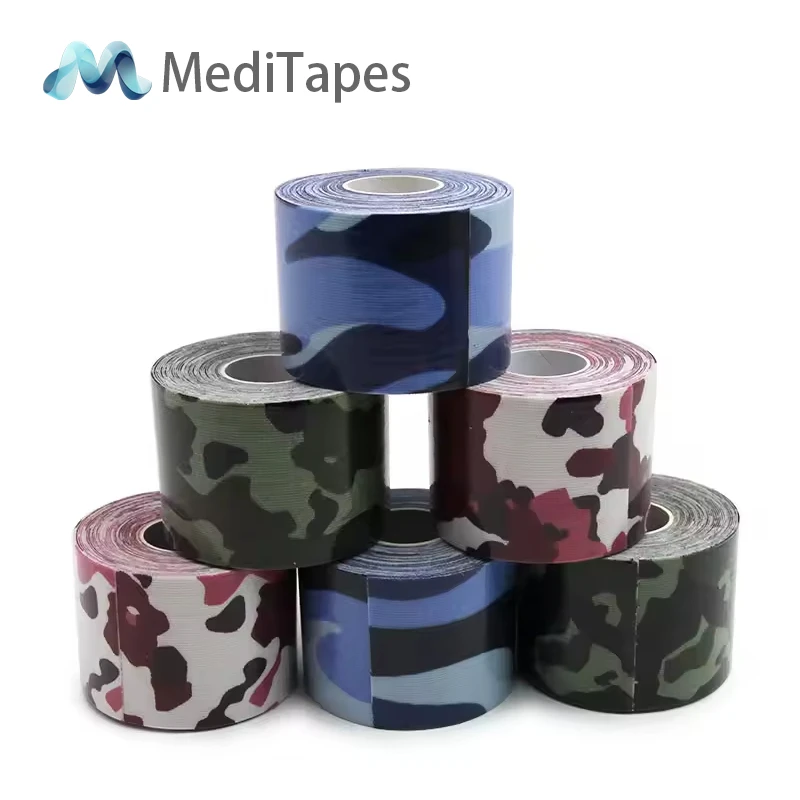
Waterproof Printed Kinesiology Tape Rolls – Athletic Muscle Support
Ensure peak performance with Waterproof Printed Kinesiology Tape. This durable cotton athletic tape resists sweat and water, making it perfect for swimming and high-intensity sports. The printed muscle tape mimics skin elasticity to reduce fatigue. Wholesale kinesiology tape rolls available now.
Sourcing from the Factory: What to Ask
When you contact MediTapes or any supplier, you need to sound like you know what you’re doing.
If you just ask for “Quote for 1000 rolls,” you get the standard price.
If you ask these questions, you get the partner price:
- “What is the GSM (Grams per Square Meter) of the glue?”
- Low end: <50gsm. (Avoid).
- Good: >70gsm.
- “Is the adhesive hot-melt or solvent-based?”
- Solvent usually sticks better longer but has environmental concerns.
- Hot-melt is cleaner but sometimes struggles in extreme heat.
- “What is the shelf life guarantee?”
- Tape expires. The glue dries out. Ensure you aren’t buying old stock.
Case Study: The “Wet Climate” Switch
Let me share a quick story. We had a client, a large physiotherapy franchise based in the Pacific Northwest (think lots of rain). They were exclusively using standard Cotton Zinc Oxide tape.
The Problem:
Patients playing outdoor sports (rugby, soccer) were complaining that the tape was “slipping” after 20 minutes in the rain. The clinic was blaming the physios’ technique.
The Trial:
We suggested a split test.
- Group A: Continued with Cotton ZO.
- Group B: Switched to high-tensile Synthetic for all outdoor wet-weather sports.
The Result:
Group B saw a 40% reduction in patient complaints regarding support failure. Interestingly, the clinic actually raised their strapping fee by $5 for the “Premium Waterproof Strap” service. Clients paid it happily. They turned a supply cost into a revenue generator.
This is what I mean by leveraging sports medicine supply trends. Don’t just buy tape; buy a solution you can sell.
Combining Modalities: When to use what?
You don’t need to go 100% Synthetic. That’s a waste of money.
Use Zinc Oxide (Cotton) When:
- It is a training session, not a final match.
- You are taping fingers, thumbs, or low-load joints.
- You need to move fast and don’t have scissors handy.
- The athlete has sensitive skin (Cotton breathes better).
Use Synthetic (Rayon) When:
- It is Game Day.
- The sport involves high impact (Rugby, American Football, Judo).
- The weather is humid or rainy.
- The joint is the ankle or patella (kneecap) where shear forces are massive.
Also, don’t forget the under-layers. Both tapes work best with a solid fix-underwrap or adhesive spray.
If you are dealing with rehab rather than immobilization, you shouldn’t be using either of these rigid tapes. You should be looking at our Kinesiology Tape Series, which facilitates movement rather than blocking it.
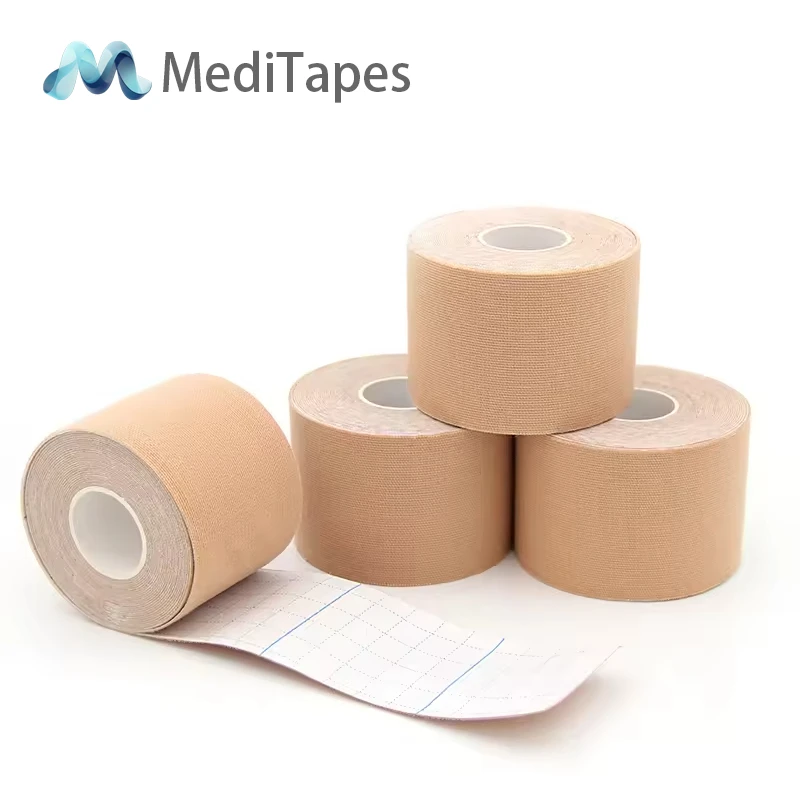
Hypoallergenic Athletic Tape Cotton – Elastic Therapeutic Tape Factory
Safe and effective Hypoallergenic Athletic Tape. Manufactured in our factory, this cotton elastic therapeutic tape reduces skin irritation. Features strong adhesion for endurance sports. Get competitive factory prices on bulk orders of skin/blue/pink/black colors.
The Manufacturing Reality in 2026
Why is the price gap closing?
Technology in the zinc oxide tape factory world has improved. We are seeing faster weaving looms for rayon fabrics. Five years ago, rayon was a luxury. Now, manufacturing efficiencies are bringing the cost down closer to cotton.
Meanwhile, cotton farming is water-intensive and prices are volatile due to climate change affecting crops. It is entirely possible that by 2030, Synthetic tape will be the cheaper option.
FAQ: Your Purchasing Questions Answered
Q1: Can I use Synthetic tape directly on the skin?
A1: Technically, yes, but I wouldn’t recommend it for long periods. The adhesive is strong. Really strong. Removing it from hair or sensitive skin can be painful. We always recommend using a foam underwrap or a hypoallergenic fix-tape underneath synthetic rigid tape.
Q2: Does “Zinc Oxide” in the name mean it heals injuries?
A2: No. This is a common myth. The Zinc Oxide is in the adhesive (the glue). It has mild antiseptic and soothing properties, which helps reduce the irritation caused by the glue itself, but the tape is a mechanical device, not a medicine delivery system.
Q3: Why does my tape roll telescope (pop out in the middle)?
A3: That’s usually a storage issue or bad tension during winding at the factory. If you leave tape in a hot car or direct sunlight, the adhesive softens and the tension releases, pushing the core out. Store your tape in a cool, dry place (ideal temp: 15-25°C).
Q4: Is rigid tape better than K-Tape?
A4: They are apples and oranges. Rigid tape (Zinc Oxide/Synthetic) is for restricting movement (stability). K-Tape is for facilitating movement and sensory feedback (neuro-proprioception). Most clinics need both.
Final Verdict for the Buyer
So, what should you put on your 2026 Purchase Order?
My advice: The 80/20 Rule.
Keep 80% of your stock as high-quality Cotton Zinc Oxide. It’s versatile, cost-effective, and handles the bulk of daily training volume.
Allocate 20% of your budget to Premium Synthetic Tape. Reserve this for your elite athletes, game days, and chronic instability cases where that extra 10% of hold makes the difference between a win and an injury.
It’s not about choosing one winner. It’s about having the right tool in the bag.
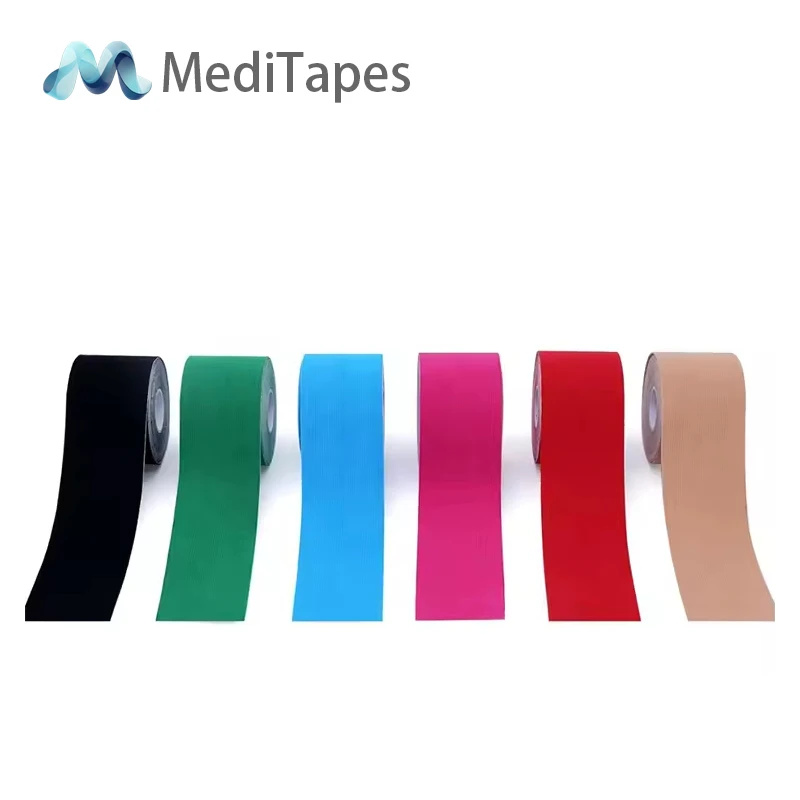
Shiny Rayon Kinesiology Tape – High Elasticity Muscle Therapy Tape
Elevate your therapy with Shiny Rayon Kinesiology Tape. This synthetic muscle tape features a reflective surface and high elasticity for maximum joint mobility. It dries faster than cotton tape, preventing skin irritation. A top choice for modern physical therapy and rehabilitation centers.
Ready to optimize your clinic’s inventory?
At MediTapes, we manufacture both premium Cotton Zinc Oxide and high-tensile Synthetic tapes directly from the factory floor to your door. No middlemen, no mystery markups.
If you are unsure which spec fits your patient demographic, let’s talk. We can send out a sample kit so you can feel the tack and tear the fabric yourself.
- Visit our website: https://meditapes.com/
- Request a Quote: https://meditapes.com/contact-us/
- Email the team: info@meditapes.com
Don’t let a snapped tape cost you a game. Upgrade your supply chain today.