Ever wondered why some medical tapes stick like crazy when you try to peel them off, but others hold firm under weight without budging? That’s the magic – or science, really – of adhesion strength tests. We’ve been working with adhesives for years here at MediTapes, and let me tell ya, getting this right makes all the difference in real-world use, especially for medical stuff where it has to stay put but not wreck skin when removed.
Adhesion testing is basically how we measure how well an adhesive bonds to a surface. There are a bunch of ways to do it, but the big two everyone talks about are peel adhesion (or peel strength) and shear strength. They’re testing different things, kinda like checking if a tape can handle being yanked off at an angle versus sliding under steady pressure.
Let’s break it down a bit, yeah? Peel tests simulate that “ripping off a bandage” feel – force applied to separate the adhesive by peeling it away. Shear tests? That’s more about how long it resists forces trying to slide one surface past the other, like if something’s hanging and pulling sideways.
What Is Peel Adhesion and Peel Strength?
Peel adhesion, often called peel strength, measures the force needed to pull an adhesive tape or material away from a surface at a specific angle. Usually, it’s done at 180 degrees or 90 degrees, pulling steadily until it lets go.
Think about removing a sticker from your laptop – that’s peel in action. The force is concentrated at the peel front, so it’s great for spotting how easy (or hard) something is to remove.
In labs, we follow standards like ASTM D3330 for pressure-sensitive tapes, which covers peel adhesion testing for things like medical tapes. This standard has different methods, like Method A for 180-degree peels on single-coated tapes. It’s super common for medical tape because it mimics real removal scenarios.
Typical peel strength values? For medical tapes, they often range from around 4-17 N/25mm on stainless steel, depending on the adhesive type – acrylics might hit higher, silicones lower for gentler removal. We’ve seen cases where a good peel balance means the tape comes off clean without tearing skin.
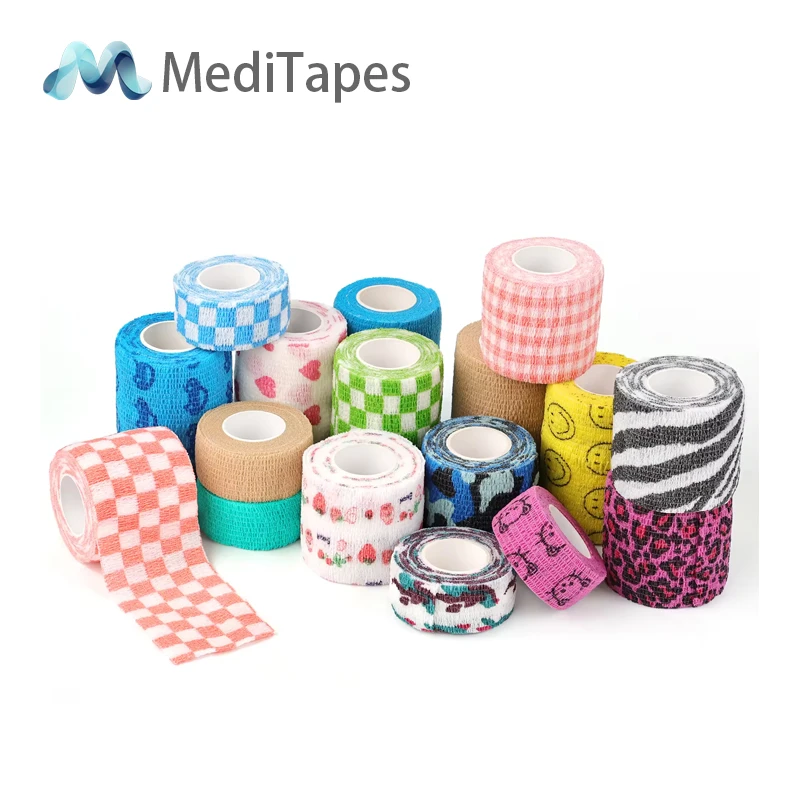
Kids Printed Cohesive Bandage – Colorful Self Sticking Medical Tape
Make first aid fun with Kids Printed Cohesive Bandage. This colorful self-sticking medical tape features smiley faces and hearts to reduce pediatric anxiety. Gentle on sensitive skin and latex-free options available. A must-have printed cohesive wrap for pediatric wards and school nurses.
How Peel Tests Work in Practice
You stick the tape to a standard panel (usually stainless steel), let it dwell for a bit, then peel at a constant speed – like 300 mm/min. The machine records the average force per width.
Here’s a quick table comparing common peel angles:
| Peel Angle | What It Tests | Common Use | Typical Force Units |
|---|---|---|---|
| 180° | Straight back peel, even stress distribution | Medical tape removal, labels | N/cm or lb/in |
| 90° | Perpendicular pull, more tensile feel | Coatings, flexible materials | N/cm or oz/in |
| T-Peel | Flexible substrates peeling apart | Laminates, double-sided tapes | Higher variability due to backing flex |
From experience, 180° peels give more consistent data for medical applications ’cause they’re closer to how nurses actually remove dressings.
Shear Strength: The Holding Power
Now, shear strength is different – it’s how well the adhesive resists forces parallel to the bond, like sliding or creeping under load.
Imagine a heavy IV line taped to skin; shear keeps it from slipping down over time. High shear means better cohesion inside the adhesive, resisting that slow slide.
Standards like ASTM D3654 test this by hanging a weight and timing how long until failure. Good medical tapes need solid shear to stay secure during movement.
Data shows trade-offs: adhesives with super high peel might have lower shear if they’re too “flowy,” and vice versa. For example, some acrylics build great peel but creep under static loads.
Static vs. Dynamic Shear
- Static Shear: Constant load, measures time to failure (e.g., minutes or hours at room temp or elevated).
- Dynamic Shear: Overlapping substrates pulled apart in shear mode, quicker force measurement.
In one setup we’ve used, tapes holding 1kg for thousands of minutes show excellent shear – crucial for long-wear devices.
Table of typical shear performance:
| Adhesive Type | Typical Static Shear (minutes to failure, 1kg load) | Notes |
|---|---|---|
| Silicone | 1000+ | Gentle on skin, good for extended wear |
| Acrylic | 500-5000+ | Builds over time, strong but can irritate |
| Rubber-based | Variable, often lower | Quick tack, less shear |
Real numbers vary by formulation, but silicones often shine in medical for balancing shear without aggression.

Bitter Taste Cohesive Bandage – No Chew Vet Wrap for Pets & Dogs
Stop pets from gnawing wounds with Bitter Taste Cohesive Bandage. This no chew vet wrap contains a safe bitter agent to deter licking and biting. Protects dressings effectively while remaining breathable. The smart choice for veterinary post-surgery care using non-woven bandage.
Key Differences: Peel Adhesion vs. Shear Strength
So what’s the big diff? Peel focuses on detachment force at an angle, shear on resistance to sliding.
- Force Direction: Peel = perpendicular/tensile mix; Shear = parallel.
- Failure Mode: Peel often adhesive failure at interface; Shear cohesive inside adhesive.
- Real-Life Scenario: Peel for removal ease; Shear for staying power under weight/movement.
From projects at MediTapes, we’ve seen tapes ace peel tests but fail shear in wear trials – like a dressing shifting on a moving patient. Balancing both is key.
Another table to make it clear:
| Aspect | Peel Adhesion/Peel Strength | Shear Strength |
|---|---|---|
| Measures | Force to separate by peeling | Resistance to sliding forces |
| Common Standards | ASTM D3330 (peel for tapes) | ASTM D3654 (static shear) |
| Units | Force per width (e.g., N/cm) | Time to failure or force per area (psi) |
| Best For | Removal characteristics, initial bond | Long-term holding, creep resistance |
| Medical Example | Easy-off bandages | Secure device fixation over days |
ASTM Standards for Medical Tape
Speaking of standards, ASTM ones are gold for consistency. For medical tape adhesion testing:
- ASTM D3330: The go-to for peel adhesion of pressure-sensitive tapes, including surgical/medical. Methods cover 180° and 90° peels, dwell times, etc.
- ASTM D3654: Shear adhesion, vital for hold times.
- Others like ASTM D903 for general peel stripping.
These ensure repeatable results – we’ve relied on ’em to validate our tapes meet clinical needs.
In medical, peel strength matters hugely to avoid skin injuries (MARSI). Studies show silicone tapes often have lower peel (gentler) but sufficient shear.
Factors Affecting Adhesion Tests
Loads of things tweak results:
- Substrate: Skin vs. steel – real skin varies by age, moisture.
- Dwell Time: Adhesion builds over hours/days.
- Temperature/Humidity: Higher temp softens adhesives, lowers strength.
- Application Pressure: Roller ensures even contact.
We’ve tweaked formulations based on these – like adding cross-linking for better shear without spiking peel.
Real-World Applications and Insights
Over the years, we’ve helped clients with custom medical tapes. One case (keeping it anonymous): a wearable sensor patch that kept falling off during activity. Peel was fine, but shear weak. Switched to a higher-cohesion acrylic, boosted static shear from ~500 to 3000+ minutes – problem solved, patient comfort up.
Another: wound dressing for fragile skin. Needed low peel to prevent tears, but enough shear for secure hold. Silicone-based won out, with peel around 5-8 N/25mm – gentle removal, no residue.
These scenarios show why testing both peel and shear matters. One without the other? Recipe for issues.
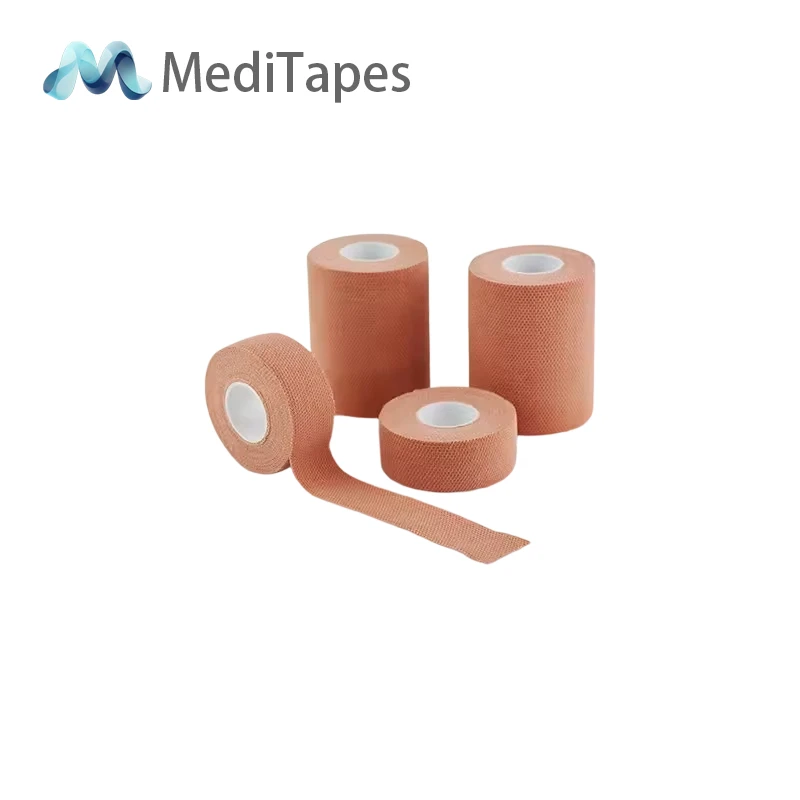
Strong Adhesion Elastic Adhesive Bandage EAB for Ankle and Knee Support Tape
Strong Adhesion Elastic Adhesive Bandage (EAB) is engineered for superior ankle and knee support in demanding activities. This Elastic Adhesive Bandage provides robust taping with high elasticity and lasting hold.
Perfect for preventing injuries, the Elastic Adhesive Bandage conforms seamlessly to joints, offering compression that reduces strain and enhances stability during movement.
Choose our premium Elastic Adhesive Bandage for professional-grade performance, trusted by trainers for reliable protection and quick recovery support.
Choosing the Right Test for Your Needs
For quality control in medical tapes, start with ASTM D3330 for peel – it’s straightforward and predictive of removal feel. Add shear if long-wear or load-bearing.
At MediTapes, we run full panels: peel, shear, tack, even aging tests. Helps pick winners fast.
FAQs
What’s the main difference between peel adhesion and shear strength tests?
Peel measures how much force to yank the tape off at an angle – think quick removal. Shear checks how long it resists sliding under steady pressure, like holding weight over time.
Why are ASTM standards important for medical tape?
They make sure tests are consistent across labs and manufacturers. ASTM D3330, for example, standardizes peel testing so results mean the same thing everywhere – crucial for safety in medical stuff.
Can a tape have high peel but low shear?
Yeah, totally. Some flowy adhesives grab hard initially (high peel) but creep under load (low shear). We balance ’em for medical apps to avoid that.
How do I improve shear strength without increasing peel too much?
Cross-linking or stiffer polymers help shear, while silicones keep peel gentle. Testing iterations nail the sweet spot.
If you’re dealing with adhesion challenges in your products, whether medical tapes or devices, drop us a line. At MediTapes, we’ve got the expertise to test, tweak, and supply custom solutions. Head over to our contact page or email info@meditapes.com for a quote or chat – we’d love to help sort your adhesion needs.